
By Staff Reporters
The stock market continues to surprise observers, maintaining a trajectory that periodically forces investors to re-examine long-held assumptions about wealth and risk. As valuations reach historic highs driven by the current frenzy surrounding Artificial Intelligence, many investors find themselves wrestling with a familiar anxiety: the conviction that an unprecedented boom must inevitably precede a catastrophic crash.

For those who have tuned out financial media and focused on daily life, the stability is a welcome constant. However, for active investors and retirees, the parallels to historical market bubbles—most notably the dot-com boom of the early 2000s—remain a persistent talking point. This exact market cycle is the subject of a new presentation developed by early retirement pioneer and digital finance commentator Mr. Money Mustache, who debuted the talk at the Camp FI Midwest event and scheduled an updated version for the upcoming Bogleheads conference in November.
Will the AI Bubble Ruin Our Retirement?
Having reached over two decades of financial independence and early retirement, the author notes that he remains comfortable with his lifestyle, despite frequent inquiries from anxious peers. The underlying question is often framed around how anyone can remain retired and sleep soundly given the state of global affairs, economic volatility, and soaring market valuations.

Yet, a historical perspective reveals that the specific catalysts for panic routinely change while the underlying anxiety remains constant. Comparing the current climate in 2026 to the worries of 2006 illustrates this phenomenon clearly. Two decades ago, financial commentators and everyday investors were consumed by entirely different sets of existential threats.
Back in 2006, the news cycle was dominated by concerns over geopolitical instability in the Middle East, surging national debt, and inflation. In the markets, the anxiety was fueled by the swelling housing bubble rather than an AI boom, while job security fears centered on the outsourcing of labor to India and China rather than automated algorithms. Furthermore, widespread panic over "Peak Oil" predicted that rising fossil fuel consumption would inevitably outstrip dwindling global supplies—an outcome that was ultimately upended by technological shifts and increased production capacity.

Despite the valid concerns that preceded the Great Financial Crisis of 2008—the largest market crash since the Great Depression—long-term data demonstrates the resilience of diversified equity markets. A historical investment of $100,000 made through those turbulent decades, including the 2020 pandemic crash, would have still appreciated significantly over the long horizon.
Simultaneously, broader global indicators improved substantially over the same twenty-year period. Extreme poverty rates dropped from roughly twenty percent in 2005 down to single digits, infant mortality rates were cut in half, and clean energy adoption accelerated as solar panel costs plummeted. Renewable generation expanded dramatically, and electric vehicles transitioned from a niche concept to a substantial share of global automotive sales.

Prosperity Comes from Productivity
When financial media focuses exclusively on market instability, reports often overlook a foundational economic principle: true societal prosperity originates from productivity rather than temporary fluctuations in financial systems or stock valuations.
The capitalist framework is inherently volatile and prone to cyclical swings, but economic value is ultimately generated by real people performing real work and developing tangible innovations. Financial markets and economic indices are human-made constructs; if a system experiences a severe correction due to speculative overextension, historical precedent demonstrates that societies adapt, restructure, and continue working.

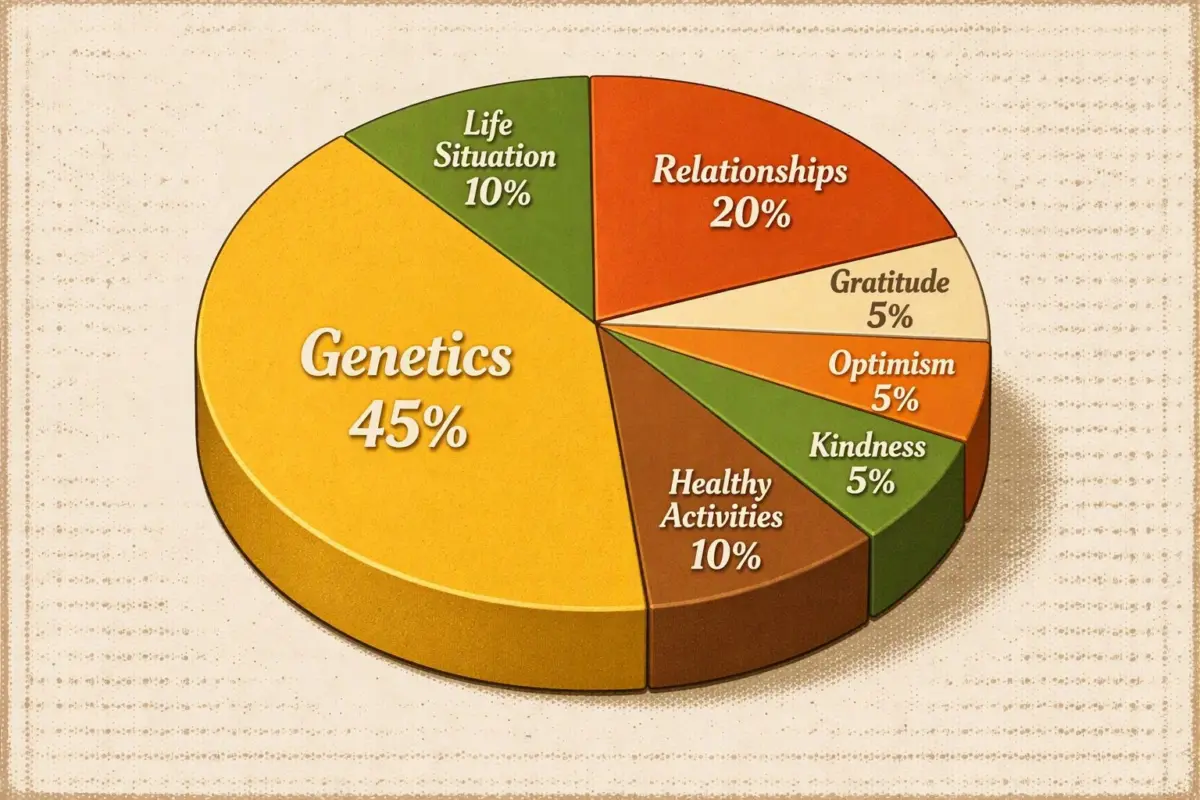
Standard of living, economic growth, and the viability of early retirement strategies are fundamentally anchored to high productivity levels. Furthermore, once basic material needs and a comfortable standard of living are secured, human happiness tends to stabilize across financial metrics, relying instead on personal relationships, health, optimism, and community engagement.
Confronting Fear as a Psychological Driver
Despite the mathematical reality of long-term market growth, underlying anxiety often persists even among seasoned investors. This pervasive unease can be understood through human evolutionary psychology: humans function largely as danger-detection machines.

When immediate physical threats such as predators or extreme scarcity are resolved, the human brain often pivots to new targets for concern. Once basic survival needs are met, individuals frequently progress to worrying about social standing, community integration, macroeconomic debt figures, or complex tax strategies like Required Minimum Distributions (RMDs).
Addressing this internal anxiety requires self-awareness and an understanding of personal history. Fears surrounding scarcity or financial ruin often trace back to childhood experiences or generational trauma, such as the lingering psychological impact passed down from families who survived the Great Depression. Recognizing that these fears are frequently relics of the past rather than objective assessments of the present is a critical step in rational decision-making.

Taking concrete action remains one of the most effective antidotes to fear, as it transforms the unfamiliar into the manageable and builds long-term resilience. By filtering out sensationalized daily news feeds and focusing instead on positive behaviors, physical health, and connection with optimistic communities, individuals can significantly alter their mental well-being.
Everything Is an Experiment
Applying an experimental mindset to major life transitions—whether changing careers, relocating, or pursuing early retirement—helps reframe uncertainty as an opportunity for learning rather than a source of dread.

This same principle applies directly to the current Artificial Intelligence boom. Rather than succumbing to speculative alarmism, viewing AI as an advanced technological tool highlights its capacity to act as a powerful engine for efficiency. Much like the introduction of the internet and mobile computing, artificial intelligence is poised to drive massive productivity gains while simultaneously displacing certain administrative and technical roles.
While the rewards of such technological shifts historically concentrate among capital owners and shareholders, the broader economic outcome is typically a reconfiguration of labor markets and the creation of entirely new industries. Artificial intelligence represents another wave of innovation that requires individuals to make deliberate choices—either viewing change as an existential threat or leveraging it as an opportunity for adaptation, personal growth, and long-term resilience.