
The stock market has once again found a way to surprise both casual observers and seasoned investors. As equity markets push toward record-high valuations, driven largely by a historic frenzy around Artificial Intelligence, a familiar wave of anxiety has washed over the financial community. Investors frequently ask a pressing question: Does the current boom-and-bust cycle mean an even larger financial crash is on the horizon, echoing the dot-com bubble of the early 2000s?

For many long-term financial commentators, this dynamic feels deeply familiar. The early 2000s internet boom helped launch early careers and paved the way for early retirement, only for the subsequent crash to threaten livelihoods and stability. Today, aging financial educators and online commentators find themselves repeatedly addressing the same cycle of anxiety. Rather than just offering fleeting commentary, some are taking these discussions to live events, including recent appearances at financial independence gatherings like Camp FI Midwest and upcoming presentations at national investor conferences.
Will the AI Bubble Ruin Our Retirement?
When individuals achieve long-term financial independence and step away from traditional careers, friends and acquaintances often pose a recurring, skeptical question: How can anyone remain comfortable and sleep soundly at night given the state of the world?

News consumers and habitual worriers can easily list a multitude of contemporary crises. Headlines frequently feature volatile geopolitical figures, persistent inflation eroding purchasing power, towering national debt levels, and escalating global conflicts that threaten widespread instability. Yet, this psychological pattern of worry is far from novel.
Looking back two decades to 2006, the worries of the day felt equally catastrophic to those experiencing them. At that time, global leaders like George W. Bush and Saddam Hussein dominated the news cycle, a major war raged in Iraq, and anxieties over national debt and inflation were omnipresent. Instead of an AI bubble, investors panicked over an overvalued housing market and a looming mortgage crisis. Instead of fears that artificial intelligence would eliminate jobs, workers worried about widespread outsourcing to India and China. There was even a widespread panic regarding "Peak Oil," with doomsayers predicting that rising fossil fuel consumption would inevitably outstrip dwindling global supplies, leading to societal collapse.

Despite those intense anxieties, the subsequent two decades defied the gloom-and-doomers. While the Great Financial Crisis did materialize—driven by irrational exuberance over real estate and reckless financial leverage—it ultimately proved to be a temporary disruption within a much broader upward trajectory. Over a twenty-year horizon, a standard market investment demonstrated resilient long-term growth despite intervening shocks, such as the pandemic-induced market drop of 2020.
At the same time, global living conditions improved dramatically. The proportion of the global population living in extreme poverty dropped significantly over a twenty-year span, while global infant mortality rates were cut in half. Clean energy adoption surged as solar panel technology became exponentially cheaper, making solar generation a dominant source of new power capacity worldwide. Meanwhile, electric vehicle sales transitioned from a theoretical concept to a substantial share of global automotive sales.

Understanding the Core Driver: Prosperity Comes from Productivity
Financial media thrives on cultivating scary narratives to capture attention, but these pessimistic forecasts frequently overlook a fundamental economic principle: true societal prosperity does not originate from the financial system or the stock market, which ultimately function as numerical abstractions tracked on computers.
Instead, prosperity is rooted entirely in productivity.

The capitalist economic structure is inherently volatile, prone to sharp cyclical swings and periodic corrections. Beneath the surface turbulence, however, real people perform tangible work and develop genuine innovations. Economies and financial systems are human constructs; if a financial system suffers a catastrophic correction because market participants dislike prevailing asset valuations, societies retain the capacity to recalibrate and resume productive labor. This exact recovery mechanism has functioned reliably through past panics, including the 2008 financial crash.
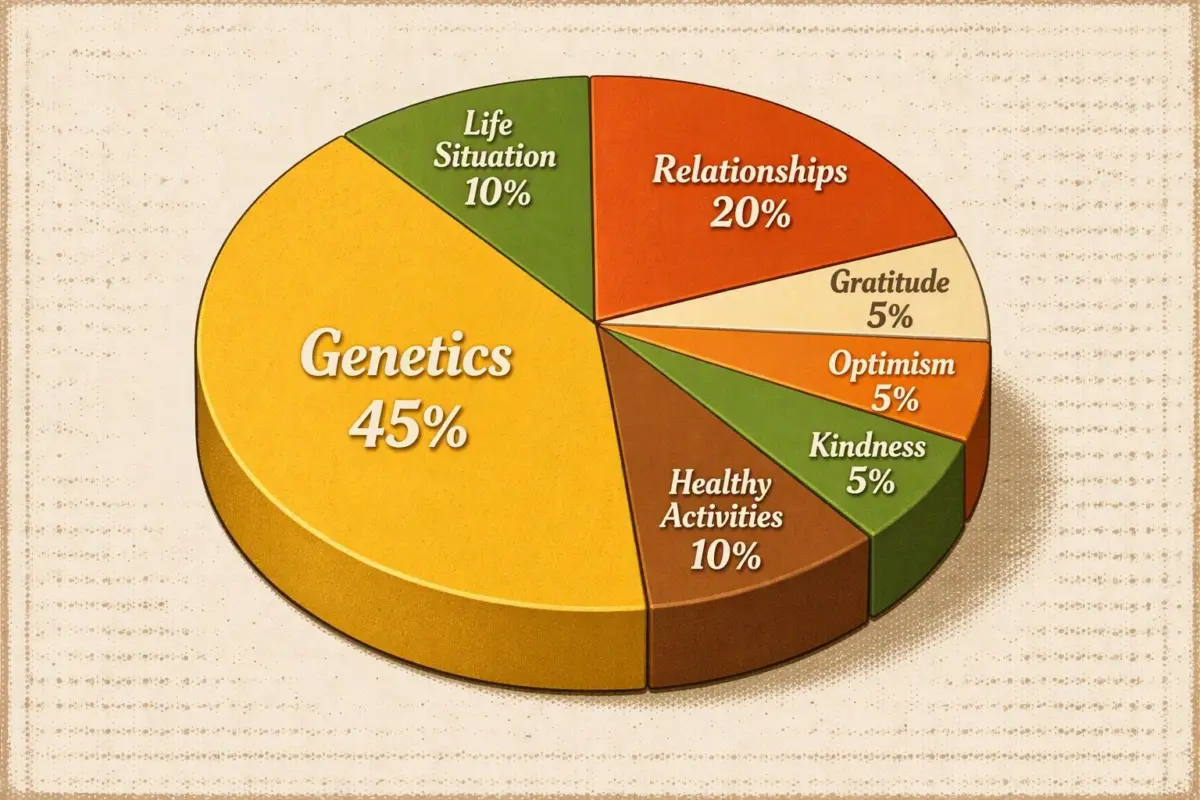
Human societies retain every tool ever invented to enhance productivity. Long-term standards of living, economic growth, and the viability of early retirement strategies all stem directly from sustained improvements in productive capacity. Furthermore, once societies achieve a baseline standard of living—a threshold long surpassed across the developed world—additional wealth yields diminishing returns regarding basic human happiness.

The Psychology of Fear and Modern Anxieties
If the fundamental mechanics of long-term economic growth remain sound, why do so many individuals—including those who have successfully achieved financial independence—remain gripped by fear?
Human beings evolved primarily as danger-detection machines. Pervasive background anxiety is an evolutionary trait designed to protect individuals from immediate physical threats and environmental dangers. However, this neurological defense mechanism possesses a significant flaw: when actual physical threats subside, the human brain continues scanning the horizon for alternative sources of worry.

Once immediate concerns regarding food scarcity and basic survival are resolved, humans pivot to worrying about social acceptance and tribal exclusion. When financial stability is achieved, anxiety shifts toward complex tax strategies, estate planning, and managing government-mandated retirement account distributions. The human brain continuously moves the goalposts, substituting new anxieties for old ones.
Fortunately, individuals can consciously counteract fear by developing self-awareness and applying rational thought. A primary step involves examining one’s personal history. Anxieties regarding money often stem from childhood conditioning or generational trauma passed down from family members who lived through historic economic depressions or personal hardships.

Identifying specific fears by examining worst-case scenarios reveals that potential outcomes are rarely as catastrophic as anticipated. Taking concrete action is an effective antidote to fear, transforming the unfamiliar into the familiar and fostering genuine personal resilience. Individuals who cultivate mental, physical, and emotional adaptability find that few external circumstances remain truly terrifying.
Another crucial strategy for managing anxiety involves filtering out unnecessary psychological clutter, particularly the sensationalized narratives pushed by daily news outlets. Rather than consuming a continuous stream of alarming stories, individuals benefit from turning toward deliberate learning, physical activity, and constructive real-world problem-solving. Aligning daily habits with natural human behaviors—such as spending time outdoors and engaging in meaningful work—dramatically improves mental well-being. Furthermore, surrounding oneself with optimistic, productive peers helps replace a scarcity mindset with a collaborative, growth-oriented perspective.

Approaching Artificial Intelligence as an Experiment
This mindset of resilience and adaptability applies directly to contemporary technological shifts, most notably the rise of Artificial Intelligence. Rather than viewing the AI era as an existential threat or a reason for relentless doom-scrolling, individuals can frame new technological developments as ongoing experiments.
Change naturally introduces uncertainty, which can feel unsettling. However, exploring the underlying mechanics of AI reveals substantial potential upside alongside valid challenges. Artificial intelligence functions essentially as a cognitive tool—a sophisticated resource designed to boost efficiency, enhance productivity, and ultimately drive broader economic prosperity.

Like previous technological revolutions, AI will inevitably displace certain traditional job roles, particularly in entry-level administrative, financial, and technical sectors. Over time, however, these shifts tend to reduce service costs, lower consumer prices, and catalyze entirely new industries, mirroring the transformative economic expansion unleashed by the internet and mobile computing.
While the economic gains from new technologies often concentrate among capital owners and shareholders, individual participants in the broader market also share in those structural rewards. Ultimately, Artificial Intelligence represents another opportunity for modern society to make deliberate choices. Individuals retain the agency to decide whether technological change serves as a source of paralyzing fear or as a catalyst for continuous learning, positive action, and a more engaged life.