
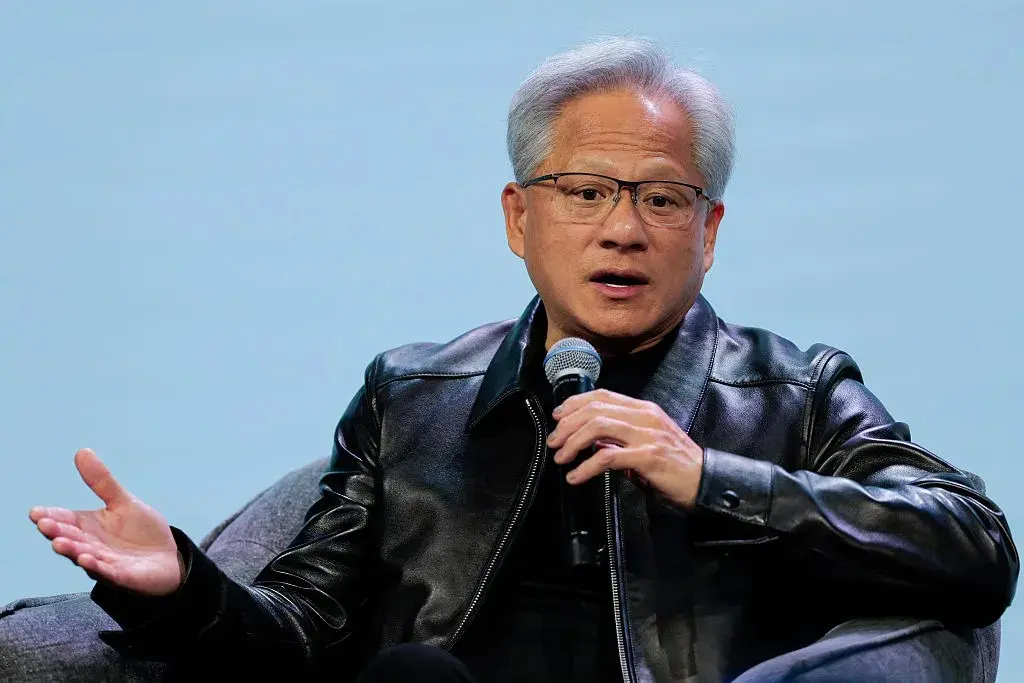
It was the resignation heard across the world. Jensen Huang, Nvidia’s embattled CEO who co-founded and led the semiconductor giant for 33 years, has officially stepped down. The departure of the visionary leader has sent immediate and profound shockwaves throughout the global technology sector, leaving artificial intelligence startups, venture capitalists, and Wall Street analysts scrambling to assess the fallout.
“It’s like a bomb went off,” one neocloud founder told TechCrunch upon first hearing the news, capturing the sheer magnitude of the disruption.
Over the last several years, Nvidia has operated not merely as a dominant hardware manufacturer, but as a prolific venture capital powerhouse. The chipmaker has poured tens of billions of dollars into startups annually, participating in an astonishing 105 investment rounds in a single year alone, frequently acting as the largest financial backer, according to data from PitchBook. For the burgeoning AI startup ecosystem, Huang’s aggressive dealmaking was the lifeblood that sustained rapid innovation and expansion.
“If that direction changes, it’ll be a big blow to so many young companies,” said Maria Davidson, founder of Relational Capital.
Huang’s abrupt absence leaves the startup ecosystem without one of its most prominent and reliable champions, alongside a sudden and severe contraction of available capital. Industry investors warn that this vacuum could trigger massive repercussions across future dealmaking, company valuations, funding trajectories, and overall market competition.
“Nvidia is carrying almost every AI-native startup from application to neocloud,” Dawn Capital’s Shamillah Bankiya noted.
According to Umesh Padval, managing partner at Seligman Ventures, the vast majority of these high-stakes startup investments were personally championed and spearheaded by Huang himself. Padval, who has known Huang since serving on the board of Mellanox Technologies—the networking chipmaker that Nvidia acquired for approximately $7 billion in 2020—suggests that while there is eventual hope that a future successor might revive Nvidia’s legendary investment appetite, market participants are realistic enough to know that a revival is unlikely to happen in the short term.
In the wake of Huang’s departure, Nvidia has named Chief Financial Officer Colette Kress as interim CEO. Kress is widely expected to institute immediate strategic changes, particularly regarding Nvidia’s multi-billion-dollar investments into AI startups that sit right at the center of the massive, capital-intensive data center build-out. Huang’s rampant, high-velocity dealmaking in this specific sphere had increasingly become a source of anxiety and concern for Wall Street observers.
“She’s much more conservative,” one investor remarked regarding Kress. “I don’t think she’s going to commit the same amount of money to keep the early-stage ecosystem going.”
Historically, Nvidia’s largest and most consequential financial bets were directed toward neoclouds, inference providers, and open-weight models—expensive foundational layers that smaller companies typically struggle to finance independently.
“Jensen’s initiatives are a big reason an ecosystem has emerged despite that,” explained Zain Javaid, co-founder of the hardware company Ghost.
The scope of Nvidia’s portfolio under Huang’s leadership was staggering. The chipmaker backed prominent infrastructure provider CoreWeave while it was still privately held, and participated in multiple funding rounds for Crusoe, including its substantial $1.4 billion Series E. Furthermore, Nvidia agreed to acquire Hugging Face this year for $13 billion in a deal expected to close in 2027, while maintaining significant equity stakes in other major players like Mistral AI, Lambda, and Black Forest Labs.
In many of these transactions, Nvidia positioned itself as the lead financial anchor. Last year, for instance, the company wrote an eye-popping $800 million check into a $2 billion Series B round for Reflection AI, backing the open-source startup before it had begun generating meaningful revenue, according to reporting by The Wall Street Journal.
“Jensen believed in open source and frankly speaking, Europe,” Bankiya said, highlighting how Huang’s global vision distributed AI funding far beyond Silicon Valley. A cessation of that financial support in regions outside of America, particularly in Europe, “would be a massive funding and honestly ecosystem gap that no one can fill.”
At the same time, it is impossible to ignore that Nvidia wielded such overwhelming dominance within the ecosystem that its influence occasionally resembled a monopoly. By backing scores of promising companies with exceptionally generous checks, Nvidia effectively secured those startups as captive consumers of its high-performance GPUs, thereby reinforcing its impenetrable market position.
Should the corporate giant adopt a more conservative posture toward startup investments, it could inadvertently carve out valuable breathing room for market rivals and smaller competitors. In a striking coincidence, Google announced two specialized new artificial intelligence chips this very week, just as the fallout from Huang’s exit began to unfold across the industry.
Several investors interviewed by TechCrunch expressed cautious optimism that other hyperscale cloud providers and rival semiconductor manufacturers might eventually step into the breach to back early-stage startups, helping to offset the void left by Huang’s departure.
Dharmesh Thakker, a general partner at Battery Ventures, anticipates that Big Tech competitors will vie for Nvidia’s former investment crown. However, he noted that such competition will depend “upon who brings the best combination of a great product, an ecosystem and community to compete with CUDA, and the financial power to bankroll the ecosystem.” CUDA is Nvidia’s proprietary software platform that enables developers to run complex artificial intelligence models efficiently on its GPUs.
While tech titans like Google, Amazon, Microsoft, and Advanced Micro Devices may selectively back more mature startups to drive adoption of their respective chips and cloud services, Thakker remains skeptical that they will replicate Nvidia’s model of pouring hundreds of millions of dollars into pre-revenue infrastructure startups.
Under Huang’s tenure, infrastructure companies requiring between $100 million and $500 million worth of GPUs could frequently raise half that amount at valuations of $1 billion or more directly from Nvidia just to establish operations. The chipmaker’s mere participation provided traditional venture capitalists with the institutional confidence required to back these high-risk ventures at lofty valuations.
Now, with Nvidia anticipated to exercise greater selectivity regarding new portfolio additions—while potentially writing smaller checks for existing holdings—a downward correction in startup valuations appears increasingly likely.
“When Nvidia was on the cap table, everyone felt safe,” Padval observed. Without that specific stamp of approval, investors suggest that traditional venture capital firms will think twice before committing capital to similar startups, potentially triggering a temporary cooling period in broader dealmaking.
Even so, few market participants believe that Nvidia’s impending investment slowdown will single-handedly halt the broader artificial intelligence boom.
While industry insiders universally agree that Huang represents a monumental and irreplaceable loss for Nvidia, former employees emphasize that the ecosystem has grown far beyond a single individual. Amulya Vishwanath, an ex-Nvidia employee who now manages her own venture capital fund, noted that founders and leaders must ultimately be held accountable, and that the broader talent pool must continue to thrive.
“That talent will, and must, continue to thrive,” Vishwanath said.