
In a significant legal victory for the former Prince Andrew, a High Court judge in London announced on Thursday that police have conceded that the search warrants used to raid his properties were unlawful. The ruling marks a major turn in the high-profile criminal investigation into his past connections with the late, convicted American sex offender Jeffrey Epstein. Justice Nicholas Hilliard stated that the Thames Valley Police had committed a fundamental and significant error when they applied for the warrants to search the homes of the man now formally known as Andrew Mountbatten-Windsor.
The admission of error by law enforcement came before the scheduled High Court hearing could fully get underway. According to Justice Hilliard, the legal representatives for both Mountbatten-Windsor and the Thames Valley Police had reached an agreement to invalidate the warrants prior to Thursday’s court session. The former prince, who is 66, was not present in the courtroom to hear the judge’s formal remarks, but the development represents a crucial tactical breakthrough for his defense team as they seek to dismantle the criminal case mounting against him.
Lawyers representing Mountbatten-Windsor have made it clear that this ruling is part of a calculated, broader legal defense strategy. Stephens, a legal representative from the London-based law firm Howard Kennedy, which is handling the case, characterized the High Court hearing as a preliminary but vital skirmish in what promises to be a protracted legal confrontation. Stephens explained that the primary objective of challenging the validity of the search warrants was to render any materials seized during the raids inadmissible in any future criminal proceedings. By proving the warrants were unlawfully obtained, the defense aims to argue that any physical or digital evidence gathered from the properties is fundamentally tainted.
“It’s the first step of Prince Andrew and his lawyers saying, ‘Actually, this is tainted evidence. It was obtained inappropriately,’” Stephens remarked outside the court. “Therefore it should be excluded from any criminal trial.”

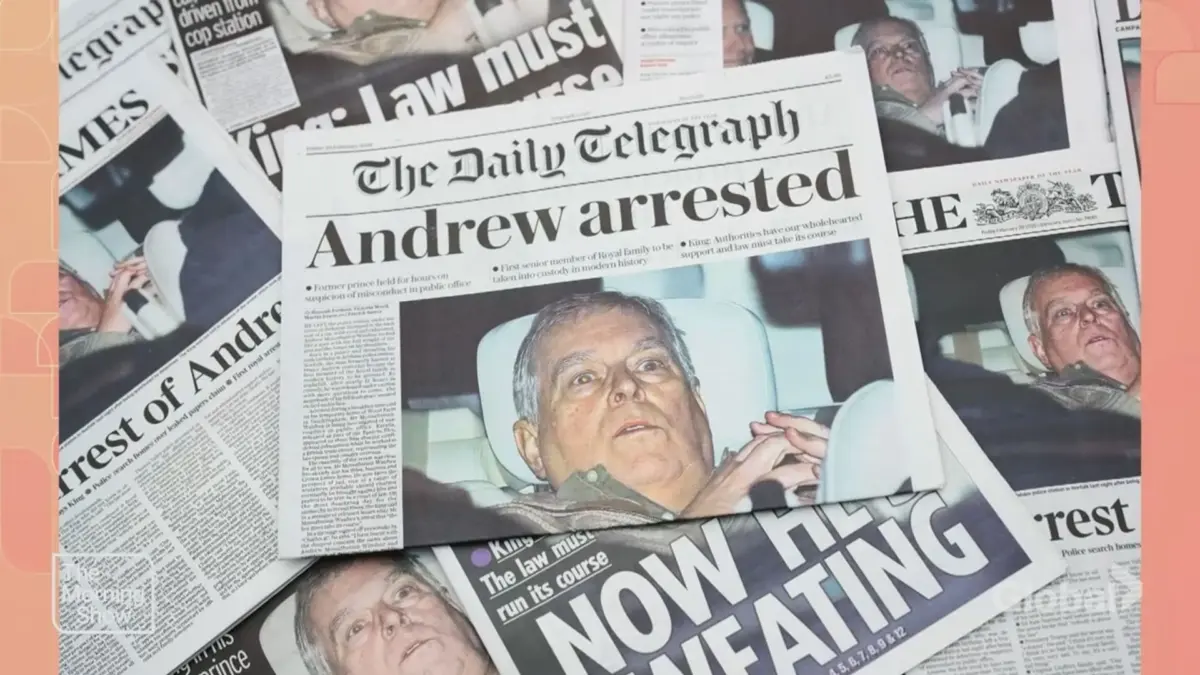
The legal battle over the search warrants stems from a stunning series of events earlier this year. On February 19, Mountbatten-Windsor was arrested by police on suspicion of misconduct in public office. Following his arrest, authorities executed the now-disputed search warrants, conducting thorough searches of two of his private residences. The arrest itself sent shockwaves through the United Kingdom and the global community, marking the first time in nearly four centuries that a senior member of the British royal family had been placed under arrest by law enforcement officers.
Following his arrest in February, Mountbatten-Windsor was subjected to an intense, 11-hour interrogation by detectives before being released under investigation. This specific legal status under English law means that while he has not been formally charged with any criminal offense, he has also not been exonerated, and the police investigation remains active and ongoing. The threat of prosecution continues to hang over the former royal as detectives review the case, though the invalidation of the search warrants is expected to severely complicate the prosecution’s ability to utilize any evidence gathered during those specific searches.
The criminal investigation into Mountbatten-Windsor has focused heavily on his official activities during his time serving as a representative for the British government. Initially, the police inquiry was centered on allegations that he had shared sensitive, potentially confidential information with Jeffrey Epstein during the period when he served as the United Kingdom’s special trade envoy. However, law enforcement officials have since indicated that the scope of their investigation is not strictly limited to these allegations, noting that they could also consider other matters that arise during the course of their inquiries.
The current legal jeopardy facing Mountbatten-Windsor is deeply rooted in the extensive investigations conducted across the Atlantic. The specific allegations that triggered the British police inquiry came to light after the United States Department of Justice released millions of pages of documents gathered during its federal investigation into Epstein’s international sex trafficking conspiracy. The unsealed documents laid bare the intricate network of wealthy, influential, and powerful men from around the globe who maintained close ties to Epstein. The references to Mountbatten-Windsor within these files provided fresh ammunition for critics and legal investigators alike, thrusting his past associations back into the public eye and ultimately prompting the Thames Valley Police to launch their criminal probe.

The escalating legal scandal has caused immense distress within the House of Windsor, prompting King Charles III to take decisive action to protect the institution of the monarchy. Last year, the King stripped his younger brother of his remaining princely titles, a dramatic move designed to sever the official connection between the working royal family and the ongoing fallout of the Epstein scandal. Now known publicly and legally as Andrew Mountbatten-Windsor, the former prince has been effectively cast out of official royal life.
While King Charles has taken steps to distance the monarchy from his brother’s legal woes, a delicate financial arrangement remains in place. Mountbatten-Windsor continues to receive a regular stipend funded from the King’s private estate. However, Buckingham Palace has established strict boundaries regarding how this money can be used. Palace officials have made it explicitly clear that these private funds are not to be utilized to finance his ongoing, expensive legal battles, including his successful effort to challenge the police search warrants. This financial restriction has forced the former prince to rely on other means to pay for his high-powered legal representation from firms like Howard Kennedy.
The current criminal investigation is the culmination of more than a decade of public embarrassment, political controversy, and intense scrutiny surrounding Mountbatten-Windsor’s relationship with Epstein. The relationship first became a matter of serious public concern as far back as 2011. At that time, British lawmakers and members of Parliament raised urgent questions about the propriety of a senior royal maintaining a close friendship with a convicted sex offender. The mounting political pressure eventually forced the then-prince to step down from his highly visible, globetrotting role as the United Kingdom’s special trade envoy, a position that is now at the center of the misconduct in public office allegations.
Despite stepping back from his trade role, Mountbatten-Windsor’s association with Epstein continued to haunt him. The crisis reached a point of no return in 2019, when he agreed to participate in a now-infamous, wide-ranging interview with the BBC’s Newsnight program. The interview, which was intended to clear his name and explain his side of the story, backfired catastrophically. His apparent lack of empathy for Epstein’s victims and his failure to satisfactorily explain why he continued to associate with the financier even after Epstein’s initial conviction sparked widespread public outrage. The fallout from the broadcast was immediate and devastating, effectively ending his career as a working member of the royal family and forcing him to withdraw from all public duties.

With the High Court now formally recognizing the unlawfulness of the search warrants, the focus of the legal battle shifts back to the Thames Valley Police and the Crown Prosecution Service. Legal experts suggest that the police’s admission of a "significant error" is a severe embarrassment for the force, raising questions about the competence of the initial phase of the investigation. While the ruling does not bring an end to the overall inquiry into Mountbatten-Windsor’s conduct, it places a formidable hurdle in the path of investigators, who must now navigate the fallout of having their primary search actions declared illegal. The broader investigation remains active, but the defense has successfully drawn first blood in what remains one of the most extraordinary legal chapters in the modern history of the British royal family.