

The criminal trial of Aiden Pleterski, the 27-year-old Whitby, Ontario man who gained notoriety under the self-proclaimed moniker of the "Crypto King," began hearing emotional and detailed testimonies on Wednesday. Alleged victims took the stand in a Toronto-area courtroom to recount how they were enticed by Pleterski’s promises of astronomical, low-risk returns, ultimately handing over hundreds of thousands of dollars that they believed would be safely invested in foreign exchange and equity markets.
Pleterski is currently facing serious criminal charges of fraud over $5,000 and money laundering. Represented by counsel, the young defendant has pleaded not guilty to all charges. The prosecution alleges that instead of managing a legitimate and highly profitable investment fund, Pleterski ran a massive fraudulent scheme that preyed on the trust of everyday investors to fund an incredibly lavish, jet-setting lifestyle.
The trial’s opening proceedings have laid bare the stark contrast between Pleterski’s humble beginnings and the extravagant persona he later projected. In his opening address to the jury on Tuesday, Crown Counsel Scott Patterson detailed Pleterski’s rapid transition from an unemployed young man to a supposed financial prodigy. Patterson explained that up until June 2020, Pleterski was living with his parents at their home in Whitby. During this period, he drove a modest Honda Civic and worked at a local car rental agency.
According to the prosecution, Pleterski was financially dependent on his parents until the onset of the COVID-19 pandemic, at which point he began receiving the Canada Emergency Response Benefit (CERB), which provided him with $500 per week. However, by the middle of 2020, Pleterski’s financial activities underwent a dramatic shift. He began soliciting funds from members of the public, telling prospective investors that he had developed a highly sophisticated trading system.
Patterson told the jury that Pleterski claimed he would take a 30 percent cut of any capital gains generated by his trading, leaving the remaining 70 percent for the investors. To ease any concerns about potential losses, Pleterski allegedly told investors that his system was designed so that he would never lose more than two percent of the principal on any given trade, while targeting consistent gains of five percent. He also began telling investors that he was an incredibly wealthy individual, a claim that appeared to be validated by his sudden display of luxury.
The prosecution argues that investors placed their complete trust in Pleterski, fully believing that he would handle their hard-earned money in accordance with his promises. Instead, Patterson told the jury, Pleterski used the investor funds as his own personal piggy bank. Rather than conducting legitimate trading, Pleterski allegedly used the money to purchase and lease exotic cars, charter private jets, fund expensive shopping sprees, and pay off credit card bills that ran into the millions of dollars. Patterson assured the jury that they would see extensive financial records documenting these transactions as the trial progressed.
On Wednesday, the jury heard firsthand accounts of how these alleged promises played out in practice. Braden Martyniuk, one of the investors who testified, explained that his decision to invest with Pleterski was heavily influenced by media coverage. Martyniuk testified that he had read several articles about Pleterski in which the young man described himself as "The Crypto King." This public persona, combined with the fact that they shared a mutual friend, convinced Martyniuk that Pleterski was a legitimate and successful trader.
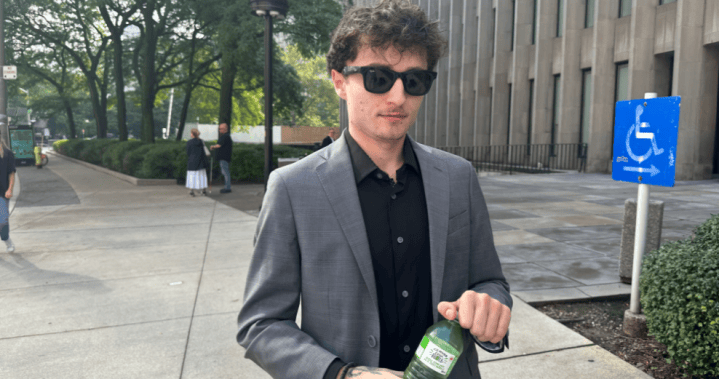
During their initial meetings, Martyniuk said Pleterski assured him that his funds would be utilized for foreign exchange trading. Martyniuk recalled the specific terms that were offered to him. Pleterski promised returns of three percent per week, which would compound on a weekly basis. Martyniuk testified that he believed Pleterski was actively executing trades on a platform called Forex. Furthermore, Pleterski allegedly assured him that there was absolutely no risk to his initial investment, claiming that all of his clients’ principal funds were fully covered against any potential losses.
To back up these claims of financial security, Martyniuk testified that Pleterski told him he maintained a $300-million "slush fund." Martyniuk explained to the court that he understood this to mean Pleterski had a massive reserve of capital set aside specifically to protect his clients and guarantee their investments. Convinced by these assurances, Martyniuk signed a contract and wired a total of $250,000 to Pleterski.
However, the promised financial security proved to be short-lived. Martyniuk testified that when he reached out to Pleterski in May or June of 2022 to request the return of his money, his attempts were met with complete silence. He received absolutely nothing back.
According to the Crown, Martyniuk’s experience was part of a much larger collapse that began in the spring of 2022, when a wave of investors began requesting withdrawals. Patterson told the jury that Pleterski simply did not have the funds to fulfill these requests. Instead of returning the money, Pleterski allegedly offered a series of excuses and delays, eventually telling investors that their capital had been frozen in his foreign exchange account. Patterson argued that this was entirely false, stating that the funds were never frozen because Pleterski had never actually invested them. Instead, the prosecution asserts, Pleterski had simply spent the money.
The jury also heard extensive testimony from Stewart Wilson, the manager of a high-end car rental company, who detailed a long-term relationship with Pleterski that eventually cost him and his girlfriend over a million dollars. Wilson testified that he first met Pleterski in 2019, when the young man was only 20 or 21 years old. Pleterski had approached Wilson’s company looking to rent high-end vehicles, eventually renting about half a dozen luxury cars over the course of that year. Through these interactions, Wilson became familiar with Pleterski’s background, even visiting the modest home on a Whitby cul-de-sac where Pleterski was living at the time.
After not seeing Pleterski for about a year, Wilson ran into him by chance in a downtown parking lot in the fall of 2020. Wilson testified that Pleterski proudly showed off a newly purchased Audi R8 and claimed he was making a living through trading. Wilson recalled being genuinely happy for him, noting that it appeared everything was going well for the young man.
Intrigued by Pleterski’s apparent success, which was highly visible through his social media accounts, Wilson reached out to set up a meeting in 2021. Wilson testified that Pleterski did not try to recruit him or pressure him into investing, which actually made the opportunity seem more appealing. Wilson observed that Pleterski was living in a large house on the Lake Shore and driving very extravagant cars, apparently achieving all of this success entirely on his own.
After learning that Pleterski was trading on behalf of close friends and family members who were supposedly receiving excellent returns, Wilson decided to inquire about investing his own money in November 2021. Pleterski invited Wilson to visit his new residence. Wilson described his reaction upon arriving at the property, which was an 8,000-square-foot waterfront mansion in Burlington. Pleterski claimed to have purchased the estate outright. Wilson testified that he was astonished by the scale of the property and Pleterski’s rapid rise, recalling that he told Pleterski he was "crazy" for buying such an immense home.

The impression of immense wealth was further reinforced by the contents of the mansion’s garage. Wilson testified that he saw a fleet of ultra-luxury vehicles parked inside, including Lamborghinis, Audis, and a McLaren valued at approximately $2 million. Wilson admitted to the court that he was highly impressed by what he saw.
During their discussions at the mansion, Pleterski explained his trading strategy to Wilson, stating that he focused on equities and foreign exchange. Wilson recalled that the strategy sounded remarkably straightforward and logical. Pleterski claimed his philosophy was centered on making a modest but consistent profit of one percent per day. He emphasized that he operated with a strict stop-loss limit, meaning that if a stock went up, he would sell immediately to lock in the gains, and he routinely traded about ten different stocks simultaneously.
Wilson testified that the strategy seemed so simple and effective that he wondered why no one else had thought of it. Pleterski also assured him that under this strict strategy, it was virtually impossible for the principal investment to be wiped out, and he showed Wilson records of the profits he was supposedly generating. Believing the operation to be entirely legitimate, Wilson signed a contract with a company called AP Private Equity and wrote an initial cheque for $250,000. Pleterski also informed him that his total asset pool was valued between $30 million and $50 million, which further reassured Wilson that his money was safe.
Over the following weeks, Wilson continued to invest, signing additional contracts and writing further cheques that eventually totaled $900,000. The agreement called for a 75-25 split on capital gains, with Pleterski retaining 25 percent of the profits. The investment soon grew to involve Wilson’s girlfriend, who decided to invest $300,000 of her own money, which represented the entire proceeds from the sale of her condominium.
When asked by the prosecution if he ever suspected that Pleterski was using his and his girlfriend’s investment funds to pay for private jets, luxury shopping, and personal credit cards, Wilson replied that the thought had never crossed his mind. He testified that he felt completely safe and believed his money was being used strictly for trading.
The positive relationship began to unravel in March 2022, when Wilson contacted Pleterski to request a withdrawal of $400,000. Following this request, Pleterski became highly evasive and difficult to contact. When Wilson finally managed to get in touch with him, Pleterski claimed that the funds were temporarily frozen in foreign accounts. When Crown Counsel Patterson asked Wilson if he ever received any of that money back, Wilson replied, "Nothing."
Following the testimonies of both Martyniuk and Wilson, Superior Court Justice Shaun Nakatsuru asked Pleterski and his legal representation if they wished to cross-examine the witnesses. On both occasions, Pleterski’s defense declined to ask any questions, leaving the witnesses’ accounts unchallenged. The trial is scheduled to continue as the prosecution presents further evidence and witness testimonies to the jury.