

OMAHA, Nebraska — In the shadow of the severe winter weather that paralyzed power grids across the central United States nearly half a decade ago, utilities have been forced to rethink how much electricity they keep in reserve. But as the American energy landscape shifts dramatically due to a nationwide data center boom, rapid electrification, and industrial growth, utilities are confronting a new and pressing crisis: a severe shortage of available power capacity.
In eastern Nebraska, this crunch is hitting close to home. The Omaha Public Power District, or OPPD, which serves approximately 419,000 customers across the region, is rapidly running low on the energy capacity it can promise to new and expanding economic development projects. The resulting bottleneck is threatening the region’s ability to foster economic growth, attract major corporations, add high-paying jobs, and expand its tax base at a critical financial juncture.
The roots of the current reliability and capacity concerns stretch back to February 2021, when Winter Storm Uri swept across much of the country. During the unprecedented freeze, utilities scrambled for power as the demand for electricity and natural gas soared. Facing crippling transmission constraints, utilities nationwide were unable to generate enough power due to frozen fuel supplies and widespread equipment malfunctions. In Nebraska, in a desperate bid to preserve the electrical grid and prevent a catastrophic system-wide failure, OPPD was forced to conduct rolling blackouts.
In the aftermath of that crisis, the Southwest Power Pool, the organization responsible for managing the region’s grid reliability, tightened the rules. It required its member utilities to maintain significantly larger power capacity margins in reserve to protect against similar high-demand emergencies during extreme winter or summer weather.
However, the grid requirements arrived right as a historic surge in energy demand began taking shape. Across the United States, the rapid proliferation of energy-hungry data centers, industrial electrification, and commercial development has delivered the promise of new customers alongside an unprecedented spike in electrical load. OPPD now finds itself grappling with the exact same compounding pressures plaguing electric grids nationwide: aging power plants and infrastructure, soaring consumer demand, and a changing climate straining the grid in real time. Compounding these technical challenges, local communities across Nebraska have increasingly pushed back against the renewable energy developments that could otherwise help alleviate the strain.
Currently, OPPD projects that it has less than 100 megawatts of available power capacity to allocate to new or expanding large customers over the next few years. To put that figure in perspective, a single large data center can easily require as much as 1,000 megawatts of capacity, while major manufacturing facilities typically range anywhere from a few megawatts to more than 100 megawatts.
While OPPD officials assert that the utility has secured enough power capacity to support typical residential and commercial growth, the limitation on large-scale projects is severe. Javier Fernandez, the outgoing president and CEO of OPPD—who is scheduled to leave the utility at the end of the year—noted that any new or expanding industrial development requiring two megawatts or more may find itself forced to wait for service.
This capacity ceiling has alarmed economic development leaders throughout the state. If power availability in Nebraska’s largest metropolitan area remains heavily restricted, both Omaha and the broader state risk falling behind competitors in securing vital economic opportunities, new businesses, and increased tax revenues. The stakes are particularly high as the state navigates tight financial horizons, including projections of a $208 million budget shortfall next year, compounded by state income tax revenues dropping by $703 million over the past year.
"We are bending over backwards. We’re trying to figure out creative solutions," Fernandez said. "How do we bridge this? Can we buy capacity from other utilities? Literally, no one has excess capacity. Everyone is in the same boat as we are, so now the pinch, so to speak, it’s, well, growth has to slow down, maybe?"
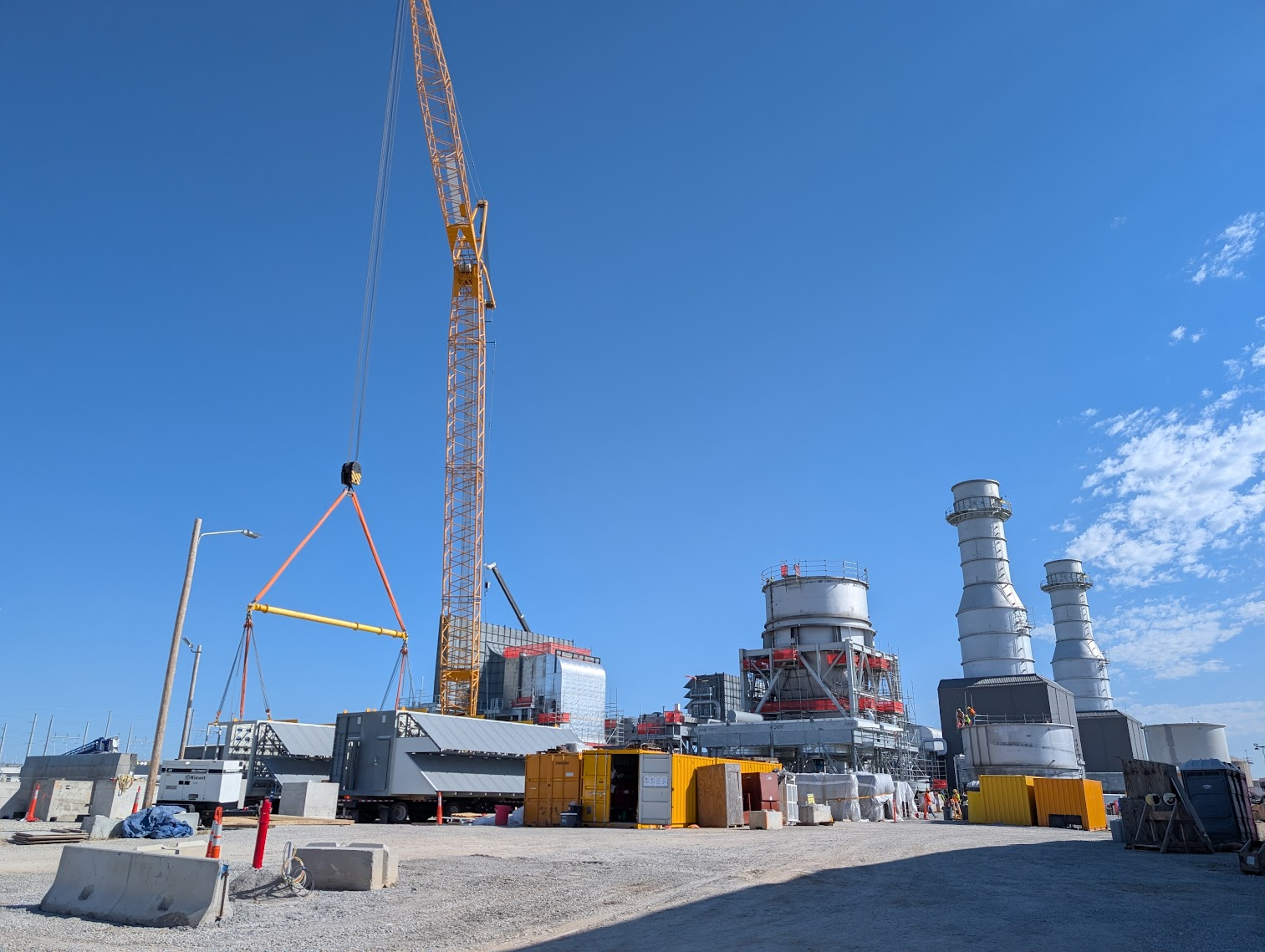
To address the looming shortfall, OPPD is engaged in extensive long-term planning to project its system needs over the next decade. To meet rising demand, the utility and its board of directors face pivotal decisions regarding the scale of future energy portfolio expansions. On the conservative end of the spectrum, the utility could add roughly 1,000 megawatts of generation. However, initial planning results indicate that OPPD may need to more than double its current portfolio, which stands at 4,583 megawatts of total energy capacity.
The urgency of these planning decisions is underscored by the sheer volume of projects currently waiting in the pipeline. Although additional generation capacity is scheduled to come online over the next few years, demand projections remain remarkably high. According to data presented in September, companies representing nearly 2,000 megawatts of economic development projects are actively in OPPD’s queue through 2031. Beyond those committed projects, the utility is tracking another 5,000 megawatts worth of potential developments considering the Omaha area.
While Fernandez acknowledged that not every project in the queue will ultimately materialize, the utility faces a difficult balancing act. Building too little generation could leave the Omaha metropolitan area trapped in a permanent economic shortage. Conversely, building too big an infrastructure footprint without the corresponding large-scale customer usage materializing could force OPPD’s everyday ratepayers to shoulder the substantial financial costs.
Nailing these demand projections and successfully constructing new generation sources—primarily a mix of renewable energy and natural gas—presents a formidable operational hurdle. Two OPPD board members have emphasized that navigating this transition would be significantly easier if state and local leaders established a unified front with clear, cohesive economic development plans to guide regional energy priorities.
Although OPPD has declined to break down the exact composition of its customer queue between data centers, manufacturers, and other industries, historical shifts illustrate the changing nature of the grid. A March utility presentation revealed that peak demand is currently driven by residential customers at 41 percent, industrial customers at 32 percent, and commercial customers at 27 percent. By 2035, however, industrial customers are projected to account for a staggering 52 percent of peak demand.
"Clearly, data centers have been a very, very big force on that increase," Fernandez said. "The biggest question my board is likely going to have to answer is going to be how big of a plan we approve. And that is going to be informed by state, counties, cities, chambers: How much do you want us to grow?"
In September, Heath Mello, president and CEO of the Greater Omaha Chamber, sent a formal letter to the OPPD board urging the utility to plan well beyond 2036 and aggressively build out infrastructure to accommodate future growth. Paul West, chair of the chamber’s board, noted that local business leaders are eager to recruit and expand heavy industries such as manufacturing.
Economic development is widely viewed as a powerful tool to help solve pressing regional issues, including the state budget shortfall, high property taxes, and the demographic challenge of brain drain. Yet, energy availability has emerged as one of the top two reasons the chamber loses prospective corporate deals to competing locations. Furthermore, incoming manufacturing facilities find themselves forced to compete directly for power with massive data center developers eyeing the same region—a phenomenon mirroring broader site-selection trends across the United States, according to Larry Gigerich, chair of the Site Selectors Guild.
While regulated utilities like OPPD carry a legal obligation to serve all customers reliably, state and local governments hold the policy levers to incentivize or discourage specific types of regional growth. The intense competition for electricity generated by the rise of data centers is fundamentally changing how industrial players operate.
"It’s causing manufacturing companies now to be more proactive and to use their voice more directly with utilities versus the way they have done it for decades," Gigerich said. "Now it’s a true competition, and we can’t generate enough new power fast enough to meet everybody’s needs."
Accurately projecting demand is only the first step; actually getting electricity-generating projects built is quite another. To meet climbing demand while keeping consumer costs down, OPPD is actively exploring the construction of additional natural gas facilities and renewable energy installations. Both generation types, however, come with distinct operational and political hurdles.
The widespread national popularity of natural gas has severely constrained the equipment supply chain, meaning that building new gas-fired plants could take significantly longer than anticipated. Meanwhile, while renewable energy sources may involve upfront capital cost considerations, they consistently remain the most cost-effective energy source to operate over the long term.
Despite these economic advantages, OPPD has repeatedly struggled to bring renewable projects online because of local opposition across parts of the state. Tensions have simmered for years, fueled by misinformation campaigns and initial secrecy from certain developers. Rural residents and community leaders throughout Nebraska have frequently rejected clean energy proposals over expressed concerns regarding potential fire risks, negative impacts on prime agricultural land, and local road infrastructure wear.
In some instances, Fernandez noted, community leaders who have rejected local renewable generation projects have simultaneously turned around to demand more power capacity to attract new economic development to their areas.
"Everyone is saying no, and then we end up in a really bad place," he said.
With power demand continuing its upward trajectory, regional stakeholders recognize that compromises must be made if Nebraska is to sustain its economic momentum.
"If Omaha doesn’t grow, if Omaha doesn’t prosper, the rest of the state very likely won’t," Fernandez said. "What the state wants versus what the city wants versus what the chambers want — well, they all want different things. But the one common denominator that I keep hearing is jobs and income."