

Blackstone, one of the largest private equity firms in the world, officially changed the name of its dedicated energy investment fund to include the phrase “energy transition” in 2022, having already ceased investing in oil and gas production five years earlier. The pivot toward a new energy future has not diminished interest in the fund. In mid-October, Blackstone announced that the fund pulled in $8.7 billion in investor money this year, reportedly turning away an additional $3 billion of demand in order to stay safely under its maximum investment cap.
Blackstone’s fund is just one of several energy transition investment vehicles managed by major private equity firms that have consistently grown over the past decade. That remarkable financial growth has continued apace even as general climate-oriented investment has flagged across broader markets over the last few years. Colloquially, the phrase “energy transition” refers to the systemic shift from fossil fuels to renewable energy sources that scientists and policymakers say is necessary to limit the worst, most catastrophic impacts of global climate change.
However, on Wall Street and within elite private equity circles, the terminology can mean something quite different. Some transition funds—including Blackstone’s—see lucrative financial opportunities not only in clean power, but also in natural gas, digital infrastructure like data centers, and the rising cost of electricity driven by surging industrial demand.
"I know a lot of the investors out there do consider gas a transition fuel," said Ryan Loughead, a senior associate and former climate solutions analyst for BloombergNEF, an influential energy research firm.
Private equity firms operate on a distinct financial model compared to publicly traded corporations. They take in massive amounts of new capital from institutional investors every few years, use that capital to acquire existing companies, restructure them to maximize profitability, and eventually sell them off, returning the realized cash to their backers. Unlike public stocks that are broadly available to retail investors, private equity firms typically accept investments only from large, sophisticated organizations such as public pension funds, endowments, or ultra-high-net-worth individuals. Because of this opaque and profit-driven structure, private equity has frequently faced intense criticism from labor and environmental advocates for prioritizing financial returns at the expense of workers and environmental health.
Despite these criticisms, the broader transition to renewable energy has proven to be a remarkably booming business for private market firms. So-called "transition funds" in private equity raked in a staggering $178 billion between 2021 and the beginning of 2026, according to Loughead’s research. This haul is roughly triple the amount raised by comparable funds dedicated strictly to fossil fuels and general energy.
These specialized funds have managed to maintain their immense popularity even as other forms of climate-related investments have flagged significantly in the United States. Climate-related venture capital, for example, is currently on track to suffer its worst year of the decade. While private equity funds typically buy out established, mature companies, venture capital funds focus on making smaller, riskier investments in early-stage startups.
These financial shifts have coincided with major changes in federal policy and the broader macroeconomic landscape. The Biden administration’s signature climate legislation once spurred a massive wave of innovation in clean technologies, but Republicans in Congress successfully repealed most of that legislation last year. Meanwhile, the explosive growth of the artificial intelligence and technology industries has triggered a massive buildout of data centers, creating surging demand for electricity and drawing trillions of dollars from corporate investors worldwide.
In the financial industry, the energy transition has grown into a sophisticated economic trend with deeply established players and markets, according to Dan Cohn, an energy finance analyst with the Institute for Energy Economics and Financial Analysis, a prominent think tank focused on the energy transition. Cohn notes that private equity funds don’t typically demonstrate investor interest in a budding industry merely to support a cause, but rather because they believe the industry is becoming critically important to the broader economy.
"Investors are sensing oncoming scarcity of electricity and are positioning themselves accordingly," Cohn said. "That speaks to both the moment of rising electricity demand, but also the maturity of clean energy technologies."
Yet even as these massive funds seek to capitalize on the soaring demand for electricity, they do not all demonstrate a clear or uniform commitment to reducing greenhouse gas emissions. Blackstone’s fund is explicitly clear in its view that methane gas—a potent fossil fuel and the primary component of natural gas—remains an essential component of the energy transition. While the fund no longer invests in upstream oil and gas fields, it actively invests in downstream natural gas power plants.
When Blackstone rebranded the fund in 2022, its global head of energy, David Foley, explained why natural gas plants remained a core part of their strategy. A significant portion of the capital invested in the energy transition is naturally flowing into simple renewable power generation assets like solar and wind, Foley noted to an industry publication at the time. While that is undeniably important, he argued, simply adding more renewables to the electrical grid does not automatically mean operators can shut down and remove existing, reliable sources of power, such as coal and natural gas plants.
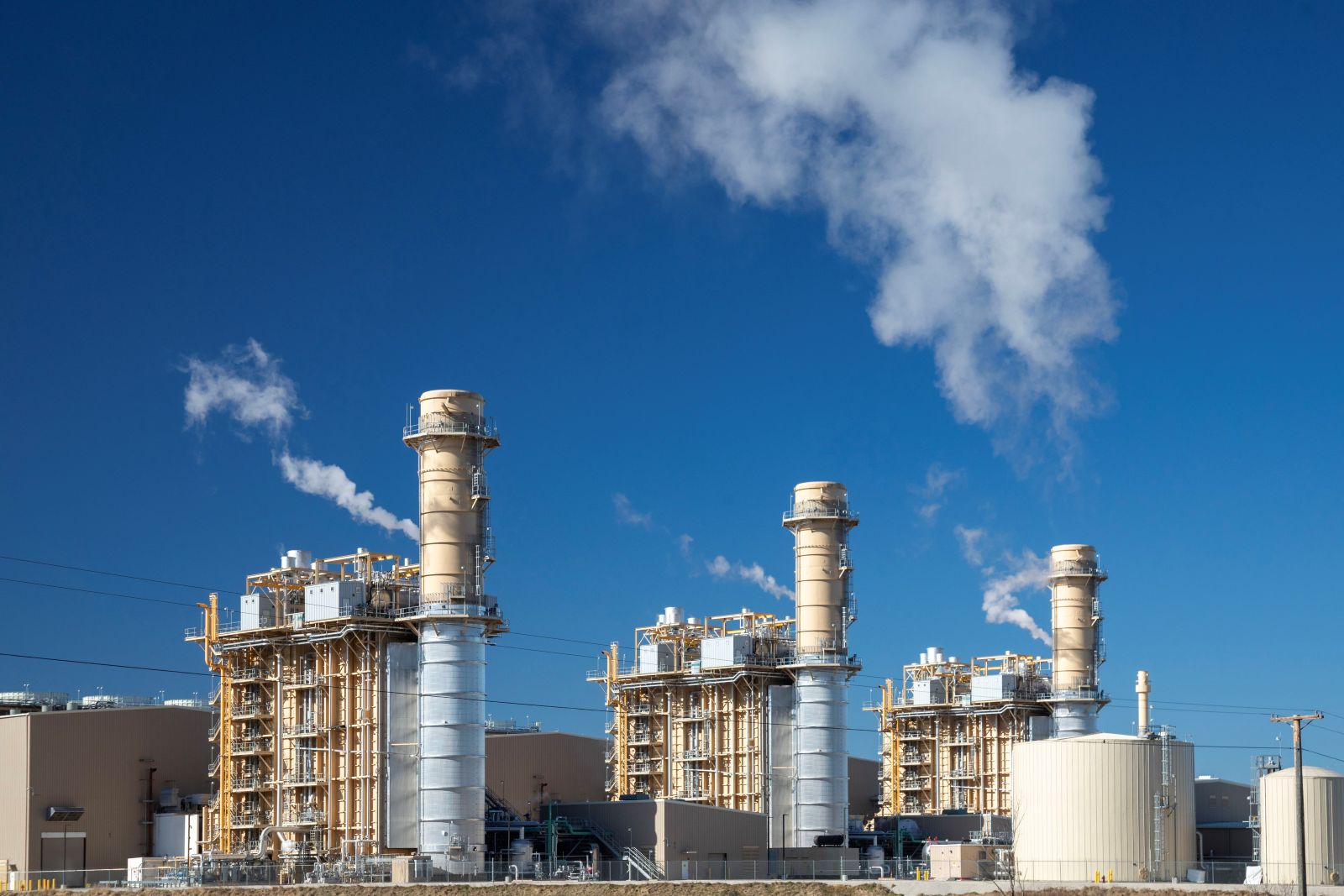
Over the past year, the fund has announced investments in six distinct companies, including a natural gas plant operator and a data center cooling technology company, alongside a firm focused on renewable energy development and several transmission and grid technology companies. Blackstone did not reply to a request for comment regarding its investment strategy.
By contrast, other major private equity players navigate these waters with different mandates. Brookfield, another giant in the private market space, governs its transition funds partly through an explicit institutional commitment to decarbonization and absolute emissions reductions. The firm has stated it can invest in natural gas in specific cases where it directly replaces dirtier fossil fuels, but Brookfield has also drawn sharp criticism from environmental watchdogs for describing natural gas expansion as a legitimate part of the energy transition.
Similar funds based in Europe, such as Copenhagen Infrastructure Partners’ Energy Transition Fund, take a much stricter approach, focusing heavily on clean energy sources like green hydrogen with little to no emphasis on natural gas.
"Energy transition is a flexible term," Cohn said. "And I’m unsurprised to see either the gas or electrical equipment and data center-related companies in some of these funds. That is perfectly consistent with how I know some investors think about the energy transition."
Other major financial institutions draw bright lines between different types of investing. BlackRock, a separate private markets giant unrelated to Blackstone, explicitly defines “transition” investing as something fundamentally distinct from “sustainable” investing. As its public corporate materials note, not all sustainable strategies are transition strategies, and not all transition strategies are sustainable. This partial overlap between terminologies, however, threatens to significantly complicate claims made by institutional investors about the true sustainability of their portfolios.
The ambiguity carries real-world stakes for public entities. At least three major government-managed institutional investors in Blackstone’s energy transition fund have explicit climate investing goals written into their institutional charters. The Oregon Treasury, the Minnesota State Board of Investment, and the San Francisco Employees’ Retirement System all maintain some form of formal climate-related goal or decarbonization plan for their public investments. According to data from analytics firm Private Equity International, these public entities have collectively committed $525 million to Blackstone’s latest energy transition fund.
None of these government-managed investors replied to requests for comment prior to publication, but the wide range of competing standards for climate- and energy-related investments has already created confusion and political friction. In Oregon, a state representative formally petitioned the state’s treasury this year to more clearly define what it officially reports as “climate-positive” investments—a category heavily featured in its public accountability reports.
Market analysts point out that investors may have a powerful financial incentive to include natural gas in their expansive definitions of the energy transition. Transition funds that include natural gas holdings tend to generate slightly higher financial returns than those that strictly exclude fossil fuels, according to Loughead. Furthermore, both Loughead and Cohn noted that the massive, highly lucrative rush to invest in the data center boom has thoroughly permeated funds that are nominally dedicated to the clean energy transition.
Outside of Wall Street boardrooms, the question of whether natural gas and data centers have a legitimate role to play in the energy transition remains fiercely debated. Proponents argue that natural gas has successfully cut carbon emissions from the power sector when deployed to replace aging coal-fired power plants, and that data centers have spurred much-needed private investment in electrical grid improvements and clean energy infrastructure.
Critics, however, counter that burning natural gas still produces significant greenhouse gas emissions—both when it is combusted for electricity and when it leaks from extraction and pipeline infrastructure into the atmosphere. They point out that the energy demands of data centers are actively spurring increased fossil fuel consumption, potentially slowing overall progress toward global power sector emissions targets. Furthermore, some regional electrical grids are already demonstrating that they can maintain reliability using cleaner alternatives to gas, such as utility-scale battery storage, which can store intermittent renewable energy to use when the sun isn’t shining and the wind isn’t blowing. Most established climate and environmental organizations argue emphatically that natural gas should never be viewed as a legitimate bridge fuel.
"Natural gas no longer functions as a credible bridge in the energy transition," wrote Shruti Shukla, a senior advocate on international energy at the Natural Resources Defense Council, in an article analyzing market trends. She added that continued reliance on the fuel risks slowing decarbonization, driving up system costs, and locking national economies into avoidable economic volatility.
Looking toward the long term, even some financial analysts suggest that natural gas may eventually lose its standing on Wall Street as a reliable investment vehicle. As persistent fuel price spikes continue to drive the global economy aggressively toward cheap renewables, fossil fuels may become progressively less attractive as long-term investment opportunities.
"There are other very prominent solutions like solar, wind, and batteries, which will mature and continue to see price declines, and so the view that you need gas is increasingly contested," Cohn said.