
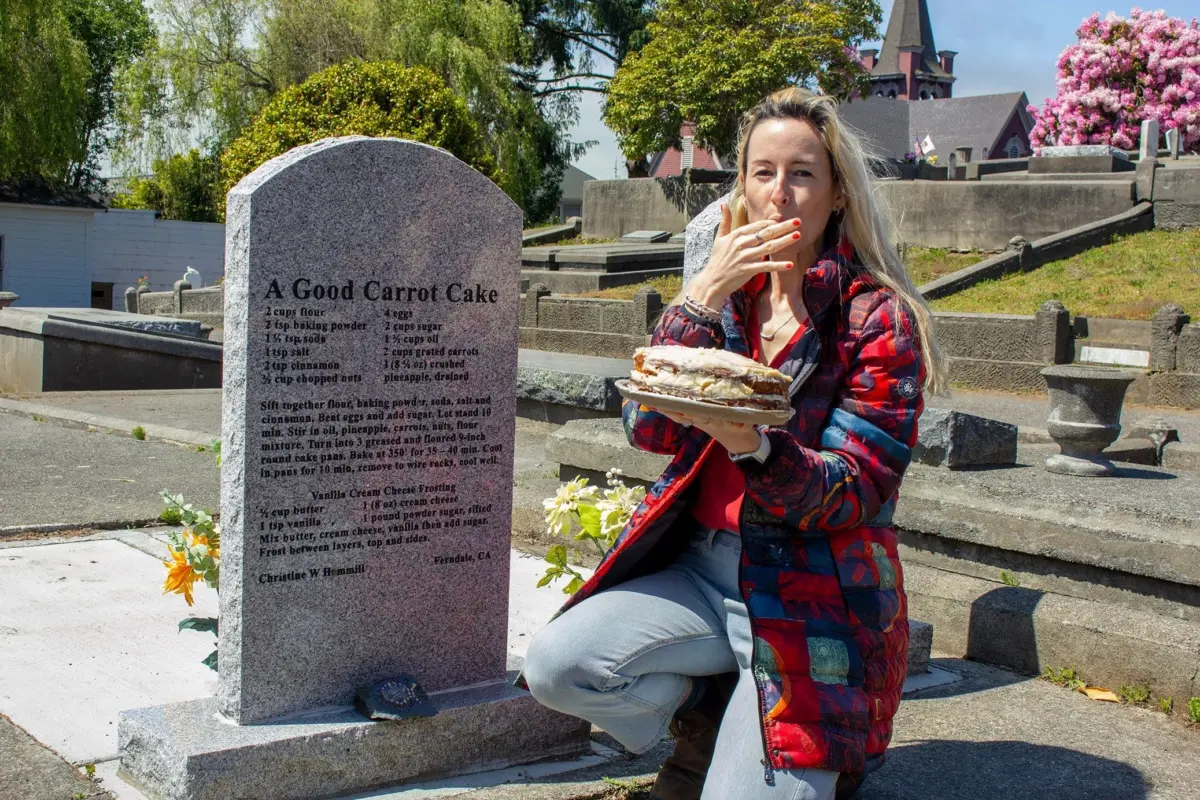
A recipe quite literally taken to the grave? That is the foundational premise behind content creator Rosie Grant’s ongoing archival project-turned-cookbook, To Die For. It is a concept that is precisely what it sounds like, blending anthropology, culinary history, and an unconventional look at mortality just in time for the autumn season. The book collects "gravestone recipes"—treasured dishes so synonymous with departed loved ones that their instructions or ingredients have been permanently engraved onto their final resting markers.
Through these unique memorials, the book celebrates the enduring legacies of ordinary folks who did extraordinary things in their communities. They were teachers, local coaches, the neighborhood dentist, or simply the friendly face everyone in town knew. What united them was a profound expression of love: cooking for their families, friends, and neighbors. What began as a light curiosity during a digital archiving internship eventually blossomed into a much larger, deeply emotional exploration of identity, geographic roots, and the tangible things we leave behind when our time on Earth concludes.
Over the past five and a half years, since launching her TikTok and Instagram accounts under the username ghostly.archive while working at the Congressional Cemetery in Washington, D.C., Grant’s travels have taken her across the United States. Her journeys have reached as far as Nome, Alaska, and stretched internationally to Nova Scotia, visiting final resting places and connecting with grieving or reminiscing families to learn the true stories behind the recipes.
To Die For features a wide array of baked goods that frequently yield dozens per batch, naturally evoking the comforting, communal foods traditionally associated with funerals and wakes. Cookies and cakes reflecting traditional Americana nostalgia—such as spritz cookies, rich brownies, and classic carrot cakes—appear alongside more surprising culinary inclusions. Among them are a World War II-era guava cobbler, glazed no-bake blueberry pie, and the lesser-known historical story behind the creation of the beloved Irish coffee. Other markers list ingredients for a Jack Daniel’s marinade, easy cheese and ranch dips, rustic breads, and savory comfort foods like meatloaf—labeled "Texas’ best" on one particular engraving—as well as fried ripe tomatoes, spaghetti chicken casserole, and kasha varnishkes.
For Grant, examining these markers offers an approachable, almost feel-good way to broach topics of mortality and death. Sitting around a dining room table to share a meal, or stepping into a kitchen brimming with sensory memories, tends to break down conversational barriers that usually make people uncomfortable. Though she was raised by parents who led ghost tours at local cemeteries in Alexandria, Virginia, Grant notes that her household was far more comfortable with the idea of ghostly hauntings than they were with discussing and planning for their own inevitable mortality.
Something like a recipe feels intensely life-giving, Grant expresses, noting that these conversations could just as easily encompass music, travel, or shared hobbies. Discussing these many life-filling moments might ultimately serve as an easier entry point to talk about tough, otherwise avoided topics.

The forty recipes included in the publication were all carefully vetted and approved by family members of the deceased. Grant tracked down many of these surviving relatives primarily through internet sleuthing, combing through digital obituaries and social media platforms to respectfully ask for permission to publish their loved ones’ culinary secrets.
Richard Dawson and his daughter, Nailah, set the emotional tone for the entire book when Grant met them two years after she first discovered Dawson’s mother. The headstone of Naomi Odessa Miller-Dawson in Brooklyn’s Green-Wood Cemetery is famously outfitted with a recipe book carved in stone, opened to her signature spritz cookies directly atop her epitaph. Her fierce yet quiet passion for baking has been lovingly exalted by her family ever since her passing in 2009, making Naomi’s marker one of the most widely recognized gravestone recipes in the country via viral online chats and community discussion threads.
Initially, Grant attempted to separate the recipes from their providers, choosing to focus solely on the food and the mechanics of the dishes themselves. However, that clinical approach quickly felt incomplete. The turning point came when she spoke directly with Richard Dawson about his mother.
The way Richard talked about waiting eagerly by the oven for the cookies to come out, recalling the specific aromas from when he was a little kid, and trying to sneak them right off the tray even while they were still burning hot, really changed the project, Grant recalls. That human connection ultimately made the project what it is today.
Grant has since cooked alongside seven of the families highlighted in To Die For, and she frequently shares her pilgrimages to the gravesites, bringing the freshly baked goods to the cemeteries to pay her respects. Through years of rigorous research and personal immersion, Grant has observed that burials and grave markers have grown significantly more personal over the course of modern history. The widespread availability of granite headstones, coupled with the mass industrialization of engraving tools, has made customized memorials far more accessible. Furthermore, granite offers vastly superior durability compared to the wood, slate, and marble used in earlier centuries, ensuring that these personal testaments endure for generations. It is proof that historic cemeteries remain vibrant grounds still vibrating with life and knowledge, provided visitors are open to experiencing them.
Her unique approach to keeping such individual histories alive has resonated deeply with the public, further cementing her relationship with the Death Positive Movement. This growing cultural shift, championed by hospice workers, death doulas, and other care professionals, advocates that open discussions around mortality and afterlife planning ultimately foster a healthier society while establishing an intimate sense of community among strangers across the globe.

While her digital presence has attracted its share of detractors—ranging from self-identified mediums claiming to speak for the deceased to one instance where a living participant was less than thrilled to have their culinary secrets shared—many individuals have found profound inspiration as they contemplate what their own gravestone recipe might be. In comment sections online, some followers express deep regret over not asking their own departed loved ones for the unwritten tips and nuanced techniques that standard recipe cards frequently omit.
Grant initially envisioned the project existing purely as a digital archive, perhaps hosted online as a downloadable PDF format. However, the families she connected with pushed for something tangible. They expressed that they liked the idea of a physical book, something precious. Even the visual style of the published volume was intentionally designed to evoke an heirloom you might inherit from a grandparent.
Perhaps the most underrated section of the book offers a thoughtful, practical list of questions designed to help families begin documenting their own culinary legacies before it is too late. It can feel genuinely morbid to approach a parent and ask for their recipe because of their mortality, Grant acknowledges with a lighthearted joke. However, preserving those traditions does not have to be heavy. It can look like taking casual pictures of a weathered recipe box and texting them to a family group chat, or saving digital files to a shared cloud drive. It can mean cooking alongside a family member, asking them to teach the technique, and sharing the experience firsthand. Passing down that knowledge carries immense power through shared experience.
Sentiments from both the families featured in the book and Grant’s broader audience echo how revisiting these recipes offers a powerful sensory catharsis alongside the processing of grief. What began as a quirky, food-focused adventure ultimately manifested into a deeper exploration of what it means to be remembered for the warmth and comfort we brought to others during our lives. It highlights turn-of-the-century attitudes toward heritage, family, and home life, serving as a modern rite of passage and a way to symbolically pass the torch to the next generation. As Grant frequently reminds her audience when discussing the preservation of these rituals, if we do not actively maintain them ourselves, nobody else will.