
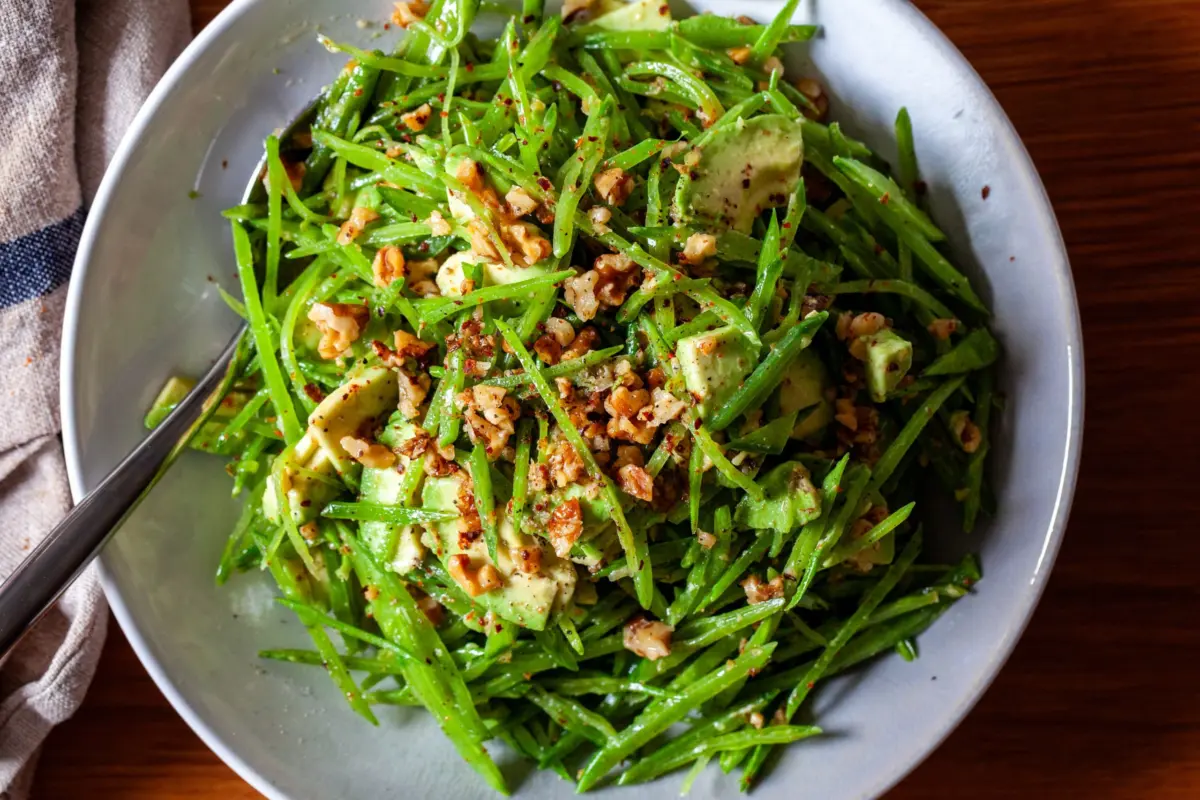
For home cooks and culinary enthusiasts alike, certain ingredients remain permanently pigeonholed by convention. Snow peas, bright and crisp, are almost universally destined for the sizzling confines of a weeknight stir-fry. Yet, culinary inspiration often arrives from unexpected places—sometimes from the memory of a single, striking dish enjoyed at a celebrated, albeit now-closed, establishment like New York’s late NoMad restaurant.
It was there that the concept of utilizing snow peas in a raw salad format first took root, challenging the assumption that these flat, edible-pod legumes require heat to shine. Building upon that foundational spark, cooks and recipe developers have continually sought ways to strip away complexity, celebrating seasonal produce with minimal intervention. This philosophy of stripping a dish down to its absolute essentials becomes particularly vital as the calendar turns toward punishing summer heat waves, offering a refreshing culinary retreat when complicated kitchen tasks feel entirely out of reach.
The evolution of this raw snow pea concept has seen various iterations, including a version featured in the cookbook Smitten Kitchen Keepers that paired the crunchy pods with sharp pecorino cheese and earthy walnuts. However, responding to shifting seasonal cravings and a desire for absolute simplicity, the recipe has undergone a significant transformation. The cheese has been completely retired, making room for a dairy-free profile anchored by the rich, buttery texture of ripe avocado.

This updated variation relies on a compelling interplay of textures rather than an elaborate list of ingredients. The dish is built upon three distinct elements: slaw-like strands of snow peas cut thinly into ribbons, crunchy toasted walnuts that provide a robust structural backbone, and soft pillows of ripe avocado that melt into the background. Tying these components together is a vibrant, punchy dressing crafted simply from fresh lemon juice, high-quality extra-virgin olive oil, and a dusting of red pepper flakes.
The resulting dish is engineered for total, effortless inhalation, making it an ideal companion for the exhausting final stretches of busy seasons, such as the hectic close of the academic calendar when routines are running on fumes and minds are wandering toward lazier, unhurried days.
Achieving the ideal texture and flavor profile in this minimalist salad requires careful attention to a few foundational techniques, beginning with the nuts. Walnuts, like many of their botanical counterparts, undergo a dramatic transformation when subjected to heat before entering a salad bowl. Toasting them properly elevates their natural oils and deepens their flavor profile. The standard method involves spreading walnut pieces across a small sheet pan and placing them into a preheated 350-degree Fahrenheit oven for a duration of six to ten minutes, watching closely until they darken slightly and release a rich, nutty fragrance. Once removed from the heat, these toasted pieces must be allowed to cool completely while the rest of the ingredients are prepared.

The preparation of the snow peas themselves demands a specific approach to achieve that signature slaw-like consistency. Before any slicing takes place, the raw snow peas benefit immensely from a cold-water bath. Submerging them in a large bowl of ice water for ten to twenty minutes—though a longer soak does no harm—crisps the pods to their absolute maximum potential. Following this crisping stage, the peas must be thoroughly drained and patted completely dry with a clean towel to ensure the dressing adheres properly without becoming diluted.
Gathering the dried pods into small, manageable stacks allows the cook to slice them lengthwise into fine, delicate ribbons efficiently. This technique transforms the traditionally crisp-tender pods into tender-yet-crunchy strands that mimic the mouthfeel of a fine slaw.
The assembly of the salad brings the textural elements together in a specific sequence designed to maximize flavor integration. The toasted walnuts, once cooled, are chopped into rubble-sized pieces and introduced to a large mixing bowl. To this, the extra-virgin olive oil, fresh lemon juice, kosher salt ranging from one-half to a full teaspoon depending on personal preference, a generous quantity of freshly cracked black pepper, and pepper flakes to taste are added. Whisking this mixture thoroughly creates a cohesive, vibrant dressing that serves as the flavor engine for the entire dish.

Once the dressing is whisked, the prepared snow pea ribbons are folded into the bowl, tossed continuously until every strand is thoroughly coated in the lemon, oil, and spice mixture. The final component to join the bowl is the ripe avocado, cut into soft pillows. Because avocado is delicate and prone to breaking down under aggressive handling, it is added last and gently folded into the mixture just until combined. Culinary experts advise that this salad is best consumed immediately upon assembly. If prepared too far in advance, the natural acidity of the lemon juice in the dressing begins to discolor the bright green snow peas, dulling both their visual appeal and their crisp vitality. For those who must plan ahead, the ideal strategy is to keep the walnut-lemon dressing separate and toss the components together only moments before serving.