
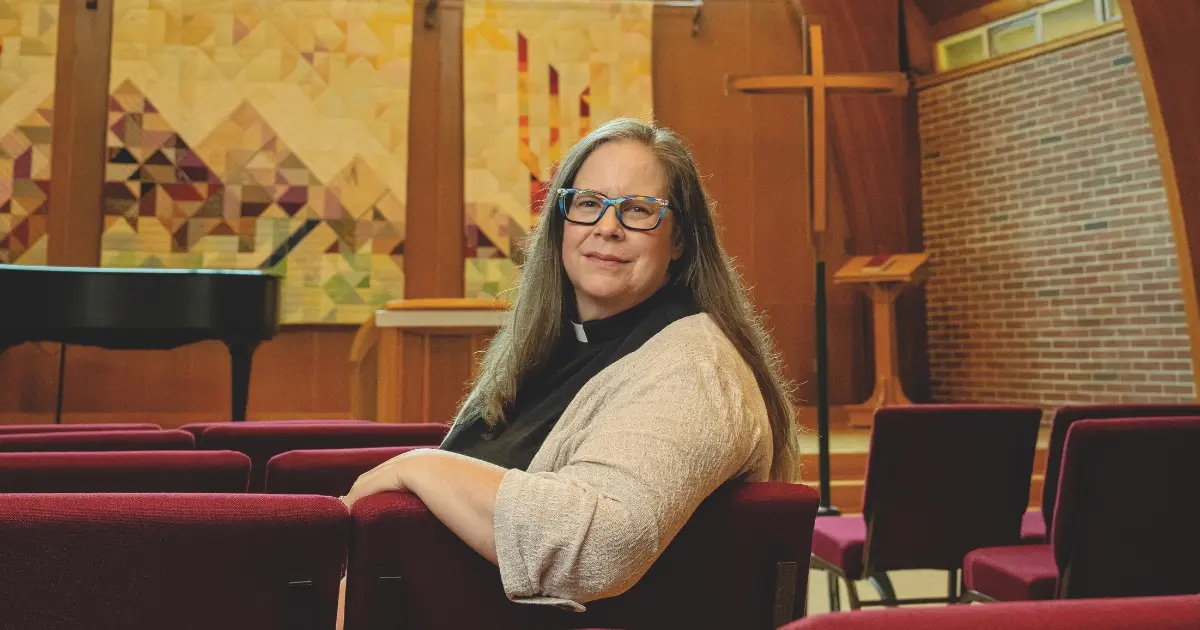
As traditional religious institutions across North America grapple with shifting demographics, declining membership numbers, and mounting administrative pressures, faith leaders are being forced to rethink what it means to gather and worship in the twenty-first century. According to Rev. Heather McCance, president of the Atlantic School of Theology, the contemporary struggles facing organized religion may actually present an unexpected opportunity to return to the foundational practices of early Christianity.
Reflecting on the historical evolution of religious gatherings, McCance points out that the modern concept of a centralized church with full-time clergy and extensive physical infrastructure would be entirely foreign to the earliest followers of the faith.
"The way we have church today, if you look at Jesus’ time, they didn’t really have any of these things," McCance notes, drawing a direct parallel to the early apostolic era.
During the formative years of the movement, figures like the Apostle Paul did not rely on massive institutional hierarchies or specialized, multi-tiered staffing models. Instead, Paul simply traveled from region to region, training local individuals to take on the responsibilities needed to lead, sustain, and care for their own communities.
As contemporary congregations face shrinking membership rosters and limited financial resources, McCance observes a growing, organic reversion to that original apostolic way of being. Rather than viewing decline purely as a crisis of survival, she sees modern congregations becoming increasingly decentralized, collaborative, and ecumenical in their approach to ministry.
This structural shift alters how congregations function day-to-day. In an era where legacy institutions are shedding excess weight, the individuals who remain committed to church life are deeply dedicated to their spiritual homes.
"The people who are still involved in churches really do want to be there," McCance observes, highlighting this profound dedication as a potent institutional asset. "And that can be a huge strength."
Even with this renewed sense of commitment, local congregations frequently struggle to fill leadership voids left by retiring clergy, volunteer fatigue, and smaller overall pools of active participants. To address these systemic hurdles without burning out remaining congregants, church leadership must evolve to embrace shared responsibilities, pragmatic planning, and modern collaborative frameworks.
Addressing the leadership gap requires a fundamental shift in perspective. Congregations are encouraged to reframe their entire mindset, viewing themselves through an apostolic lens that prioritizes responsiveness to modern community needs over rigid adherence to traditional operating procedures. By moving away from legacy expectations of what a church "should" look like, members can begin to evaluate their actual capacities and gifts.
Central to this transition is the embrace of shared leadership models. Rather than placing the entirety of pastoral, administrative, and programmatic responsibilities onto a single overworked minister or a tiny handful of exhausted volunteers, healthy communities are learning to identify and leverage the unique gifts of every individual. Ensuring that nobody carries the heavy burdens of the church entirely alone is vital for long-term sustainability.
"Share in the tasks of ministry, so everybody is cared for," McCance explains, emphasizing communal care over isolated burden-bearing.
However, distributing responsibilities effectively requires intentional preparation. Historically, institutions have excelled at assigning tasks to willing volunteers while failing to provide adequate preparation or skill-building. Bridging this gap means actively equipping ministry teams to succeed by sourcing relevant educational resources, leadership development programs, and practical training workshops tailored to volunteer-led initiatives.
Alongside practical training, nurturing ongoing spiritual study remains a cornerstone of resilient communities. Fostering continuous spiritual development across the entire congregation deepens interpersonal bonds and strengthens the collective fabric of the group. These shared educational and devotional practices offer vital renewal, keeping the community grounded and unified amidst external pressures.
Being pragmatic is another critical survival strategy for modern faith communities. Adapting to changing circumstances requires an openness to new ideas and unfamiliar approaches, even when those changes cause initial discomfort. Embracing institutional evolution with an open mind allows congregations to focus on present-day realities rather than mourning lost eras.
"God is excited for what we are able to do now," McCance notes, framing adaptation not as a compromise of faith, but as a faithful response to current conditions.
Targeting organizational energies effectively allows congregations to work within their actual means rather than exhausting themselves trying to maintain unsustainable programs. Recognizing that scaling back is not a failure is essential for volunteer health. Successful, resilient churches routinely evaluate their capacity, knowing precisely when to streamline offerings and scale down programs to match the actual time and energy of their active members.
Furthermore, building local partnerships can dramatically expand a community’s capacity without increasing financial strain. Collaborative efforts often begin with simple, honest conversations between neighboring groups about available assets.
"Start with, ‘What do we have, and what do you have?’" McCance suggests. "That can mean sharing buildings, resources or leadership."
To prevent volunteer burnout and institutional fragility, congregations must also establish robust plans for turnover and succession. When individual leaders need a necessary respite, having cross-trained peers ready to step in ensures continuity of care and operations.
"God doesn’t call us to burn ourselves out," McCance reminds communities.
Without deliberate succession planning, even the most vibrant grassroots initiatives risk short-term lifespans, often lasting only five or ten years before collapsing under the weight of their own unstructured momentum. Continuous cultivation of new leaders guarantees that the mission outlasts any single individual.
Finally, modern congregations are reminded that they do not need to operate in isolation. A wide array of institutional support remains accessible, whether sourced through regional administrative councils, broader ecumenical organizations, or wider civic communities. By leaning on external networks, small faith groups can find encouragement, strategic advice, and collaborative opportunities that lighten their load.
Despite the profound demographic and structural challenges confronting modern religious institutions, McCance remains fundamentally hopeful about the future of grassroots faith communities. Even as traditional models continue to contract, the underlying spirit of service endures.
"Small churches will always find a way to be faithful to who God is calling them to be," McCance concludes.