
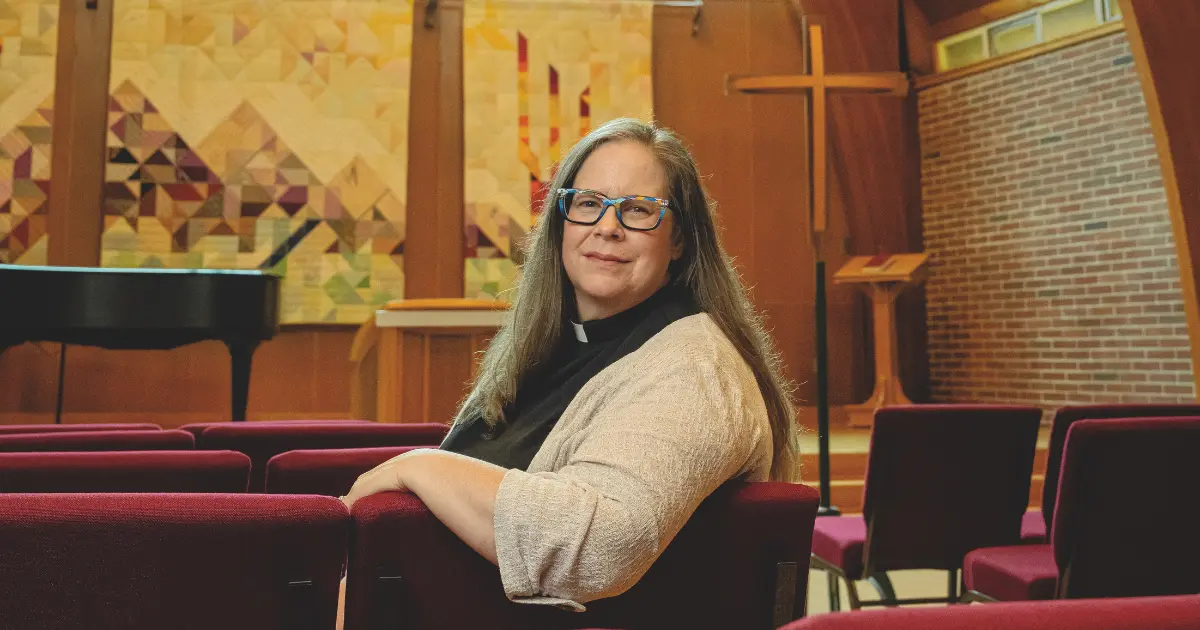
As traditional church membership numbers face ongoing declines across North America, religious institutions are increasingly forced to re-examine how they operate, gather, and sustain themselves. According to the Rev. Heather McCance, president of the Atlantic School of Theology, this period of contraction is not necessarily a signal of the end, but rather an opportunity for a profound structural and spiritual transformation.
Reflecting on the historical origins of the faith, McCance points out that the contemporary model of "doing church" bears little resemblance to the realities of Jesus’ time. In the early days of Christianity, the Apostle Paul did not establish complex institutional hierarchies or property-heavy corporations. Instead, he simply trained local individuals to meet the immediate needs of their communities, fostering organic, self-sustaining groups.
Today, as congregations grapple with shrinking resources, aging memberships, and severe leadership shortages, McCance sees modern churches naturally reverting to that foundational, apostolic way of being. Rather than relying solely on heavily resourced, centralized institutions, contemporary faith communities are becoming more decentralized and ecumenical. While the challenges are undeniable, McCance emphasizes that this shift carries a hidden advantage: the people who remain actively involved in church life today do so out of a deep, personal commitment. The individuals holding these communities together truly want to be there, creating a resilient core of dedicated volunteers and believers.
Navigating this transition, however, requires a deliberate change in perspective and practice. To address the persistent leadership gap facing small and mid-sized congregations, McCance has outlined ten strategic approaches designed to help communities reimagine ministry without burning out their members.
The first step in this institutional evolution requires a fundamental reframing of the mindset. Instead of viewing current struggles through the lens of decline, congregations are encouraged to embrace an apostolic self-image. By asking how the church can actively respond to the urgent needs of the present day rather than clinging to traditional, resource-heavy methods of the past, communities can unlock new pathways for survival and relevance.
A critical component of this mindset shift involves leaning into shared leadership. Historically, many churches have relied heavily on a single ordained minister or a tiny group of overworked volunteers to carry the entire operational and spiritual weight of the community. McCance stresses the importance of identifying each person’s unique gifts and distributing responsibilities so that no single individual bears the burden alone. By sharing in the tasks of ministry, communities ensure that everyone is cared for and supported.
However, shared leadership cannot succeed without adequate preparation. McCance notes a common pitfall among religious organizations: churches are historically exceptional at asking people to step up and take on roles, but they frequently fail to provide the necessary training for those tasks. Equipping teams to succeed means actively seeking out relevant resources, educational tools, and leadership development programs to build confidence and competence among congregants.
Alongside administrative and operational training, ongoing spiritual study remains vital for community cohesion. Fostering shared spiritual development across the entire congregation acts as a powerful bonding agent. When members engage in spiritual renewal together, it strengthens the collective fabric of the community, anchoring their operational changes in a shared faith.
Pragmatism must also guide decision-making during times of transition. Adapting to changing circumstances is no longer optional for survival; it is a necessity. This means embracing new ideas and approaches, even when they feel uncomfortable or depart sharply from established habits. McCance offers an encouraging perspective on this friction, noting that congregations should trust that faith remains active and relevant in new forms.
Part of being pragmatic involves targeting energies realistically. McCance stresses that acknowledging limitations and scaling back is not a sign of failure. Successful contemporary churches recognize when to reduce the scope of their offerings and programs to match the actual capacity of their members, preventing exhaustion and burnout.
When internal resources fall short, looking outward for local partnerships can provide a vital lifeline. McCance suggests that communities begin the conversation with a simple, collaborative question: "What do we have, and what do you have?" Such partnerships can manifest as shared physical buildings, pooled financial resources, or cooperative leadership structures that span multiple congregations or community groups.
Sustainability also requires proactive planning for human limitations. McCance notes that faith does not call individuals to run themselves into the ground. Establishing clear plans for turnover ensures that when one person inevitably needs a break or steps away due to fatigue, another person is prepared and positioned to step in seamlessly.
On a broader scale, long-term survival depends heavily on deliberate succession planning. Without continuous efforts to cultivate new leaders, organizations often experience a brief, localized burst of energy that lasts for only five or ten years before collapsing entirely. Congregations must intentionally invest in raising up the next generation of leaders to ensure enduring viability.
Finally, McCance emphasizes that communities do not have to navigate these turbulent waters alone. A wealth of support remains available for congregations willing to reach out, whether through regional administrative councils, ecumenical networks, or the broader secular community.
Despite the profound pressures facing modern religious institutions, McCance remains fundamentally hopeful about the future. Small churches, she asserts, will always find a way to remain faithful to the distinct calling placed upon them, even as the structures surrounding them continue to shift and evolve.