
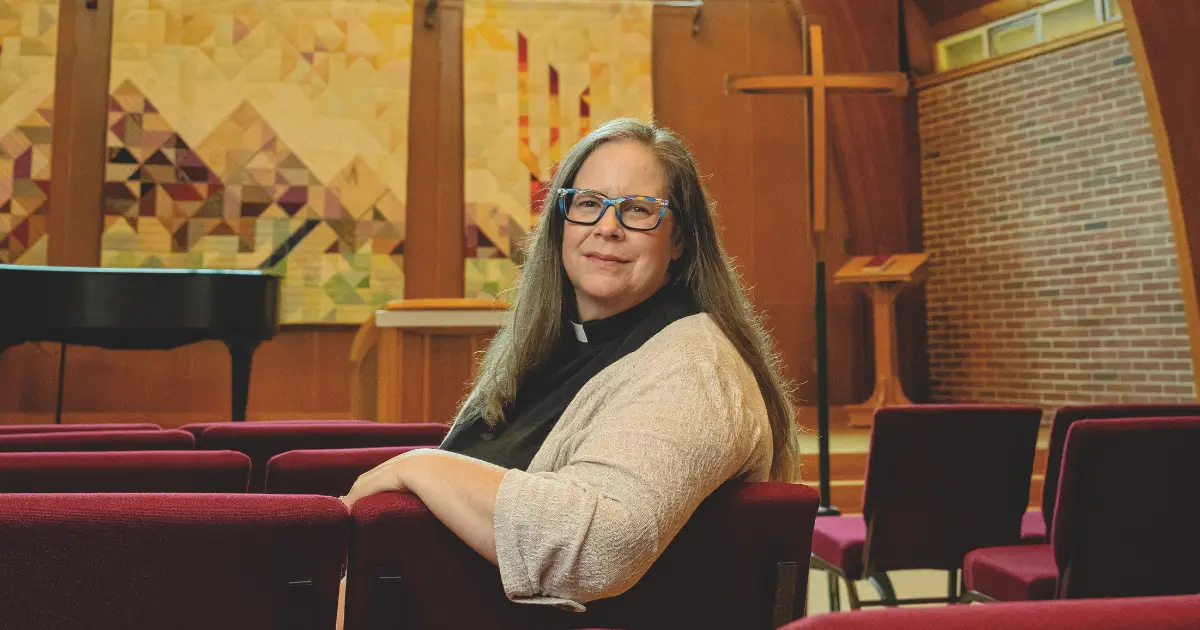
MONTREAL — As traditional attendance numbers shift and institutional congregations face mounting operational pressures, modern faith communities are being urged to look backward in order to move forward. According to Rev. Heather McCance, president of the Atlantic School of Theology, the contemporary model of a centralized, highly structured church bears little resemblance to the earliest days of Christianity.
Reflecting on the historical precedent set during the time of Jesus and the early apostles, McCance notes that these foundational communities operated without the complex administrative apparatus, vast real estate portfolios, and rigid hierarchies that characterize many modern denominations. Instead, the Apostle Paul relied on empowering local individuals, training ordinary community members to step up and provide the leadership required to sustain their congregations.
Today, as many modern churches navigate declining memberships, financial constraints, and an escalating leadership gap, McCance observes a quiet revolution. Communities are organically reverting to that original apostolic way of being. They are becoming more decentralized, ecumenical, and deeply collaborative.
Far from viewing this era of contraction as a sign of institutional failure, McCance highlights a powerful hidden advantage embedded within today’s smaller congregations. "The people who are still involved in churches really do want to be there," she observes, pointing out that this high level of genuine personal investment serves as a formidable cornerstone for future resilience and community strength.
Addressing the practical realities of this transition, McCance has outlined ten strategic principles designed to help congregations bridge the persistent leadership gap while honoring their core spiritual missions.
The first principle centers on a fundamental shift in perspective. Congregations are encouraged to reframe their collective mindset by viewing themselves through an apostolic lens. Rather than clinging to traditional, resource-heavy methods of operation, modern churches must continually ask how they can directly respond to the immediate, pressing needs of today’s society.
Building upon this modernized outlook, the second principle emphasizes the critical importance of shared leadership. In an era where burnout is common, McCance stresses that no single individual should ever shoulder the immense responsibilities of a church alone. By actively identifying and celebrating each person’s unique spiritual gifts, communities can distribute the workload effectively. "Share in the tasks of ministry, so everybody is cared for," she notes, underlining the necessity of mutual support within the flock.
However, distributing tasks cannot succeed without proper preparation, which forms the core of the third principle. McCance points out a common pitfall among religious organizations: "Churches are really good at asking people to do things but not giving them the training to do it." To counteract this, she advises congregations to actively source relevant educational materials, mentorship opportunities, and leadership development programs that empower volunteers to step into roles with confidence and competence.
To maintain spiritual vitality amidst organizational restructuring, the fourth principle advocates for the creation of ongoing spiritual study programs. Engaging the entire congregation in collective spiritual development does more than simply impart knowledge; it deeply bonds and strengthens the community. According to McCance, this shared educational journey fosters resilience "because they’re renewing themselves together."
Practicality and adaptability represent the fifth pillar of McCance’s strategic approach. Recognizing that modern societal shifts demand organizational flexibility, she urges church leaders to embrace innovative ideas and unfamiliar approaches, even when doing so causes temporary discomfort. Navigating these changes with an open mind allows communities to thrive, rooted in the belief that "God is excited for what we are able to do now."
Closely tied to pragmatism is the sixth principle: targeting organizational energies through realistic self-assessment. McCance explicitly reassures congregations that "being realistic is not failing." Embracing a realistic scope means understanding that it is entirely acceptable to do less. Successful contemporary churches recognize their current limitations and know precisely when to scale back programs and offerings to match the actual capacity of their members, thereby preventing systemic exhaustion.
When internal capacities are stretched thin, the seventh principle encourages faith communities to look outward and establish meaningful local partnerships. Grounded in a spirit of mutual cooperation, McCance suggests starting with a simple, foundational question: "What do we have, and what do you have?" By pooling assets, communities can successfully share physical buildings, administrative resources, or pastoral leadership across organizational lines.
To sustain these collaborative efforts over the long term, the eighth principle emphasizes the creation of robust plans for daily and seasonal turnover. Burnout remains one of the greatest threats to volunteer-driven organizations. By establishing transparent systems where one person can seamlessly step in when another requires a necessary break, congregations honor the principle that "God doesn’t call us to burn ourselves out."
Looking further into the future, the ninth principle highlights the vital necessity of succession planning. Without deliberate efforts to cultivate emerging leaders, organizational momentum inevitably stalls. McCance warns that a complete lack of succession planning typically means an initiative "lasts for five or 10 years and then it falls apart," underscoring the necessity of continuously mentoring the next generation of community stewards.
Finally, the tenth principle reminds leaders that they do not need to navigate these complex transitions in isolation. Comprehensive support systems remain readily accessible across the broader religious landscape, whether sourced from regional church councils, ecumenical organizations, or wider civic communities.
Despite the profound systemic challenges facing modern religious institutions, McCance maintains an enduring sense of hope for the future of faith-based communities. Small congregations, she maintains, will continually adapt and discover creative avenues to remain faithful to their spiritual callings.
As contemporary churches continue to grapple with shifting demographics and institutional evolution, the wisdom offered by leaders like McCance points toward a future defined not by grand architectural scale or centralized authority, but by resilience, shared purpose, and a return to the foundational roots of apostolic community.