

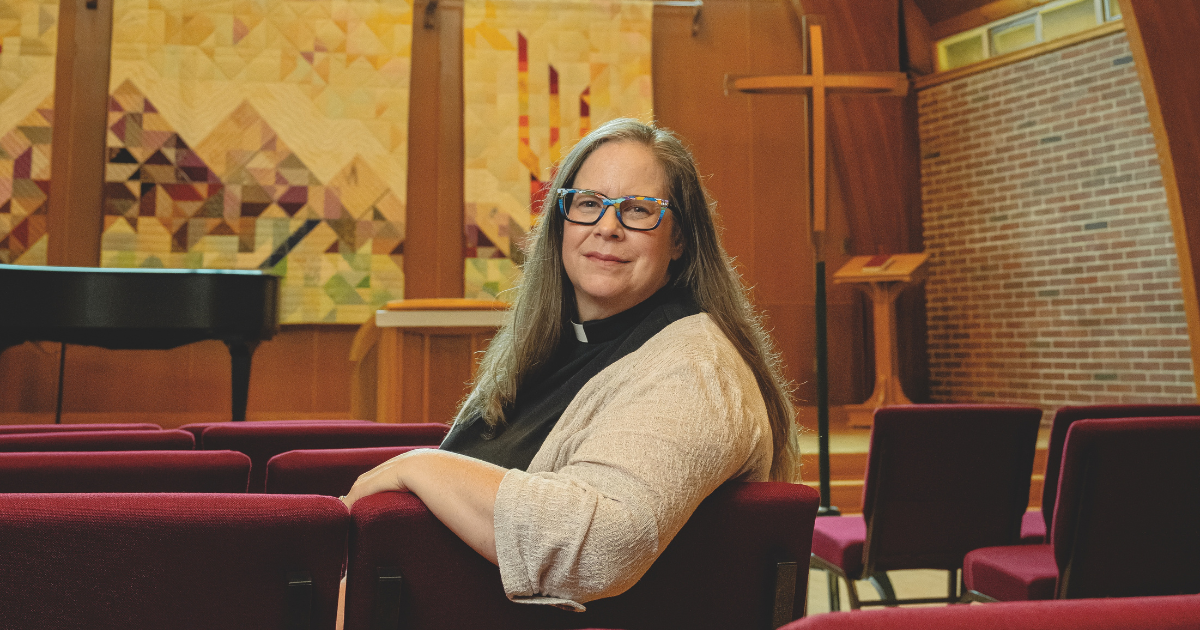
As religious institutions navigate an era of declining membership and shifting cultural landscapes, faith communities are increasingly looking backward to find a path forward. According to Rev. Heather McCance, president of the Atlantic School of Theology, the contemporary struggle with leadership shortages and institutional fatigue is prompting a necessary evolution within modern congregations—one that mirrors the earliest days of Christianity.
Reflecting on the structural evolution of houses of worship, McCance notes that the way contemporary society conceptualizes church operations bears little resemblance to the earliest faith communities. During the time of Jesus and the early apostles, formal institutional frameworks, massive physical infrastructure, and specialized corporate hierarchies simply did not exist. Instead, figures like the Apostle Paul focused on empowering local individuals, training community members on the ground to handle the day-to-day responsibilities required to sustain and lead their local assemblies.
Today, as traditional church rolls shrink and institutional resources become stretched thin, McCance observes that congregations are organically reverting to that foundational, apostolic way of being. Rather than relying solely on heavily centralized administrative models or sustained professional clergy, modern churches are becoming increasingly decentralized and ecumenical. This transformation, while born out of necessity, is revealing a profound resilience among those who remain actively engaged. The individuals who continue to invest their time, energy, and resources in church life truly want to be there, a dynamic that McCance identifies as a formidable operational strength for the future of modern ministry.
This shift, however, requires a deliberate reimagining of how congregations function day-to-day, particularly when addressing the persistent leadership gaps that trouble many parishes and regional ministries. To bridge these gaps without exhausting the faithful, McCance has outlined a comprehensive framework for congregational renewal, emphasizing that survival and vitality in the modern era depend heavily on flexibility, shared responsibility, and realistic planning.
At the core of this transition is the need for congregations to reframe their collective mindset. Instead of clinging to traditional methods of operation that may no longer be sustainable, churches are encouraged to view themselves through an apostolic lens. This means asking fundamental questions about how the community can directly respond to the pressing spiritual and social needs of today, rather than simply preserving historical routines for their own sake.
Central to this modern apostolic model is the embrace of shared leadership. In an era when burnout among volunteers and clergy is a rising concern, McCance emphasizes the importance of identifying individual gifts within the congregation to ensure that no single person is left carrying the burdens of the entire church alone. By distributing the tasks of ministry among multiple members, communities can foster an environment where everyone feels cared for and valued, preventing the exhaustion that often plagues under-resourced parishes.
However, distributing labor effectively requires intentional preparation. McCance points out a common pitfall in institutional church culture, noting that organizations are often exceptionally good at asking individuals to step up and take on roles, but frequently fail to provide the necessary training to succeed in those capacities. Equipping teams through accessible leadership programs and relevant resource sharing is vital to ensuring that volunteers feel confident and competent in their ministries.
Alongside practical training, congregations are being urged to prioritize ongoing spiritual study. Fostering spiritual development across the entire congregation acts as a powerful bonding agent, strengthening the community from within. When members engage in spiritual renewal together, the collective resilience of the group deepens, creating a stable foundation for navigating external challenges.
Adapting to changing circumstances also requires a high degree of pragmatism. Embracing new ideas and unconventional approaches can often feel uncomfortable for long-standing institutions, but McCance argues that such flexibility is essential for survival. Framing the evolution of the church in a positive light, she suggests that faith communities should trust in new possibilities rather than mourning the loss of the past.
Being pragmatic also means exercising realism regarding institutional capacity. McCance stresses that recognizing limitations and scaling back offerings is not a sign of failure. Successful modern churches understand when to streamline their programs and reduce workloads to match the actual number of active members available to support them, ensuring that ambition does not outpace energy.
Furthermore, congregations are increasingly finding strength in local partnerships. By asking fundamental questions about resource sharing—such as evaluating what assets one community holds versus another—churches can pool their strengths. This collaborative approach can manifest as shared physical spaces, joint community outreach initiatives, or collaborative leadership arrangements that benefit all participating groups.
To maintain long-term stability, McCance highlights the necessity of proactive planning for both everyday turnover and generational succession. Because ministry can be demanding, organizations must build structures that allow individuals to step back and take a break without destabilizing the community. Burnout prevention is framed not as a luxury, but as a faithful stewardship of human resources, grounded in the understanding that demanding endless self-sacrifice is unsustainable.
Similarly, a lack of intentional succession planning remains a primary vulnerability for grassroots initiatives. Without a continuous effort to cultivate new leaders from within the congregation, even the most vibrant programs risk collapsing after a few years of operation.
Finally, McCance emphasizes that modern churches do not need to operate in isolation. A wealth of support remains available for struggling communities, whether accessed through regional church councils, broader ecumenical networks, or wider civic partnerships. By reaching beyond their own walls, congregations can find the encouragement and practical assistance required to sustain their missions.
Despite the hurdles facing contemporary religious life, McCance remains fundamentally hopeful about the trajectory of small-scale faith communities. As churches continue to adapt to the realities of the twenty-first century, she maintains that small congregations will consistently discover meaningful ways to remain faithful to their spiritual calling, even as the structures surrounding them transform.