
OSLO, Norway — In a powerful declaration of support for the global legal order at a time when its foundational institutions face unprecedented strain, South African jurist and former United Nations human rights chief Navi Pillay has been awarded the Nobel Peace Prize. The Norwegian Nobel Committee’s decision, announced on Friday during the 125th anniversary year of the prize, positions Pillay as a symbol of resilience against the erosion of the international rules-based system.
Pillay, 85, has spent decades at the forefront of international human rights law. Her extensive career spans some of the modern era’s most defining legal struggles, from defending political prisoners—including Nelson Mandela—under South Africa’s brutal apartheid regime, to leading a high-profile United Nations panel that recently concluded Israel committed genocide in Gaza.
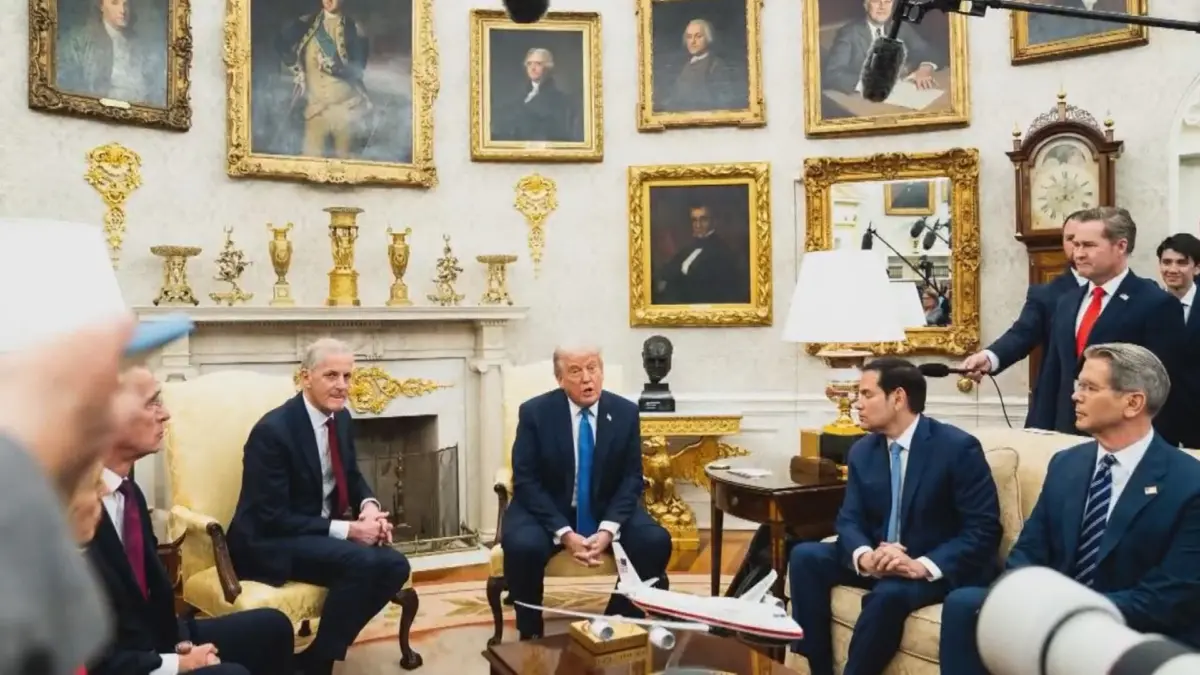
Her selection by the Nobel Committee is a highly charged political milestone. It is widely interpreted as a direct, high-profile rebuke to major world figures, most notably U.S. President Donald Trump and Israeli Prime Minister Benjamin Netanyahu. Both leaders have aggressively challenged the findings of the U.N. commission she led on Gaza and have been highly critical of the International Court of Justice (ICJ) and the International Criminal Court (ICC)—two pivotal institutions where Pillay has served.
Jørgen Watne Frydnes, the chair of the Norwegian Nobel Committee, emphasized that Pillay’s lifelong commitment to justice serves as a beacon. Her work "is a source of hope and inspiration to all those who seek to bring about a more peaceful world," Frydnes said during the announcement in Oslo. He clarified that the committee aimed to fortify the foundations of international law during an era defined by devastating conflicts and systemic erosion of legal norms. The prize, Frydnes added, carries a clear message to those who actively seek to undermine "the international rules-based system and the institutions."

Pillay received the life-changing news while attending a legal forum in Nuremberg, Germany. By a stroke of historical symmetry, she was sitting inside the historic Courtroom 600 of the Nuremberg Palace of Justice—the very chamber where the trials of Nazi war criminals were held, laying the modern foundations for international criminal law.
"Perhaps it was meant to be that I was in this historic Courtroom 600," Pillay remarked, reflecting on the moment she learned of her win. She used the occasion to issue a stark warning about the current state of global justice, asserting that contemporary efforts to weaken international courts "endanger the progress painstakingly made since Nuremberg, and they risk returning us to a world in which power, rather than law, determines whose suffering matters." She reminded the international community that world leaders bear a strict "legal obligation to protect human rights and refrain from war."
An Uncompromising Investigation into the Gaza Conflict
Pillay recently chaired the Independent International Commission of Inquiry on the Occupied Palestinian Territory and Israel, a body established by the UN-backed Human Rights Council. A year ago, the commission published a landmark and highly controversial report concluding that Israel was responsible for committing genocide in the Gaza Strip, operating with a "specific intent to destroy Palestinians in Gaza."
The commission’s findings did not stop at state responsibility; they directly targeted individual leaders. The panel determined that the Israeli president, prime minister, and former defense minister had actively "incited the commission of genocide." Israel has consistently refused to cooperate with the commission since its inception in 2021, rejecting its mandate and its findings.

Upon learning of her Nobel win on Friday, Gaza remained at the forefront of Pillay’s remarks. Speaking to an applauding audience in Germany, she reiterated her panel’s conclusions without hesitation: "What’s happening there is genocide."
Despite fierce criticism, Pillay has steadfastly defended the integrity of her work, pushing back against accusations of bias or antisemitism. Under her stewardship, the commission also examined the actions of Palestinian armed groups, issuing comprehensive reports that accused Hamas of committing war crimes and grave violations of international humanitarian law during the October 7, 2023, attacks on Israel.
Pillay has previously noted her balanced approach, pointing out her history of working alongside Jewish lawyers in South Africa to dismantle apartheid, as well as her official visits to Israel during her tenure as the UN High Commissioner for Human Rights from 2008 to 2014.
Deep-Seated Roots in the Anti-Apartheid Struggle
Growing up under South Africa’s system of racial segregation deeply shaped Pillay’s view of the law as an instrument of liberation. As a young attorney, she took on the apartheid state, representing vulnerable populations and political dissidents. Crucially, her legal defense work established essential rights for political prisoners detained on the notorious Robben Island, a group that famously included Nelson Mandela.

Following the collapse of apartheid and South Africa’s transition to a multiracial democracy, President Mandela appointed Pillay as the country’s first non-white female High Court judge. This personal and historical connection to the anti-apartheid struggle continues to influence her legal outlook.
South South Africa’s democratic governments, starting with Mandela’s presidency, have frequently drawn parallels between the segregationist policies of apartheid and the treatment of Palestinians under Israeli occupation. Mandela famously remarked shortly after the fall of apartheid that "our freedom is incomplete without the freedom of the Palestinians."
Geopolitical Tremors and Polarized Reactions
The announcement of Pillay’s Nobel Peace Prize comes at an extraordinarily tense geopolitical moment. It was delivered just two days after the anniversary of the October 7, 2023, Hamas-led attacks, which resulted in the deaths of approximately 1,200 people in Israel and ignited the ongoing war. In the year since, the conflict has taken an immense toll, with over 74,000 Palestinians killed and the Gaza Strip left in ruins. The announcement also preceded the anniversary of a fragile, short-lived ceasefire, even as Israeli military operations continue across the region.
The reaction to Pillay’s Nobel win highlighted the deep global divisions over the conflict. Bassem Naim, a senior Hamas official, welcomed the committee’s decision, calling it a "message of hope" for Palestinians, particularly those enduring the war in Gaza. He stated that the award proves "humanity still resists the forces of evil targeting international justice."

In sharp contrast, the Israeli government reacted with fierce condemnation. The Israeli Foreign Ministry issued an unusually harsh statement, declaring: "If there were an award for lies, hatred, and blood libels, Navi Pillay wouldn’t just be a contender. She’d be a frontrunner."
In a subsequent post on the social media platform X, the ministry dismissed the Nobel Committee’s decision as a "grotesque weaponization of an award to legitimize anti-Israel hatred and prejudice," rather than a genuine recognition of justice. This diplomatic clash unfolds less than three weeks before Israel’s national election, a contest in which Prime Minister Benjamin Netanyahu is fighting a high-stakes battle to maintain his hold on power.
A Direct Challenge to Trump and the ICC Sanctions
Beyond the Middle East, Pillay’s Nobel win carries profound implications for U.S. foreign policy and the future of international judicial institutions. Specifically, the award refocuses global attention on the ongoing hostilities between U.S. President Donald Trump and the International Criminal Court (ICC), where Pillay served as a judge from 2003 to 2008.
The Trump administration has taken an aggressively adversarial stance against the ICC, implementing sanctions against 13 of the court’s staff members. These sanctions have targeted high-profile prosecutors and nine sitting judges, including the court’s Japanese President, Tomoko Akane.

In a fiery address to the United Nations General Assembly, Trump denounced the ICC as an "out of control institution" and characterized it as an "anti-American tribunal with no jurisdiction" over the United States, while openly calling on other member states to withdraw their support from the court. The targeting of ICC officials has raised alarm bells among legal scholars and diplomats, who fear that broader, systemic sanctions could cripple the court’s ability to investigate and prosecute war crimes globally. By honoring Pillay, the Nobel Committee has thrown its weight behind the very institutions Trump has sought to isolate.
Pillay’s international judicial footprint also extends to the UN’s highest judicial organ, the International Court of Justice (ICJ). She currently serves as an ad hoc judge at the ICJ in the ongoing genocide case against Myanmar. Under ICJ rules, states party to a dispute that do not have a national on the permanent 15-judge panel may appoint an external expert. The Gambia, which initiated the legal proceedings against Myanmar in 2019 over the alleged genocide of the Rohingya Muslim minority, selected Pillay to fill this critical role.
The Complex Legacy of the Nobel Peace Prize
Pillay’s recognition comes amid a complex backdrop of recent Nobel Peace Prize history and political aspirations. Last year, the prize was awarded to Venezuelan opposition leader María Corina Machado for her relentless efforts to guide the South American nation toward a peaceful democratic transition.
Following the ouster of Venezuelan President Nicolás Maduro, Machado made the symbolic gesture of giving her Nobel medal to Donald Trump. However, the Norwegian Nobel Committee subsequently clarified that the honor itself is strictly personal and cannot be legally or formally transferred.

For his part, Donald Trump has frequently expressed his own desire to win the Nobel Peace Prize during his second term, while simultaneously questioning the impartiality of the selection committee. "They have a reputation for maybe not giving it to people like me," Trump remarked to reporters, expressing doubt that he would ever receive the accolade.
The Nobel Peace Prize announcement is the crown jewel of Nobel week, which saw the awarding of prizes in Medicine, Physics, Chemistry, and Literature. The final award of the season, the Nobel Memorial Prize in Economic Sciences, is scheduled for announcement on Monday. This year’s laureates, whether individuals, small groups, or organizations, will receive a cash prize of 12 million Swedish kronor (approximately $1.2 million USD) alongside their medal, cementing their place in the annals of global achievement.