

As the Thanksgiving long weekend approaches, the political landscape in British Columbia has reached a fever pitch. With the provincial election campaign entering its final, crucial weeks, party leaders and candidates are crisscrossing the province in a frantic bid to solidify support and deliver their core messages to an increasingly attentive electorate. The holiday weekend, traditionally a time for family gatherings and reflection, this year serves as both a pivotal breathing room and a launching pad for the final, high-stakes sprint toward election day. Political strategists and observers agree that the window of opportunity for campaigns to sway undecided voters is rapidly closing, making every announcement, rally, and policy release of paramount importance.
The campaign is shaping up to be one of the most competitive and closely watched contests in recent provincial history. With public opinion polls suggesting an exceptionally tight race, the major political parties are sharpening their arguments and drawing clear ideological battle lines. Issues such as healthcare accessibility, economic affordability, housing, and infrastructure are dominating the debate, with each party offering vastly different visions for the future of British Columbia. As British Columbians prepare to gather around Thanksgiving tables, political discussions are expected to take center stage, setting the scene for what many predict will be an increasingly ferocious fight to the finish line.
Seizing on the theme of affordability and support for vulnerable populations, the BC Conservatives have made a direct and concerted pitch to the province’s seniors. Speaking at a campaign event designed to highlight the economic challenges facing older British Columbians, BC Conservative leader Lorne Doerkson leveled sharp criticism at the governing New Democratic Party (NDP). Doerkson framed the current administration’s record as one of neglect toward the generation that laid the groundwork for the province’s modern prosperity, arguing that seniors have been disproportionately harmed by the rising cost of living and systemic gaps in the care system.
“So here’s where the NDP has left the people who built B.C., taxed more on less, squeezed out of their own homes and nowhere to go when they need care,” Doerkson said, delivering a pointed assessment of the status quo. The Conservative leader’s remarks tapped into widespread anxieties among seniors who are living on fixed incomes amidst high inflation and a challenging housing market. By focusing on the intersection of taxation, housing security, and elder care, the Conservatives are attempting to position themselves as the true champions of the province’s aging demographic, promising a return to stability and respect.
To address these concerns, the BC Conservatives are promising to enact a series of targeted measures aimed at restoring financial security and improving the quality of life for seniors. Chief among their proposals is a commitment to reverse the NDP’s changes to the provincial property-tax deferment program, a move the Conservatives argue will help seniors remain in their own homes longer without facing overwhelming financial pressure. Additionally, the party is pledging to significantly expand the capacity of the province’s healthcare system by building more long-term-care beds and implementing robust support programs designed to facilitate aging at home, allowing seniors to maintain their independence for as long as possible.
Beyond policy announcements, the BC Conservatives are also focusing heavily on leadership dynamics. The party has recently released a targeted advertisement campaign specifically designed to present Doerkson as a reliable, capable, and ready-to-govern alternative to the current premier. The advertisements aim to build Doerkson’s profile among voters who may still be unfamiliar with his platform, portraying him as a steady hand capable of navigating the complex economic and social challenges currently facing British Columbia.
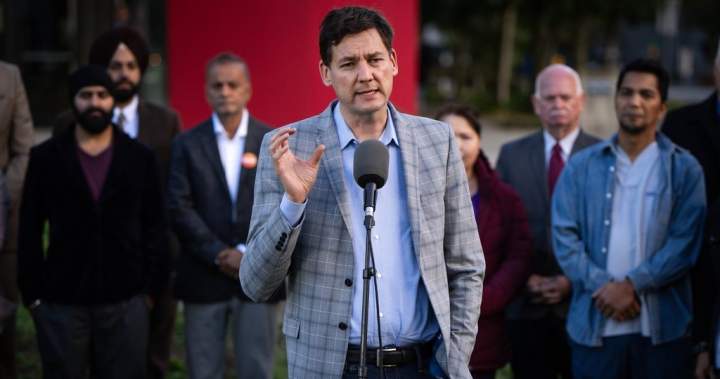
Meanwhile, the BC NDP is mounting a vigorous defense of its record while laying out an ambitious plan for the future, particularly in the critical arena of healthcare. BC NDP leader David Eby took his campaign to Surrey, a rapidly growing municipality that has become a key battleground in the election. Surrey’s expanding population has placed immense strain on local infrastructure, particularly hospital and primary care services, making it the ideal backdrop for Eby to unveil the party’s latest healthcare commitments and directly address the concerns of suburban families.
“There’s a number of components to today’s announcement, but it’s all about getting you faster access to the care that you and your family need,” Eby told the gathered crowd, emphasizing a theme of accessibility and speed. The Premier’s address focused on the real-world frustrations of patients dealing with long wait times and a shortage of family doctors. Eby sought to reassure voters that his administration understands the urgency of the healthcare crisis and is actively working on scalable, practical solutions to expand system capacity.
If returned to government, Eby is promising to implement a multi-faceted healthcare strategy that includes the opening of 20 new primary care clinics across the province. To address the acute shortage of medical professionals, the NDP plan proposes to fast-track international medical graduates who are already living in British Columbia but are currently unable to practice due to licensing bottlenecks. Furthermore, the party is pledging to open training spaces for an additional 1,000 healthcare workers, representing a major investment in the province’s medical workforce.

In addition to promoting their own platform, Eby and the NDP are actively working to undermine the credibility of their main opponents. The NDP campaign has consistently sought to cast doubt on the feasibility of the BC Conservatives’ proposals, particularly their plans to reform the Insurance Corporation of British Columbia (ICBC). By highlighting potential risks and unanswered questions in the Conservative platform, the NDP is hoping to convince moderate and undecided voters that a change in government would bring unwanted instability and jeopardize public services.
Adding further complexity to the electoral map is CentreBC, led by Elenore Sturko. The party held its first official rally of the campaign on Friday, signaling its intent to carve out a distinct space in the political center. Running 36 candidates across the province, CentreBC is attempting to appeal to voters who feel alienated by the polarization between the NDP and the Conservatives, offering a platform focused on pragmatic economic growth and targeted public investments.
During her rally, Sturko focused heavily on the province’s industrial sector, promising substantial new funding to boost local manufacturing and create high-paying jobs. Sturko pointed to existing provincial structures as a foundation to build upon, arguing that more aggressive investment is needed to keep British Columbia competitive. “B.C. already has a fund for manufacturers,” Sturko noted, referring to the current government initiatives.
“The Manufacturing Jobs Fund and CentreBC is promising; we will double it to $60 million a year.” By focusing on tangible economic support for businesses, CentreBC hopes to position itself as a strong voice for fiscal responsibility and industrial modernization.
The BC Green Party is also making a bold play for voters, focusing its latest campaign announcements on public transit and regional connectivity. BC Green Party leader Emily Lowan announced a comprehensive transportation platform designed to make transit more affordable and accessible while reducing the province’s carbon footprint. A key pillar of the Green proposal is the introduction of free transit passes for youth under the age of 25 and seniors over the age of 65, a policy aimed at reducing financial barriers for two of the most transit-dependent demographics in the province.

In addition to fare relief, the Greens are proposing an expansion of the province’s transportation infrastructure, with a particular focus on passenger rail and ferry services. Lowan argued that successive governments have failed to adequately maintain and expand these vital links, leading to a fragmented transportation network that isolates communities and stifles local economies. “B.C. has rail corridors, it has the capacity to run more ferries,” Lowan said, outlining her party’s vision. “Yet due to consistent delays and unsustainable funding, these essential services have been neglected.”
Lowan emphasized that a Green government would prioritize local manufacturing and labor in its transit expansion plans, ensuring that the economic benefits of public investments remain within the province. “The BC Greens will make sure communities, workers, and families from across B.C. can stay connected, through supporting a future for our rail corridors, building and maintaining ferries locally, and supporting the union workers we’ll need to connect B.C.,” she declared. This emphasis on local union jobs and regional connectivity represents a strategic effort by the Greens to appeal to both environmentally conscious voters and working-class families outside of major urban centers.
As the various parties roll out their platforms, political analysts are closely examining the underlying dynamics of the race. Stewart Prest, a political science lecturer with the Department of Political Science at the University of British Columbia, suggests that the election is ultimately turning into a referendum on the incumbent NDP government. According to Prest, the outcome may depend on how voters weigh their frustrations with the current administration against their comfort level with the political alternatives. “This election will ultimately become a referendum on the NDP as government and voters may be more content to go with the unknown than the known frustrations of the NDP,” Prest observed, pointing to a common electoral phenomenon where a desire for change can override concerns about an opposition party’s lack of governing experience.
This sentiment is echoed by political strategy officer and podcast host Mike McDonald, who points out that the NDP’s primary challenge in the final weeks of the campaign is to manage the electorate’s appetite for change. McDonald argues that the governing party must shift the focus of the election from a simple review of their own record to a critical examination of the Conservative alternative. “A lot of voters are thinking time for change, so the NDP have to convince those voters that change with the Conservatives is too risky,” McDonald explained. This strategic imperative explains the NDP’s aggressive messaging surrounding the Conservatives’ credibility and their proposed changes to public institutions like ICBC.
With the Thanksgiving long weekend providing a brief moment of reflection for voters, the campaigns are preparing for an intense final push. The race is widely expected to enter its most ferocious phase immediately following the holiday, as the parties prepare for the highly anticipated leaders’ debate on Wednesday. The televised debate represents perhaps the single most important event of the entire campaign, offering a rare opportunity for all leaders to speak directly to a massive province-wide audience and challenge their opponents in real-time. In a race this close, where a handful of ridings could determine the next government, the performance of the leaders on the debate stage could very well decide the political future of British Columbia.