
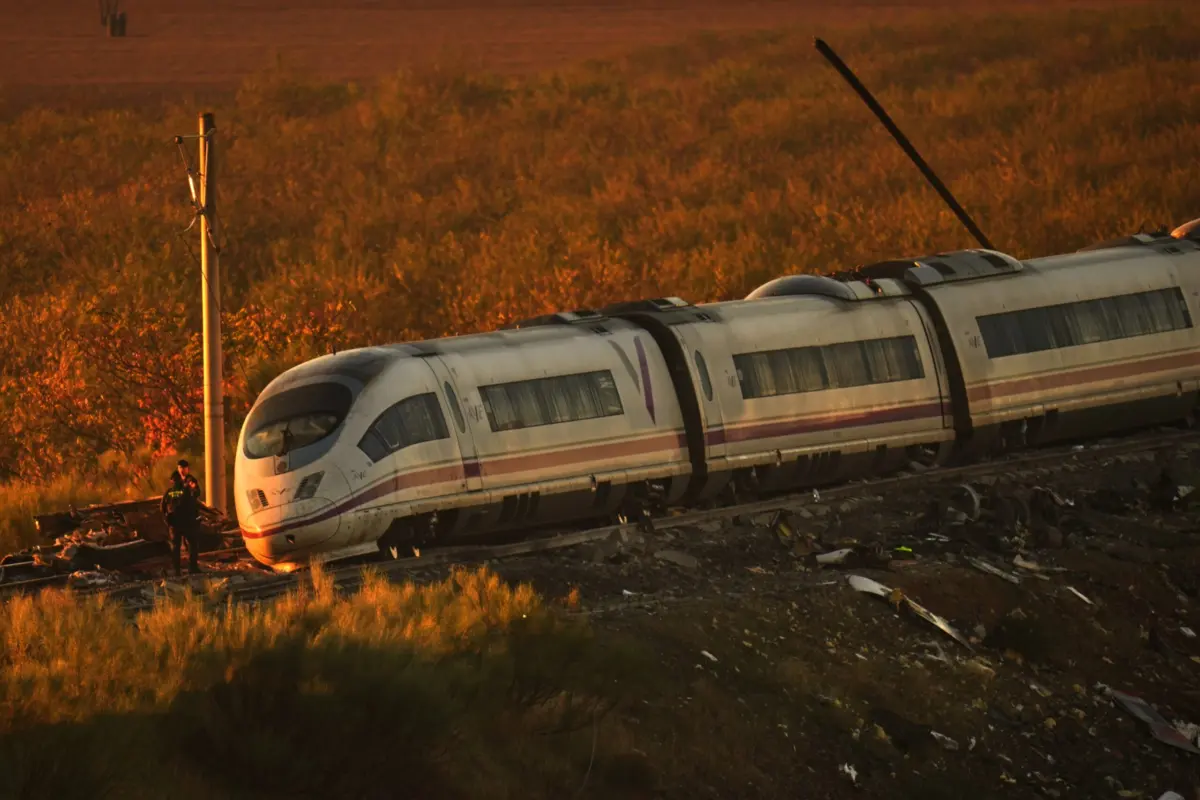
Spanish authorities have confirmed that 69 people lost their lives in last week’s catastrophic high-speed train collision in the province of Toledo, marking one of the deadliest rail disasters in the country’s recent history. As forensic teams and emergency investigators work around the clock, officials announced that 66 of the victims have now been formally identified. The tragic toll includes a significant number of international travelers, among them one Canadian and four citizens of the United States, alongside victims hailing from across Europe, Asia, Africa, and the Americas.
The disaster unfolded last Wednesday when a high-speed passenger train traveling along the heavily used Madrid-Seville corridor collided at full speed into another train that had come to an unexpected halt on the active tracks. The sheer force of the impact derailed multiple carriages, crushing metal structures and scattering debris across the railway corridor. Emergency response teams rushed to the scene in Toledo, working through tangled metal and difficult terrain to rescue survivors and recover those who perished.

According to late-night updates from official investigators, the vast majority of those killed were Spanish nationals, accounting for 54 of the 69 total fatalities. However, the presence of foreign passengers highlights the international reach of Spain’s high-speed rail network, which serves millions of overseas visitors each year. In addition to the Canadian and four American victims, authorities confirmed that the identified dead include one citizen each from France, Japan, Argentina, Mexico, Portugal, Tunisia, and the Czech Republic.
The painstaking process of identifying the victims has been an agonizing ordeal for families and forensic specialists alike. Officials stated that three bodies recovered from the wreckage remain unidentified as medical examiners rely on DNA testing, dental records, and specialized forensic protocols to confirm their identities. Meanwhile, authorities are actively attempting to locate three individuals who remain officially unaccounted for following the collision. Among those reported missing are two Australian nationals and one Japanese citizen, leaving their loved ones in an agonizing state of limbo as search and identification efforts continue.
For the families of the victims, the days following the crash have brought overwhelming grief and frustration. Distant relatives and next of kin have scrambled to travel to Spain or coordinate with diplomatic services from afar, struggling to navigate the agonizing process of identification and body repatriation. Relatives of those involved in the crash have publicly voiced their immense distress, expressing that they feel completely powerless as they await definitive answers from Spanish investigators regarding how such a catastrophic failure could occur on a modern rail line.

The Toledo collision has sent shockwaves through Spain’s transportation sector, not only due to the scale of the loss of life, but also because of its troubling proximity to another recent disaster. The crash occurred just nine months after another fatal rail collision farther south along the very same Madrid-Seville high-speed line. That earlier disaster claimed 46 lives, meaning that two major rail collisions have taken place on the same vital infrastructure corridor in less than a year, resulting in a combined death toll of over 100 people.
The occurrence of two fatal crashes in such short succession has severely shaken public confidence in a rail network that was long considered a benchmark of European infrastructure, speed, and safety. Spain’s high-speed train network—known locally for its extensive reach connecting major metropolitan hubs and tourist regions—carried approximately 45 million passengers last year alone. Millions of these travelers are international tourists who rely on the system for fast, efficient transit between cities like Madrid, Seville, and Cordoba. The recurring safety failures on the network have raised serious doubts among the public and industry experts about the underlying reliability of the system’s safety redundancies and traffic control protocols.
In response to the tragedy, Spanish Prime Minister Pedro Sánchez pledged a full, transparent investigation into the causes of the collision, promising that his administration will implement all necessary improvements to restore trust in the nation’s railway infrastructure. Officials are facing intense pressure to explain how a high-speed train was permitted to operate at high velocity on a section of track occupied by a stationary train, and why automated signaling systems, emergency braking mechanisms, or dispatcher interventions failed to prevent the collision.

The timing of the disaster carries immense political weight for the country. The fatal collision occurred just one month before Spain’s upcoming general election, scheduled for November 29, in which Prime Minister Sánchez is seeking to extend his eight-year tenure in office. The tragedy has immediately altered the national political landscape, thrusting issues of infrastructure maintenance, safety oversight, and government management directly to the forefront of public debate.
Opponents and political critics have increasingly questioned the government’s oversight of national infrastructure projects and rail safety standards. Questions are now being raised regarding whether safety investments, routine maintenance schedules, and system upgrades under Sánchez’s government have kept pace with the high volume of traffic and expansion seen across the rail network in recent years. As political scrutiny intensifies ahead of the vote, the administration faces the daunting task of addressing systemic safety concerns while managing a complex national crisis.
As the official investigation in Toledo continues, investigators are focusing on retrieving data from black box recorders, analyzing signal logs, and evaluating track conditions leading up to the moment of impact. Government agencies and forensic experts remain committed to completing the identification of the remaining deceased passengers, providing final answers to grieving families both in Spain and across the globe.