

Nearly nineteen years into an early retirement that many would view as the ultimate realization of the American dream, financial independence pioneer and prominent lifestyle blogger known as Mr. Money Mustache has come to a sobering realization: absolute freedom is a profound double-edged sword.
For nearly two decades, the upsides of this lifestyle have been glaringly obvious and deeply rewarding. Having the complete autonomy to raise a son from the day he was born through his eighteenth birthday without professional compromises stands as a monumental achievement. Beyond parenting, thousands of hours have been dedicated to cherished personal values: family, health, friendships, global adventures, hands-on construction projects, and sharing insights through blogging. Yet, beneath the veneer of this idyllic lifestyle lies what he jokingly describes as a "Tiny Violin of First World Problems" solo—a psychological flaw unique to absolute autonomy.
The core issue is deceptively simple: he never has to do anything he does not want to do.
To the average commuter or 9-to-5 worker, this scenario sounds like an unmitigated paradise. Combined with financial security, a life of total freedom theoretically transforms daily existence into a non-stop playground of self-actualization. However, reality proves far more nuanced. Freedom and financial security ultimately act as an analytical lens, laying bare an individual’s true psychological strengths and vulnerabilities. Across a wide behavioral spectrum, this freedom can manifest at one extreme as endless indulgence on a living room couch, or at the other extreme as the founding and management of major nonprofit institutions dedicated to medical research and clean energy.

For the majority of his early retirement journey, achieving a natural equilibrium seemed straightforward. While the responsibilities of fatherhood were intense during the first decade, they coexisted harmoniously with building and restoring neighborhood houses, embarking on adventurous travels, recording videos, and penning hundreds of blog articles. In recent years, however, a noticeable deceleration set in. The internal drive required to summon focus and propel projects forward became increasingly elusive.
Rather than maintaining a relentless pace on active construction sites or diving into laser-focused writing sessions at the keyboard, afternoons began to see an earlier retreat to the living room couch. Distractions via smartphone replaced productive output, accompanied by a frustrating internal wish for the energy and focus needed to complete deeply enjoyable tasks. In response, a rigorous personal investigation into health and wellness commenced. Extensive studies into daily habits, circadian biology, and the dangers of excessive modern comfort yielded actionable strategies designed to restore cognitive drive and vitality.
While these wellness principles proved effective in theory, a recurring behavioral pattern emerged. Knowledge would be acquired and successfully integrated into daily routines, producing temporary improvements. Eventually, however, the brain would generate subtle excuses to abandon consistency, leaving a wide gulf between acquired wisdom and actual accomplishment.
The breakthrough realization arrived only months ago: the very advantage that made early retirement so appealing had been weaponized against personal progress. Freedom was being systematically utilized to evade tasks that required immediate discomfort or friction. While freedom provides a vital escape from grueling commutes and rigid office environments, that same autonomy is entirely wasted if individuals merely substitute corporate neglect with domestic passivity—such as parking children in front of cheap cartoons while endlessly scrolling social media. Without channeling that freedom into pursuits more meaningful than the jobs left behind, early retirement loses its fundamental purpose.

This avoidance manifested primarily in tasks requiring planning, physical energy, or mental focus—even when those exact activities formed the bedrock of an enjoyable life. Physical exercise serves as the prime illustration. Despite recognizing that a minute-for-minute investment in strength training yields disproportionately massive returns across every metric of health and well-being, a familiar cycle of hesitation routinely derailed consistency.
The internal dialogue previously followed a predictable, overly cautious script: desiring a robust weight training session, acknowledging a lack of enthusiasm due to the inherent difficulty, and attempting to engineer the "perfect" environmental conditions. This involved meticulously selecting the optimal time of day when weather and energy levels aligned, staging gym equipment the night prior, and waiting indefinitely for a golden moment of absolute readiness. In practice, this moment rarely materialized reliably. Weeks would slip by with erratic attendance, masked by self-deceiving rationalizations about accumulating daily steps or general busyness. Reviewing training logs often revealed multi-week gaps between serious workouts, yielding entirely predictable results: lackluster fitness and stagnating physical capability.
The paradigm shift occurred through a radical restructuring of this internal dialogue. By discarding elaborate rationalizations and replacing them with immediate self-awareness, behavioral inertia was successfully dismantled. Catching the exact moment of hesitation transformed from a trigger for procrastination into an immediate catalyst for action. When the realization surfaced that a workout was unwanted, that precise hesitation was recognized as self-sabotage, prompting an immediate transition: putting on shoes and walking directly to the gym.
This behavioral pivot, while initially counterintuitive, proved transformative. Hesitation, though uncomfortable in the micro-moment, can erode long-term fulfillment if indulged. The definitive antidote requires running directly toward resistance rather than retreating from it, effectively positioning hesitation itself as an unorthodox life coach.

Using Extreme Motivation as Fuel
Exploring these behavioral hurdles with peers revealed a sharp divide. Approximately half of acquaintances related deeply to struggles with underachievement and a desire for greater output. The other half viewed such concerns as absurd, maintaining jam-packed schedules characterized by raising multiple children, running multiple business ventures, and training for grueling mountain triathlons. While these high-achieving peers operated in a state of constant, stressful momentum, their lifestyles held little appeal. Yet, they viewed a relaxed early retirement schedule as overly complacent.
The true catalyst for breaking through this plateau, however, came from external exposure to society’s most extreme examples of human endurance. Listening to an in-depth podcast interview with David Goggins—widely recognized for driving physical and psychological limits to astronomical extremes—fundamentally reframed personal benchmarks. Goggins’ life story, forged through severe childhood trauma and psychological demons, is defined by a compulsive, unrelenting pursuit of extreme hardship. From surviving near-death experiences during Navy SEAL training to fracturing bones and overexerting cardiovascular systems through non-stop ultra-marathons spanning hundreds of miles without sleep, Goggins routinely accomplishes feats previously deemed physiologically impossible.
While adopting the Goggins lifestyle—such as running consecutive marathons—held zero personal appeal, the narrative provided a startling perspective shift regarding personal limitations. It underscored the reality that nearly all perceived barriers are entirely psychological rather than physical or environmentally imposed. Viewing personal capacity no longer as a rigid, predetermined ceiling, but rather as an elastic boundary defined strictly by mental tolerance, opened up vast psychological horizons.
Ongoing Inspiration and Reclaimed Vitality
Armed with a concise, profanity-laden mantra scribbled on a cardstock note affixed to a bathroom mirror—reminding himself that he already knows precisely what actions are required—immediate execution replaced deliberation. Gym attendance stabilized into a daily routine, fueled by the realization that both enthusiasm and reluctance could serve as valid triggers to train.
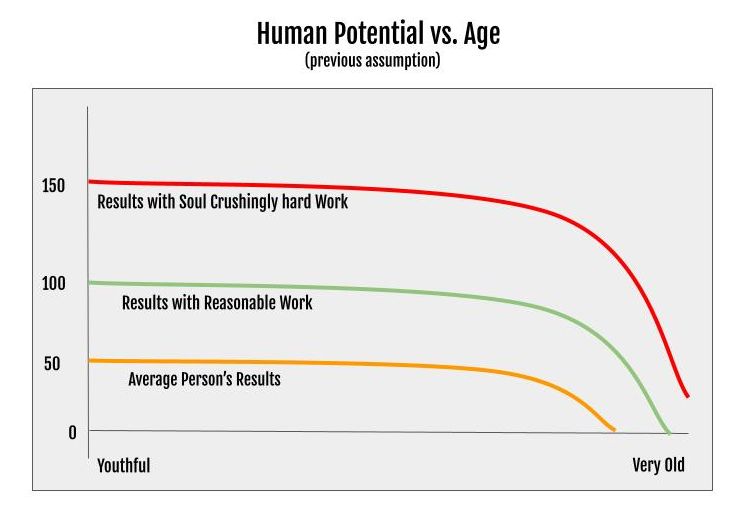
The physical dividends were swift and substantial. Despite decades of intermittent training, years of plateaued progress were shattered within four months of adopting this uncompromising mindset. Ten pounds of lean muscle mass were added, returning joint flexibility, strength, and structural resilience to levels not experienced since age twenty-five.
This exact "catch yourself at hesitation" methodology was subsequently deployed across other dormant areas of life, including significantly increasing running frequency, engaging more actively in coworking and social spaces, and returning to the computer to produce written content. While excessive professional output remains counterproductive to the ethos of early retirement, striking the correct balance requires rigorous discipline, particularly when competing against more immediately gratifying leisure activities.
Sustaining this momentum requires regularly refilling the inspiration tank. Integrating audiobooks by extreme achievers into routine morning walks—ranging from Goggins’ memoirs to Peter Attia’s longevity framework Outlive and Jocko Willink’s principles of Extreme Ownership—provides a steady stream of psychological fuel. While academic critics frequently dismiss modern wellness and motivational literature as "bro science" or debate its cultural undertones, the pragmatic approach involves extracting actionable wisdom and discarding extraneous noise. Surrounding oneself, even virtually, with strong, driven individuals who demand rigorous personal accountability remains an effective strategy for maximizing daily purpose during this chapter of life.