
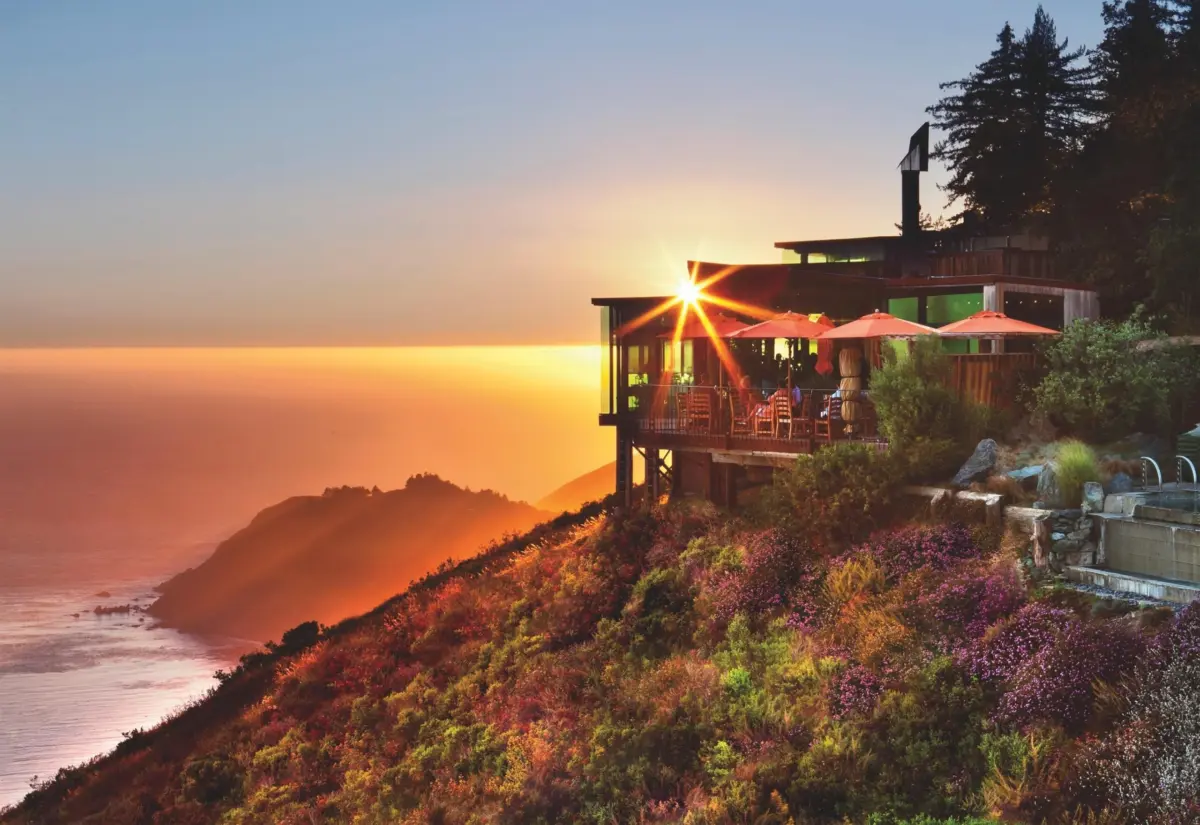
It is a brilliant fall day on Carter’s Creek in Irvington, Virginia, and a small group is hauling baskets of heavy oysters from the brackish waters. They are not traditional Chesapeake watermen earning a living on the historic bay; they are guests of the Tides Inn, and this hands-on harvesting is the best way they know to press pause on the relentless noise of their everyday lives and be fully present in this unique coastal place. Meanwhile, thousands of miles away in the dappled light of a Big Sur, California, forest, a solitary meditator takes in deep lungfuls of eucalyptus and salty ocean air. At the base of a nearby ancient live oak sits a frilled chanterelle mushroom destined for a gourmet dinner that same evening at the Post Ranch Inn’s award-winning restaurant.
These divergent yet parallel scenes capture a broader transformation in the hospitality industry, one driven by a new generation of travelers who are eager to hit the road, check in, and genuinely destress. However, they are approaching resort vacations entirely on their own terms, seeking authenticity, mindfulness, and a deep connection to local environments without having to compromise when it comes to high-end cuisine or rich cultural experiences. Whatever an individual traveler’s ultimate escape looks like—whether it involves the maritime traditions of the Mid-Atlantic or the rugged, forested cliffs of the Pacific Coast—there is a modern resort tailored to fulfill that exact vision. Furthermore, industry experts note that the planning portion of these getaways does not have to be a source of stress either, as seasoned hospitality professionals have assembled all the essential insights and pro tips travelers need to make the experience completely seamless and well worth the journey.
The shift toward experiential and grounding travel reflects a fundamental change in consumer psychology following years of global disruption and digital saturation. Vacationers no longer measure the success of a trip merely by the thread count of the linens or the opulence of the lobby, though luxury remains a baseline expectation. Instead, today’s discerning guests prioritize emotional resonance, mental reset, and active participation in the local ecosystem. By stepping off the beaten path of passive tourism, travelers are finding that physical engagement—such as pulling a bounty from the water or foraging for culinary ingredients alongside resident experts—offers a deeper, more enduring form of relaxation.
This desire for meaningful engagement is reshaping properties across the country, encouraging historic inns and secluded mountain retreats alike to curate programming that bridges the gap between luxury comfort and authentic regional culture. At the Tides Inn, the connection to the Chesapeake Bay’s rich maritime heritage has long been a defining characteristic of the guest experience, but inviting visitors to directly participate in local harvesting traditions elevates the stay from a passive scenic retreat to an immersive cultural encounter. It allows travelers to understand and appreciate the delicate balance of the local ecosystem, grounding them in the rhythms of the surrounding community.
Similarly, along the dramatic coastline of Big Sur, properties like the Post Ranch Inn leverage their breathtaking natural geography to offer guests an antidote to urban burnout. The integration of wellness practices, such as meditation amid towering eucalyptus groves, combined with world-class gastronomy that incorporates wild ingredients foraged directly from the property grounds, demonstrates a holistic approach to modern hospitality. Guests are invited to engage all of their senses—tasting the local terroir, smelling the coastal flora, and listening to the wind through the redwoods—resulting in a restorative experience that lingers long after the journey home.
As the travel landscape continues to evolve, hospitality operators are recognizing that the modern traveler values flexibility, personalization, and a distinct lack of friction throughout the entire travel lifecycle. From the initial booking process to the final checkout, eliminating logistical hurdles is just as important as the on-site amenities. By streamlining travel planning and offering expert guidance on how to maximize a resort stay, properties are ensuring that guests can transition effortlessly from the stresses of daily life into an environment of unhurried tranquility. Ultimately, whether one seeks the quiet waters of a Virginia creek or the majestic heights of a California sanctuary, the modern resort experience proves that luxury and authenticity are no longer mutually exclusive, offering a blueprint for the future of meaningful travel.