
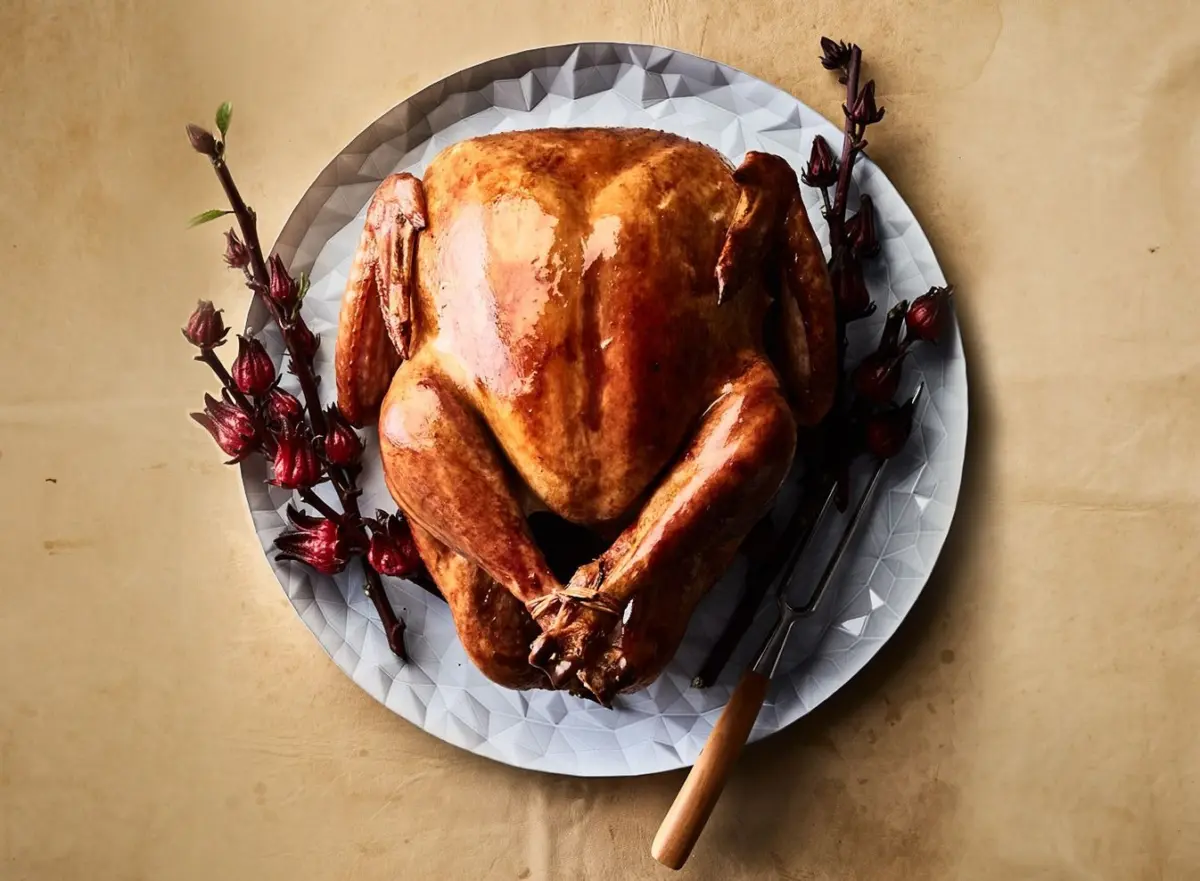
The annual Thanksgiving scramble usually begins weeks before the actual holiday, but the culinary crisis frequently peaks about forty-eight hours before dinner when the host attempts to perform a miraculous game of spatial Tetris inside the household refrigerator. Wedging a massive, fifteen-pound raw turkey into a crowded chilling compartment alongside pie crusts, vegetable platters, leftover containers, and the various ingredients required for a massive holiday feast is a universal seasonal headache. Fortunately, culinary expert Alton Brown has popularized a brilliant and remarkably simple workaround that removes the bird from the refrigerator entirely while simultaneously ensuring an exceptionally flavorful and moist centerpiece for the holiday table.
By utilizing a clean, insulated beverage cooler instead of the refrigerator shelves, home cooks can effectively execute a traditional wet brine without sacrificing crucial storage space for side dishes and beverages. This unconventional approach has become a holiday staple for hosts seeking to streamline their Thanksgiving logistics. The method relies on a straightforward, harmonious mixture of kosher salt, sugar, and vegetable broth. When the turkey spends its designated hours submerged in this seasoned liquid, the science of osmosis goes to work, allowing the bird to absorb moisture and flavor deep within the muscle tissue before it ever touches a roasting pan.
The mechanics of the cooler method are straightforward, but they require careful attention to food safety fundamentals. Culinary experts stress that the brine must remain safely at or below forty degrees Fahrenheit throughout the entire soaking duration. To achieve this, cooks must employ a thoroughly sanitized, food-safe insulated cooler and monitor the temperature of the liquid using a reliable probe thermometer. When necessary, sealed ice packs can be introduced into the liquid to maintain a consistently cold environment, ensuring the poultry remains just as chilled as it would on a refrigerator shelf.
Once the bird has completed its temperature-controlled soak in the cooler, the preparation transitions to the cooking phase, which is designed to yield maximum flavor with minimal kitchen stress. The first rule of this high-impact roasting technique is absolute dryness. Cooks must pat the brined turkey thoroughly dry with paper towels to eliminate surface moisture, which is the primary enemy of crispy poultry skin.
With the bird thoroughly dried, it goes straight into a blazing-hot five-hundred-degree oven. This intense burst of thermal energy jump-starts the cooking process and gets the skin hurtling rapidly toward a deep golden brown and an ultra-crisp finish. After thirty to forty minutes of high-heat roasting, the chef shields the delicate breast meat with a tent of aluminum foil to prevent scorching, lowers the oven temperature to a steady three hundred and fifty degrees, and allows the turkey to finish cooking through to the appropriate internal temperature.
The beauty of this high-heat start followed by a gentle finish extends far beyond the texture of the bird. This streamlined approach eliminates the need for constant supervision during the roasting process. There is no need for traditional basting, which repeatedly opens the oven door, drops the ambient temperature, and prolongs the cooking time. There is no need to hover nervously by the oven waiting for the next step. Instead, the cook is granted a precious window of uninterrupted time to focus on preparing classic side dishes, such as rich sweet potato casseroles, from-scratch apple pies, and the myriad other culinary components that comprise a traditional Thanksgiving feast.
For hosts who prefer to bypass the wet brining process altogether, alternative paths to a magnificent holiday dinner are readily available. Those seeking a less labor-intensive seasoning method often turn to dry-brining, which involves rubbing the raw bird with salt and spices well in advance and allowing it to air-chill uncovered in the refrigerator to naturally concentrate flavors and dry out the skin. Meanwhile, home cooks who find themselves pressed for time or feeding a smaller gathering can look to techniques like breaking down a whole turkey into individual parts. This approach drastically reduces overall cooking time, allowing a complete turkey dinner to be prepared and served in under two hours without sacrificing traditional holiday flavors.
As millions of home cooks prepare to tackle their holiday menus, understanding the nuances of brining and roasting has become an essential part of the seasonal routine. Addressing common questions and potential pitfalls helps ensure that the Thanksgiving centerpiece turns out flawlessly every single time.
Brined Turkey FAQ
How long should you brine a turkey?
For a standard fourteen to eighteen-pound turkey, cooks should plan on eight to twelve hours in the brine. This timeframe provides an optimal window for the salt to work its way deep into the meat, effectively seasoning the flesh and helping it retain essential moisture during the roasting process. While it can be tempting to leave the turkey soaking for a full twenty-four hours to maximize flavor absorption, an extended brine can easily cause the meat to become overly salty and alter its texture. Sticking closely to the recommended time window yields the best possible balance of flavor and moisture.
Is brining turkey in a cooler safe?
Using an insulated cooler for brining is entirely safe, provided that the liquid is maintained at or below forty degrees Fahrenheit for the entire duration of the soak. To execute this safely, the cooler must be thoroughly cleaned and sanitized, and it should be dedicated to food use. Cooks must monitor the temperature of the brine continuously using a digital probe thermometer and add sealed ice packs as needed to counteract any environmental warming. The ultimate objective is to replicate the exact chilling conditions of a standard kitchen refrigerator inside the portable container.
Can you brine a turkey that has already been brined?
It is strongly advised to avoid double-brining a turkey. Many commercially packaged turkeys found in supermarkets are sold pre-brined or injected with a saline solution to enhance juiciness, frequently labeled on the packaging as self-basting, enhanced, or containing a solution. Subjecting an already enhanced bird to an additional salt brine will result in an unpleasantly salty finished product. Checking the product packaging carefully before purchasing and selecting an entirely unbrined turkey is the best way to ensure success with this specific recipe.
How do you keep gravy made from brined turkey from getting too salty?
While brining works wonders for seasoning the turkey itself, it can occasionally transfer a heavy concentration of salt into the pan drippings used for gravy. To maintain control over the final flavor profile, cooks should always taste the drippings before adding any additional salt or seasonings, and they should use low-sodium or completely unsalted broths as a base. If the finished gravy tastes overly salty upon completion, culinary experts recommend melting in a few pats of unsalted butter or thinning the mixture with additional salt-free broth to balance the flavors before serving it alongside the holiday meal.