
For decades, one of the foundational, unwritten laws of venture capital was simple and absolute: a reputable firm does not back two companies competing head-on in the same market. This unstated pact protected the trust between founders and their early financial backers, ensuring that sensitive strategic decisions, proprietary roadmaps, and board-level deliberations remained strictly insulated from competitors.
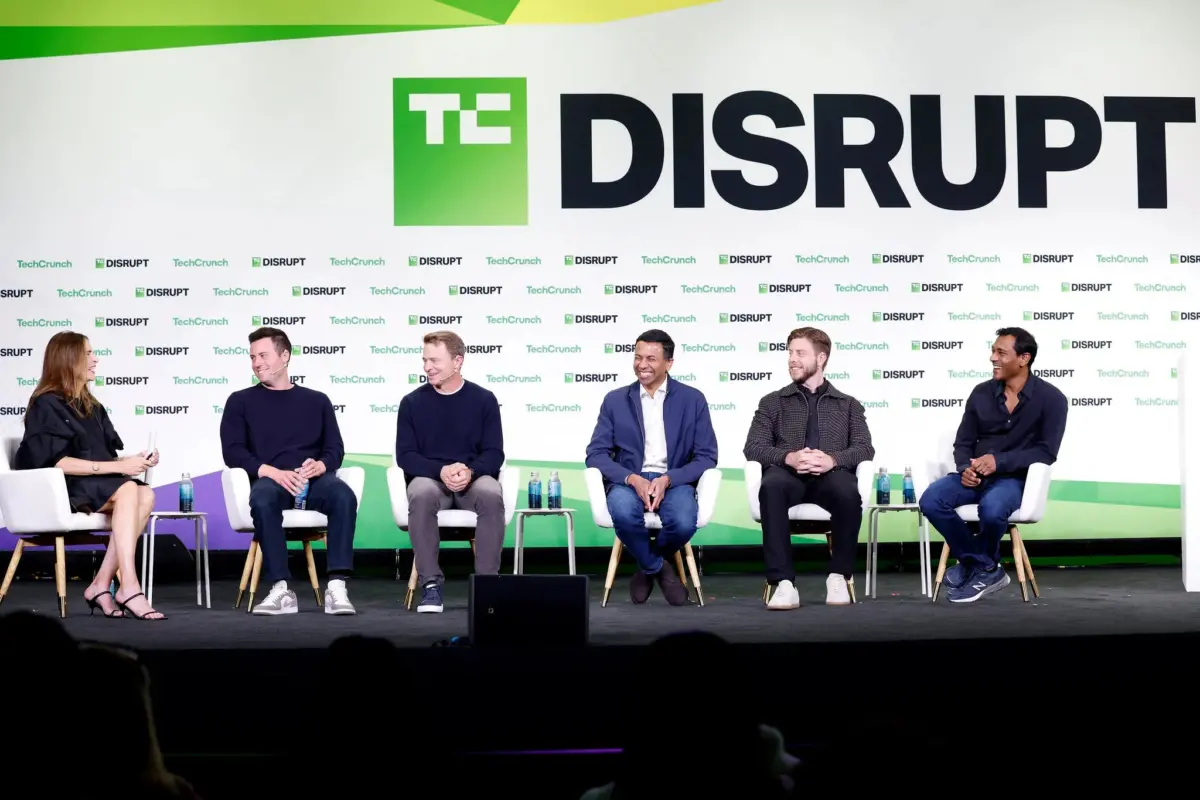
However, speaking on stage at TechCrunch Disrupt, the partners of legendary venture capital firm Benchmark readily acknowledged what many in Silicon Valley have suspected for quite some time. The unprecedented, gold-rush velocity of the artificial intelligence boom is actively straining that traditional rule, pushing the boundaries of venture ethics and portfolio management to their absolute limits.
The breaking point has been looming on the horizon for years. Today, foundational AI heavyweights like OpenAI and Anthropic share dozens of the exact same institutional investors, a phenomenon that would have been virtually unheard of in previous generations of software investing. Yet, as the technology matures, the friction is spilling over from high-level mega-rounds down into early and growth-stage companies, erupting into public view with messy, high-stakes governance disputes.
A stark example of this brewing tension unfolded at the end of September. Factory, an ambitious startup that builds autonomous AI agents designed to write software, publicly announced it was ousting board observer and adviser Chris Degnan. The reason cited by the company was what it termed "unethical conduct involving Cognition," its direct rival and the creator of the prominent Devin coding agent.
According to Factory’s chief executive officer, Degnan had allegedly discussed a potential employment opportunity with Cognition while simultaneously privy to sensitive, board-level discussions at Factory. Degnan pushed back against the narrative, maintaining that he had already tendered his resignation prior to the allegations and vehemently denying that he had ever shared confidential information. Shortly after the public spat, Degnan announced his official move to Cognition as its new chief revenue officer.
The drama quickly escalated beyond the boardroom and onto social media when powerhouse investor Vinod Khosla publicly sided with Degnan on X, formerly known as Twitter. Khosla blasted Factory’s CEO for the public accusation, dismissing the startup as a "struggling second tier competitor." The public fallout carried a distinct layer of irony and illustration for the industry: Khosla Ventures is an investor in both competing companies, highlighting the very conflicts that are beginning to plague modern tech portfolios.
Even for Benchmark—a firm whose sterling reputation rests on cultivating long-term, 10-to-15-year partnerships with founders at the earliest stages of company-building—the old rule of strict exclusivity can no longer be counted on as an absolute guarantee. When asked on stage at Disrupt whether the traditional pact against backing rivals still holds true as portfolio companies organically expand and encroach upon each other’s territory, the Benchmark partners described these emerging conflicts not as a matter of strategic preference, but as an unavoidable operational necessity.
"The harsh reality of this world is every company is evolving very quickly," explained Benchmark partner Eric Vishria during the session. As startups pivot, adapt, and scale, overlapping markets become inevitable. "You are going to get conflicts, and that’s just the reality of the current dynamic," he added.
Despite acknowledging the shifting landscape, Vishria emphasized that Benchmark remains deeply committed to each individual founder they back and strictly maintains the confidentiality of what is shared within the boardroom. He also downplayed the degree to which a venture capital firm could realistically act as an industrial spy or pass along critical intellectual property, noting plainly that venture capitalists "are not product or technology experts."
Seemingly referencing the messy public feud between Factory and Cognition, Vishria noted that Benchmark has fortunately managed to avoid landing in "that type of insane direct conflict." He maintained that exclusivity remains "really important" at the very early seed and Series A stages that Benchmark traditionally favors. Even so, he conceded, things are undeniably changing across the broader venture ecosystem.
Chetan Puttagunta, another partner at the firm, elaborated on how the economics and velocity of artificial intelligence are dramatically accelerating the problem. As the fundamental cost of building software "effectively goes to zero," Puttagunta observed that modern founders are operating with extraordinary ambition. Because these entrepreneurs can now envision a massive "surface area" of opportunity and naturally want to claim all of it, he noted that "it’s probably going to happen more, where you start to run into each other."
Puttagunta drew a clear operational line between funding a direct competitor right out of the gate, which he described as "an easy answer" to avoid, versus a situation where an existing portfolio company gradually expands and pivots into another portfolio company’s turf over time. "That happens," he acknowledged matter-of-factly.
For veteran investor Peter Fenton, the issue represents something much deeper and more volatile. He characterized the challenge of portfolio conflicts as "kryptonite" and acknowledged it as arguably the toughest problem a modern venture firm faces.
Fenton described a broad spectrum of how investors relate to the companies in their portfolios. At one extreme sits the co-founder, an individual who is deeply embedded and would never dream of working on a competing company due to total alignment and loyalty. At the other extreme is the public-market stock picker, who can comfortably own shares in several direct market rivals simultaneously because their role is purely to allocate capital rather than actively shape or build the underlying businesses.
Benchmark, Fenton explained, positions itself much closer to the co-founder end of that spectrum, treating absolute transparency as a golden rule. "There shouldn’t be the surprise after the fact," Fenton said, emphasizing that if a conflict does eventually emerge as companies scale and evolve, a founder should never feel shortchanged or deceived by their backers.
While Benchmark is not officially declaring the death of the exclusivity pact, its partners’ candid admissions signal a profound cultural shift within elite venture capital. When a firm that built its foundational name on unwavering loyalty and early-stage dedication openly admits that overlapping competitive conflicts are becoming the new normal, founders across the tech ecosystem are left to wonder which firms will remain truly exclusive—and who else will be this transparent about the shifting rules of the game.