
Creating cultural capital that adults do not understand has long been a foundational hallmark of childhood, a timeless rite of passage uniquely amplified when navigating the eccentricities of teen and tween subcultures. Consequently, there is a strong statistical probability that modern parents have recently caught wind of a baffling online phenomenon known as "Italian brainrot." Perhaps you have walked past your child’s bedroom to hear them chanting phrases like "Tung Tung Tung Tung Tung!" over and over again for no apparent logical reason. When gently questioned about the origin or meaning of these repetitive utterances, the standard reply from the younger demographic is often an airy, dismissive declaration: "It’s a meme!" Yet, when pressed further, they find themselves entirely unable to elaborate or explain the joke.
Let us break down the phenomenon. But before diving headfirst into the surreal depths of this digital subculture, it is helpful to establish the primary conclusion up front: You absolutely should not overthink any of this.
To understand the current craze, one must first examine the foundational concept of "brainrot," a term that achieved mainstream validation when it was named the Oxford Word of the Year for 2024. Lexicographers formally define brainrot as "the supposed deterioration of a person’s mental or intellectual state, especially viewed as the result of overconsumption of material (now particularly online content) considered to be trivial or unchallenging," as well as "something characterized as likely to lead to such deterioration." In everyday vernacular, it simply refers to the profoundly silly, low-effort entertainment individuals encounter endlessly scrolling through social media feeds.
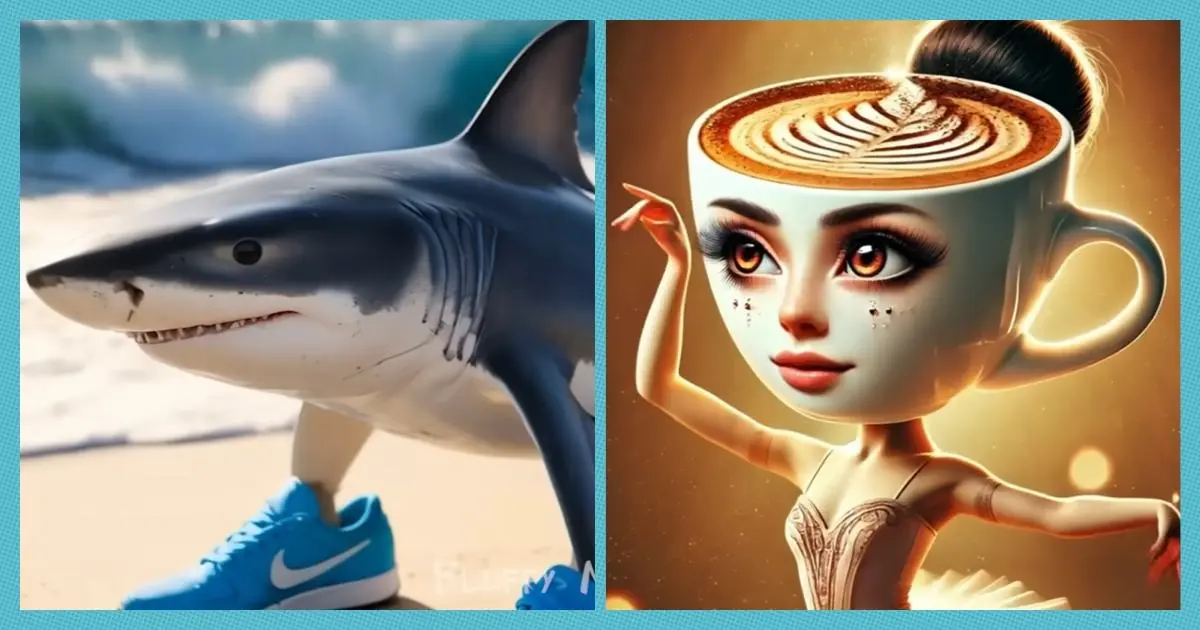
Within this broader category, Italian brainrot specifically refers to an expanding wave of artificial intelligence-generated surrealist character memes paired with completely nonsensical, rhythmic Italian narration. This peculiar subgenre began gaining traction in January 2025, famously sparked by a viral creation known as Trallallero Trallallà—depicting a computer-generated blue shark sporting a pair of Nike sneakers.
While these bizarre characters were initially conceived by Italian digital creators, this specific brand of digital nonsense has rapidly metastasized across the globe, with new iterations originating from Indonesia, the United States, and various other regions. Because the barrier to entry is virtually nonexistent, anyone with access to generative AI tools can craft their own versions of these characters. This allows children and teenagers to either passively consume vast quantities of pre-existing content or actively generate their own weird digital entities in the hopes of catching a lucky break and watching their creations go viral.
At this stage, observers often find themselves asking fundamental questions: But why? Why a shark wearing Nikes? What does it actually mean?
Experts and cultural commentators offer a simple, repetitive reminder: You should not overthink any of it. It does not mean anything. There is no hidden allegorical significance, no profound cultural commentary, and no secret code to decode.
The most accurate explanation for the enduring appeal of these memes lies in the inherent bizarreness of the characters—which are typically bizarre fusions of animals and random inanimate objects, though deviations occur—coupled with names that tend to be sing-songy and rhythmic. This combination naturally provokes giggles and amusement among younger audiences. Beyond that, the content is thoroughly nonsensical and silly. Adults must internalize the reality that they are not missing anything. There is nothing to get. Lock that concept in firmly, because that understanding will be severely tested when examining some of the most popular characters driving the Italian brainrot phenomenon.
Bombardino Crocodilo
Among the frontrunners of the movement is Bombardino Crocodilo, a digital entity representing a crocodile engineered directly into a bomber plane. In typical fashion, this specific character is accompanied by a catchy yet aggressively repetitive electronic dance music track designed to loop endlessly in the viewer’s head.
DO NOT OVERTHINK IT.
Tung Tung Tung Tung Tung Tung Tung Tung Tung Sahur
Another dominant fixture of the trend features a stylized club brandishing a baseball bat. Content featuring this particular character has amassed more than 72 million views across digital platforms. DO NOT OVERTHINK IT. Simply allow this staggering viewership metric to exist as a flat, unanalyzable fact within your cognitive architecture.
Lirilò Larilà
Moving further into the botanical and fauna hybrid spectrum, Lirilò Larilà introduces the world to an elephant-cactus hybrid casually wearing Birkenstocks. Naturally.
Chimpanzini Bananini
Chimpanzini Bananini offers little beyond the phonetic satisfaction of its own name. It is undeniably fun to say aloud, and that appears to be the absolute extent of the character’s narrative depth. As the mind inevitably begins searching for a deeper rationale behind the primate-fruit combination, the golden rule applies once more: DON’T OVERTHINK IT!
Brr Brr Patapim
This towering tree-giant leans slightly toward the unsettling side of the spectrum. The associated brainrot meme documents the character’s bizarre evolutionary progression from a simple forest seedling straight into a full-fledged cyborg.
Ballerina Cappucina
Rounding out the notable roster is an anthropomorphic creation blending a classical ballerina with a traditional cappuccino. This character is frequently observed alongside her digital spouse, Capuccino Assassino. Content featuring this marital pairing has successfully secured upward of 15 million views.
The catalog of characters extends far beyond these examples, though applying the term "characters" is perhaps excessively generous and fails to capture the true amorphous nature of the trend. Yet, by this point, the phenomenon is understood about as well as humanly possible.
For those seeking relief after navigating the surreal landscape of contemporary youth culture, a brief glance backward offers a comforting palate cleanser in the form of nostalgic, millennial-era brainrot. Exploring earlier iterations of internet humor reveals that every generation invents its own incomprehensible digital garbage. Society ultimately grasps the concept of brainrot itself; adults simply struggle to comprehend the specific variety currently consumed by their children. And that dynamic remains entirely as it should be, ensuring the generational cycle continues uninterrupted.
As Italian brainrot cemented its status as a pervasive online fixture earlier this year, institutional authorities stepped in to evaluate its potential impact. The American Academy of Pediatrics weighed in on whether this relentless wave of digital absurdity genuinely harms children’s cognitive development. Their official assessment noted that because the phenomenon is relatively modern, comprehensive longitudinal research specifically targeting brainrot remains sparse. However, related academic inquiries, such as a study interviewing college students, have successfully linked extended periods of consuming low-value digital media to "reduced productivity, poorer concentration, impaired decision-making, worse academic performance, and social isolation."
The AAP also highlighted a broader review of existing scientific literature concerning comparable media habits, which concluded that excessive screen time and low-effort digital consumption may contribute directly to noticeable cognitive declines. These potential impacts include heightened difficulty maintaining sustained attention and feelings of cognitive overload, a state wherein the human brain becomes so overwhelmed by a relentless influx of trivial information that it struggles to process data effectively.
Unsurprisingly, child health professionals and pediatric specialists urge parents to proactively guide children toward higher-quality media alternatives during designated screen time hours. While it does not require a media scholar to recognize that Italian brainrot falls well short of enriching educational standards, experts recommend redirecting children toward thoughtfully produced shows, movies, and digital channels when they seek entertainment. Furthermore, if young people turn to endless scrolling primarily as a coping mechanism for stress or emotional regulation, health advocates suggest encouraging alternative outlets such as physical exercise, creative hobbies, or mindfulness practices.