
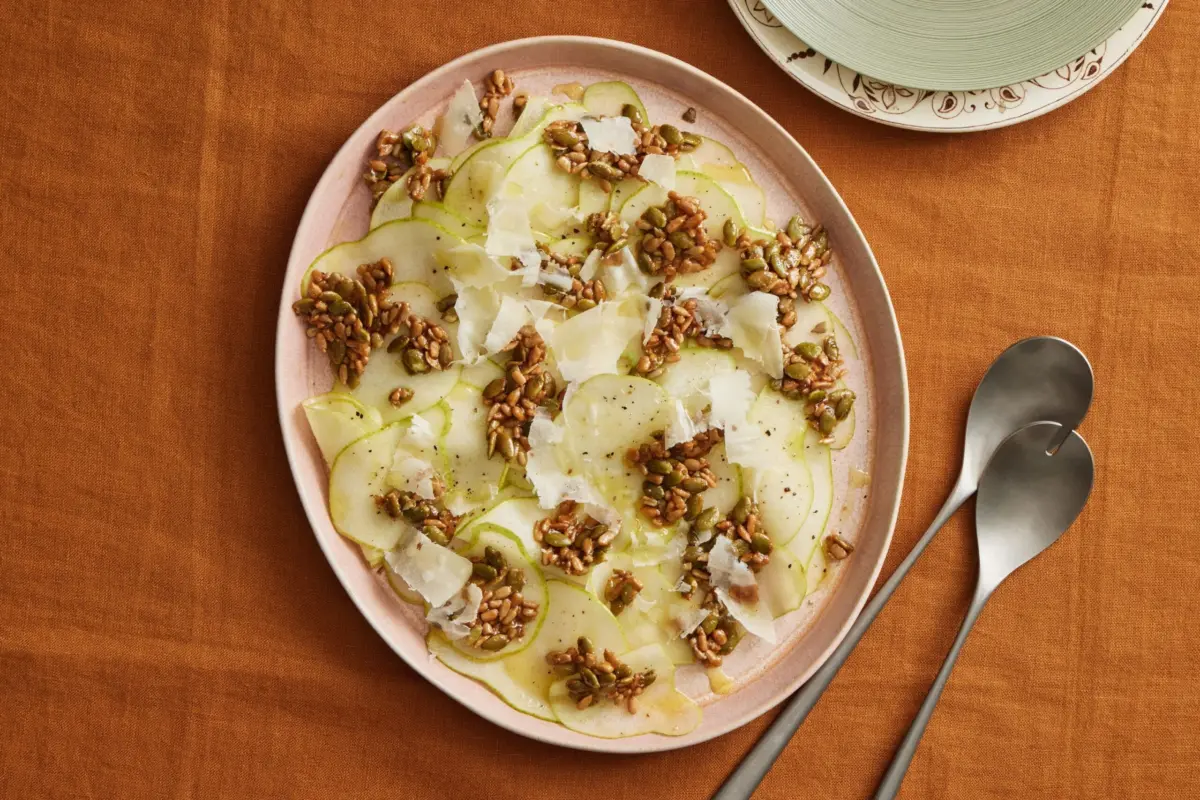
When a rich, heavy meal is underway, the human palate naturally craves something fresh, bright, and acidic to keep the taste buds awake and engaged. While a standard bed of lettuce splashed with a quick vinaigrette can often feel like an obligatory afterthought or a melancholy nod to health amid a sea of heavy carbohydrates, a juicy, savory-slanting pear salad offers a compelling argument for its own dedicated real estate. This culinary approach is well worth making room for on a plate already crowded with roasted turkey, savory stuffing, and golden cornbread.
This dish stands as the complete antithesis of the haphazardly chunked together fruit salads commonly found at supermarket counters during weekend brunch spreads or generic dessert buffets. Instead of a soggy, overly sweet assortment of canned peaches and melon chunks, the focus here remains squarely on crisp, tart pears—though firm apples can also serve as a worthy substitute when necessary. When prepared thoughtfully, this vibrant fruit preparation functions as a remarkably welcome accompaniment to the other rich, hearty dishes that typically dominate a traditional holiday spread.
To achieve the ideal texture and visual presentation, the fruit should be sliced razor-thin, a task easily accomplished with the help of a reliable kitchen mandoline. Once sliced, the fruit can be fanned out gracefully across a serving platter, where it effectively acts as an edible canvas ready to receive delicate wisps of sharp cheese and clusters of crunchy, honey-roasted seeds. Beyond its immediate success during a major holiday dinner, this dish holds a hidden advantage for the morning after. The leftovers, assuming there are any to speak of, make for a delightful culinary encore when spooned generously over a well-toasted and buttered slice of multigrain bread the next day.
Selecting the right produce is paramount to the success of this savory-leaning presentation. Culinary experts advise picking firm green pears to ensure they successfully hold their shape once they have been sliced thin. Varieties such as Bartlett and Anjou are fair game for this preparation, and crisp Asian pears can even be utilized in a pinch if standard varieties are unavailable. In fact, utilizing fruit that is even a little underripe is far better than opting for fruit that is slightly overripe, as softer textures will wilt and lose their structural integrity under the weight of the dressing and garnishes.
Once the slicing process is complete, a quick taste test of the fruit is strongly recommended before proceeding with the rest of the assembly. The subsequent seasoning depends entirely on the natural flavor profile of the fruit chosen. If the slices prove to be very tart, incorporating a single teaspoon of honey into the dressing will help balance the acidity. Conversely, if the fruit is naturally fairly sweet, skipping the honey entirely will maintain the desired savory balance of the dish, preventing the flavor profile from tipping too heavily into dessert territory.
This elevated approach to incorporating fresh fruit into a heavy, savory meal highlights a broader culinary shift toward balancing textures and flavors during major celebratory gatherings. Rather than relying on traditional, overly sweet side dishes that blur the line between dinner and dessert, home cooks are increasingly turning to crisp, acidic, and subtly savory elements to cut through the richness of roasted meats and buttery starches. By focusing on precision slicing, textural contrast, and thoughtful balancing of sweet and tart notes, a simple fruit component is transformed into an essential anchor for the entire dining experience.