
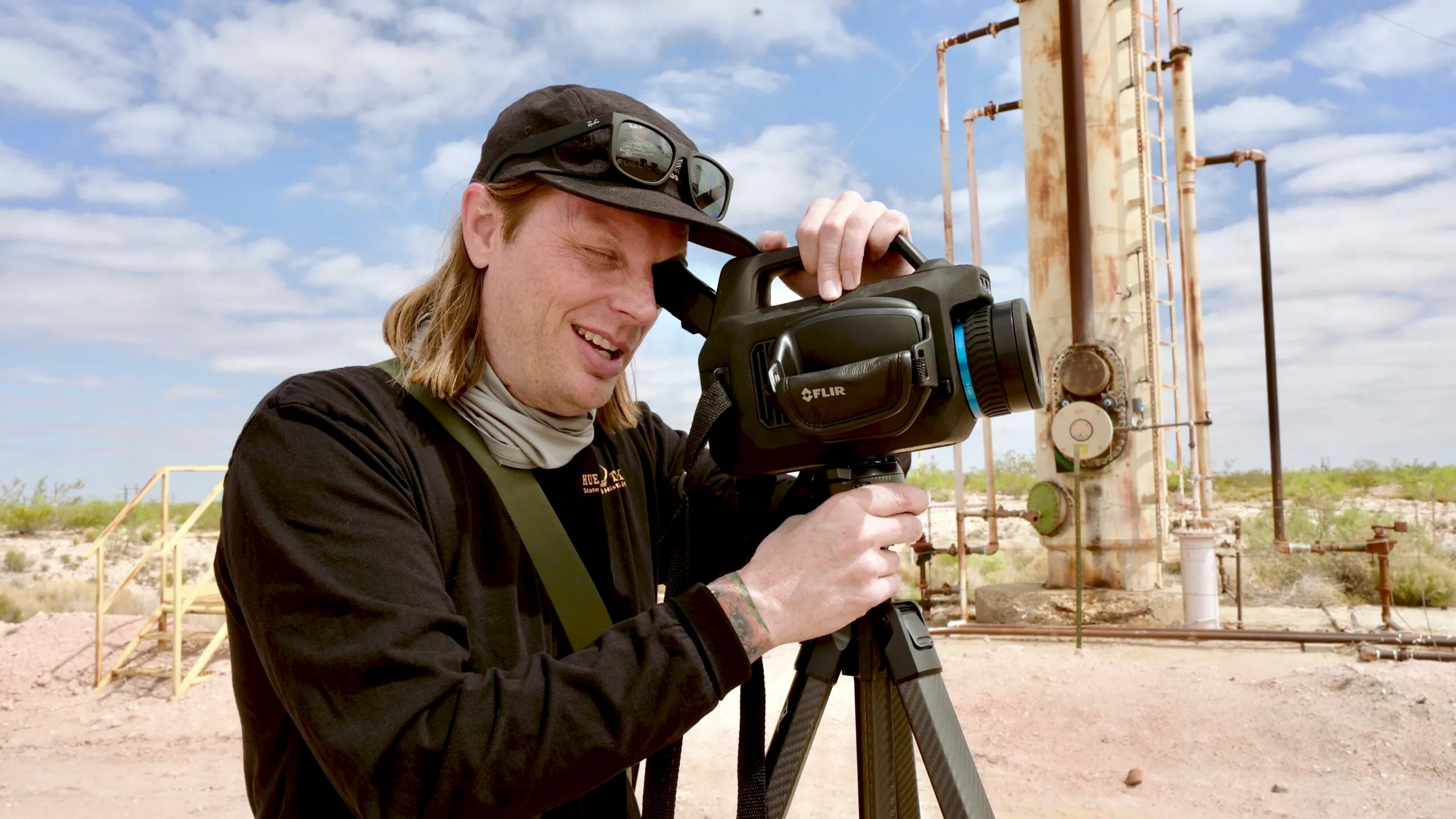
It is an early May afternoon in southern New Mexico, and Charlie Barrett has parked his pickup truck in a gravel pullout along a county road just a few hundred feet from the Black River. This quiet desert stream sits a mere mile from where its waters empty into the larger Pecos River, carving a thin ribbon of green through an otherwise stark landscape. Barrett, a thermographer with the industry watchdog group Oilfield Witness, has stopped his vehicle to set up a specialized video camera. The device is designed to detect heat and invisible gases, allowing him to check for fugitive emissions at a nearby oil and gas operation.
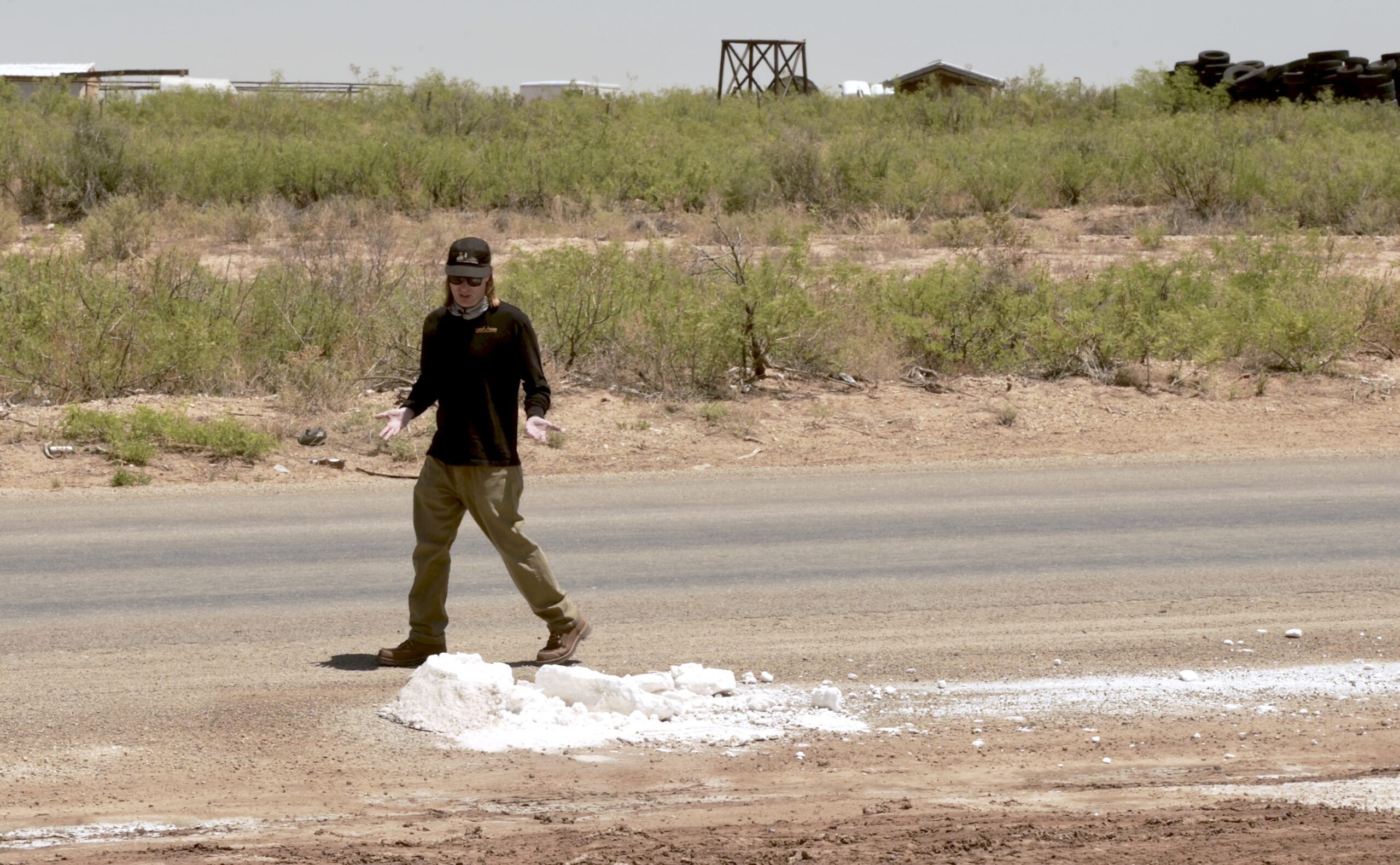
Stepping out of the driver’s side, Barrett finds the pullout unusually muddy and dotted with standing puddles—a strange anomaly during an ongoing, severe regional drought. Resting near one of these murky pools is a gray chunk of salt roughly the size of a medicine ball, surrounded by mud flecked with shimmering white crystals.
“Unfortunately this is pretty common,” Barrett said, eyeing the deposit. “It’s also quite dangerous.”
It quickly becomes apparent to the veteran field investigator that someone has illegally dumped or leaked oilfield wastewater at the pullout. Also known as produced water, this extremely saline and toxic byproduct of oil and gas extraction carries a dangerous mix of petroleum compounds, heavy chemical additives, and, in many cases, naturally occurring radioactive materials. Barrett worries that passing motorists could unwittingly drive through the contaminated muck, or that unwary travelers might pull off the road and walk directly through the toxic residue.
Throughout the day, every single day, hundreds of heavy semi-trucks haul this toxic produced water from well sites to disposal stations along the asphalt highways and dusty backroads of this far-flung corner of New Mexico. The wastewater is an inevitable and massive unwanted byproduct of modern fossil fuel development. On average across New Mexico, more than three barrels of wastewater emerge from deep underground for every single barrel of extracted oil. As fossil fuel production has skyrocketed across the sprawling Permian Basin, the volume of produced water has surged in lockstep. Furthermore, the water-to-oil ratio naturally increases as individual wells and oilfields age—a geological progression known throughout the industry as “watering out.”
New Mexico state regulations strictly ban the use of produced water for anything outside of approved oilfield operations. This legal restriction has given rise to a massive, parallel industrial network dedicated to gathering, transporting, and reinjecting produced water deep into disposal formations underground. However, that high-volume injection has triggered a dramatic rise in seismic activity throughout the region, alongside catastrophic surface blowouts that spew toxic brine into the air when injection wells fail under pressure.
As Barrett sets up his equipment under a brilliant, cloudless sky, a steady stream of heavy trucks hauling produced water rumbles down the nearby road. Looking through the viewfinder of his thermal camera, Barrett begins to film.
“Oh, man, that’s fucking terrible,” he remarks quietly.
On the camera’s small digital screen, rendered in wavy, candy-colored hues that reveal thermal variances, the heat signatures of three active industrial flares loom dangerously close to a residential home.
“Got a person’s home here and then this mess … all producing CO2 and methane and other volatile organic compounds, blowing right into their home,” Barrett says, shaking his head as he studies the viewfinder. “Jesus, man. It’s ridiculous.”
When he analyzes the digital footage later on a larger computer screen, Barrett discovers yet another lit flare captured in the video, bringing the total in that single field of view to four active flares. This concentration of burning gas persists despite the fact that New Mexico enacted a sweeping ban on nearly all routine flaring back in 2022.
Energy companies typically burn off—or “flare”—natural gas for several operational reasons, including when the extracted gas does not meet pipeline specifications, when pipelines become dangerously overpressurized, or when flaring is deemed necessary during routine equipment maintenance. While burning methane is technically better for the global climate than venting unburned gas directly into the atmosphere, flaring still generates massive quantities of carbon dioxide and other hazardous air pollutants that settle over the surrounding terrain.
Later in the afternoon, Barrett sits quietly on a small boulder along a peaceful bend in the Pecos River. The river gurgles over smooth stones, dragonflies hover across the surface, and desert grasses rustle in the breeze as more oilfield trucks rumble across a nearby concrete bridge. The ambient noise serves as a constant, jarring reminder that Barrett is sitting squarely in the middle of one of the most prolific and heavily industrialized fossil fuel basins on the planet.
“It sucks,” he said, looking at the water. “It’s a beautiful river in the middle of a hellscape.”
Just several months earlier, during his previous visit to this exact spot, Barrett found thick salt deposits coating the ground all the way from the bridge down to the riverbank.
“I mean, the whole road was flooded over,” he recalled. “We couldn’t confirm one way or another if that was an actual produced water spill,” he added, noting that given the surrounding land use, there are very few other plausible explanations for the heavy mineralization.
Such an environmental insult would represent yet another blow to a river system already under severe ecological stress. The ultimate irony, environmental advocates note, is that the Pecos River desperately needs more water, not less. Official data compiled by the U.S. Geological Survey over the span of nearly four decades shows that the annual winter snowpack has slowly but steadily declined in the high mountain ranges surrounding the river’s headwaters. Flow measurements recorded at upstream gauging stations reflect the exact same downward trajectory.
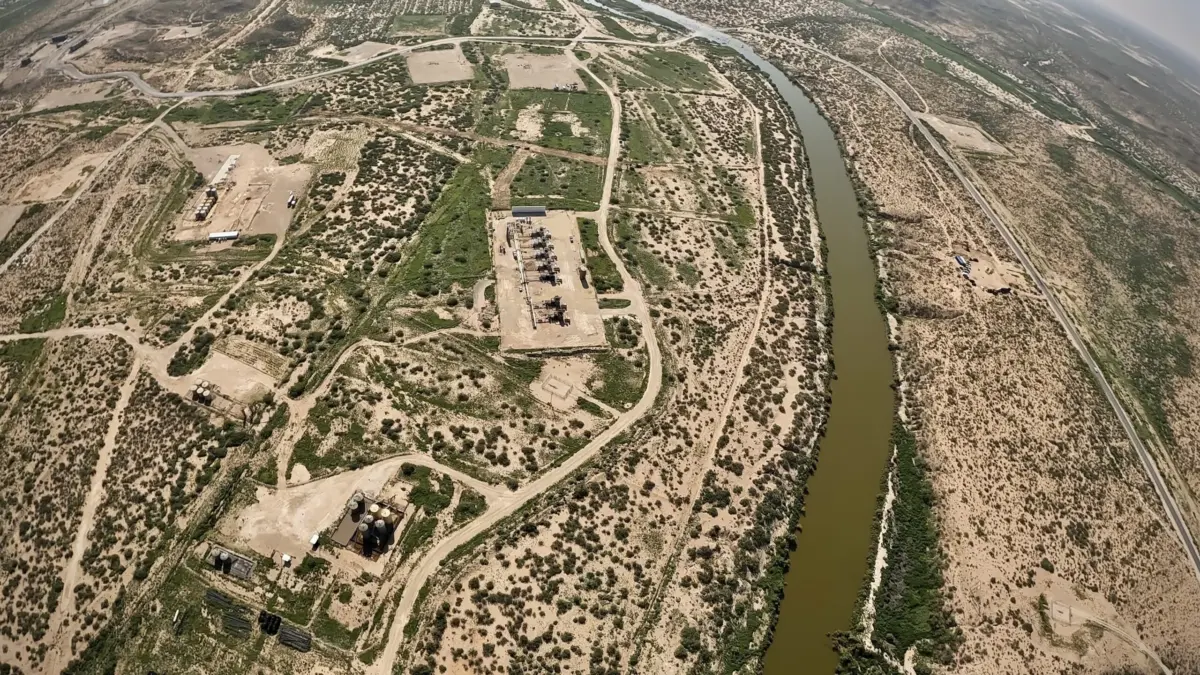
As global climate change continues to heat and dry out the American Southwest, and the Pecos River runs at increasingly diminished levels, one of the primary drivers of that climatic shift sits directly atop the river’s eastern banks. Just feet from where Barrett sits stretches the vast Permian Basin—a massive energy-producing region encompassing 75,000 square miles across 55 counties in New Mexico and Texas.
Water and Geology
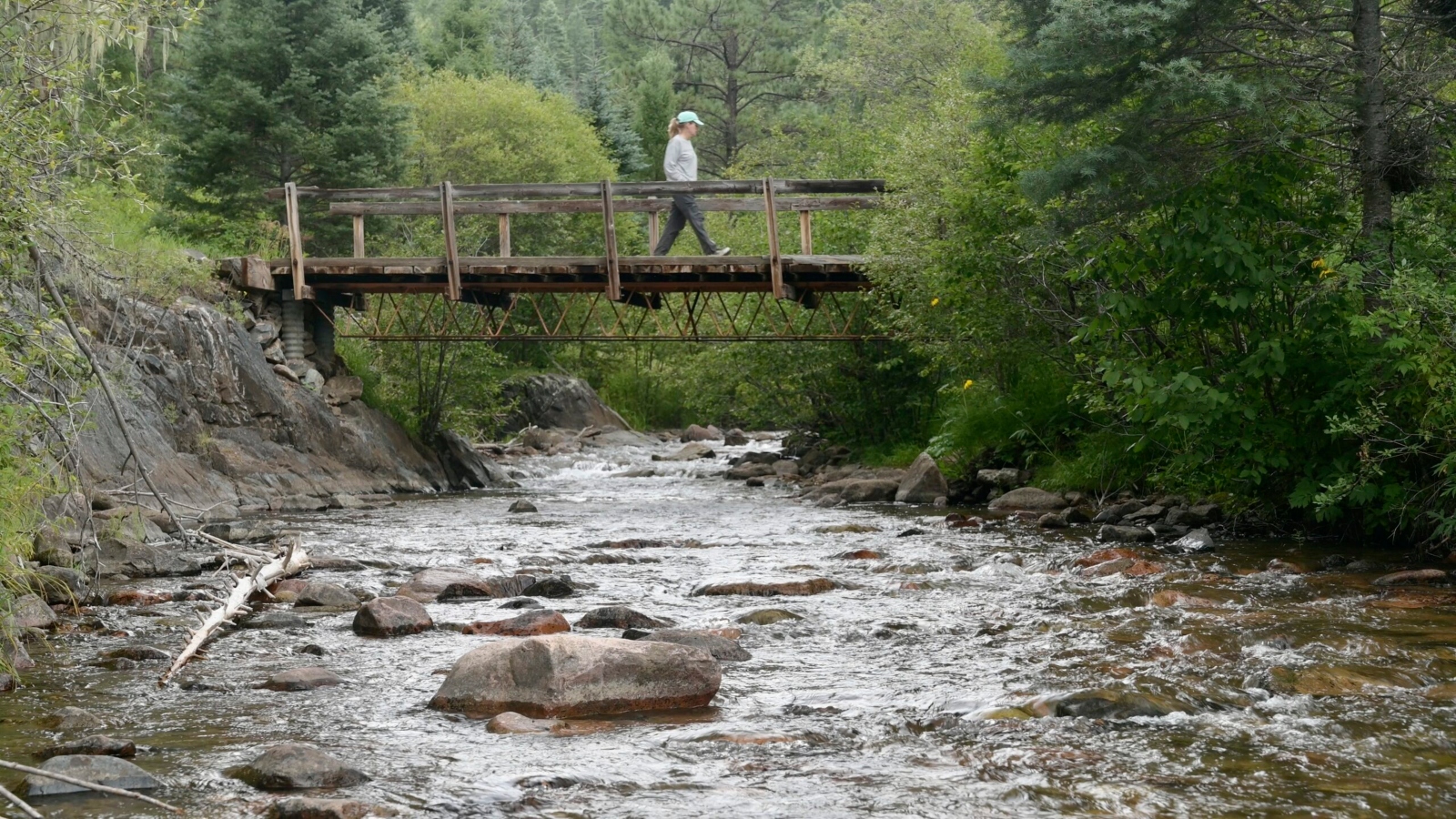
The Pecos River holds an iconic place in American lore, immortalized both as a favorite fishing spot of the cartoon character Yosemite Sam and as a historic geographic demarcation line of the Wild West. The river originates among some of New Mexico’s highest alpine peaks east of Santa Fe, rushing untamed through miles of steep, pine-covered canyons that earned it an official designation as a National Wild and Scenic River. In its upper reaches, its waters nourish generational farms and ranches across the central plains of New Mexico.
However, by the time the river exits the state to the south, it bears little resemblance to a wild mountain stream. Instead, it flows as a tightly managed, artificial conveyance, delivering carefully tallied water allotments through the absolute center of the Permian Basin, the most productive oil and gas extraction zone in the United States.
Reflecting the mounting ecological pressures, the national conservation organization American Rivers has twice named the Pecos River among the most endangered rivers in the country—placing it on the list in 2021 as a standalone entry, and again in 2024 alongside several other stressed New Mexico waterways.
Both the river and the surrounding Permian Basin represent striking natural features of a landscape that has been profoundly altered by humanity’s insatiable demand for fossil fuels. Over the past century, energy developers have drilled tens of thousands of deep wells, webbed the desert floor with an intricate network of pipelines, and released ancient carbon trapped tens of millions of years ago to power global transportation and electricity grids. That industrial carbon release has fundamentally altered the chemistry of Earth’s atmosphere, trapping excess heat that warms the planet and accelerates the aridification of New Mexico.
Meanwhile, along the Pecos River, water managers face a relentless upward surge in human demand coupled with a dwindling supply year after year. The meager winter snowpack from previous years has only exacerbated the regional water crisis.
“It is totally terrifying in a lot of ways,” said Hannah Riseley-White, director of the New Mexico Interstate Stream Commission, whose agency is tasked with ensuring the state meets its legal water delivery obligations to all competing stakeholders.
“Everyone this spring got tired of me at the beginning of every meeting screen-sharing the snowpack figures for all of the basins that we manage,” she said. “It fell off the cliff. It wasn’t just record breaking. It was beyond anything that we could have imagined in terms of snowpack.”
The preceding winter provided little relief, and long-term scientific projections offer no comfort. Riseley-White noted that state models anticipate a staggering 25% to 30% decrease in overall river flows by the year 2070.
“So the biggest challenge that the Pecos faces is just aridification due to climate change,” she said.
These sobering percentages form a cornerstone of New Mexico Governor Michelle Lujan Grisham’s comprehensive 50-Year Water Action Plan, which outlines how accelerating global warming will drastically contract the state’s available water supplies in the coming decades. The state plan also proposes various strategies to conserve existing supplies and develop alternative water sources in an increasingly parched environment. Among the most controversial proposals is the industrial treatment of oilfield wastewater—the very substance Barrett suspects was dumped along the roadway—to purify it to a standard where regulators might permit its use outside the oilfield for broader industrial and agricultural applications.
“The industry’s actually advocating for repurposing produced water and pumping it into this river,” Barrett noted from his seat beside the Pecos.
To date, legal and regulatory maneuvering to permit such discharges has faced steep hurdles. A recent high-profile push to alter state rules and authorize the widespread application of treated wastewater abruptly stalled after Governor Lujan Grisham intervened in the deliberations of a state rulemaking commission. Although industry proponents continue to eye future regulatory changes, no definitive timelines have been established, and local environmental organizations remain fiercely opposed to the concept. Critics argue that current membrane and filtration technologies cannot guarantee the 100% removal of complex, toxic industrial chemicals from the briny waste stream.
Just across the state line, the Texas chapter of the Sierra Club has documented at least five distinct industry proposals to discharge treated produced water directly into the Texas portion of the Pecos River watershed, though none of those permits have received final approval to date.
“Do I think [treated] produced water will solve all of our problems in the Pecos? No,” Riseley-White said. “But thinking about it as one of the many sort of tools in the toolbox I think makes sense.”
She added that finding creative solutions will inevitably require examining every available option. “And I think technology is there to clean water to various standards. It’s just a question of whether financially the incentives are there.”
Other Dangers
A number of vulnerable and endangered native species inhabit the riparian corridors and arid uplands along the Pecos River, including the dunes sagebrush lizard and the Texas hornshell mussel. The lesser prairie chicken was historically part of that protected ecological community until the U.S. Fish and Wildlife Service formally removed its federal protections under the Endangered Species Act, despite documented declines in its wild population numbers.
“There’s going to be just increasing challenges in ensuring that there’s sufficient water for those species, just like for the other users that depend on it,” Riseley-White said.
As an example of collaborative conservation, she pointed to ongoing efforts involving the Texas hornshell along a tributary of the Pecos. In that instance, she noted, local landowners recognized that maintaining adequate flows in the Black River to preserve the rare mussel meant ensuring that enough water remained available for their own agricultural needs as well.
However, new challenges to wildlife survival are also emanating from federal policy shifts in Washington. The Department of the Interior rolled back regulatory interpretations of what constitutes “harm” to an endangered species, narrowing the definition to apply primarily to direct physical injury or death while excluding habitat destruction and chronic noise pollution from regulatory enforcement considerations. Furthermore, federal officials rescinded long-standing blanket rules that automatically extended endangered-level protections to threatened species, while simultaneously mandating that regulators formally consider the economic costs imposed on energy production when designating critical habitats.
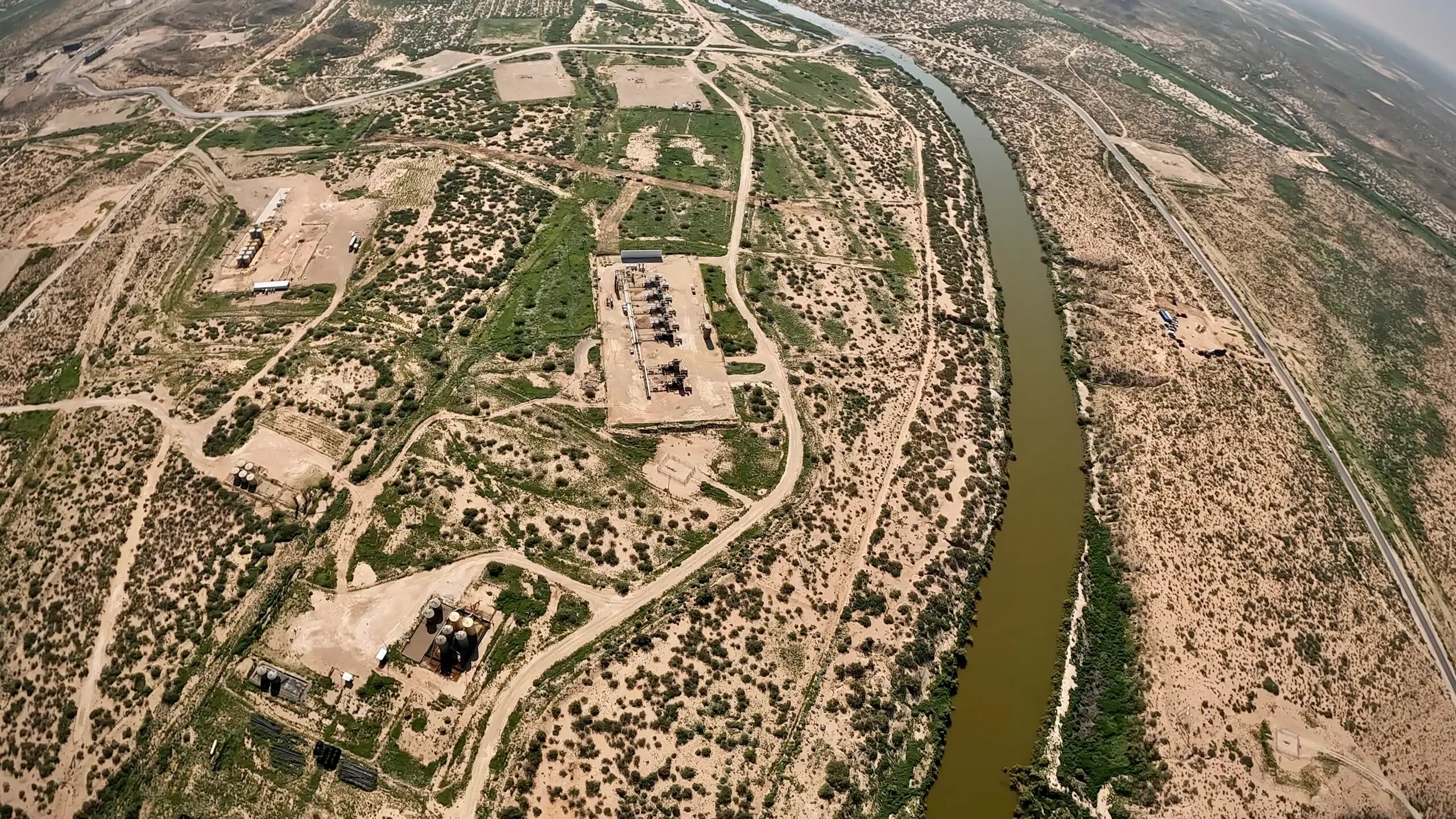
Taken together, these regulatory changes have substantially weakened federal oversight for native plants and animals across the American West, including the fragile ecosystems of the Pecos River watershed. Within New Mexico’s portion of the Permian Basin, approximately 380 active oil and gas wells pierce the ground within a mere half-mile of the riverbanks, alongside 11 deep injection wells utilized exclusively for wastewater disposal within that same sensitive corridor.
“The sound pollution and light pollution also affect this river ecosystem,” said Barrett, whose background includes formal studies in ecology and wildlife management, as well as prior professional work as a staff ecologist for the Texas Parks and Wildlife Department and the Texas A&M Forest Service.
He warned that chronic industrial disturbance in close proximity to fragile waterways invariably drives native wildlife away, ultimately triggering regional extirpations.
Despite the compounding pressures of industrial expansion, climate-driven aridification, and regulatory rollbacks, state water officials maintain that a collaborative path forward remains possible.
“My hope in the Pecos is that as we face these challenges, we can get all of the different interests at the table and find solutions that make sense to everybody,” Riseley-White said.
“I think it’s challenging, but I think it’s definitely possible.”