
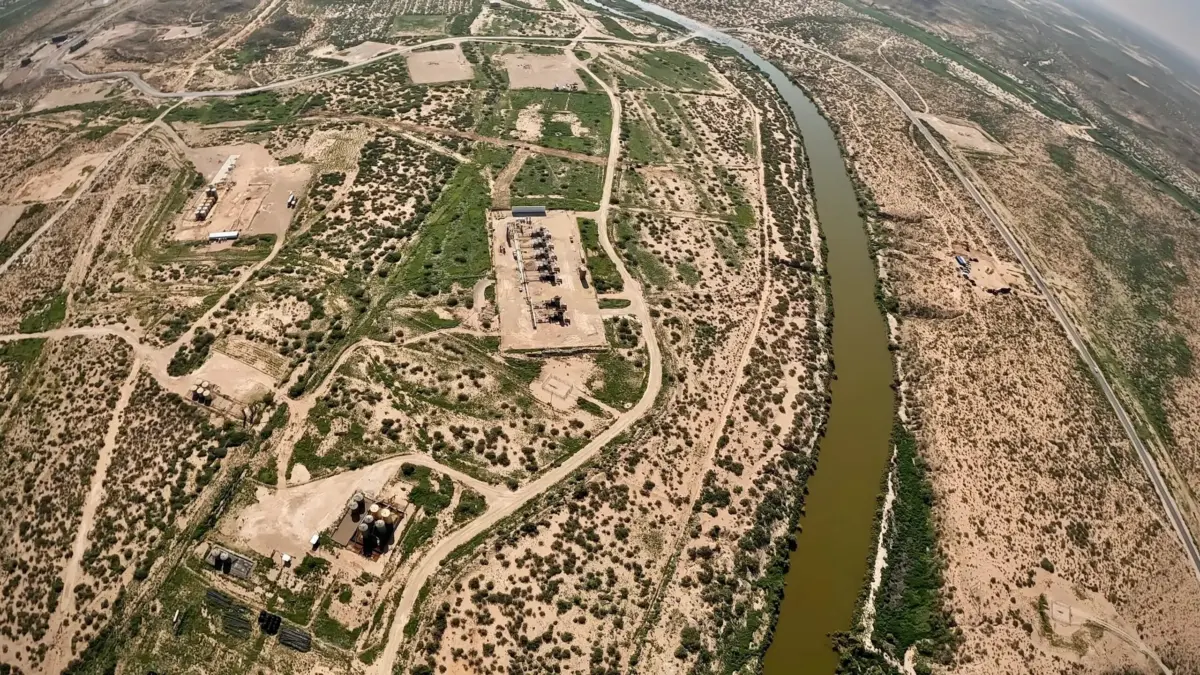
On a warm afternoon in early May, Charlie Barrett parked his pickup truck in a gravel pullout along a county road just a few hundred feet from the winding Black River in southern New Mexico. He was only a mile upstream from where the Black empties its currents into the Pecos River. Barrett, a thermographer with the industry watchdog group Oilfield Witness, had stopped to set up a specialized video camera capable of detecting invisible heat signatures and hydrocarbon gases to check for emissions at a nearby oil and gas operation.
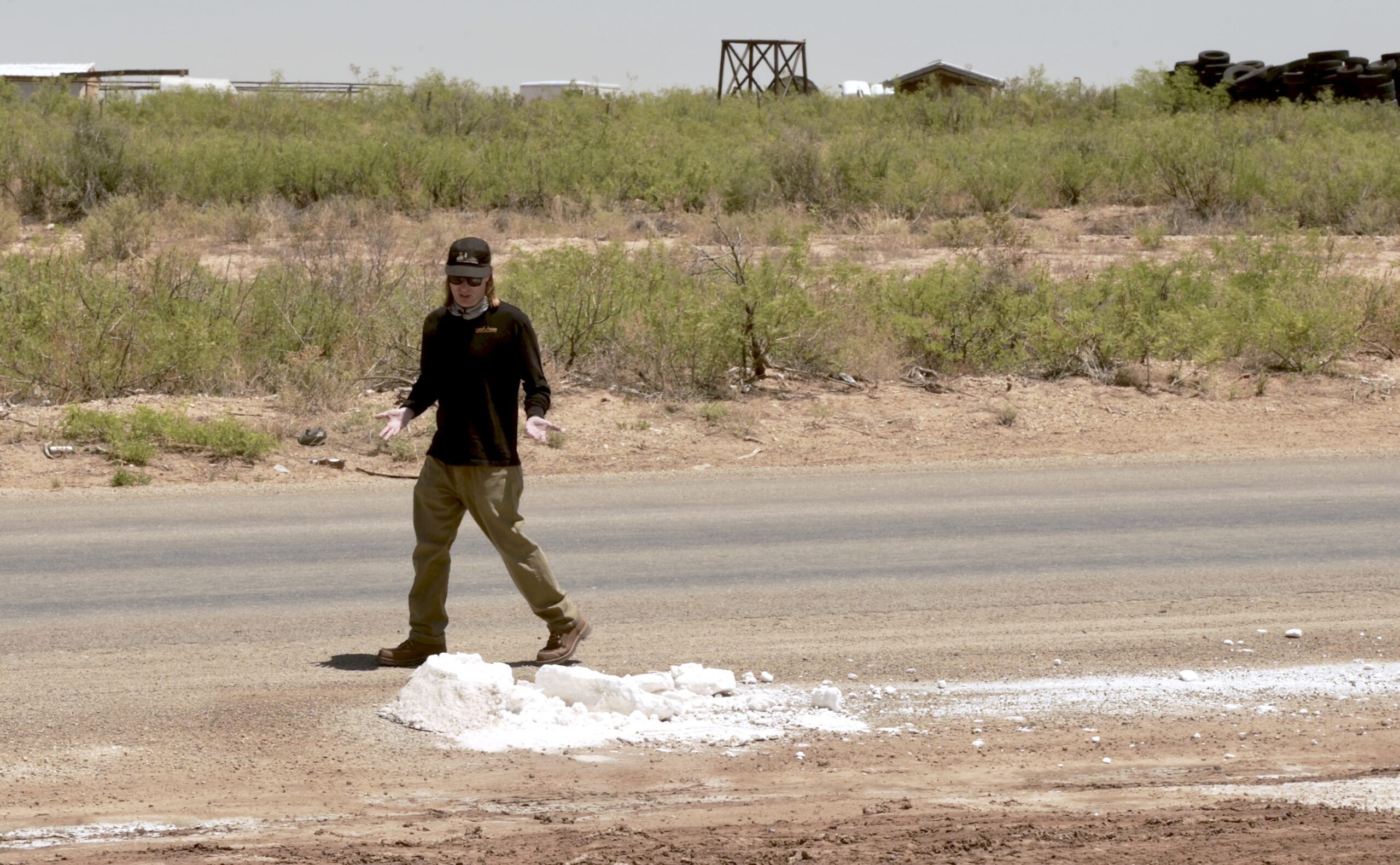
Stepping out onto the shoulder, Barrett immediately noticed that the pullout was muddy and dotted with lingering puddles—a peculiar sight during a severe, ongoing drought that has gripped the region for years. Resting near one of the mud puddles was a gray chunk of salt roughly the size of a medicine ball, glistening with shimmering white crystals.
"Unfortunately, this is pretty common," Barrett remarked, inspecting the ground. "It’s also quite dangerous."
It was evident to the experienced thermographer that someone had illegally dumped oilfield wastewater, commonly known as produced water, directly onto the roadside pullout. Produced water is an extremely saline and toxic byproduct of oil and gas extraction that carries a complex mixture of petroleum compounds, industrial chemicals, and, in some cases, naturally occurring radioactive materials. Barrett expressed deep concern that unsuspecting motorists might drive through the muck, or that travelers might pull off the road and walk their pets or children right through the hazardous residue.
A Deluge of Toxic Wastewater
All day, every day, a relentless fleet of semi-trucks hauls toxic produced water from well sites across the state, shuttling the unwanted fluid between extraction points and disposal stations along the highways and backroads of this far corner of New Mexico. For every single barrel of crude oil extracted in the state, more than three barrels of wastewater emerge from the subterranean depths. As fossil fuel production has skyrocketed to historic heights across the vast Permian Basin, the volume of produced water has surged in lockstep. Compounding the issue, the water-to-oil ratio naturally increases as oil wells and fields age—a geological process known in the industry as "watering out."
State regulations in New Mexico strictly ban the use of produced water for anything outside of approved oilfield operations. This restriction has fostered a massive, parallel industrial infrastructure dedicated entirely to gathering, transporting, and reinjecting produced water deep beneath the earth’s surface. However, that reliance on deep-well reinjection has triggered unintended consequences, most notably a sharp spike in local seismic activity and dramatic, high-profile blowouts where failing injection wells rupture and spew geysers of toxic wastewater hundreds of feet into the air.
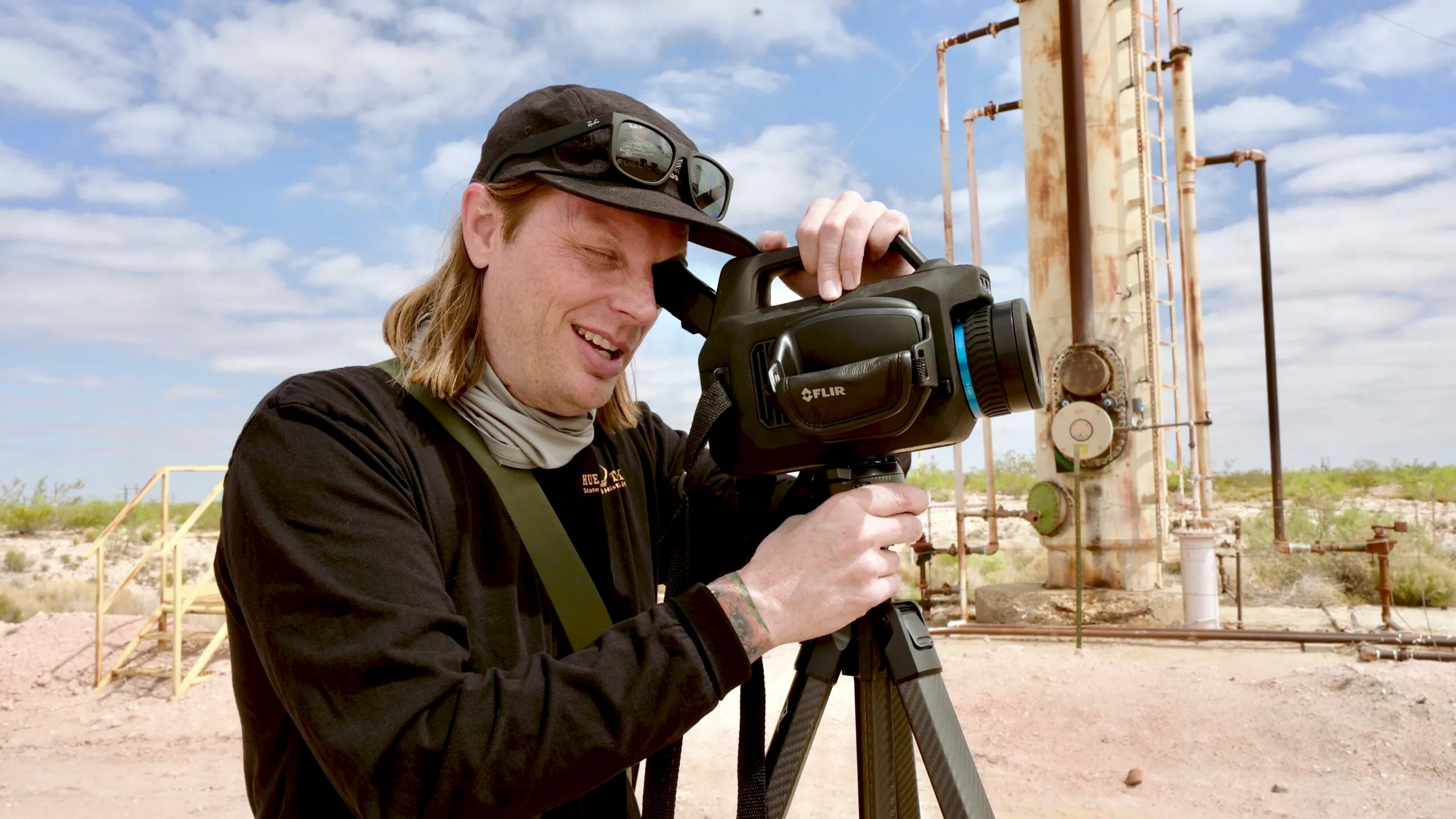
Working as an independent thermographer, Barrett uses his optical gas imaging equipment to make the invisible visible, capturing unauthorized emissions leaking from valves, storage tanks, and flares. As he prepared his tripod under a cloudless sky, a steady stream of heavy oilfield trucks rumbled down the asphalt.
Looking through the viewfinder of his thermal camera, Barrett began recording. "Oh, man, that’s fucking terrible," he muttered. On the small screen, rendered in undulating, candy-colored hues, the thermal feed exposed the intense heat signatures of three active industrial flares situated hazardously close to a residential home.
"Got a person’s home here and then this mess — all producing CO2 and methane and other volatile organic compounds, blowing right into their home," Barrett said, panning the camera across the landscape. "Jesus, man. It’s ridiculous."
When he reviewed the digital footage later on a larger computer monitor, he discovered an additional lit flare hidden in the frame, bringing the total to four active flares in a single field of view. This troubling sight occurred despite the fact that New Mexico instituted a broad ban on nearly all routine flaring back in 2022.
Fossil fuel companies burn off, or "flare," natural gas for several operational reasons: the gas may not meet pipeline quality specifications, lines may become dangerously over-pressurized, or flaring may be deemed necessary during routine equipment maintenance. While burning uncaptured gas is considered better for the global climate than venting raw methane directly into the atmosphere, flaring still releases substantial quantities of carbon dioxide and other hazardous air pollutants into neighboring communities.
The Pecos River in the Crosshairs
Later in the day, Barrett sat quietly on a small boulder along a peaceful bend in the Pecos River. The river gurgled gently over smooth stones, dragonflies hovered above the surface, and coastal grasses rustled as more heavy oilfield trucks rumbled across a nearby bridge—a stark, industrial reminder that he was sitting in the heart of one of the most prolific fossil fuel basins on the planet.
"It sucks," Barrett said, looking out over the water. "It’s a beautiful river in the middle of a hellscape."
Months earlier, during his previous visit to the exact same spot, Barrett discovered thick salt deposits coating the ground between the bridge and the riverbank. "I mean, the whole road was flooded over," he recalled. "We couldn’t confirm one way or another if that was an actual produced water spill," he added, noting that given the surrounding industrial activity, there were very few alternative explanations.
Such an environmental insult would represent yet another heavy blow to a river system already under severe ecological stress. Ironically, the Pecos River desperately needs more water, not less. Long-term data collected by the U.S. Geological Survey over the past four decades demonstrates a slow, steady decline in the annual winter snowpack accumulating in the high mountains surrounding the river’s headwaters. Flow measurements recorded further upriver near the town of Pecos mirror this troubling downward trend.
As global climate change continues to heat and aridify New Mexico, causing the Pecos River to run lower with each passing year, one of the primary drivers of that climatic shift sits directly atop the river’s banks. The immense Permian Basin spans approximately 75,000 square miles across 55 counties in New Mexico and Texas, a sprawling grid of drilling rigs, pipelines, and storage facilities.
Water and Geology in an Arid Land
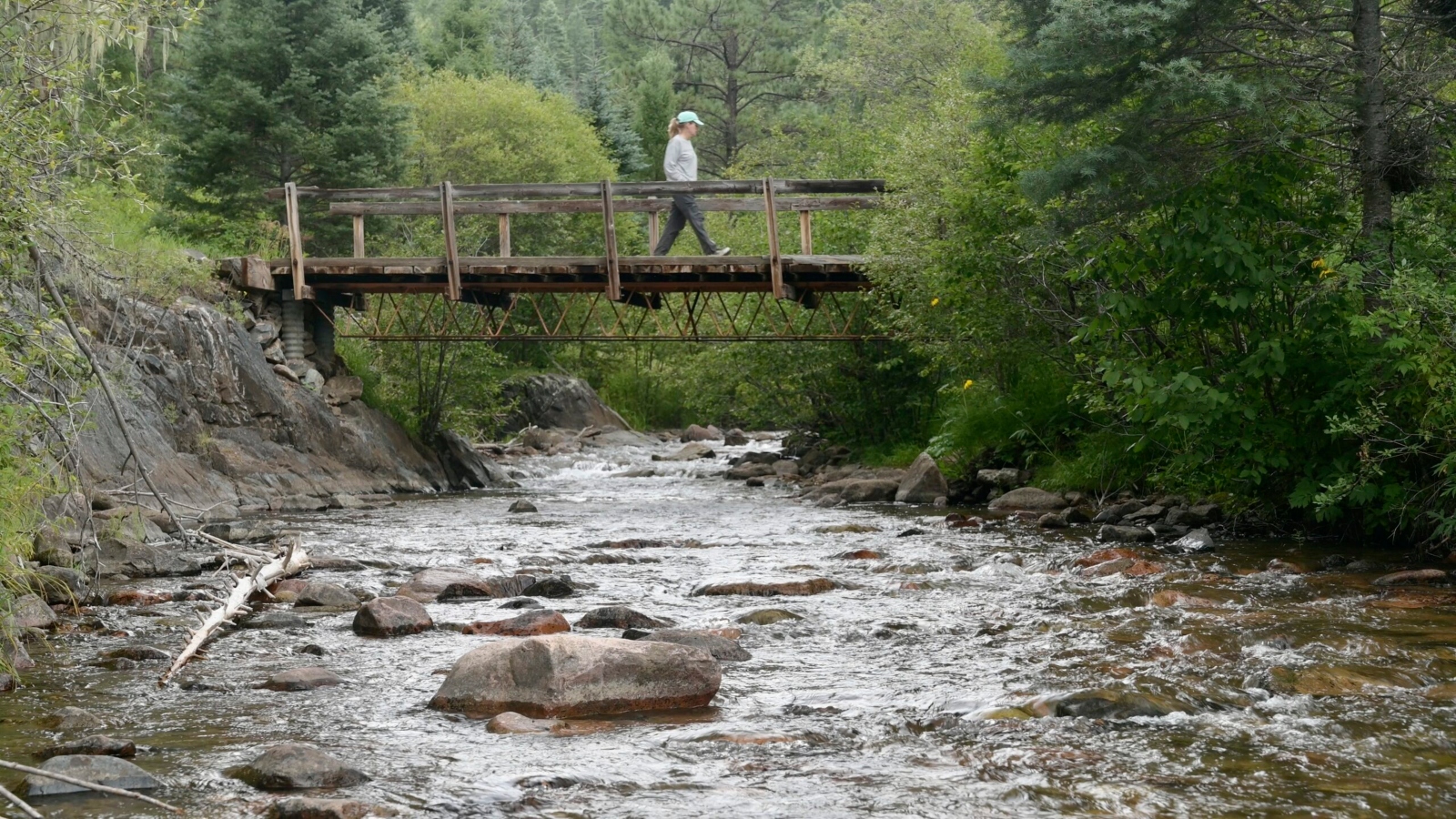
The Pecos River occupies a legendary place in American lore, immortalized both as the historic demarcation line of the Wild West and as the nominal home of the famously cantankerous Looney Tunes character Yosemite Sam. The river originates in some of New Mexico’s highest alpine peaks east of Santa Fe, rushing untamed through miles of steep canyons and pine-forested slopes—a journey that earned its upper reaches a prestigious National Wild and Scenic River designation. Along its central course, its waters sustain farms, ranches, and rural communities. But by the time the river reaches the southern border and exits the state, it resembles a tightly managed, artificial creek—a regulated conveyance tasked with delivering carefully tallied water allotments through the center of the Permian Basin.
The environmental advocacy organization American Rivers has repeatedly sounded the alarm over the river’s fate, naming the Pecos one of the country’s most endangered waterways, including a standalone designation in 2021 and a joint listing alongside other New Mexico rivers in 2024.
Both the river and the surrounding basin are physical manifestations of a landscape transformed by humanity’s insatiable demand for fossil fuels. Over the past century, energy companies have drilled tens of thousands of wells, webbed the desert with pipelines, and released ancient carbon trapped millions of years ago to power global transportation and industry. That massive carbon release has fundamentally altered the chemistry of the earth’s atmosphere, trapping heat that steadily warms the planet and dries out the American Southwest.
Meanwhile, on the Pecos, as on virtually every other major river system across New Mexico, demand steadily outpaces supply. The meager snowpack of recent winters has only heightened the anxiety of state water managers.
"It is totally terrifying in a lot of ways," said Hannah Riseley-White, director of the New Mexico Interstate Stream Commission, whose agency is tasked with balancing the competing demands of all stakeholders who rely on the river’s dwindling flow.
"Everyone this spring got tired of me at the beginning of every meeting screen-sharing the snowpack figures for all of the basins that we manage," Riseley-White said. "It fell off the cliff. It wasn’t just record-breaking. It was beyond anything that we could have imagined in terms of snowpack."
With long-term climatological forecasts pointing toward a projected 25% to 30% reduction in river flows by the year 2070, Riseley-White acknowledges that the single greatest challenge facing the Pecos is long-term aridification driven by climate change.
Those stark projections form the backbone of New Mexico Governor Michelle Lujan Grisham’s 50-Year Water Action Plan, which outlines strategies for conserving existing water supplies and developing alternative sources. Among the proposals under consideration is the industrial treatment of oilfield wastewater—the very fluid Barrett suspects he found dumped on the roadside—to purify it sufficiently for broader industrial and commercial applications outside the oil patch.
"The industry’s actually advocating for repurposing produced water and pumping it into this river," Barrett noted while sitting by the riverbank.
To date, legal efforts to alter state regulations to permit the broad discharge and use of treated produced water have faced fierce resistance. A recent push to change state rules effectively stalled after Gov. Lujan Grisham intervened in a rulemaking body’s deliberations. Although additional efforts to revise the regulations remain underway, no firm timelines have been established. Local environmental organizations strongly oppose the initiative, arguing that current water treatment technology cannot guarantee the 100% removal of all complex toxic chemicals.
Across the state line in Texas, the Lone Star Chapter of the Sierra Club has identified at least five distinct proposals seeking authorization to discharge treated produced water into the Texas portion of the Pecos River watershed, though none have secured final approval from regulators.
"Do I think [treated] produced water will solve all of our problems in the Pecos? No," Riseley-White said. "लेकिन thinking about it as one of the many sort of tools in the toolbox I think makes sense."
She added that finding creative solutions will inevitably require evaluating all available options. "I think the technology is there to clean water to various standards. It’s just a question of whether financially the incentives are there."
Mounting Ecological Pressures
A rich array of vulnerable and endangered wildlife relies on the remaining habitat along the Pecos River corridor, including the dunes sagebrush lizard and the Texas hornshell mussel. Until recently, the lesser prairie chicken shared those protections, but the U.S. Fish and Wildlife Service formally stripped the bird of its Endangered Species Act protections in early 2026, despite documented population declines.
"There’s going to be just increasing challenges in ensuring that there’s sufficient water for those species, just like for the other users that depend on it," Riseley-White said. She pointed to collaborative conservation efforts as a rare bright spot, noting that when authorities worked to protect the Texas hornshell along a Pecos tributary, local landowners realized that maintaining water in the Black River for the mussel ensured water remained available for their own agricultural needs as well.
However, those conservation efforts face new headwinds from federal policy shifts originating in Washington. The Department of the Interior rolled back the federal definition of "harm" under the Endangered Species Act to apply only to actions that directly injure or kill an endangered animal, meaning that ambient noise and habitat destruction would no longer be considered legal threats to a species’ survival. Subsequent regulatory changes rescinded the "blanket rule" that previously afforded threatened species the same robust protections as endangered ones, while mandating that regulators formally consider the economic costs of protecting wildlife—effectively prioritizing the financial interests of the oil and gas sector.
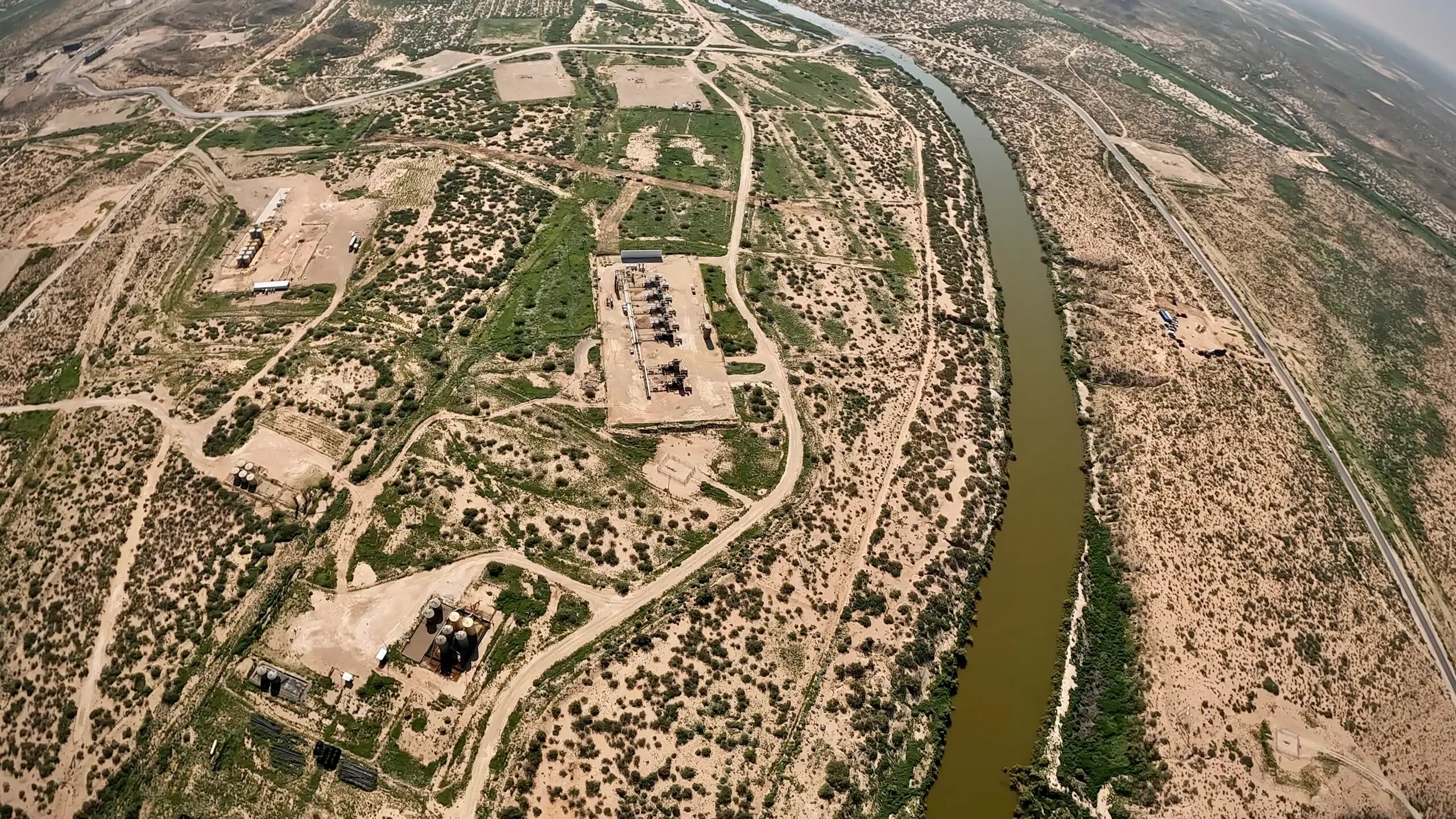
These cumulative policy changes threaten to undermine decades of conservation work across the Pecos River watershed. Within New Mexico’s share of the Permian Basin, an estimated 380 oil and gas wells sit within just a half-mile of the river, accompanied by 11 industrial injection wells utilized for wastewater disposal in that same narrow riparian corridor.
"The sound pollution and light pollution also affect this river ecosystem," said Barrett, who holds an academic background in ecology and wildlife management and previously worked as a staff ecologist for the Texas Parks and Wildlife Department and the Texas A&M Forest Service. He warned that chronic industrial disturbance inevitably forces native species to abandon the ecosystem, potentially leading to regional extirpation.
Despite the daunting convergence of climate change, industrial pollution, and regulatory rollbacks, Riseley-White maintains a cautious sense of optimism.
"My hope in the Pecos is that as we face these challenges, we can get all of the different interests at the table and find solutions that make sense to everybody," she said. "I think it’s challenging, but I think it’s definitely possible."