
For parents of sleepless young children, the cultural footprint and enduring resonance of author Adam Mansbach are difficult to overstate. Bleary-eyed, exhausted, and perhaps operating on the very edge of despair, a parent picking up his runaway hit Go the Fck to Sleep* for the first time often experiences a moment of genuine, transcendent relief. The irreverent, darkly humorous picture book perfectly captures the complex, contradictory emotions that caregivers universally experience with toddlers—the overwhelming feeling of being trapped in a simmering, inescapable pot of cuddles, fierce dependence, pure sweetness, and unrelenting frustration. Mansbach allowed those intense feelings to boil completely over, providing millions of parents with a long-needed, deeply cathartic laugh during the most grueling phases of early childhood.
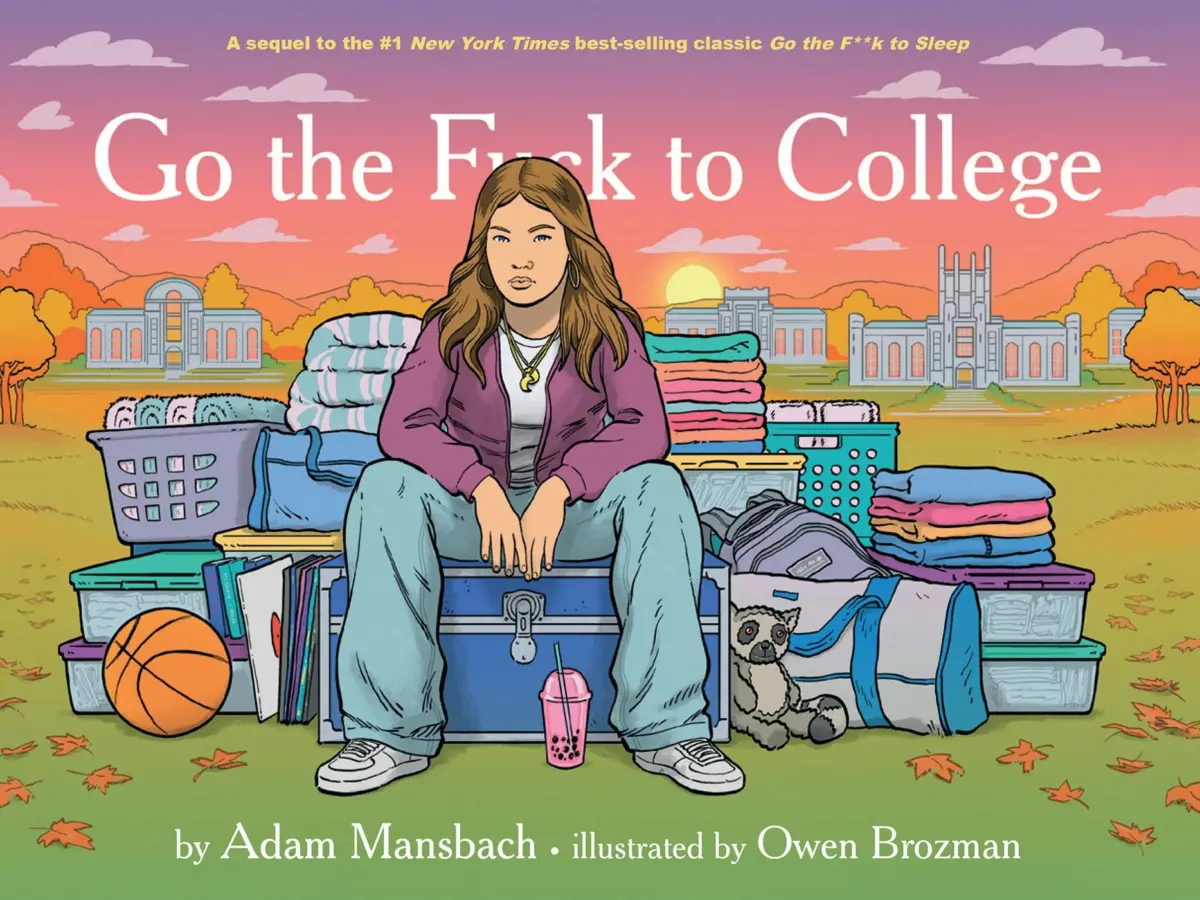
Now, exactly fifteen years later, Mansbach is tapping once again into the impossible, dizzying emotions of parents who are standing on the precipice of sending their children—who are suddenly towering teenagers—out into the wider world and away to college. His new book, Go the Fck to College*, which is available everywhere books are sold, proves to be just as sweet, sardonic, and endearingly cathartic as its predecessor. Even for parents who are currently navigating the turbulent waters of pre-adolescence, the book serves as a wonderful, grounding reminder that the entire parenting journey is exceptionally long, fraught with anxiety, difficult, and simultaneously beautiful—and that humanity is always better off when we manage to find a bit of humor in the chaos. In a reflective essay, Mansbach explores the swirling, contradictory state of mind he finds himself in as he grapples with the reality of how ready, or perhaps unready, his child is to finally embark on independent life.
The Text Message That Started It All
A few weeks ago, as I sat quietly at my desk in the middle of a mundane administrative task, ordering a cap and gown for my graduating high school senior, the kid in question abruptly interrupted my thoughts with a text message that stopped me cold:
Do I really have to go to college?
My heart rate soared instantly, sending a rush of panic through my system as I scrambled to type out a measured response: I mean, we already bought the sweatshirts. Those sweatshirts, representing Bard College, were the institution of their dreams—a school to which they had been accepted months earlier, prompting us to purchase roughly a dozen pieces of branded apparel in sheer excitement.
But you know I’m in favor of a gap year, I quickly added, trying to steer the conversation into safe territory. What are you thinking?
I just want to live at home. I could be a barista, the text read.
Fine with me, I said, desperately trying to play it cool and project an aura of total parental flexibility.
Maybe sell weed? Vivien wrote back.
Market’s kind of saturated, I replied, leaning into the joke. You’d be better off selling tomatoes.
Sorry Papa, April Fool’s.
Hahahahahahaha, I wrote back, entirely not laughing.
Thank you for being so supportive, Vivien responded. That was heartwarming. Ur fcking lying, bro.*
Parenting is all about embracing paradox. If you cannot manage to hold opposite, conflicting ideas in your mind at the very same time, you just might go completely insane.
The truth of the matter is that I was not lying. I genuinely wish that I had been, but my sudden excitement, my racing heart, and my carefully constructed fake nonchalance were all driven by a deeper, truer, and thoroughly embarrassing reaction: Yesssssss! They’re not leaving! Everything can stay the same forever! In that precise moment, I was more than willing to trade away the genuine exultation I felt when contemplating all the ways Vivien’s world was about to expand beautifully, opting instead for the safe, the familiar, and a lifetime of unlimited free lattes.
It was a timely and potent reminder that the entire enterprise of parenting is fundamentally rooted in embracing paradox. When children are small, these paradoxes are relatively simple—such as being consumed by blinding, white-hot rage when their stubborn refusal to go to sleep leaves you trapped in a grueling two-hour snuggle session with the person you love most in the entire world, a dynamic I explored at length years ago in Go the Fck to Sleep*.
A decade later, the paradox evolves into something entirely different, like wrapping your head around the bewildering reality that a twelve-year-old child is somehow simultaneously eighteen and six years old depending on the hour of the day. As a friend of mine once neatly summarized the unique middle school parenting experience: Fck you, tuck me in.* By the time high school rolls around, the paradox transforms into the jarring realization that the only thing more infuriating than seeing your teenager completely lost and catatonic inside their smartphone screen is texting them and failing to receive a reply within four nanoseconds.
The Heaviest Paradox of All
And as the clock steadily ticks down toward graduation, adulthood, and true independence, those paradoxes only grow thornier and more difficult to navigate. For me, moving past the strange interplay of exultation and melancholy that completely inverted an April Fools’ joke, or balancing the complexity of letting my kid know they can always return home while simultaneously informing them that I am planning to convert their empty bedroom into a home gym, the single biggest paradox is wanting to do the most active parenting precisely when the least is needed.
The exact moment I fully realized I could no longer unilaterally solve all of Vivien’s problems stands out vividly in my memory. It happened back in the fourth grade, when their favorite teacher abruptly announced she was leaving the school. Vivien felt utterly betrayed and crushed by the news—and because I was entirely powerless to alter or affect the situation, I was forced to do something I find vastly more difficult than fixing things: I had to simply sit down, listen quietly, and go through the emotional fallout alongside them.
However, because I am inherently a solution-oriented person, or perhaps just a stubborn knucklehead who fundamentally hates to see my children experience pain, that crucial lesson did not stick the first time around. Year after year, I repeatedly erred on the side of offering immediate directives, telling them here’s what you need to do instead of offering the much harder, more appropriate response: that sounds really hard, and I’m sure you’ll figure it out.
Eventually, I managed to get a little better at stepping back. And Vivien turned out to be remarkably capable and resourceful anyway—not least because I inadvertently taught them how to stand up to overbearing authority figures, by which I mostly mean me. But now, with the looming reality of college just around the corner, I find myself frantically scrambling to impart every single ounce of wisdom I have finally grown wise enough to keep to myself.
The underlying problem is that whatever advice I attempt to offer usually falls into one of three categories: it is stuff they already know and have heard a million times, such as the classic parental edict of "no pills, no powders"; it consists of precious nuggets of insight that instantly reveal themselves as completely idiotic the exact second I say them out loud, like "take classes about things you think are interesting!"; or they are profound jewels of experience whose immense importance is rivaled only by the absolute impossibility of turning them into practical, prescriptive advice, such as "learn to quickly discern who is a trustworthy friend who will push you to be the best version of yourself, and who is drawn to you merely because they are an emotional vampire and you are an emotional blood source!"
Consequently, as deeply tempted as I am to orchestrate a comprehensive, last-minute crash course in life before dropping them off on a college campus, I am holding back. These final months before departure are certainly not the time to suddenly establish a new family exercise routine or attempt to master basic automotive maintenance; instead, they are meant for simply enjoying each other’s company and purchasing copious amounts of dormitory bedding.
College itself is the ultimate crash course in everything that matters, and the reality is that nobody is ever a finished product when they leave home—not Vivien at eighteen, and certainly not me at forty-nine. Perhaps the most important paradox of all is realizing that your child remains your child even when they are fully out on their own in the world. Or perhaps it is the understanding that human beings truly grow from the inside out; more than anything else, I desperately want Vivien to hold tightly onto their essential kidness—the natural wonder, the silliness, and the simple yet beautiful moral code they first learned back in preschool—as they take those monumental first steps into genuine adulthood.
Besides, it is a safe bet that someone else over at Bard College will probably know how to change a tire.