

Matthew Mayich stepped onto the field of Sun Angel Stadium in Tempe, Arizona, at about 7 a.m. on August 20. It was the standout hockey player’s first official practice with his new team, and temperatures were already hovering in the mid-80s Fahrenheit.
The 21-year-old St. Louis Blues prospect had transferred to Arizona State University to continue his college career, carrying the promise of a bright future in the sport. Instead, that crisp morning practice devolved into a medical emergency that has left him fighting for his life, placed his head coach on leave, and ignited a sweeping national conversation regarding athlete safety and the mounting dangers of extreme heat in sports.
During the morning session, Mayich and his ASU teammates spent at least 45 minutes—though teammates later alleged the workout stretched to 75 minutes—performing an intensive regimen of push-ups, planks, flutter kicks, bear crawls, squats, sprints, and buddy-carries. The grueling conditioning was led by guest trainer and former Green Beret Tim Ziesel. Before dismissing the team from the field, Ziesel issued instructions for one final exercise: a medicine ball run.
As temperatures steadily climbed toward 90 degrees Fahrenheit, the players set off in small groups across the turf, according to the university’s official timeline of events. Mayich quickly appeared to struggle. Witnesses and reports indicate he stumbled, dropped the ball, and fell to the ground. When he attempted to rise, his legs gave out, and he fell a second time.
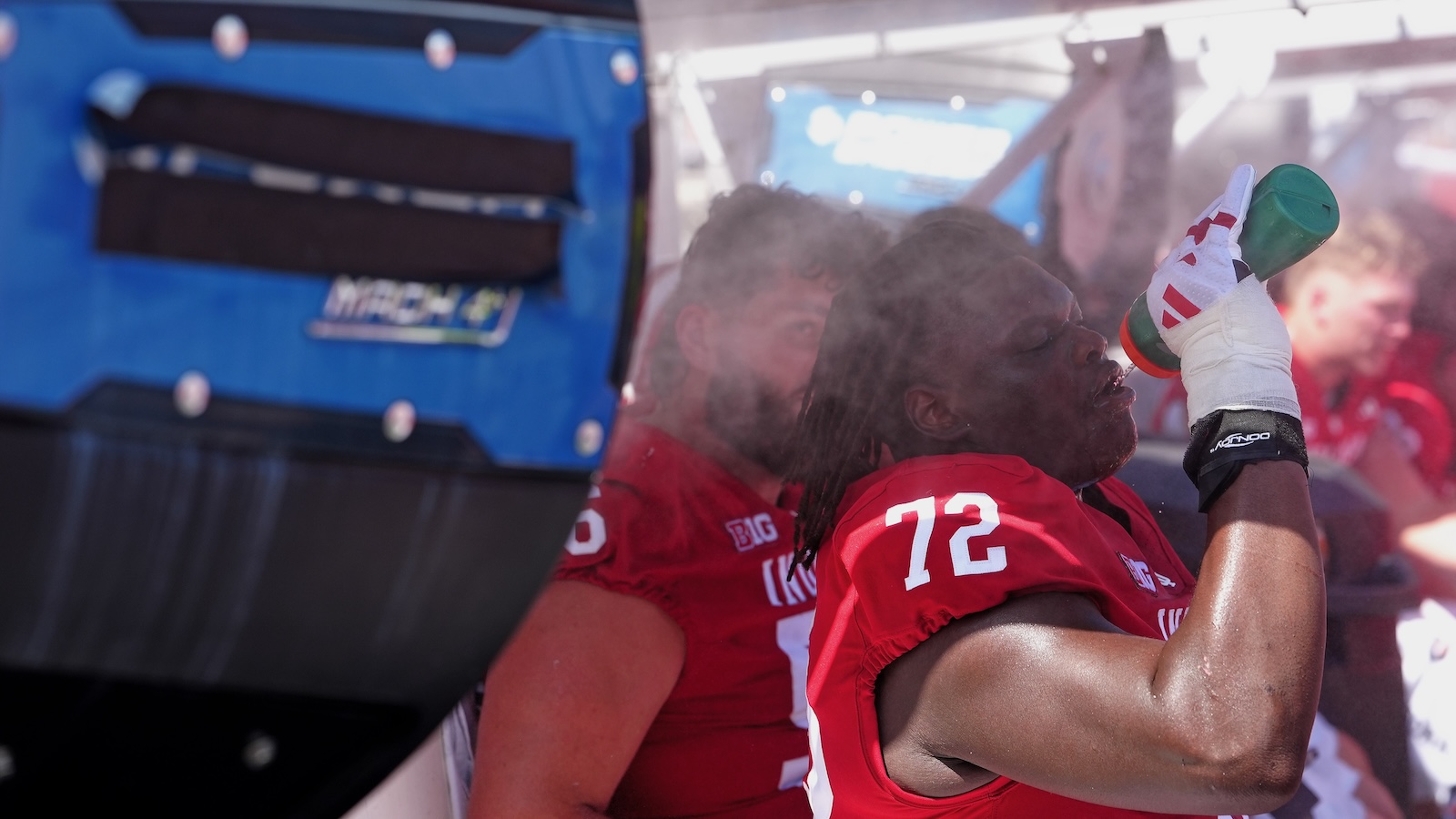
Athletic staff rushed to his aid, treating him with iced towels and cool water before spraying him with a garden hose. While he was initially responsive, his condition rapidly deteriorated. Alarmed by the worsening symptoms, a trainer placed a frantic call to 911. Paramedics rushed Mayich to the hospital, where he was admitted in critical condition. Robert Carey, an attorney representing Mayich’s family, stated that the player suffered from exertional heat stroke. While Carey did not respond to requests for additional medical records to independently corroborate the diagnosis, he has openly told journalists that the family’s hope for a meaningful recovery hovers near a miracle.
“We want accountability for what happened to our son,” Matthew’s parents, John and Christina, said in a written statement. “We want the truth.”
The fallout from the incident has sent shockwaves through the university and the broader collegiate sports community. University officials have declined requests for interviews, while legal representatives for the guest trainer downplayed the severity of the session. Larry Kazan, an attorney for Ziesel, wrote in an email that the workout was not as difficult as some media outlets had attempted to portray it.
Meanwhile, head coach Greg Powers insisted during a September 23 press conference that he remained the “right guy” to lead the hockey program, though he avoided addressing the specific details of the fateful morning workout. The university ultimately placed Powers on paid leave on a Wednesday, more than a month after the incident occurred and just two days after seven of Mayich’s teammates challenged the school’s official narrative and response.
In an anonymous letter sent through an attorney to ASU President Michael M. Crow, the teammates alleged that the university failed to follow its own established safety guidelines.
“The precautions required by ASU’s heat policy were not in place: no immersion tub, no ice chests, no on-field heat measurement, no scheduled breaks in shade,” the players wrote in the document. They added that the session “continued after some of us showed signs of distress, including dropping to a knee, vomiting and, in Matthew’s case, visible disorientation well before the final task.”

The tragedy involving Mayich echoes past athletic disasters, carrying grim parallels to the death of NFL player Korey Stringer, who succumbed to heat stroke 25 years to the month before Mayich’s hospitalization. Stringer’s death famously propelled heat safety into the national consciousness, forcing professional and amateur leagues to reevaluate how they handle soaring temperatures.
Experts note that while significant strides have been made over the past two decades, gaps in policy enforcement still leave athletes vulnerable. Doug Casa, an exercise physiologist, certified athletic trainer, and CEO of the Korey Stringer Institute, emphasized that Mayich’s case demonstrates that organizations can and must do more.
Exertional heat stroke is a life-threatening medical emergency triggered when the body overheats and fails to regulate its internal temperature. It remains a leading cause of preventable sports-related deaths, and the associated risks are steadily climbing. Climate change has driven up the frequency, intensity, and duration of extreme heat waves across the globe. According to findings from World Weather Attribution regarding cities hosting soccer’s World Cup between 1994 and 2026, the probability of extreme temperatures at least doubled in multiple host locations.
At the same time, traditional grass athletic fields are increasingly being replaced by synthetic turf surfaces, which absorb and retain massive amounts of thermal energy. Turf temperatures during a recent Tennessee Titans football game in Nashville soared to an astonishing 157 degrees Fahrenheit. The heat was so severe that players reported melted cleats, and unplayed substitutes required intravenous fluids to combat heat-related exhaustion.
From professional stadiums down to youth leagues, athletes are confronting a dangerous new environmental reality. While some organizations have instituted robust preventative measures—such as Georgia high schools, whose stringent policies transformed the state from one of the deadliest for football players into among the safest—others continue to rely on vague recommendations and lax mandates. The regulatory vacuum often extends beyond athletes to other individuals exposed to punishing conditions. Just one week after Mayich was hospitalized, University of Iowa band member Derek Phillips collapsed during a football game played in temperatures topping 90 degrees and later died.
Policy implementation remains the central issue, according to safety experts. While best practices for preventing and treating heat-related illnesses are well-established, consistent execution during moments of crisis often falls short.
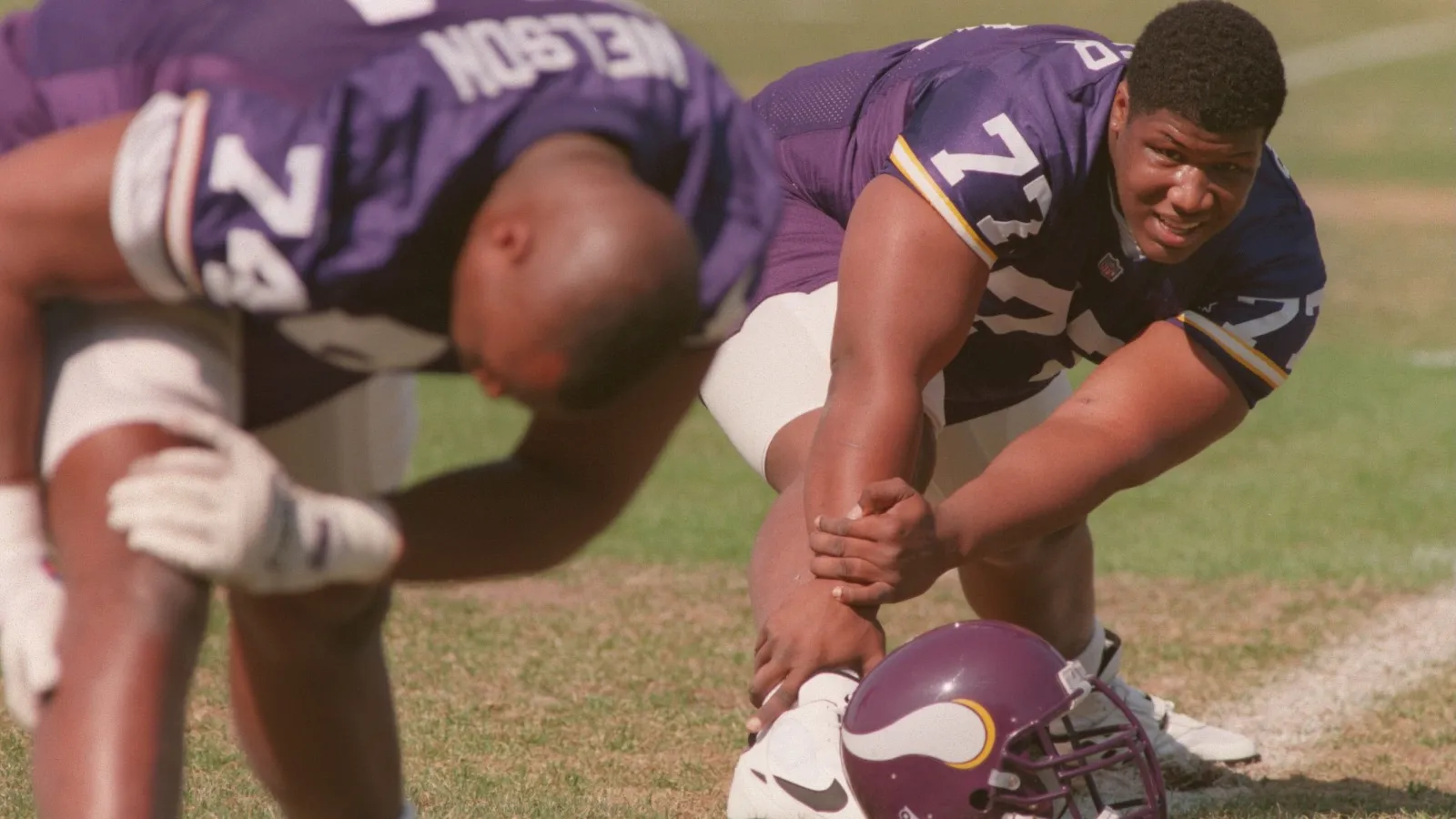
The historical context of these dangers underscores the critical importance of immediate and proper treatment. Korey Stringer, a premier offensive lineman for the Minnesota Vikings and a Pro Bowl selection, reported to training camp in the summer of 2001 amid scorching conditions. On the first day, he vomited multiple times and left practice early to cool off in an air-conditioned trailer. The following day, with the heat index pushing toward 100 degrees, Stringer completed the practice session despite falling ill again. During post-practice conditioning, he collapsed, lost consciousness, and was transported to a hospital with an internal body temperature of 108.8 degrees. He died of multiple organ failure thirteen hours later at the age of 27.
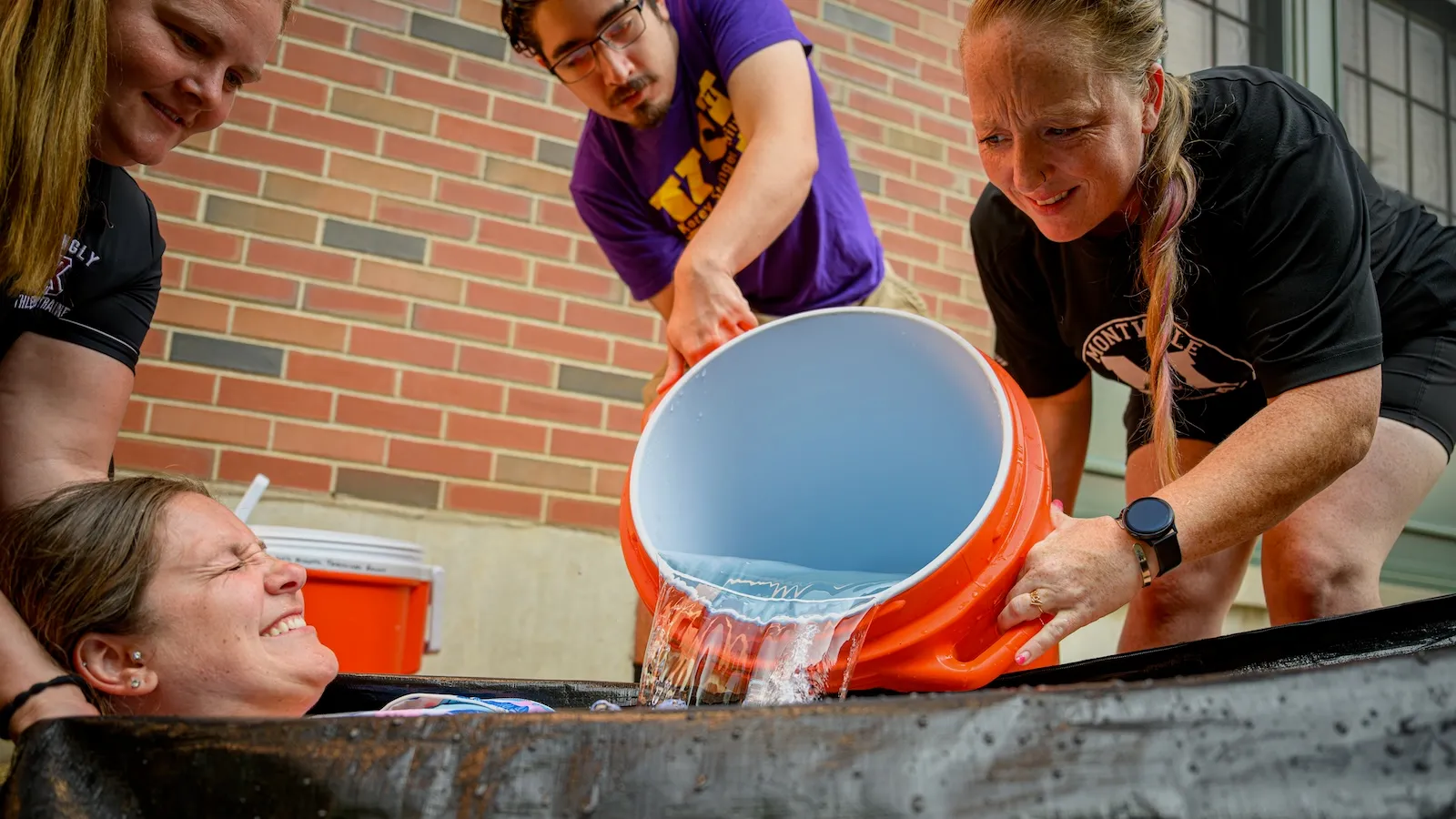
Experts like Casa, who served as an expert witness in subsequent litigation, maintain that Stringer’s death was entirely preventable. Research spearheaded by Casa confirms that cold-water immersion is the gold standard and most effective treatment for exertional heat stroke, cooling the body significantly faster than air conditioning or shade alone. While cooling Stringer via air conditioning would have taken well over an hour, an ice water immersion tub can safely lower a patient’s temperature in roughly 25 minutes.
Professional sports leagues have largely standardized how they track environmental heat risk. While weather reports typically rely on standard temperature and humidity-based heat index values, sports medicine professionals favor the wet bulb globe temperature, or WBGT. This metric incorporates ambient temperature, humidity, wind speed, angle of the sun, and radiant heat, making it a far superior indicator of true heat stress.
Leagues vary widely in how strictly they mandate WBGT thresholds. The NFL requires teams to utilize WBGT measurements but grants individual franchises flexibility in enforcement. Conversely, the National Women’s Soccer League enforces mandatory hydration breaks when WBGT reaches 82.3 degrees and mandates game delays if it exceeds 91.1 degrees, backed by disciplinary sanctions for non-compliance. Other organizations have faced criticism for prioritizing commercial interests over player safety, such as FIFA’s implementation of mandated water breaks during air-conditioned World Cup matches, which drew accusations of manufacturing television timeouts rather than protecting athletes.
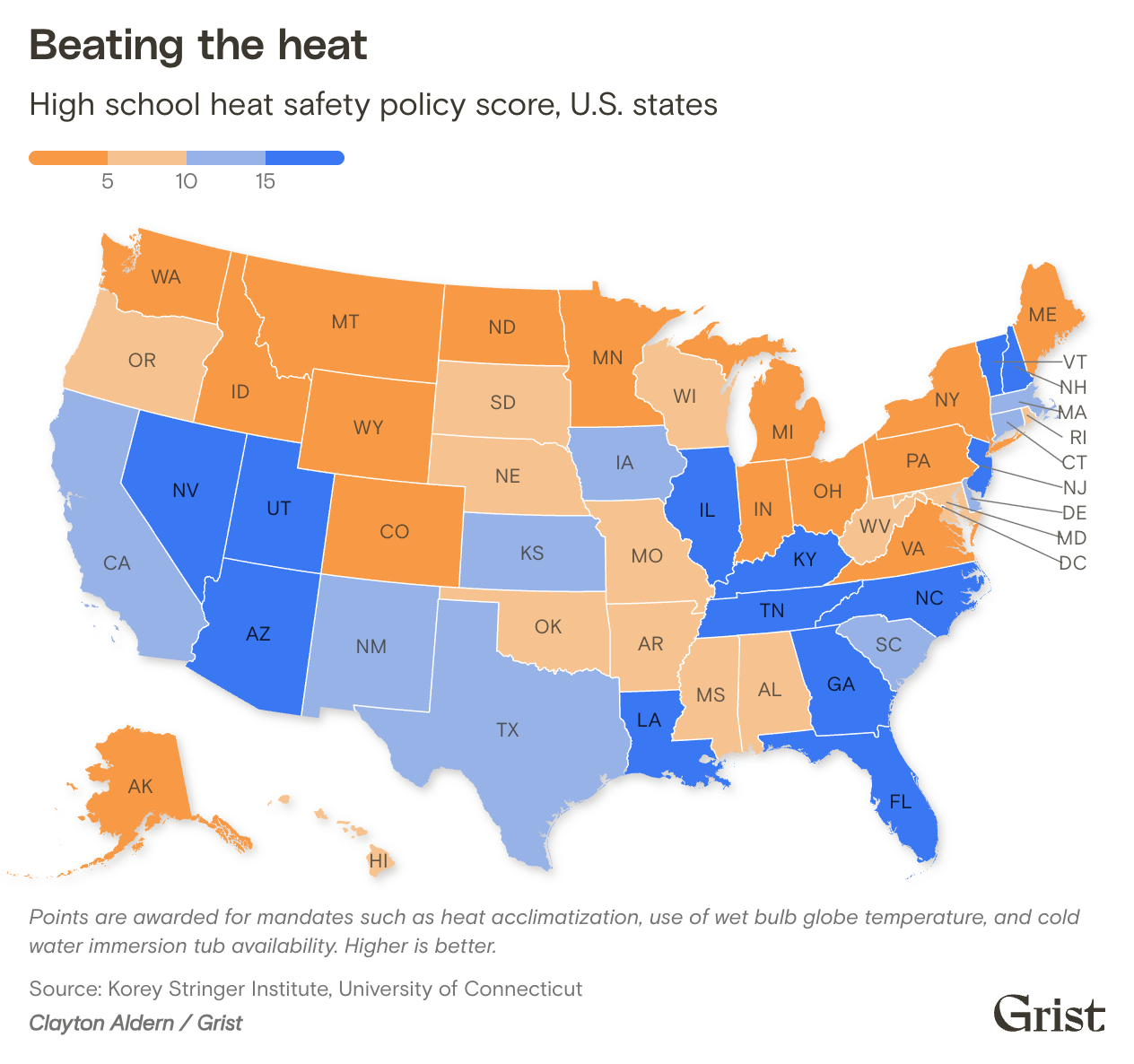
While professional leagues generally maintain structured safety protocols, severe regulatory gaps persist at lower levels of competition. No federal regulations govern heat safety in sports. Instead, oversight is fractured across state athletic associations, school districts, and individual volunteer leagues. The Korey Stringer Institute evaluates state high school heat safety policies on a scoring scale based on whether they mandate heat acclimatization, utilize WBGT monitoring, and require cold-water immersion tubs.
The resulting data reveals stark disparities across the country. While several southeastern states, led by Georgia, have instituted exemplary policies requiring rigorous acclimatization and mandatory WBGT monitoring, many northern and Mountain West states score near the bottom.
Georgia’s policy overhaul was born out of tragedy. Between 1994 and 2009, the state recorded six high school football deaths due to heat stroke, prompting health officials to investigate local practices. Discovering that district policies were entirely inconsistent—with some schools refusing to suspend practice until the heat index hit 140 degrees—officials enacted strict standards in 2012. Within three years, heat-related illnesses among high school athletes in the state dropped dramatically. Aside from a tragic 2019 incident involving a basketball player running stairs in extreme heat, the protocols have largely succeeded, proving that strict, enforced safety measures save lives.
Despite proven successes, resistance to comprehensive heat policies often stems from concerns over financial resources and competitive parity. School districts may hesitate to purchase WBGT gauges or immersion tubs, while coaches worry that strict practice limitations could compromise team competitiveness. Safety advocates stress that athletes in cooler climates are often at even higher risk during sudden summer heat spikes because their bodies have not undergone proper physiological acclimatization.
Youth sports organizations face even greater systemic deficiencies, often described by pediatric researchers as the “wild west” of athletic safety, where policy creation is left to individual volunteer coaches. College athletes generally benefit from better access to athletic trainers and equipment, yet major governing bodies like the NCAA continue to issue voluntary recommendations rather than strict mandates, leaving enforcement up to individual universities.
In response to the mounting crisis surrounding Matthew Mayich’s hospitalization, Arizona State University announced that former Arizona Supreme Court Chief Justice Scott Bales will lead an independent review of the university’s planning, policies, and response to outdoor athletic activities, with a completion target of early December.
While Mayich’s family welcomed the appointment of Bales through statements released by their attorney, they argued the scope does not go far enough. The family is calling for a dedicated, independent investigation focused specifically on the events on the field that morning, individual accountability, and potential violations of university, athletic conference, or NCAA rules. They have urged the university to expand the mandate or appoint a secondary investigator and make all findings public.
As Mayich remains on life support at the Barrow Neurological Institute, questions linger over whether existing institutional safeguards were ignored. Just two miles from the hospital where Mayich fights for his life, ASU recently hosted a symposium to launch its new Center for Heat Preparedness, where university officials spoke publicly about the lethal dangers of environmental heat. For Mayich’s family, teammates, and the wider athletic community, those warnings arrive too late, underscoring an urgent need for accountability and uncompromising adherence to safety standards across all levels of sport.