
British Columbia New Democratic Party (NDP) Leader David Eby has announced a major fiscal proposal designed to generate additional revenue for the province’s healthcare system by targeting the highest-earning residents. If re-elected in the upcoming provincial election, Eby promises that his government will introduce a brand-new provincial income tax bracket specifically for individuals who earn $1 million or more per year. The revenue collected from this new tax bracket would be directly allocated to funding public healthcare, addressing one of the most critical and widely debated issues of the current campaign.
The significant policy announcement was made on Sunday, October 4, 2026, while Eby was campaigning in Comox on Vancouver Island. The picturesque coastal community served as the stage for this key platform plank, highlighting the NDP’s efforts to shore up support on Vancouver Island, which contains several crucial swing ridings. The stop in Comox was part of an active weekend of campaigning that saw Eby travel across various regions of the province to connect with voters, share his party’s vision, and address local concerns.
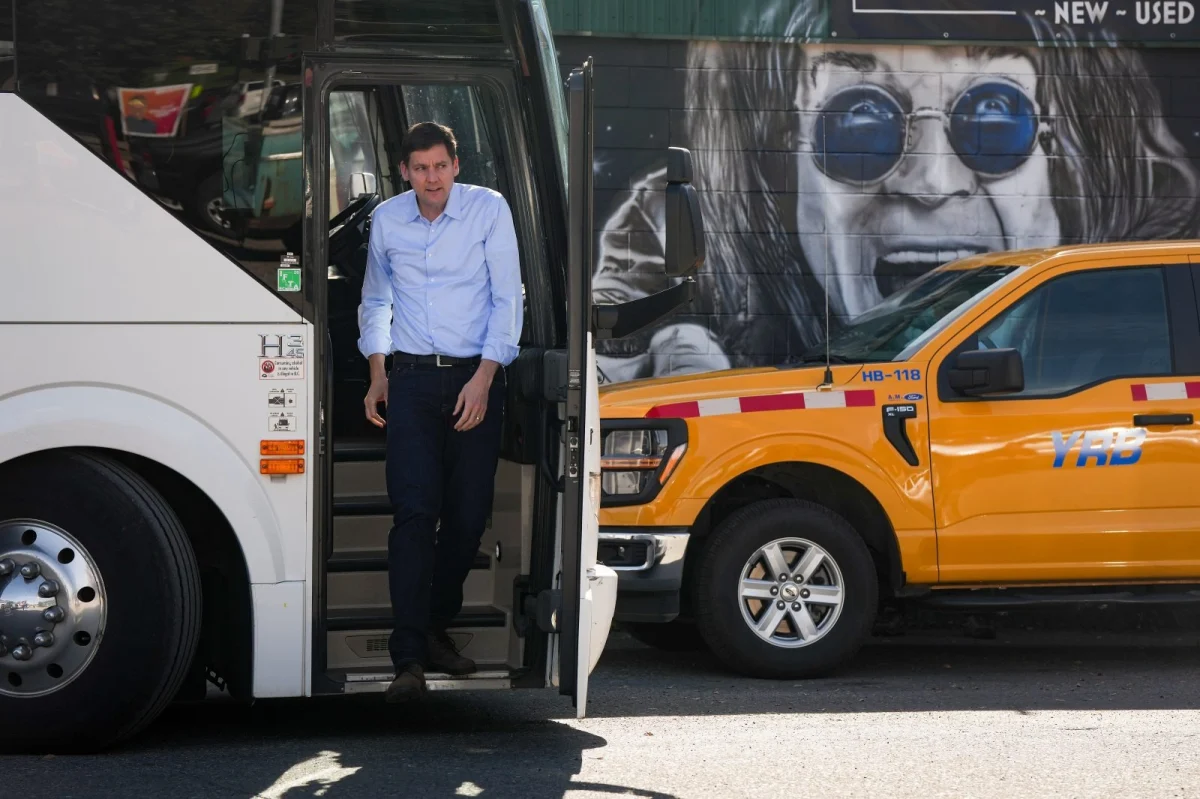
Eby’s arrival on Vancouver Island followed an extensive tour through southern British Columbia, where the campaign bus made numerous stops to engage with local communities. On Saturday, October 3, 2026, the campaign visited the city of Grand Forks in the southern interior of the province. In a moment that captured the local color and grassroots feel of the provincial campaign trail, Eby was photographed stepping off his campaign bus outside a local music shop. The shop’s exterior featured a prominent piece of artwork depicting rock icon Ozzy Osbourne, providing a distinct and memorable backdrop as the NDP leader prepared to speak with local residents about his party’s economic and social policies.
Speaking to supporters and media in Comox, Eby articulated the philosophical rationale behind the proposed high-earner tax bracket. He sought to strike a balance between encouraging economic success and ensuring social equity. Eby emphasized that the NDP supports and celebrates those who have achieved financial success in British Columbia, stating that the party cheers for those who have done well. However, he argued that the current economic climate demands a collective effort to maintain the integrity of public services. In times of significant pressure on public systems, Eby stated that it is entirely appropriate to ask those who earn a little bit more to pitch in and contribute to the collective well-being of the province.

The NDP leader did not immediately provide the exact percentage rate for the proposed tax bracket or the total revenue it is projected to generate. Instead, Eby indicated that his campaign would offer additional, comprehensive details about the structure of the new tax bracket during an upcoming campaign stop in Victoria. As the provincial capital and a major center of government, Victoria will serve as the logical setting for the party to present the technical aspects of its fiscal plan, where economists, policy analysts, and voters can examine the projected impact on the provincial budget and the healthcare sector.
The decision to earmark the revenue from the proposed tax bracket specifically for healthcare comes at a time when the provincial medical system is facing intense scrutiny. Throughout the campaign, voters have expressed deep concerns over healthcare access, emergency room wait times, and the availability of family doctors. By linking a tax on the province’s wealthiest residents directly to healthcare funding, the NDP is attempting to build a clear and popular mandate for progressive taxation, presenting it as a direct solution to the tangible challenges faced by everyday patients and healthcare workers across British Columbia.
This proposed tax bracket is the latest in a series of economic measures put forward by Eby as he seeks to address widespread concerns over inflation and the rising cost of living. Earlier in the campaign, the NDP leader announced plans to introduce price guards for certain essential goods. These proposed price guards would target specific groceries, as well as gasoline and diesel fuel, in an effort to protect consumers from sudden price spikes and potential market gouging. By proposing direct intervention in the pricing of everyday essentials, the NDP has signaled a willingness to use regulatory powers to shield households from financial pressure.
In addition to the long-term structural changes proposed through price guards, Eby’s campaign has also promised immediate relief for motorists at the pump. The party has pledged to temporarily lower the provincial motor fuel tax by 10 cents per litre. This temporary reduction is designed to provide quick, direct relief to drivers, families, and small businesses that have been struggling with high fuel prices. The combination of targeted price controls and temporary tax relief highlights the NDP’s dual approach to affordability, offering both immediate financial breathing room and longer-term market protections.
Beyond income tax and fuel costs, housing remains a central pillar of the NDP’s campaign platform. During the early phases of the provincial campaign, Eby announced a series of targeted measures aimed at addressing British Columbia’s ongoing housing crisis. Among these proposals was the introduction of a new tax specifically targeting empty condominiums. This measure is designed to incentivize property owners to place vacant units onto the long-term rental market, thereby increasing the supply of available housing and helping to moderate rental prices in high-demand urban centers.

Alongside the proposed tax on empty condominiums, Eby also announced plans to lift the provincial speculation and vacancy tax. This move represents an adjustment to the province’s existing housing tax framework, as the party seeks to refine its policies to better target speculative behavior while ensuring that the tax system does not inadvertently penalize ordinary homeowners or hinder the development of new housing supply. Together, these housing policies reflect the NDP’s broader strategy of using targeted taxation to influence market behavior, increase housing availability, and make homeownership and renting more accessible.
As the October 24, 2026, election day draws nearer, the contrast between the competing political platforms is becoming increasingly defined. The NDP’s focus on progressive taxation, public service investment, and direct market interventions stands as a core element of its pitch to the electorate. By proposing to tax those earning over $1 million to fund healthcare, while simultaneously offering fuel tax cuts and grocery price guards, Eby is attempting to assemble a broad coalition of voters who are concerned about both the state of public services and their own household budgets.
The upcoming campaign stop in Victoria, where Eby has promised to reveal the specific details of the million-dollar tax bracket, will be a critical moment for the campaign. Political rivals and business groups are expected to scrutinize the details closely, debating the potential economic impacts of higher taxes on top earners and whether such measures could affect investment in the province. Conversely, supporters of the measure will likely view it as a necessary step to secure the funding needed to stabilize and improve the provincial healthcare system.
With the campaign trail moving from the southern interior to Vancouver Island, and eventually to the capital, the final weeks of the race will see intense debate over the province’s fiscal future. Eby’s tour has underscored the diverse economic realities of British Columbia, from the rural communities of the southern interior to the growing coastal municipalities. How voters weigh the promise of enhanced public services funded by the wealthy against alternative economic visions will ultimately determine the outcome when British Columbians cast their ballots on October 24.