
When one of the nation’s largest investor-owned utilities, Pacific Gas and Electric, wanted to replace Merrian Borgeson’s aging gas service line in her Berkeley, California home, she asked the company not to do it.
Borgeson, who serves as the California policy director for climate and energy at the nonprofit Natural Resources Defense Council, knew that the repair was entirely unnecessary for her household’s future. She was already in the process of fully electrifying her home. As part of an upcoming kitchen remodel, she planned to replace her stove—which happened to be the very last gas appliance left in the house—with a modern induction version. Once that transition was complete, her plan was to formally request that the utility shut off her gas supply permanently.
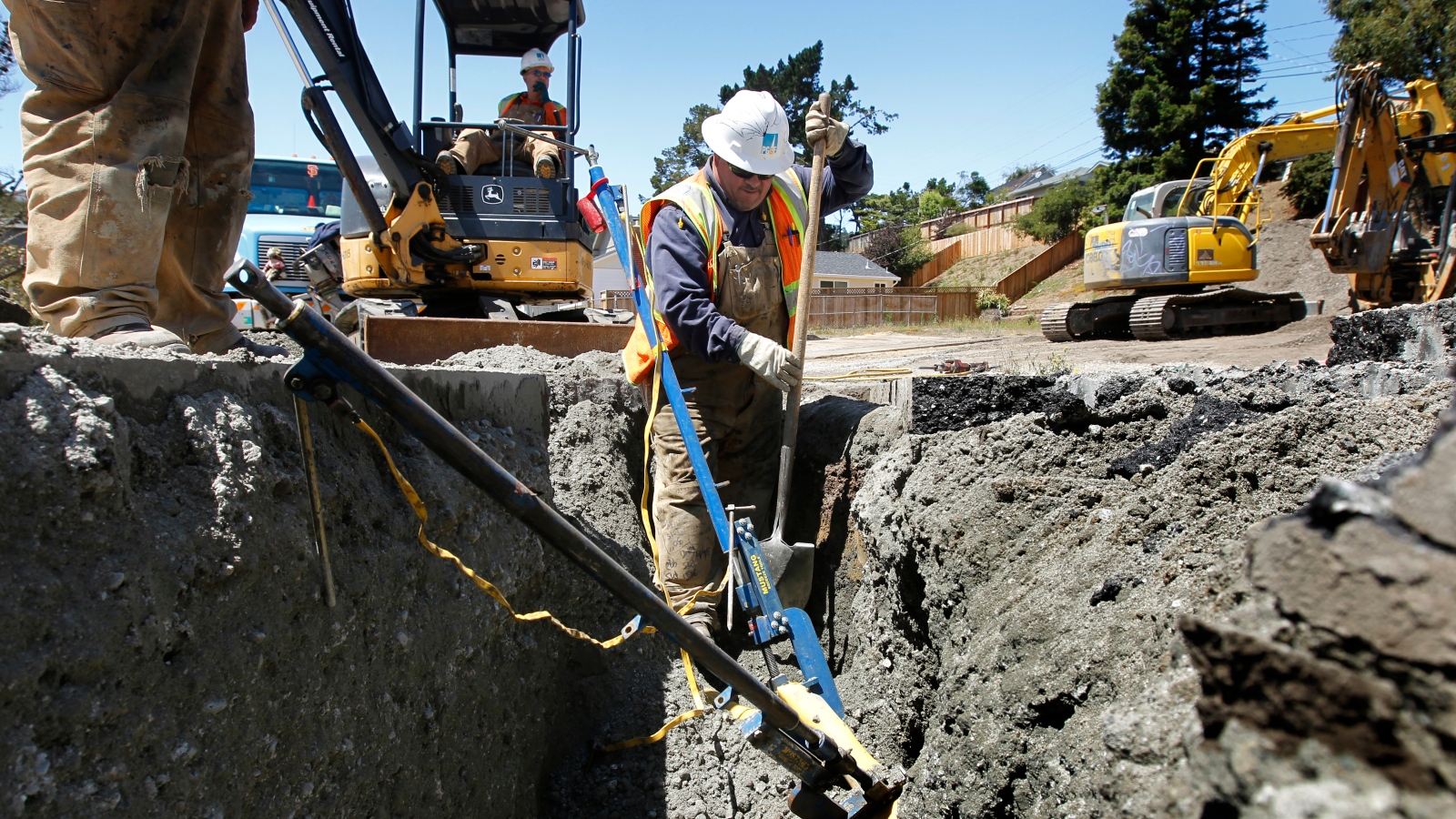
Yet, despite her plans, PG&E informed her that it could not wait or bypass the scheduled maintenance. That very week, utility crews dug up her front yard and swapped in a brand-new metal pipe designed to send gas from the distribution main line directly to her home.
Borgeson was not billed for the service directly out of pocket. Instead, the costly infrastructure upgrade—which in PG&E’s service territory typically ranges from $20,000 to $30,000, not including ongoing interest, operational expenses, and future maintenance costs—was rolled into the rate base, meaning it gets paid for by all gas customers over the typical 50-year lifespan of the equipment.
A few years later, that brand-new pipe sits completely unused, buried underground.
"Now, I have no gas in my house," Borgeson said, reflecting on the systemic waste. "But the customers all around me are paying for that pipeline for the next 50 years."
Soon, however, homeowners across California will finally have the choice that Borgeson was denied. A newly enacted piece of legislation, known as the Home Energy Choice Act, or Assembly Bill 2313, is set to fundamentally alter how utilities manage infrastructure maintenance and fossil fuel dependency. The law will soon require utilities to provide households scheduled for routine service line replacements with a critical choice: they can either allow the utility to install the traditional new gas line, or they can opt to take a financial incentive—potentially worth several thousand dollars—to disconnect from the gas system entirely and transition to clean, all-electric alternatives.
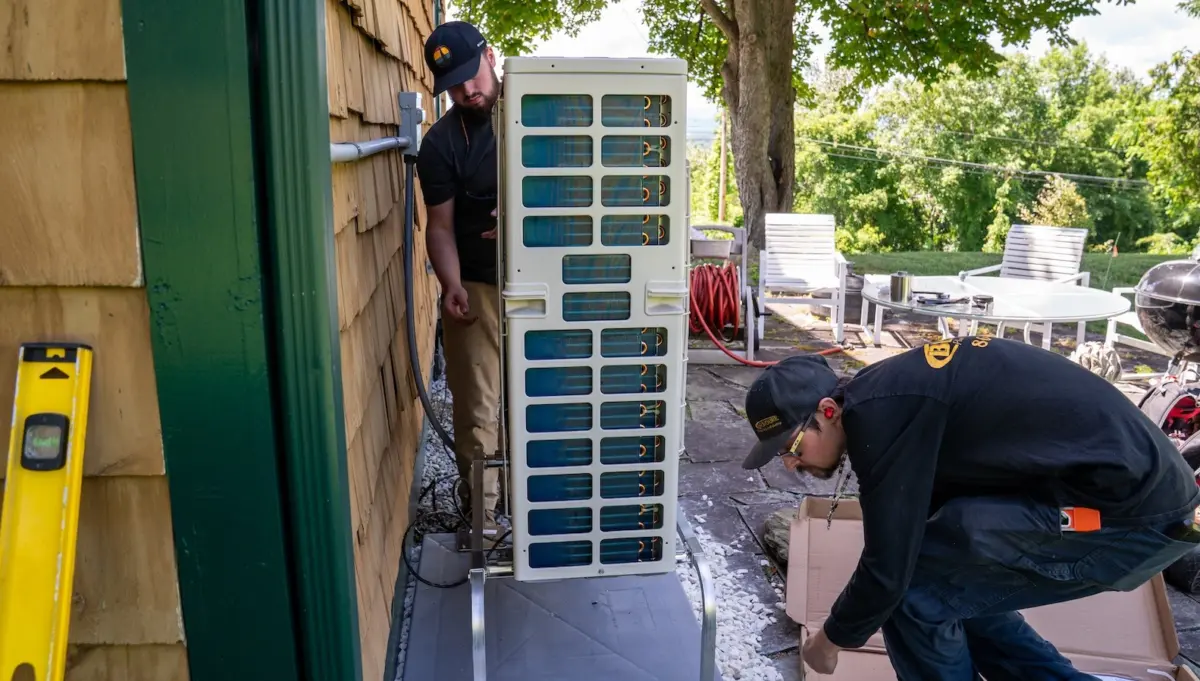
Crucially, the math behind the law is designed to benefit everyone. The financial incentive offered to homeowners to switch to all-electric equipment, such as a high-efficiency heat pump for space heating, an induction range for cooking, and a heat-pump water heater, will be carefully calculated to be less than the actual cost of replacing the gas service line. This dynamic ensures that every avoided pipeline replacement results in immediate net savings, which are then shared among all remaining gas ratepayers rather than adding to the utility’s capital expenditure burden.
Advocates say the legislation marks a major turning point for the nation’s most populous state. The law sends a very clear message that California is no longer going to invest tens of millions of dollars into locking in long-term gas infrastructure without seriously considering the future of the energy grid, according to Borgeson, who actively advocated for the passage of the bill. She describes the legislative shift as a massive signal of where the state is ultimately headed.
The Natural Resources Defense Council has crunched the numbers to illustrate the potential scale of these savings. According to the organization’s calculations, PG&E’s gas customers could save a combined total of $20 million if the utility simply offered 1,000 households a $17,500 financial incentive apiece rather than moving forward with replacing their aging service lines. For context and scale, PG&E typically replaces approximately 15,000 service lines every single year as part of its standard maintenance operations.
If similar programs and statutory frameworks were instituted across the country, the cumulative financial and environmental savings could easily rival major federal investments in home electrification, such as those seen under recent Biden-era climate legislation. According to data from the clean energy nonprofit RMI, traditional utilities across the United States spend upward of $7 billion every single year exclusively on routine service line replacements.
While the policy will help push the state significantly closer to its overarching statutory goal of achieving a carbon-neutral economy by 2045, the version that ultimately crossed the finish line and was signed into law was noticeably less ambitious than what was initially introduced by lawmakers, according to Brandon García, the California director at the industry association Advanced Energy United. Among the compromises made during the legislative process were provisions capping the pipeline replacement alternative programs at just 1% of a utility’s total customer base. Additionally, the law includes a sunset provision, meaning it is scheduled to expire on January 1, 2035, though lawmakers could choose to renew and extend the program before that deadline arrives.
Assemblymember Marc Berman, the author of the bill, acknowledged the fierce legislative battles required to get the measure passed in a statehouse often lobbied heavily by traditional energy interests. He expressed deep excitement that the policy will soon give everyday Californians the opportunity to decide what kind of energy powers their homes while offering tangible financial support if they choose to step away from natural gas.
When homeowners opt to electrify their properties, Berman noted via email, the utility successfully avoids making additional, unnecessary capital investments in fossil fuel infrastructure that would otherwise eventually become a stranded asset paid for by the public. Over the long term, avoiding these dead-end investments saves all ratepayers money.
Not everyone welcomed the new policy, however. Major investor-owned utilities, including San Diego Gas and Electric and SoCalGas, strongly opposed the bill throughout the legislative process. Their primary argument centered on the fear of an unfair cost shift: as individual customers gradually stop using gas and disconnect from the network, those remaining on the system—often lower-income households or renters who lack the capital or control to electrify—could be left bearing increasingly outsized costs to maintain the vast, aging physical pipeline system.
While that structural dilemma is a legitimate, overarching challenge for the broader transition away from fossil fuels—and one that state regulators will eventually need to address comprehensively—proponents argue that AB 2313 addresses the problem from the opposite, more productive angle. Rather than penalizing those left behind, the law is about trying to encourage people to leave the system precisely at the moment when their departure actually saves money for everyone else still connected to the grid, according to Kiki Velez, the equitable gas transition lead at the Natural Resources Defense Council.
With the enactment of this legislation, California officially becomes the third jurisdiction in the country to authorize this innovative pipeline replacement alternative approach, and the very first to implement it on a statewide level. The movement began gaining traction elsewhere in 2024, when New York utility Con Edison launched its own localized initiative known as the Energy Exchange Program. That program offers eligible residential households up to $20,000 in financial assistance to fully electrify their homes. Velez noted that other utilities across New York are currently following suit with similar frameworks. Furthermore, in July, the Colorado Public Utilities Commission officially authorized Xcel Energy to create a comparable program, which is expected to launch within a matter of months.
In California, the next critical phase of implementation shifts to the state Public Utilities Commission, which must now draft a detailed, comprehensive framework for utilities to follow. This regulatory process will establish precise incentive levels, including provisions for larger financial amounts to be directed toward customers living in disadvantaged communities who might otherwise struggle to afford the upfront costs of clean energy upgrades. Once the rules are finalized, individual utilities will have until January 1, 2028, to submit their proposed programs for formal state approval.
One important operational detail that remains to be determined by regulators is how much advance notice utilities will be required to give residents whose pipes are currently scheduled for replacement. If notification comes too late, homeowners may not have enough time to plan a major kitchen remodel or secure heating alternatives. Borgeson pointed out that the absolute worst-case scenario is a homeowner learning about the electrification incentive at the absolute last minute when the utility trucks are already outside. To prevent this, RMI recommends that utilities proactively alert residents anywhere from one to five years in advance, precisely when the service line replacements are initially added to the scheduling queue.
Meanwhile, policymakers and clean energy advocates in other states are already looking closely at California’s model with the intent of emulating it through their own legislation. Velez highlighted that stakeholders in states such as Illinois, Maryland, Minnesota, Oregon, and Washington are actively watching developments. People are already reaching out frequently to inquire about how they can successfully bring similar statutory frameworks to their own home states, she said.
In California, the integration of larger electrification incentives tailored specifically for disadvantaged communities will also provide a much-needed boost to broader clean energy equity goals, García noted. Having grown up in those kinds of neighborhoods as a low-income resident himself, García emphasized the personal importance of ensuring that every community has fair access to modern all-electric technology rather than leaving vulnerable populations behind in the transition.