
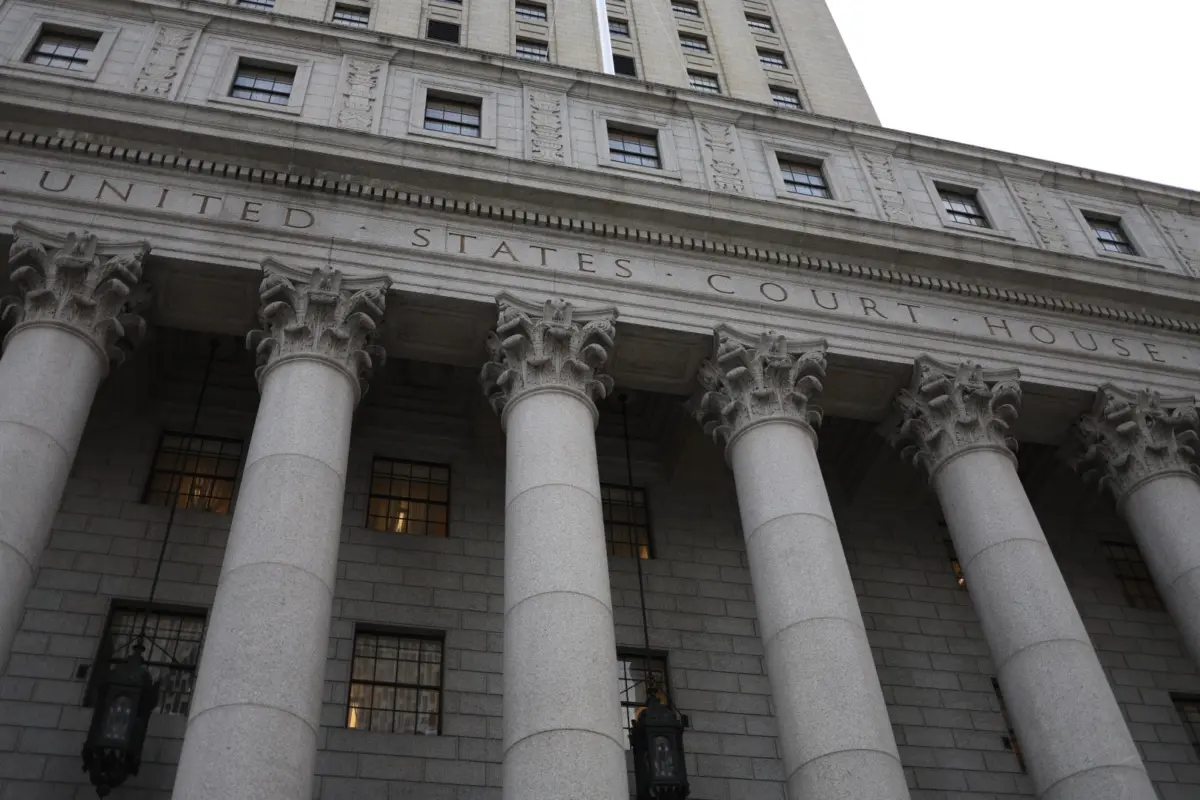
Deirdre Macnab was reading her local newspaper this spring when she learned that Rio Blanco County, where she lives in northwest Colorado, had taken a decisive side in a major lawsuit before the United States Supreme Court. Energy giants Suncor Energy and ExxonMobil were attempting to block a trial from moving forward. The city and county of Boulder had previously sued the oil companies, seeking financial damages to help cover the rapidly escalating costs of adapting to extreme heat waves, persistent wildfires, and devastating floods.
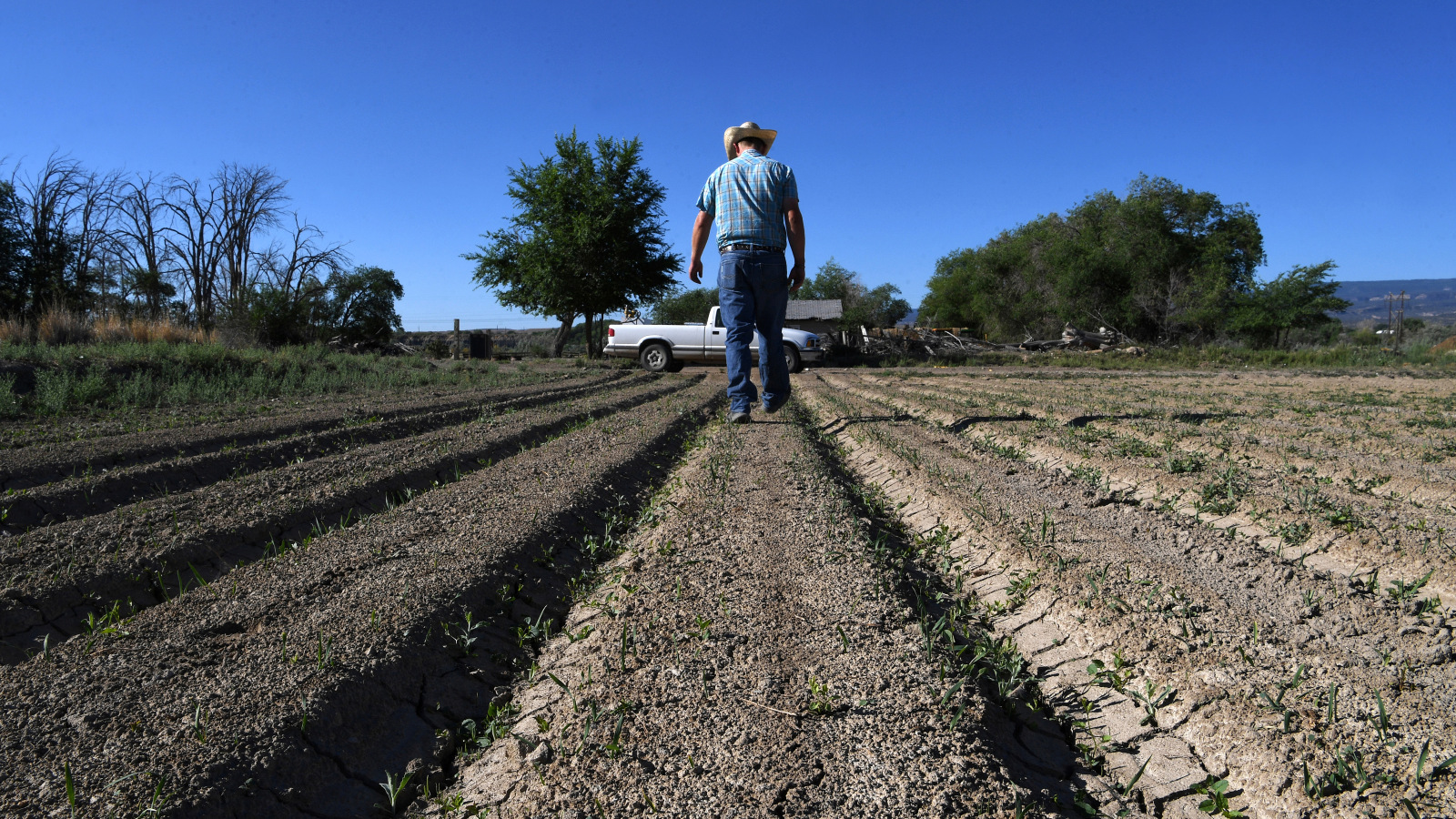
After a decade of working as a rancher, Macnab had witnessed those devastating costs firsthand. During one of the most destructive wildfires in Colorado history last year, 60 of her neighbor’s cows burned to death. Record-shattering heat and severe drought parched the land so thoroughly this year that ranchers were forced to spend thousands of dollars out of pocket just to haul in emergency feed and drinking water for their livestock. Some ranchers, facing the grim prospect of imminent bankruptcy, have been forced to sell off portions of their historic herds or put their family lands up for sale entirely.
“It really disturbed me that the county was taking sides,” Macnab said, “and in particular, supporting oil companies whose operations, we now know, are putting the human population and wildlife, livestock, everything, at risk.”
Records show that Rio Blanco County spent thousands of taxpayer dollars in legal fees to join an amicus brief alongside several other Colorado counties where the fossil fuel industry maintains a heavy economic and operational presence. The move stunned many local residents who feel the compounding burdens of a changing climate every single day.
In response, Macnab rallied fellow ranchers from around Colorado to join her in pushing back. Together, they urged the Supreme Court to rule in favor of Boulder and allow the litigation to proceed. In their court filings, the ranchers wrote that local governments simply cannot keep absorbing the skyrocketing costs of worsening heat, persistent drought, catastrophic fires, and severe flooding while still maintaining the resources—such as disaster relief, public grants, and vital infrastructure repairs—needed to keep ranchers in business.
Conversely, the oil companies argue that federal law not only protects them from needing to defend their historic actions in state courtrooms, but also completely shields them from being held financially liable for the damages associated with global greenhouse gas emissions.
The Supreme Court is set to hear oral arguments in the high-stakes case on Monday. The upcoming decision could carry massive ramifications for ongoing efforts to hold energy corporations legally accountable for allegedly deceiving the public about the severe dangers of burning fossil fuels, while also addressing the broader, contentious question of who ultimately pays for the multi-billion-dollar costs of adapting to a warming world.
Major oil companies have pulled out all the stops to stymie the dozens of climate change lawsuits that local and state governments have brought against them across the country, with billions of dollars potentially on the line. With a conservative-dominated Supreme Court and the Trump administration’s Department of Justice operating as a powerful ally, oil companies saw a prime window of opportunity to halt these coordinated suits once and for all, according to Alejandro Camacho, a professor at the UCLA School of Law.
That legal calculus shifted slightly, however, when Supreme Court Justice Samuel Alito—a strong conservative jurist with known financial holdings in oil companies—recused himself from the case. His sudden withdrawal makes it substantially harder for the oil companies to secure at least five votes from the remaining justices to form a solid majority on their side.
The legal battle itself has a long and winding history. The city and county of Boulder originally filed their lawsuit against Suncor and ExxonMobil back in 2018. The litigation slowly wound its way through the state and federal court systems over the course of several years. Throughout the process, the oil companies repeatedly tried to dismiss the complaint or successfully move it to federal court, which is widely viewed as a more industry-friendly venue. However, Boulder prevailed at virtually every stage of the jurisdictional battle. In May 2025, the Colorado Supreme Court ruled definitively that the case should proceed forward in the state courts.
Much of the political and institutional support for Boulder on one side and the oil companies on the other falls along familiar, highly partisan lines. Predominantly Republican states and powerful business associations tend to align themselves with the oil companies, while Democratic-leaning states and environmental advocacy organizations typically back Boulder’s right to sue.
A recent investigation by a consumer watchdog organization revealed that 25 of the 38 briefs filed with the Supreme Court in support of ExxonMobil and Suncor were written by advocacy groups with direct financial ties to the fossil fuel industry or by philanthropic foundations that actively oppose climate science and federal regulation. Yet Colorado ranchers are not the only surprising source of support for Boulder’s case; a faction of conservative legal thinkers and former officials are also actively challenging the core arguments presented by the oil companies.
To understand this unexpected alliance, it helps to look closely at what the case before the Supreme Court is actually about. The immediate question is not about the ultimate substance of the lawsuit—namely, whether oil companies should have to pay damages for causing climate change. Instead, the preliminary legal question is whether the Supreme Court can take the unusual step of intervening before the case has even gone to trial in a state court.
If the justices decide they have the authority to step in now, they will then consider the oil companies’ broader arguments. Attorneys for Suncor and ExxonMobil argue that Boulder’s lawsuit is essentially an improper backdoor attempt to regulate national emissions through the state court system. They also contend that the federal Clean Air Act and broader constitutional limits on state power should legally prevent Boulder’s claims from moving forward.
“If someone has harmed you, you should be able to go to court and make the case that they harmed you and that they need to pay you for it,” Camacho said. “It’s a centuries-old common law principle. And these companies are basically trying to say, ‘You shouldn’t be able make the case in court.’”
Some prominent conservative legal scholars argue that there is nothing explicitly written in federal law or the United States Constitution that would legally prevent the lawsuit from moving forward in state court. That group includes Jonathan Adler, a respected professor of environmental law at the William & Mary Law School. Two former heads of the Environmental Protection Agency who served under Republican presidential administrations—Christine Todd Whitman and William Reilly—are other prominent public proponents of that same legal argument.
The oil companies appear to have recognized that their initial legal arguments concerning the Clean Air Act are not particularly strong, Adler noted, because their legal teams have shifted focus over time toward alternative arguments concerning the limits of state power. In Adler’s view, courts generally should not override claims brought under state law “unless there is a clear basis for doing so.” Adler acknowledges why some conservatives argue that utilizing state-level litigation to drive climate policy is improper, but he also suggests that deep underlying skepticism about the merits of the underlying lawsuit might have inadvertently influenced some observers’ views on the much narrower procedural questions currently before the court.
It is not just Colorado where traditional political lines are blurring. Some Republican-dominated jurisdictions have also found themselves at odds with the fossil fuel industry. Coastal parishes in Louisiana, for example, have filed lawsuits against Chevron and other major oil companies, seeking substantial financial compensation to restore vanishing coastal lands and protect vulnerable infrastructure from rising seas.
“There are going to be conservative communities, or predominantly conservative communities, who see that they are being forced to pay millions of dollars to protect their towns because of the actions of fossil fuel companies,” Camacho said.
For Colorado ranchers, who are certainly not known for holding liberal political views, the economic crisis has left them with very few practical options for dealing with the compounding environmental changes that are actively pushing them toward bankruptcy. Macnab said she hopes the Supreme Court ultimately sends Boulder’s case right back down to the state court where it rightfully belongs, ensuring that the major oil companies are finally forced to face public accountability.
“Until they’re held responsible for the consequences that they have known about for decades, they are not going to be part of the solution,” Macnab said. “They need to be brought to the table, because humankind and our food production is what’s at stake.”