
This coverage is made possible through a partnership between Grist and Interlochen Public Radio in northern Michigan.
John Boyer grew up surrounded by the quiet rhythms of his family’s 131 acres in rural northern Michigan, where rolling fields of corn, oats, and wheat define the landscape near the tiny city of East Jordan. Over the decades, the farm slipped outside family ownership multiple times before Boyer managed to repurchase it in 2018. For him, stepping back onto the property was not merely a business transaction, but a profound moral obligation to protect the ground from encroaching development and safeguard the region’s tightly knit community of family farms.
“For any farmer, everything’s personal,” Boyer said, surveying the soil he has come to know intimately. “Every piece of property, every stone you pick up, you spend countless hours out there.”
Boyer’s personal crusade mirrors a broader national crisis. As millions of farmland acres across the United States prepare to change hands over the coming decades, rural communities are grappling with difficult decisions about whether—and how—to preserve agricultural land. These choices are driven by intense pressures from surging land values, an unpredictable and shifting climate, and a younger generation increasingly opting out of agricultural careers. In Michigan, as in the rest of the country, the total acreage dedicated to farming has steadily declined over recent decades, while the fundamental structure of land ownership undergoes a profound transformation.
According to the most recent federal farm census, an estimated 9.5 million acres—representing about a quarter of Michigan’s total land area—were devoted to farming in 2022. That figure reflects a roughly 3 percent dip compared to 2017. During that same five-year window, Michigan farmland where the majority of operations were family-owned decreased by nearly 470,000 acres. Conversely, land leased or rented for farming operations expanded by nearly 30,000 acres, highlighting a growing reliance on rental agreements rather than outright ownership.
Yet, even as overall agricultural acreage contracts, conservation efforts are gaining traction. The number of farmland acres in Michigan protected by conservation programs has increased in recent years, mirroring a broader national trend. Federal data from the U.S. Department of Agriculture shows that the state secured an additional 22,000 acres in agricultural conservation easements between 2017 and 2022.
“It’s a matter of trying to figure out what exactly is going to be the best fit for everybody’s situation,” said Jon LaPorte, a farm business management educator for Michigan State University Extension. “And there’s a lot of pressure. There’s a lot of money.”
Financial pressures on landowners are mounting rapidly. USDA data indicates that Michigan farmland was valued at approximately $6,800 per acre, marking a 7.8 percent increase that outpaced the national average growth rate of 4.3 percent. This appreciation is driven in part by regional economic shifts, including a boom in data center developments and growing demand for industrial and residential expansion across the Midwest.
In northern Michigan, these pressures intersect uniquely with climate change. Local farmers are already confronting environmental shifts, including more extreme precipitation events, persistent crop diseases, and erratic temperature swings. However, many local agriculturalists maintain that these challenges remain relatively manageable compared to the severe droughts and extreme heat threatening food production in other parts of the country.
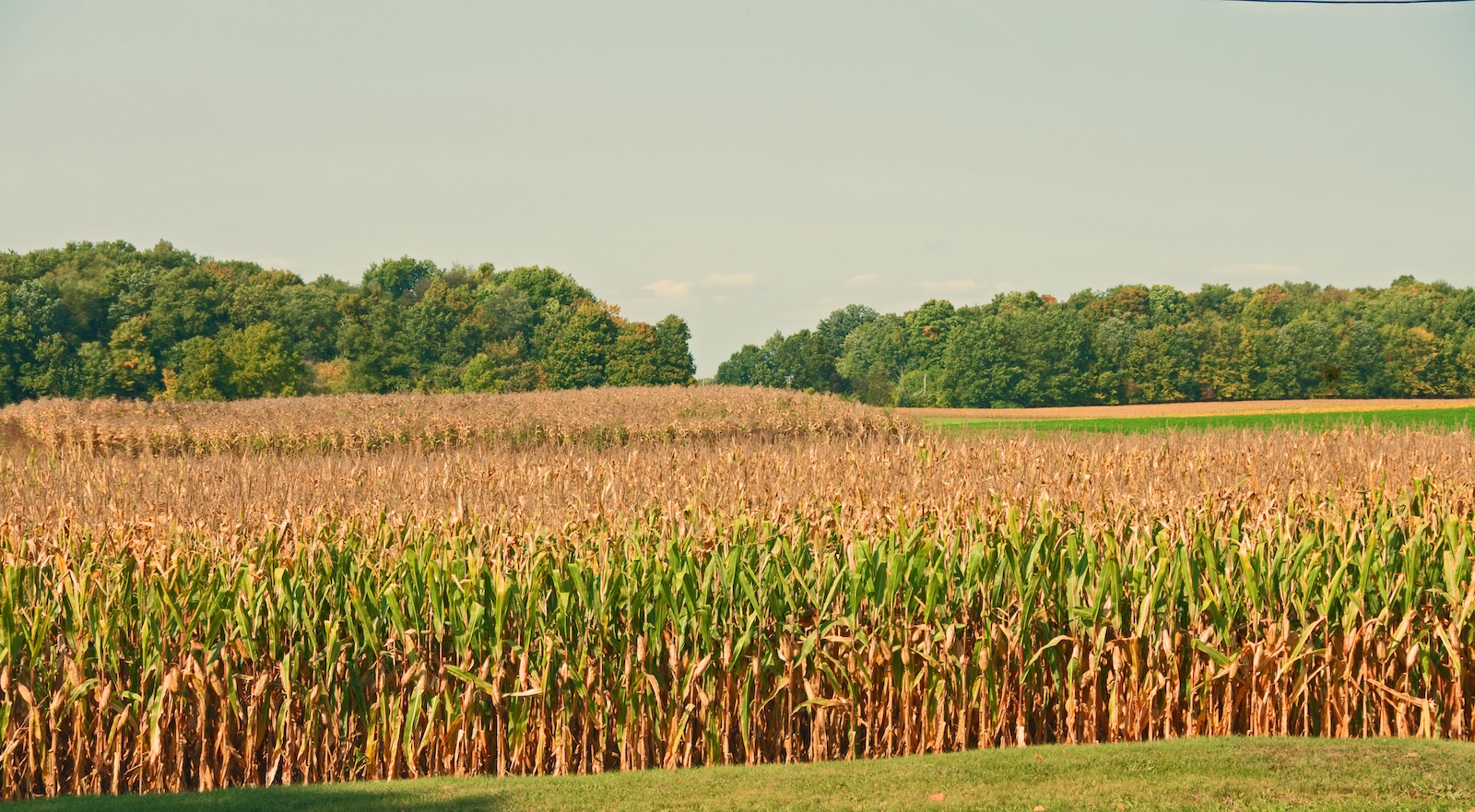
“As the world climate changes, this area could become more and more important for food production and food security,” said Dave Skornia, a farmer in Boyne City, Michigan. “So, you got to have land.”
For Boyer, securing the future of his farm meant restricting permanent development through a legal mechanism known as a conservation easement. While he retains ownership of the property, he sold the future development rights of his 131 acres to the Little Traverse Conservancy, a nonprofit organization dedicated to acquiring and protecting natural and agricultural lands. Under the agreement, the conservancy holds those rights in perpetuity, ensuring the land cannot be subdivided or commercially developed even if Boyer passes the property to his children or decides to sell it to another owner later in life.
Entering into a conservation easement is rarely an easy choice for agricultural landowners. For most farmers, land represents their single greatest financial asset—a critical resource capable of funding retirement or serving as a college fund for their children, explained Joe Graham, chief financial and operating officer for the Little Traverse Conservancy.
“We’re offering them another alternative,” Graham said. “We’re offering a way to capture some of the equity and the value they have in that land without having to sell it and see it leave their ownership.”
The Little Traverse Conservancy has protected roughly 30,000 acres through easements across five counties in northern Michigan and the Upper Peninsula, with approximately 6,000 of those acres dedicated to active farming. Graham noted that interest in agricultural conservation easements has been steadily rising among small farming communities as landowners look for ways to protect their legacies.
However, easements come with their own distinct set of hurdles. Because conservancies pay landowners only a portion of the overall property value, selling development rights yields less immediate revenue than an outright commercial sale. In rural northern Michigan, where land values are climbing sharply, some farmers hesitate to enter agreements that might limit their future financial flexibility.
“There can be a question of timing: ‘Is this the right thing to do? What might we be foregoing later?’” Graham said.
Boyer remains steadfast, driven by a desire to prevent his land from being carved up into smaller parcels “to make a quick buck.” Once agricultural land is converted to built environments like housing subdivisions or commercial strip malls, it rarely reverts to farming.
“Then suddenly a productive farm field or ground is gone, and it’s gone for generations,” Boyer said. “It’s gone forever.”
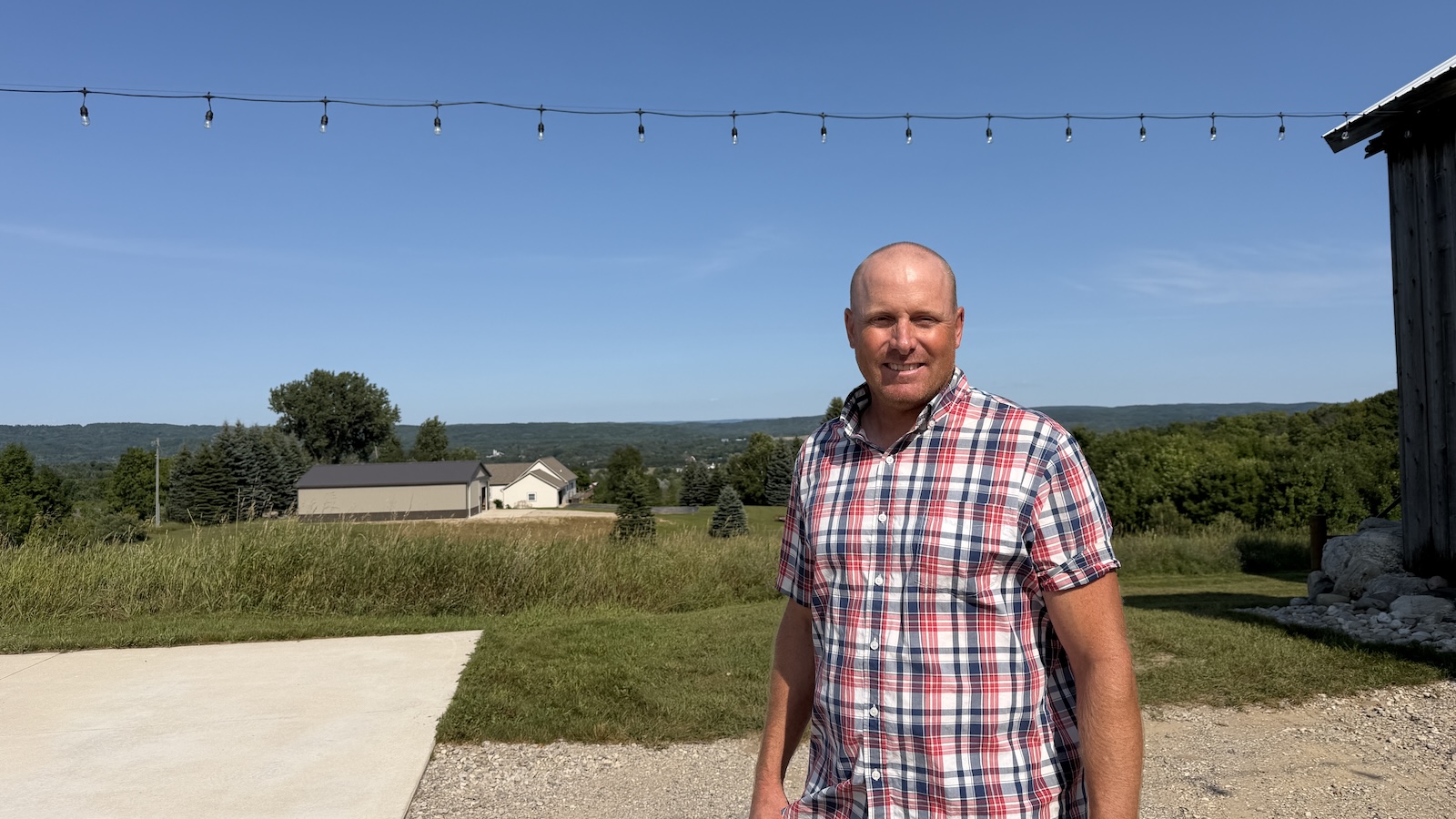
Rebecca Carlson, a fourth-generation cherry and apple grower who operates Overlook Orchards in Northport at the tip of Michigan’s Leelanau Peninsula, shares deep concerns about the ongoing fragmentation of agricultural land. As aging farmers reach retirement age without successors, estates are frequently divided among multiple children, creating a patchwork of splintered ownership that dismantles multigenerational family farms.
Carlson and her husband married into multigenerational farming families and spent eight years expanding their initial 200-acre operation into a sprawling 1,300-acre enterprise. Their expansion strategy relied on purchasing nearby parcels as well as leasing land from neighboring farmers who lacked younger family members to take over the family business.
“In order to be successful in farming, in some cases, it’s one of those, ‘Go big or go home,’ with the climate of farming today,” Carlson said.
According to the 2022 USDA census, approximately 39 percent of Michigan’s agricultural land is currently leased, mirroring the national average. For operators like Carlson, long-term leases—many of which span up to 30 years—provide a viable pathway to maintain and scale production without incurring the crushing debt of outright property purchases. Annual lease fees vary depending on location and crop productivity, often remaining significantly cheaper than ownership because tenant farmers are exempt from property taxes and major infrastructure insurance costs.
“It’s a great way to maintain your farm and grow your farm,” Carlson said. “They don’t make land anymore.”
At the same time, leasing presents structural limitations. A 2026 survey conducted by Michigan State University revealed that high lease rates and the difficulty of locating land suited to specific operational needs are primary concerns for farmers seeking to rent acreage. Landseekers often find themselves caught between having a specific crop in mind with nowhere to plant it, or securing ground without knowing whether the soil is appropriate for their intended harvest, LaPorte noted.
Beyond the physical dirt, the interpersonal dynamic between landowner and tenant plays an outsized role in the stability of leased farming operations.
“You might have a great relationship where you never worry a single day about whether or not you’re going to have the property a year from now,” LaPorte said. “Other cases, there’s some differences in terms of what each party’s goals are that kind of create that sense of anxiety about, ‘Is this going to last long-term?’”
Across the wider Midwest, farmland values continue to hold steady or climb even as national farm incomes experience a downturn. Howard Halderman, president and CEO of Halderman Companies, a farm real estate and management agency operating in Indiana, Michigan, and Ohio, attributes this resilience to robust demand from industrial and residential developers. Furthermore, tax-deferred exchanges—which allow landowners to defer capital gains taxes when selling appreciated real estate to buy replacement property—provide a strong financial floor for land prices.
“That’s where a lot of your farmland value gets support. Are there other buyers out there that keep a floor under it?” Halderman said. “If you’re looking to buy farmland, that might be frustrating. However, if you’re a farmer that owns a lot of farmland and you like to keep your asset values on your balance sheet higher, it’s a good thing.”
As Michigan pushes toward a cleaner electrical grid to mitigate climate change, state policies are simultaneously drawing renewable energy developers to rural communities. Companies are increasingly eyeing agricultural land as prime locations for wind turbines, utility-scale battery storage facilities, and solar panel arrays.
“From a landowner’s perspective, they’ve got bills to pay the same as a farmer, and they’re looking at situations of, ‘Where can I get the most value?’” LaPorte said. “And if they struggle to find an interested farm, they might be willing to go into some of these long-term agreements that you see into wind turbines, solar.”
Data from the Solar Energy Industries Association indicates that solar installations currently occupy a very small fraction—roughly 0.09 percent—of USDA prime farmland in Michigan, accounting for less acreage than suburban conversion or recreational developments like golf courses. Nevertheless, local resistance remains intense. Earlier this year in Wexford County, located at the northern end of Michigan’s Lower Peninsula, preliminary proposals from a renewable energy developer to install solar panels across nearly 1,500 acres of farmland sparked widespread community concern regarding the permanent loss of productive soil.
To address these tensions, agricultural researchers in Michigan are exploring ways to merge energy production with active farming through a practice known as agrivoltaics. By installing elevated solar panels that can provide partial shade to crops or safely shelter grazing livestock, farmers can generate supplementary income while keeping the land in agricultural use, explained Charles Gould, a bioenergy educator with MSU Extension.
Gould emphasized that transitioning rural land to renewable energy does not necessarily require an absolute choice between producing electricity or growing food.
“If we can do both on the same acre of land, why wouldn’t we?” Gould said. “We want to preserve the family farm. This is a very powerful tool.”