
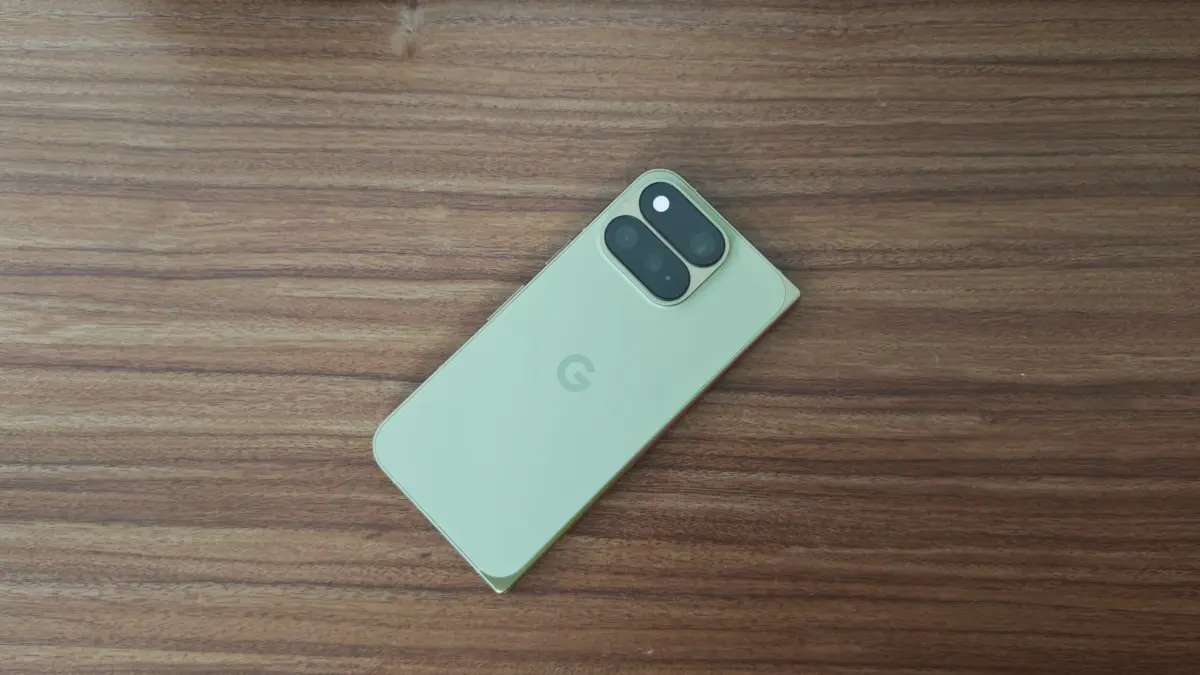
It is a fascinating time to evaluate the state of the foldable smartphone market. While the broader tech world fixes its gaze on the passport-sized iPhone Duo and Chinese manufacturers push aggressively into wide-format foldables boasting similar form factors, Google has chosen a different path. This year, the tech giant has stuck to its guns, releasing the Pixel 11 Pro Fold—a device that closely mirrors its predecessor in philosophy, physical presence, and execution.

For consumers browsing the market, the changes found in this latest iteration are largely evolutionary rather than revolutionary. Google has focused its engineering efforts on delivering a slightly lighter design, a significantly brighter display, improved wireless charging capabilities, and an updated primary camera sensor. Adding to its visual appeal is a brand-new olive colorway, which offers a subtle yet gorgeous aesthetic touch.

However, against a backdrop of rapidly evolving alternative options, the Pixel 11 Pro Fold may struggle to capture the attention of first-time foldable buyers. Unless they happen to be die-hard Pixel loyalists, mainstream consumers might find themselves tempted by the bolder design choices and form-factor experiments emerging from competitors.

Even so, spending time with the device reveals an undeniably pleasant daily experience. The Pixel 11 Pro Fold features a camera array that is more than competent for everyday shooting, even if it falls short of the premier setup found on the standard Pixel 11 Pro. Furthermore, the expansive interior screen remains a joy to use for media consumption and productivity, despite the persistence of a very visible display crease down the middle.

Design
When looking at the physical specifications, the Pixel 11 Pro Fold measures 5 millimeters thick when unfolded, a slight trim compared to the 5.2mm thickness of the Pixel 10 Pro Fold. When folded shut, it measures 10.1mm, down from 10.8mm last year. For the most part, these millimeter-level adjustments are figures destined for the specification sheet rather than something the average user will immediately notice in daily handling. Moreover, it still lacks the paper-thin profile achieved by ultra-slim rivals like the Honor V6 Magic.

The physical difference that is actually perceptible—provided you hold last year’s model and this year’s model side by side—is a reduction of 19 grams in overall weight. For anyone upgrading directly from the previous generation, or transitioning from another foldable brand, this weight loss is barely noticeable in practice.

Durability, however, represents a notable area of improvement. The Pixel 10 Pro Fold was already recognized as a structurally sound device, but Google claims to have tripled the overall durability with this latest generation. The hardware incorporates a new glass-ceramic cover alongside a glass-fiber composite back cover designed to absorb and deflect kinetic impact. In real-world use, drops from tables and pockets fail to leave any noticeable dents or deep scratches, proving that Google’s structural enhancements are more than just marketing claims.

One distinct characteristic inherited from its predecessor is the robust hinge mechanism. Designed intentionally to resist effortless one-handed opening, the hinge requires a deliberate two-handed motion to unfold the device completely.

The outer cover display is marginally larger this year, but the most striking upgrade is its peak brightness, which reaches a dazzling 3,600 nits compared to the 3,000-nit panel found on last year’s model. This substantial increase in luminance translates to significantly better usability under harsh, direct sunlight.

Despite these hardware refinements, Google’s foldable still features a prominently visible display crease. In an era where competing manufacturers such as Oppo and Honor have made remarkable strides in minimizing crease visibility, Google’s panel feels a step behind. The indentation becomes even more pronounced when using the phone in bright outdoor lighting conditions, given that the inner screen lacks a heavily reflective coating to mask the physical fold.

On the rear chassis, Google has retained the HiLight indicator light. True to its behavior on previous models, it continues to illuminate exclusively for incoming calls from designated favorite contacts and when engaging hands-free with Gemini. Beyond these limited use cases, the feature remains largely a subtle visual flourish rather than a functional cornerstone.

Software and AI
Consuming media, reading long-form articles, and watching videos on an unfolded foldable screen remains an inherently enjoyable experience, though wide-format competitors occasionally hold a slight advantage for video playback due to aspect ratios. Multitasking is handled capably, though functionality is currently limited to running two applications side by side in a split-screen view.

Apps that have been explicitly optimized for foldable displays offer a seamless workflow. Gmail, for instance, leverages the expansive canvas brilliantly by displaying the inbox list on one half of the screen and the selected email thread on the other, helping users clear out correspondence with impressive speed.

Conversely, productivity apps like Slack still lack a dedicated split-view layout. Encountering such omissions is increasingly frustrating given how many generations of Android foldables have come and gone without developers updating their software to suit the expanded screen properly.

With the rapid development pace of Apple’s developer ecosystem, Android risks feeling as though it is lagging behind in the foldable software experience following the commercial rollout of the iPhone Duo. While the tech community remains divided on how standard apps scale across the Duo’s unique unfolded display, Apple’s developer base has shown an aggressive momentum in updating applications to fit unconventional form factors.

To its credit, Google’s software interface incorporates useful navigation elements like floating app bubbles. These allow users to access secondary applications in movable windows and minimize them into a taskbar, offering a quick glance at supplementary information without forcing the app into a full-sized window.

Gemini received relatively muted updates this year. Google has built upon its "Magic Cue" concept to deliver contextual, timely suggestions across various apps. Among the artificial intelligence features introduced across the broader Pixel hardware lineup, the Rambler tool stands out as a standout addition, allowing users to draft rapid replies to emails and text messages as well as capture structured notes without needing to type out responses on a cramped virtual keyboard.

Camera
For years, foldable smartphones have lagged behind their traditional candybar counterparts in photographic performance. While the Pixel 11 Pro Fold does nothing to shatter that industry trend, Google’s ongoing decision to include the "Pro" moniker in the device’s branding feels somewhat misleading. The cameras on the Pixel 11 Pro Fold are certainly capable, but they simply do not match the elite photographic prowess of the standard Pixel 11 Pro XL.

There are, however, notable hardware and software positives to report. The primary camera utilizes an updated 48-megapixel sensor designed to capture significantly more light, resulting in photographs rich with fine detail. Additionally, Google has expanded its computational photography models to support up to 30x Super Res Zoom, an upgrade from the 20x limit of the previous generation.

While Google has opted not to equip the foldable with the exact same ultrawide and telephoto sensors found in its slab-format flagship siblings, it is unfortunate that the primary sensor could not be unified across the lineup. The telephoto and ultrawide hardware largely mirrors last year’s configuration, yielding minimal improvements in images captured through those lenses.

On the software side, new additions include "Looks," which allows users to dynamically alter the color tone and mood of an image using curated presets, and "Magic Capture," a tool designed to automatically extract the sharpest individual frames from a moving video file—proving particularly useful when photographing active children or pets.

Price
Priced at $1,899, the Pixel 11 Pro Fold is aimed squarely at dedicated Google hardware enthusiasts who are eager to embrace the foldable form factor. Its price point sits a mere $100 below the newly released iPhone Duo and matches the cost of the Samsung Galaxy Z Fold 8, both of which utilize wide-format designs. For American consumers seeking an even larger alternative, the taller Galaxy Z Fold 8 Ultra commands a starting price of $2,099.

Across the European market, manufacturers such as Xiaomi and Honor are preparing to launch competing foldable offerings, setting the stage for intense competition in the high-end mobile sector. Google’s latest folding flagship enters this arena not by reinventing the category, but by refining an established formula—relying on durability enhancements, display brightness, and ecosystem loyalty to carve out its place in the market.