
At once an enthralling cinematic achievement and the most unexpected box-office hit of the year, the three-hour documentary You Can See Everything is built upon a foundational premise that would be classified as extraordinarily ill-advised under any normal circumstances, let alone the uniquely fraught conditions surrounding its subjects. At the very least, the finished film serves as a powerful deterrent for anyone who might ever consider inviting a camera crew into their private residence to record every spoken word and captured action in the pursuit of what one participant describes as "radical transparency." If the documentary proves anything, it is that no human life can withstand that level of unyielding scrutiny, no matter how hard an individual might try to prevent their flaws, foibles, and self-delusions from spilling out into plain view.
For the individuals who gather inside a coastal California beach house for the turbulent events chronicled in the film, the surrounding circumstances are rendered even more extraordinary by the sheer notoriety of who they are. Elizabeth Holmes captured the attention of the global public as a glittering superstar of Silicon Valley, successfully raising hundreds of millions of dollars in venture capital based on proprietary technology promised by her company, Theranos, which claimed it would completely revolutionize the landscape of medical testing. Yet, as investigative journalists and federal regulators eventually brought to light, the corporation was systematically misleading investors, patients, and regulatory bodies regarding the true efficacy of its technology. This catastrophic collapse eventually resulted in Holmes being convicted of multiple counts of wire fraud and related federal charges.
A Prelude to Prison in Del Mar
As the head-spinning narrative of You Can See Everything opens in 2023, Holmes finds herself just a few short weeks away from officially beginning an 11-year federal prison sentence. In the interim, she is residing in a rented seaside home located in Del Mar, California, alongside her two young children and her husband, Billy Evans. Evans is a fellow entrepreneur who entered into a relationship with Holmes after her corporate empire and high-profile ruse had completely collapsed.
The couple’s primary motivation for participating in the documentary appears to be a desire to actively counter the dominant public perceptions of Holmes that have been forged by relentless media coverage and scripted dramatizations, most notably The Dropout, a critically acclaimed 2022 television series starring Amanda Seyfried that chronicled Holmes’s meteoric rise and subsequent catastrophic fall. Such cultural representations routinely painted the former tech founder as an unrepentant deceiver and master manipulator who possessed a unique and uncanny ability to warp objective reality to suit her own ambitious needs.
Yet, one of the most compelling and confounding mysteries embedded within the very fabric of the film lies in the couple’s perplexing choice of documentarian. Rather than selecting a traditional, sympathetic, or deferential journalist to tell their side of the story, Holmes and Evans invited Nathan Fielder—a Vancouver-born comedian, actor, and filmmaker widely celebrated for his groundbreaking television series Nathan for You and The Rehearsal—to live alongside them and help project the "real" Elizabeth to the outside world. Fielder is renowned for creating bold, avant-garde satires that intentionally blur the fragile boundaries between fiction and documentary filmmaking, applying deadpan improvisation and his own distinct on-screen persona to authentic, real-life situations. The resulting social encounters inevitably transform into complex, unpredictable experiments in behavioral science.
Unpredictable Encounters and Behavioral Science
Needless to say, this combustible combination of distinct personalities and profound psychological pathologies steers the entire situation in intensely unpredictable directions. Co-directed by Nathan Fielder and Lance Oppenheim, You Can See Everything has rapidly ascended to become the most widely discussed film of the season precisely because it offers audiences an overwhelming abundance of material to digest, debate, and analyze.
Questions regarding culpability and moral responsibility are continuously muddied by lingering suggestions about the precise degree to which Holmes actually understands her own historical deceptions as such. Throughout the documentary, Fielder dangles the tantalizing and deeply disquieting possibility that Holmes might be a neurodivergent individual who operates with an entirely unconventional relationship to language and social norms. In one particularly striking scene, he exposes her to the classic Abbott and Costello comedy routine "Who’s on First?", to which she responds with utter bewilderment and confusion. Alternatively, Holmes can also be interpreted through another lens entirely: that of a vulnerable woman who has continually fallen under the sway of domineering men. This dynamic allegedly began with her former Theranos business partner and romantic companion Sunny Balwani, and continues through her current husband, Billy Evans, whose on-screen actions and demeanor can occasionally provoke significant concern from the audience.
As the narrative twists and turns grow increasingly wild, You Can See Everything transcends its initial premise as a mere investigative deep-dive into Elizabeth Holmes and her high-profile legal case. Instead, it evolves into a remarkably deft, multi-layered inquiry into the absolute mutability of truth and human identity—a cinematic work that manages to be gripping, darkly hilarious, and deeply profound in equal measure.
Subverting Conventions and Examining the Viewer’s Response
Fielder is far from an objective, detached bystander throughout this entire ordeal. He consistently highlights the numerous ways he deliberately subverts traditional documentary and storytelling conventions in order to more accurately convey the dizzying complexity of his own experience inside the house. Along the way, he openly reckons with the complicated emotional responses that inevitably bubble to the surface during his intensely intimate and unorthodox relationship with his primary subject.
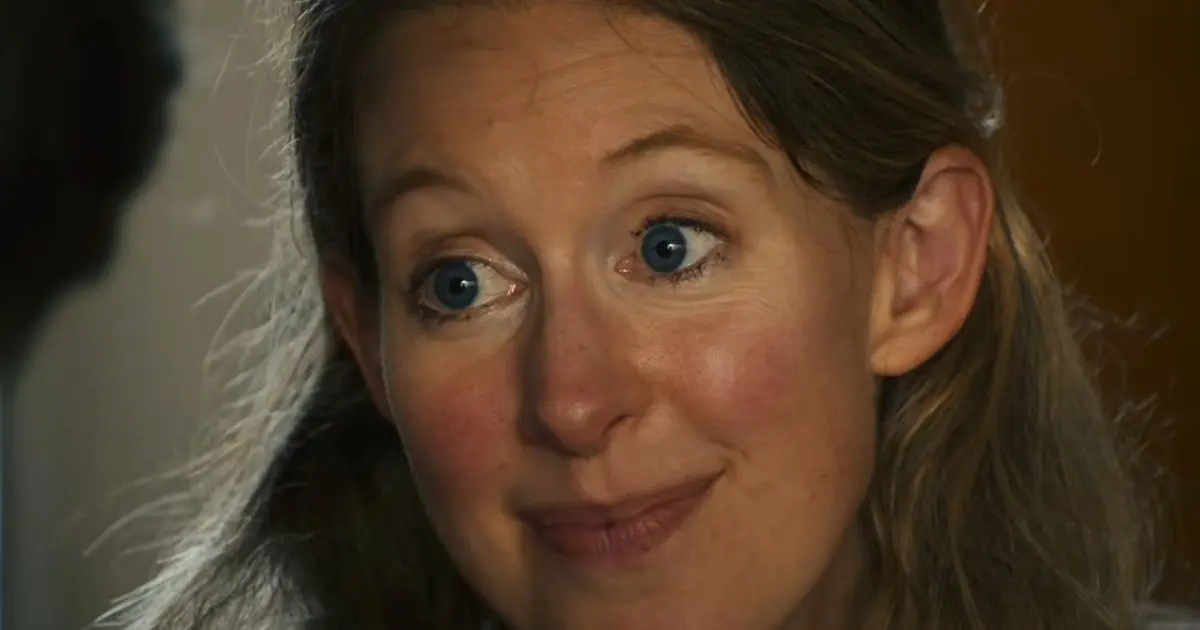
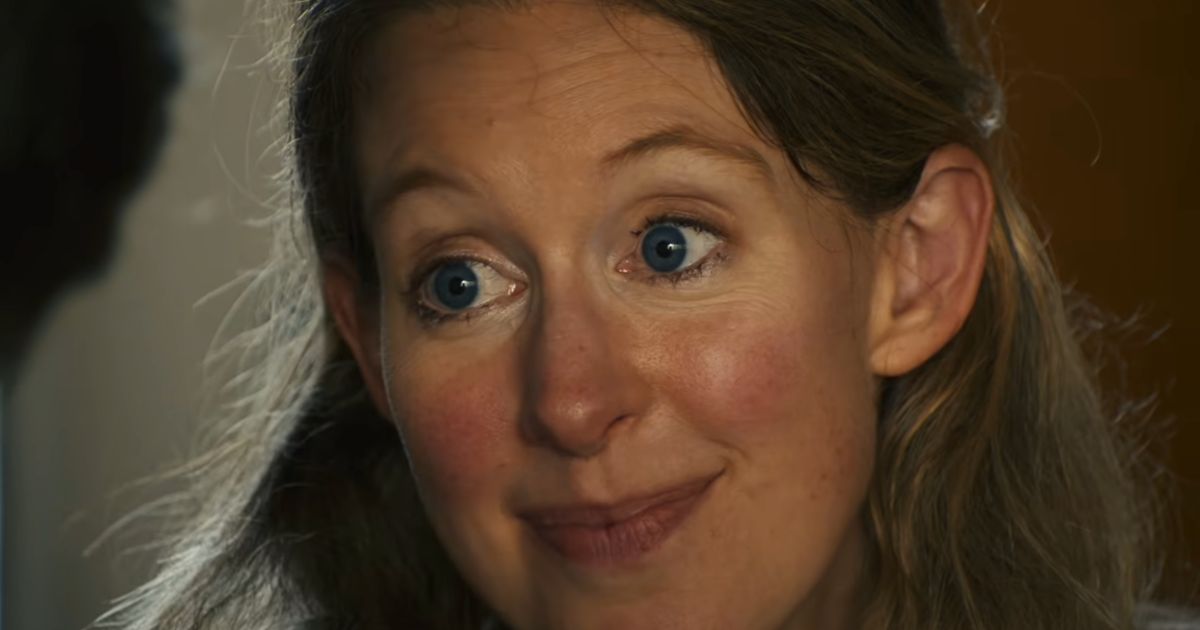
Audience members are likely to find themselves equally perplexed by their own psychological and emotional reactions after watching Holmes so closely, and for such an extended duration. On more than one occasion, her face fills the widescreen frame with a wide-eyed expression of such profound earnestness and naked vulnerability that it borders on heartbreaking. Once confronted with those arresting images, it becomes remarkably difficult for viewers to look away.
You Can See Everything is currently playing in select theatres across Canada.