
The stock market has a persistent habit of surprising investors, leaving many to wonder how long a historic bull run can possibly last. As major indexes regularly push toward unprecedented valuations, a familiar sense of anxiety grips parts of the financial community. With the current market boom heavily fueled by the rapid rise of Artificial Intelligence, many investors fear that a massive correction is looming, drawing uneasy parallels to the dot-com crash of the early 2000s.

For observers of financial trends, the dot-com era holds particular significance. That initial internet boom helped launch early careers and paved the way for financial independence for many, even as the subsequent crash threatened livelihoods and economic stability. Decades later, as artificial intelligence captures the global imagination and drives tech sector valuations to new heights, questions surrounding market sustainability have resurfaced with renewed intensity. Financial commentators and independent thinkers are increasingly fielding inquiries about how this cycle compares to past economic booms and busts.

Will Market Volatility Derail Long-Term Planning?
Reflecting on more than two decades of financial independence, long-time commentators note that public anxiety about the state of the world rarely abates. When examining the psychological weight of retirement planning, friends and observers frequently voice concerns about how anyone can sleep comfortably at night amid global uncertainty. The list of modern anxieties often includes volatile geopolitical figures, persistent inflation, escalating national debts, and the potential fallout of international conflicts, alongside fears of a bursting AI bubble.

However, looking back at historical anxieties reveals a recurring pattern. Concerns voiced two decades ago during similar market peaks centered on entirely different crises, ranging from housing market bubbles and geopolitical conflicts in the Middle East to fears of widespread job outsourcing overseas and impending "peak oil" shortages. Despite those very real anxieties, a long-term perspective on the stock market demonstrates remarkable resilience. Major historical downturns, including the Great Financial Crisis and the economic shock of the COVID-19 pandemic, ultimately proved to be temporary disruptions within a broader trajectory of long-term economic growth and wealth accumulation.

Beyond the financial markets, broader global metrics over the past twenty years reveal significant human progress. Global rates of extreme poverty have dropped substantially, infant mortality rates have been cut in half, and clean energy technologies have advanced dramatically, with solar power and electric vehicle adoption expanding far beyond historical expectations. This disconnect between widespread doom-scrolling and actual societal progress raises fundamental questions about whether society focuses too heavily on an unpredictable future rather than recognizing structural advancement.

Prosperity Risen from Productivity
Skeptics continually question whether current economic pressures are genuinely different this time, pointing to towering national debt levels or the unprecedented speed of artificial intelligence development. Financial media outlets frequently amplify these fears, spinning intricate narratives about impending doom. Yet, these pessimistic assessments often overlook a fundamental economic truth: true prosperity is not derived from financial systems or stock market tickers, which ultimately represent numerical abstractions tracked on computers.

Instead, long-term prosperity is rooted firmly in productivity. While the capitalist system remains inherently volatile and prone to cyclical swings, underlying human productivity continues to drive real-world innovation. Economic systems and financial markets are human inventions; if a system experiences a severe correction, societies have repeatedly demonstrated the capacity to restructure, adapt, and return to productive work. The fundamental tools that boost human productivity—technology, ingenuity, and infrastructure—remain intact, providing the foundation for standard of living improvements and long-term economic expansion.

Confronting the Psychology of Fear
For many individuals, financial anxiety is less about objective economic reality and more closely tied to human psychology. Evolutionary biology has wired humans to act as danger detection machines, an adaptive trait designed to protect early humans from predators and scarcity. However, in modern society, once immediate physical dangers are resolved, this cognitive machinery frequently keeps searching for new threats, shifting goalposts from basic survival to social status, portfolio values, and tax strategies.

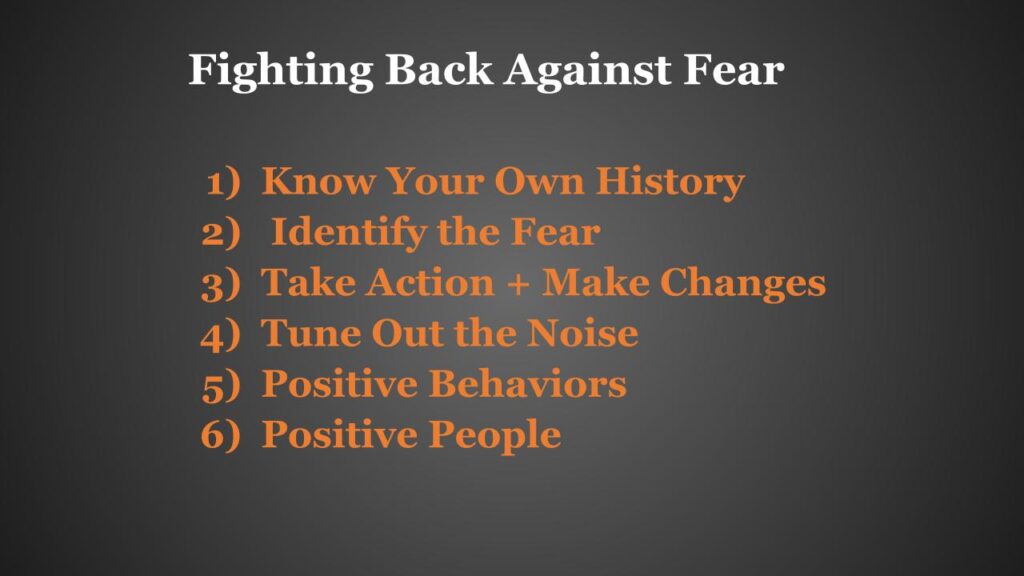
Combatting this persistent background fear requires self-awareness and an understanding of personal history. Childhood experiences, family attitudes toward scarcity, and past trauma often manifest as financial anxiety in adulthood. Identifying these root causes helps distinguish between genuine present-day risks and inherited emotional responses. Taking concrete action remains one of the most effective ways to neutralize anxiety, transforming the unfamiliar into the manageable and building personal resilience.
Furthermore, managing one’s mental diet by reducing exposure to sensationalized news media can significantly alter perspective. Traditional news feeds often prioritize the most alarming daily stories, whereas true understanding and progress are achieved through learning, outdoor activity, and positive behaviors. Surrounding oneself with optimistic, productive peers further reinforces a balanced outlook, shifting the focus from fear-driven avoidance to intentional living.

AI as a Cognitive Tool Rather Than an Existential Threat
Viewing new technological shifts through the lens of experimentation helps demystify periods of rapid change. Rather than succumbing to doomsday narratives surrounding artificial intelligence, industry observers suggest examining the technology objectively. AI can be understood fundamentally as a sophisticated form of cognitive leverage—a tool designed to enhance human efficiency and boost productivity.
Like previous technological revolutions, AI will inevitably displace certain entry-level administrative and technical roles while simultaneously lowering service costs and catalyzing the creation of entirely new industries, much like the advent of the internet and mobile applications. While these technological shifts often concentrate initial financial rewards among owners and shareholders, they ultimately expand society’s productive capacity.

Ultimately, artificial intelligence represents another milestone in human innovation, offering an opportunity for adaptation rather than a reason for panic. Recognizing that fear often serves as a psychological barrier rather than a reflection of objective danger allows individuals to navigate market uncertainties with clarity, focusing their energy on personal growth, productivity, and purposeful action.