
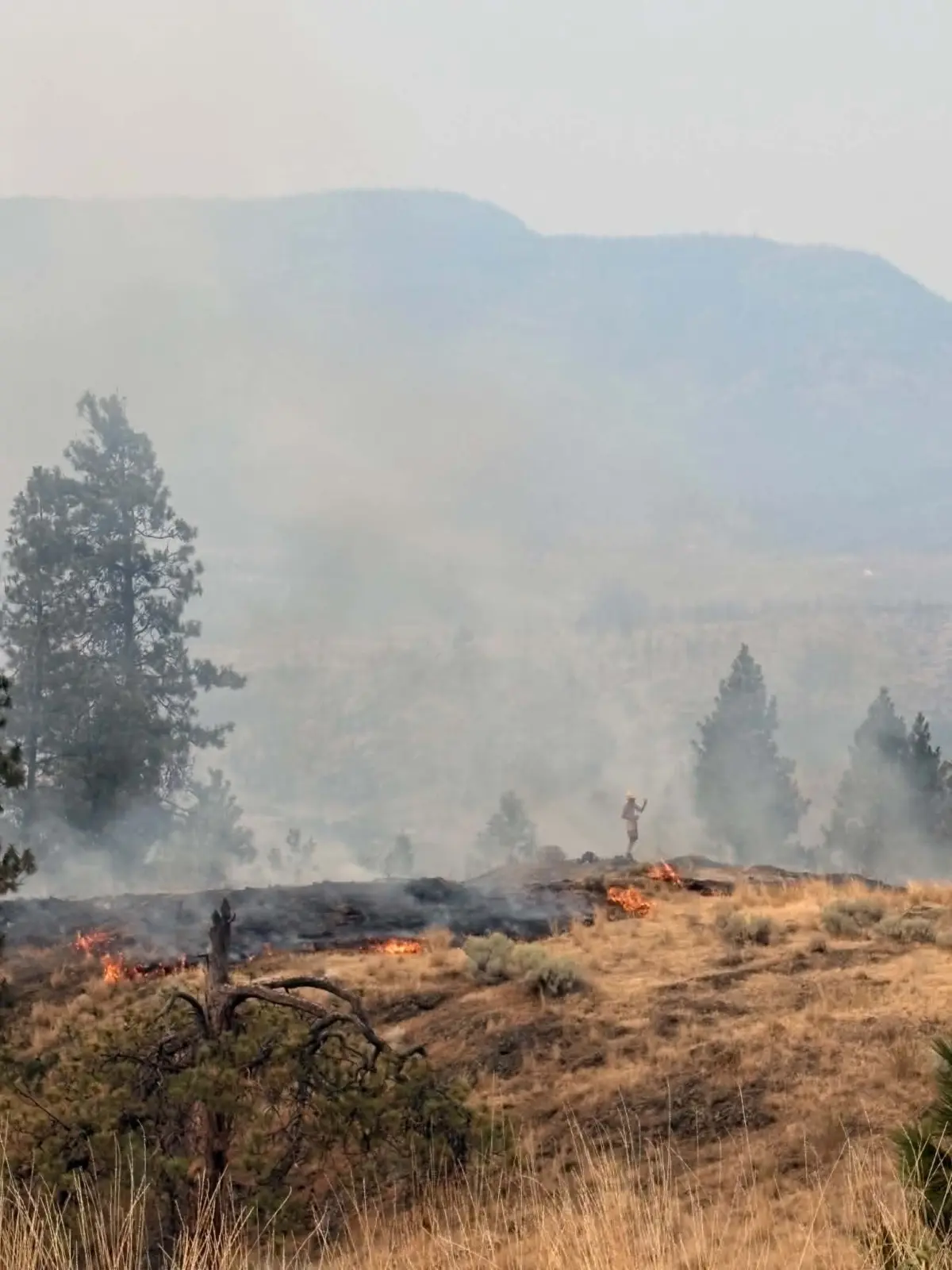
Following consecutive years of intense and destructive wildfire activity across the Okanagan, the Kelowna Fire Department is preparing to launch a series of prescribed burns in several key areas of the city, including the prominent natural landmark of Knox Mountain. The planned burn at Knox Mountain Park marks the second time within a single year that fire crews will actively introduce controlled fire to the park’s landscape. This proactive strategy represents a significant shift in how local authorities manage municipal wildlands, transitioning from a reactive model of fire suppression to a proactive model of fuel reduction. For communities situated along the wildland-urban interface, where residential neighborhoods directly border dense forests and grasslands, the upcoming burns are viewed as an essential shield against future disasters.
For residents living in the immediate vicinity of Knox Mountain and other designated burn zones, the prospect of proactively reducing wildfire risk is a highly welcome development. The memory of recent wildfire seasons remains fresh for many Okanagan residents, who have witnessed firsthand the speed and devastation with which uncontrolled wildfires can move. Roy Shatz, a local resident who lives near the planned burn area, expressed strong support for the fire department’s initiative. Shatz emphasized the critical need for pre-emptive action, pointing to the severe impacts of past blazes in neighboring communities. He noted that being proactive is no longer optional, citing the destructive wildfires that previously threatened and impacted Summerland as a stark reminder of what is at stake. According to Shatz, the community must accept and support these preventative measures, as waiting for a fire to start before taking action is no longer a viable strategy in a region that has experienced repeated wildfire devastation.

The Kelowna Fire Department hopes to execute three distinct prescribed burns across the municipality over the course of the next month. However, fire officials stress that these operations cannot be scheduled with absolute certainty, as they are entirely dependent on highly specific weather conditions. Dennis Craig, the assistant chief of mitigation, risk, and wellness with the Kelowna Fire Department, explained that executing a successful prescribed burn requires a delicate atmospheric balance. According to Craig, the fire department is ultimately at the mercy of environmental factors, noting that crews do not choose the burn day because Mother Nature ultimately makes that decision. Fire crews must wait for a precise window where the temperature, relative humidity, and wind speeds align perfectly to ensure the fire can be safely controlled while still effectively consuming target fuels.
A critical component of this meteorological equation is atmospheric venting—the ability of the atmosphere to disperse smoke upward and away from populated areas. In municipal settings like Kelowna, where residential neighborhoods are located just meters from the burn sites, smoke management is a primary concern for fire managers. If the venting conditions are poor, smoke can become trapped close to the ground, creating poor air quality and reducing visibility for local residents and motorists. Therefore, the fire department works closely with provincial air quality meteorologists to monitor the venting index, ensuring that burning only occurs when conditions allow smoke to loft high into the atmosphere and dissipate safely.
The primary objective of these controlled burns is fuel mitigation, a process that involves systematically reducing the amount of flammable organic material available on the forest floor. Over decades of strict wildfire suppression, forests and grasslands across British Columbia have accumulated thick layers of dead wood, dry pine needles, leaves, and dense underbrush. When a wildfire ignites in these conditions, this accumulated fuel load acts as an accelerant, allowing the fire to burn with extreme intensity and easily climb into the upper canopy of the trees, creating highly destructive crown fires. Assistant Chief Craig emphasized that prescribed fire is not a magic solution that will stop fires from starting altogether. Instead, its purpose is to alter the behavior of future fires. By pre-emptively burning away the fine surface fuels under controlled conditions, any future wildfire that enters the treated area will have far less fuel to consume. This dramatically reduces the fire’s severity and intensity, making it much easier and safer for ground crews to manage and suppress.

While the use of prescribed fire is increasingly viewed as a modern necessity, the practice itself is rooted in centuries of land stewardship. Indigenous communities and early land managers utilized low-intensity fires for generations to maintain healthy ecosystems, clear underbrush, and promote the growth of specific plant species. However, for modern urban municipalities, reintroducing fire to the landscape is a relatively recent and complex endeavor. It requires overcoming decades of public perception that all fire is inherently dangerous and must be immediately extinguished. Establishing a successful prescribed burn program in a city like Kelowna requires extensive planning, rigorous safety protocols, and a concerted effort to build public trust. Craig noted that ensuring the department conducts these burns responsibly is paramount to maintaining community support and achieving long-term wildfire resilience.
The upcoming prescribed burns in Kelowna also serve a broader provincial purpose by providing a critical training ground for wildland firefighters. This year’s operations will feature active participation from fire officials across British Columbia through the BC Wildfire Service’s Training Exchange, commonly known as TREX. This collaborative program brings together structural firefighters, wildland fire specialists, and municipal crews to work side-by-side on active prescribed burns. Craig highlighted the value of this partnership, noting that the Kelowna Fire Department has invited provincial personnel to assist with and participate in the local burns. By opening up their municipal mitigation projects to outside agencies, Kelowna is helping to build a more robust, highly skilled workforce capable of planning and executing complex prescribed fires throughout the province.
This collaborative training is essential for addressing a widespread shortage of personnel qualified to manage prescribed burns. Conducting a controlled burn in close proximity to a city requires a high level of technical expertise, including a deep understanding of fire behavior, weather patterns, and ignition techniques. Through the TREX program, participants gain invaluable hands-on experience under the mentorship of seasoned burn bosses. Craig expressed pride in Kelowna’s role in this educational initiative, describing it as a way for the local department to give back to the firefighting industry as a whole. By providing a safe, controlled environment for learning and professional development, Kelowna is actively contributing to the province-wide effort to return natural, low-intensity fire to British Columbia’s landscapes.

The initiative in Kelowna reflects a much larger, province-wide trend toward proactive wildfire management. Across British Columbia, there is a growing recognition among policymakers, forestry experts, and emergency managers that traditional suppression tactics alone are no longer sufficient to protect communities from increasingly severe wildfire seasons. Statistics from the BC Wildfire Service illustrate this rapid shift in strategy. In 2025, the BC Wildfire Service successfully completed 76 prescribed burns across the province, a significant increase from the 48 controlled burns conducted the previous year. This upward trajectory is expected to continue as training programs like TREX expand and public acceptance of prescribed fire grows.
The push for increased mitigation is not limited to Kelowna. Across the Okanagan Valley, local governments and fire departments are working in tandem with provincial authorities to address the shared threat of wildfire. Similar prescribed burns are currently being planned and coordinated in neighboring communities, including Lake Country and various locations throughout the North Okanagan. This regional approach ensures that fuel mitigation efforts are contiguous and coordinated, reducing the risk of a major wildfire sweeping uninterrupted across municipal boundaries. For long-time residents like Shatz, seeing these coordinated efforts expand year after year brings a sense of reassurance. Reflecting on the repeated wildfire devastation that has impacted the region, Shatz emphasized that ongoing, yearly action is the only path forward, stating that communities must commit to doing more every single year to adapt to the reality of wildfire risk in the Okanagan.