
By Paul Adams, Diplomatic correspondent, in Kyiv
As autumn’s cooler temperatures settle across the Ukrainian capital and hint at another relentless winter ahead, the residents of Kyiv are wrestling with how to endure a double threat: an escalating campaign of Russian missile and drone strikes, and the onset of biting cold weather.
The memory of the previous winter remains painfully fresh across the country. Marked by prolonged stretches of sub-zero temperatures and persistent, widespread power cuts caused by deliberate attacks on Ukraine’s energy infrastructure, it proved to be one of the hardest periods for urban populations since the start of the war. Now, with the weather turning once again, urban families are weighing their limited options, forced to decide whether to stay and adapt, flee to rural sanctuaries, or abandon the country altogether.
For Mariia Shostak, a mother of two living in Kyiv, the memory of those months has made the prospect of remaining in the capital unthinkable. Standing inside her small flat, she gathers her family’s belongings into packed bags, preparing to abandon her city residence before the frost sets in.
"It was a very difficult winter last year in Kyiv," Mariia explains, looking back at the long days spent without heat or light. "There were some days and weeks that were unbearable. I started thinking I’m not going through another winter like this."

Mariia had initially hoped to hold out longer, but a dramatic shift in the intensity and pattern of aerial attacks forced her hand well ahead of winter’s official arrival. By late August and early September, Russia’s air assaults on the capital shifted from sporadic, long-range barrages to near-constant bombardment.
"Everything changed in late August and the beginning of September, when Kyiv started being attacked around the clock," she says. "Earlier, the drones and missiles were intercepted somewhere on the outskirts. Now it was happening in the centre, right above our heads."
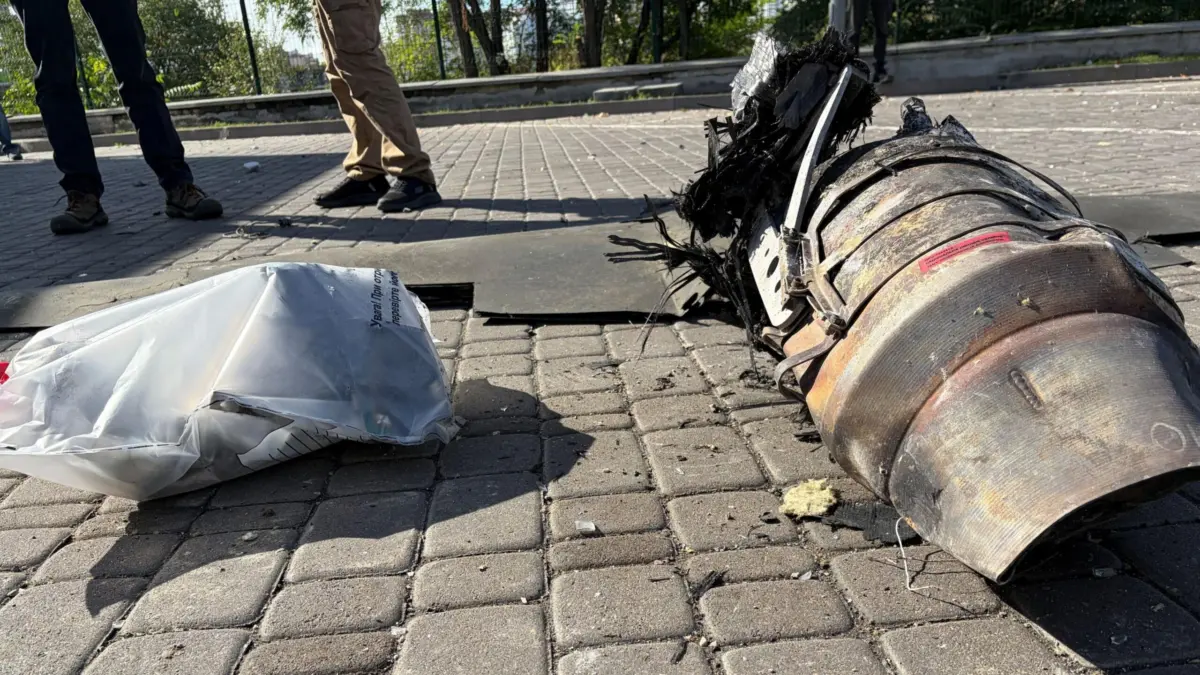
The physical and psychological toll of these strikes expanded through the end of September. Russian targeting shifted to vital municipal infrastructure across the capital, including petrol stations, power generation plants, and major bridges spanning the Dnipro River. The strikes drew stark warnings from local officials. Kyiv Mayor Vitaly Klitschko publicly characterized the situation in the capital as "very dramatic," stating plainly that the relentless bombardment was "tearing Kyiv apart."
Mariia’s two children—four-year-old Artur and two-year-old Kira—were both born after Russia launched its full-scale invasion in 2022. Unwilling to subject her toddlers to another dangerous and freezing winter in a city under siege, Mariia made the choice to take them out of Ukraine entirely.
Her destination is Hurghada, a coastal city on Egypt’s Red Sea coast. She notes that living in Egypt offers a far more affordable alternative to Western European countries while providing guaranteed warmth away from disrupted power grids. Her motivation is rooted in basic survival and protection. "I don’t feel safe in Ukraine in any way," she says.
Sociological data indicates that Mariia’s anxieties are shared by a significant portion of the population. A survey conducted in September by the Gradus research firm revealed that 40% of Ukrainians were actively weighing the option of relocating if living conditions deteriorated further during the colder months. According to the data, 35% of respondents stated they had no plans to move, while 25% remained undecided, waiting to see how severe the infrastructure damage and winter conditions would become.

Evgeniya Blyznyuk, the founder and chief executive officer of Gradus, explains that the psychological stress facing citizens has evolved beyond the single threat of winter power outages. "People are thinking about a combination of stress factors," Blyznyuk says. "Not just about electricity and blackouts like last winter. Russians are targeting big logistics centres, which means that the population is worrying about products, about food during the winter."
The continuous targeting of fuel depots, supply lines, logistics hubs, and educational institutions has heightened the pervasive sense of danger across urban centers. For families raising young children in high-rise apartment complexes, the combination of physical destruction and severe cold poses immediate risks to health and safety.
Another Kyiv mother, Iryna, who asked that her surname be withheld, spent the previous winter watching her three-year-old daughter, Polina, suffer through prolonged utility outages. Without electricity or centralized heating, the internal temperatures inside their apartment regularly plunged to near-freezing levels.
"Sometimes we didn’t have heating for weeks and the temperature inside the apartment was zero or five degrees," Iryna recalls. "So being here with a little child that is sick all the time was not OK."
The hardship was compounded by direct physical damage to their living quarters on the north-western edge of Kyiv. The family’s apartment block was struck twice in rapid succession by nearby missile detonations. The first explosion, occurring in early June, shattered multiple window frames throughout their home. Just a month later, shortly after initial repairs were completed, a second missile detonated near the foot of their 10-storey building. The force of the second blast hurled a heavy wave of earth and debris directly into the flat, destroying their living space and forcing the family into temporary housing.
The repeated trauma has severely impacted young Polina’s neurological and physical health. The child now suffers from debilitating anxiety that manifests in severe physical symptoms, including recurring bouts of incontinence, vomiting, and uncontrollable shaking whenever loud noises or sirens occur.

"Now we have this neurological problem with her so that’s the reason we’re thinking about leaving," Iryna says, describing the toll the bombardment has taken on her daughter. "There are new symptoms after each shelling."
With her husband serving away in the military, Iryna is evaluating her options. Because she works for an international non-governmental organization, she may be able to secure permission to work remotely from Poland. She also notes that official guidance from the national government offers little reassurance for those holding out in the capital. "Our president says that it is better to leave Kyiv because this is target number one," she says.
While some families are preparing to cross international borders, others are seeking safety within Ukraine’s borders by abandoning urban centers for rural communities.
Olena Konoplia spent weeks searching for an ideal refuge before choosing a modest cottage located in a small, remote village roughly two hours outside of Kyiv. Her selection criteria were strictly strategic: she sought out an area entirely stripped of infrastructure that could attract air strikes.
"I decided the better option will be a little village without any factories, any warehouses, and any railway stations," Olena explains. "Everything that can be a Russian target."
In the days leading up to the cold weather, Olena has been busy transporting essential supplies to her new residence and supervising basic structural upgrades, including the installation of a reinforced exterior door. In keeping with local custom, she arranged for a local priest to visit and bless the home before her formal move-in.

To ensure resilience against prolonged grid failures, the cottage is equipped with gas-powered convection heaters, supplemented by a heavy stack of firewood stored in an adjacent barn. Olena has also connected a high-speed internet link, allowing her to continue her daily work for a Kyiv-based charitable foundation remotely.
For Olena, the primary benefit of the rural move is the break from relentless noise. In Kyiv, daily life is punctuated by continuous air raid alerts, anti-aircraft fire, and heavy explosions. In the quiet of the countryside, the immediate psychological relief was unmistakable.
"After several nights here, when I can sleep, just sleep, without any explosions, without any sirens, I feel better," she says. "I can work, write my articles, I feel good."
Olena is currently preparing the cottage for her elderly mother, who will soon join her in the village. "She lives in a pretty dangerous district in Kyiv and it’s harmful for her health," Olena notes.
Leaving the capital, however, is a privilege that remains out of reach for millions of residents. International relocation and countryside cottage rentals require financial resources that many families simply do not possess. As a result, the vast majority of Kyiv’s population will stay in the city, relying on personal resilience and municipal contingency measures to navigate the coming months.
Local authorities in Kyiv have initiated several emergency efforts to bolster the city’s defenses and cushion the impact on the most vulnerable. Municipal programs are offering temporary placement in converted sanatoriums and rehabilitation facilities located in the forested, lower-risk outskirts of the city for elderly citizens and mothers with small children.

To defend against the destruction of centralized power infrastructure, municipal engineers have spent the past 18 months constructing a decentralized network of approximately 15 small-scale power generation units situated around the capital. Built inside heavily fortified underground bunkers, these mini-power stations are encased in massive steel cages designed to detonate incoming strike drones before they can cause structural damage. Each localized plant is engineered to generate both heat and electricity for several hundred nearby high-rise residential blocks if the main power grid fails.
Despite these engineering interventions, the immediate outlook for the capital remains precarious. Utility operators have already warned residents to prepare for scheduled, rolling blackouts, while local supermarkets have experienced intermittent shortages of basic consumer goods due to supply chain disruptions.
Evgeniya Blyznyuk of Gradus Research observes that despite the overwhelming strain on urban populations, a sudden, mass evacuation of the capital remains unlikely in the short term. Most residents face strong economic and social anchors, including jobs, family ties, and children’s educational commitments, which keep them in place until staying becomes physically impossible.
"They will postpone it until conditions become really unliveable," Blyznyuk says.