
The morning routine at El Camarón Peludo is an intricate choreography that lays the foundation for everything that makes the establishment unique. The process begins with the arrival of pristine ingredients, most notably fresh shrimp sourced from regions renowned for their coastal bounty, including Sinaloa, Mexico, and Ecuador, alongside other carefully selected locales. These crustaceans are meticulously de-shelled and de-veined, a crucial first step dedicated to supporting three of the bar’s central shrimp dishes. While the prep station hums with the rhythmic motion of knife work, Cervantes turns his attention to the day’s salsas. In a culinary operation where consistency is paramount, Cervantes undertakes a rigorous quality control ritual, taste-testing and comparing each newly made batch against the flavor profile of the salsa from the previous week. This dedication ensures that the bold, authentic notes remain unwavering, preserving the culinary integrity that patrons have come to expect.
Among these preparations is a bright, vibrant red salsa that serves as a cornerstone for one of the menu’s standout offerings. This freshly made red salsa is thoughtfully blended with mayonnaise to create the signature sauce that coats the camarones zarandeados. Inspired by a traditional fish dish from the sun-drenched Pacific coast of Mexico—where seafood is classically butterflied, heavily seasoned, and grilled over open flames in a flat wire grill basket—this shrimp adaptation captures the smoky, rich, and tangy essence of coastal Mexican cooking, reimagined for an intimate urban setting.
While the kitchen staff works feverishly beneath street level, Apolinar is upstairs, orchestrating the front-of-house transformation to prepare the intimate space for its daily debut. Her attention to detail is evident in the careful curation of the front window display, where fresh catches of chilled seafood are laid out artistically on a bed of ice, immediately catching the eyes of passersby on the bustling West Village street. Nearby, wine bottles are carefully positioned in chilled buckets, ready to be uncorked the moment service begins. For guests looking to fully immerse themselves in the experience, Apolinar offers a discerning insider recommendation: secure a seat at the long, winding bar. From this vantage point, diners are treated to an unobstructed view of the bartenders and chefs working in tandem, turning the meal into an interactive, theatrical display of hospitality and craftsmanship.
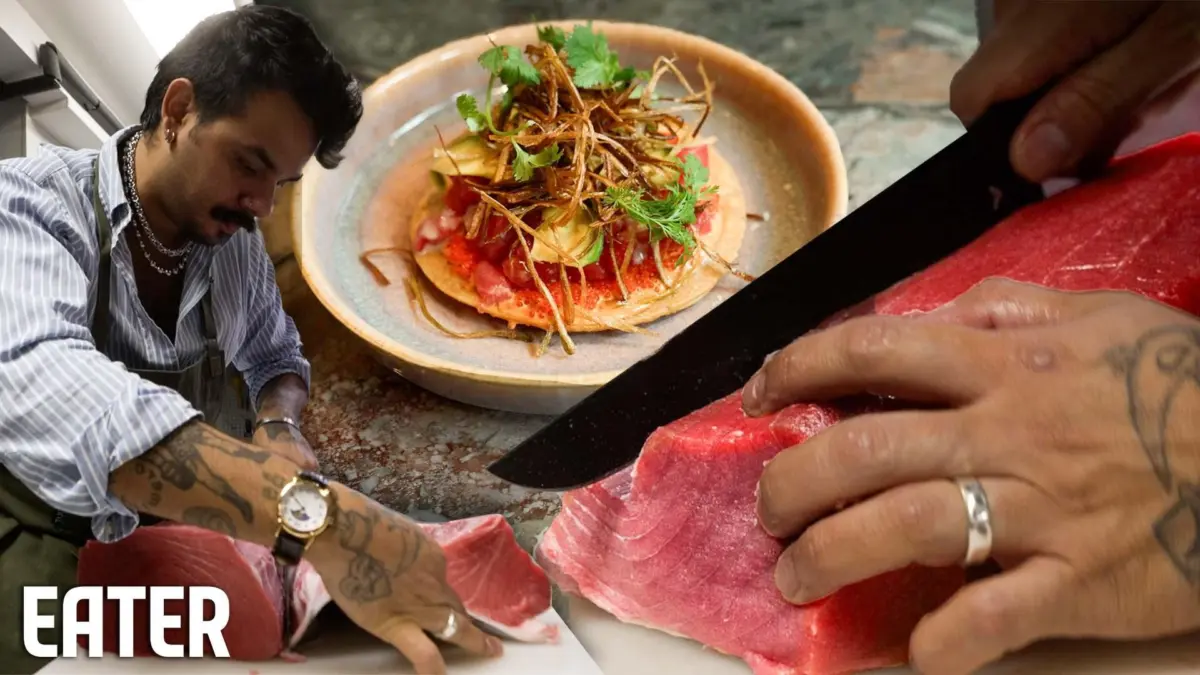
Back down in the kitchen, Chef Barrera is engaged in a complex piece of butchery, breaking down whole Spanish tuna. This prized fish is destined for a creative and visually striking tuna tostada, a dish that exemplifies the menu’s modern, boundary-pushing approach. The tostada is meticulously constructed, layering the delicate, high-grade tuna with a spicy mayonnaise, rich fish eggs for a pop of briny salinity, aromatic habanero-lime oil for a sharp citrus kick, creamy avocado to balance the heat, and crispy leeks that add a vital textural crunch to every bite.
The prep work continues with a relentless focus on the taco station, a nod to the team’s deep roots in Mexican street food traditions, though elevated here through a seafood lens. Barrera and his culinary team prep the components for the pescadilla, a classic deep-fried fish taco known for its golden, shattering exterior and tender filling, alongside a robust shrimp taco. The latter is built with a foundation of creamy queso fresco, hearty refried beans, and delicate slices of roasted poblano peppers, creating a harmonious balance of earthy, spicy, and savory elements. Simultaneously, Cervantes and Barrera finalize the raw bar station, churning out complex house-made condiments like salsa verde and salsa negro. While the green salsa relies on the clean, herbal notes of fresh parsley to brighten the palate, the black salsa takes on a more mysterious, deeply savory character, layered with the fiery heat of habanero and piquin chiles, and darkened dramatically with squid ink.
The genesis of El Camarón Peludo stems from an evolving vision regarding how these bold, ocean-forward plates should be consumed. Cervantes explains that his original concept centered simply on pairing innovative seafood plates with bubbly wine. However, that initial idea organically blossomed into something more expansive—a natural wine bar sourcing low-intervention, character-driven bottles from all corners of the globe. This curated beverage program provides a playful yet sophisticated counterpoint to the heat and acidity found in the kitchen’s dishes, bridging the gap between traditional Mexican coastal cuisine and contemporary wine culture.
Food enthusiasts and curious diners eager to see this meticulous daily routine in action can witness the team at work online. The entire process—from the careful slicing of raw fish to the assembly of tostadas, tacos, and flavor-packed aguachile—is captured in detail in the newest episode of Now Open, offering a rare, behind-the-scenes look at how one of the West Village’s most talked-about new culinary destinations brings its vibrant vision to life every single day.