
For decades, the stock market has maintained a remarkable knack for surprising investors, defying expectations with cyclical surges and sudden downturns. When markets crash, retirement portfolios shrink, triggering immediate anxiety among savers. Yet, even when indices climb to unprecedented record valuations, a different kind of worry sets in. Investors begin to fear that astronomical peaks inevitably precede catastrophic collapses, a sentiment amplified today by the intense and frenzied boom surrounding Artificial Intelligence.

While many market participants remain focused on the daily drama of financial media headlines, seasoned commentators note that this cycle of panic mirrors historical booms and busts. Financial commentators who lived through the dot-com era and the 2008 financial crisis point out that while technological innovations like AI bring genuine transformation, the speed of market mania often evokes memories of past bubbles. Addressing these concerns requires a step back from the daily volatility to examine what truly drives economic prosperity and human well-being over the long term.

Will the AI Bubble Ruin Our Retirement?
Living through multiple decades of retirement brings a certain comfort with market fluctuations, yet friends and peers frequently raise anxious questions regarding the state of the world. In an era dominated by relentless news cycles, it is easy to compile a lengthy list of existential threats. Today’s worries often center on geopolitical instability involving major global leaders, persistent inflation eroding purchasing power, escalating national debts, and the potential fallout of an overheated AI sector.

Interestingly, these anxieties closely mirror those voiced by investors two decades ago. During the mid-2000s, market observers worried about different geopolitical conflicts, rising national debt, and housing markets experiencing unsustainable bubbles. Back then, widespread anxiety focused on real estate rather than artificial intelligence, while fears of job displacement centered on outsourcing rather than machine learning. Macroeconomic debates of the era also featured concerns over peak oil and energy scarcity, a narrative that ultimately shifted dramatically as solar and electric vehicle technologies advanced.

Despite the severe Great Financial Crisis that materialized shortly after 2006—sparked by irrational exuberance in housing and complex financial leverage—long-term market performance demonstrated remarkable resilience. Historical charts show that a $100,000 investment made during that period of peak anxiety would still experience significant growth over the subsequent two decades, weathering both the 2008 crisis and the pandemic-induced market drop of 2020.

Simultaneously, broader global indicators improved significantly over the same twenty-year timeframe. Extreme poverty rates declined substantially, infant mortality was cut in half, and clean energy adoption surged as solar panel costs plummeted. Electric vehicle sales transitioned from a statistical novelty into a substantial share of global automotive markets. These trends highlight a fundamental economic truth: long-term prosperity is driven not by fluctuating financial systems or speculative stock prices, but by underlying productivity.

Prosperity, Productivity, and Human Happiness
Economic prosperity fundamentally relies on productivity rather than the arbitrary numbers displayed on computerized financial dashboards. Capitalism is inherently choppy and prone to wild swings, but beneath the surface volatility, real people continue to perform tangible work and develop practical inventions. Financial systems and economies are human constructs; if a market system falters due to unsustainable valuations, societies have repeatedly demonstrated the capacity to recalibrate and resume productive output.

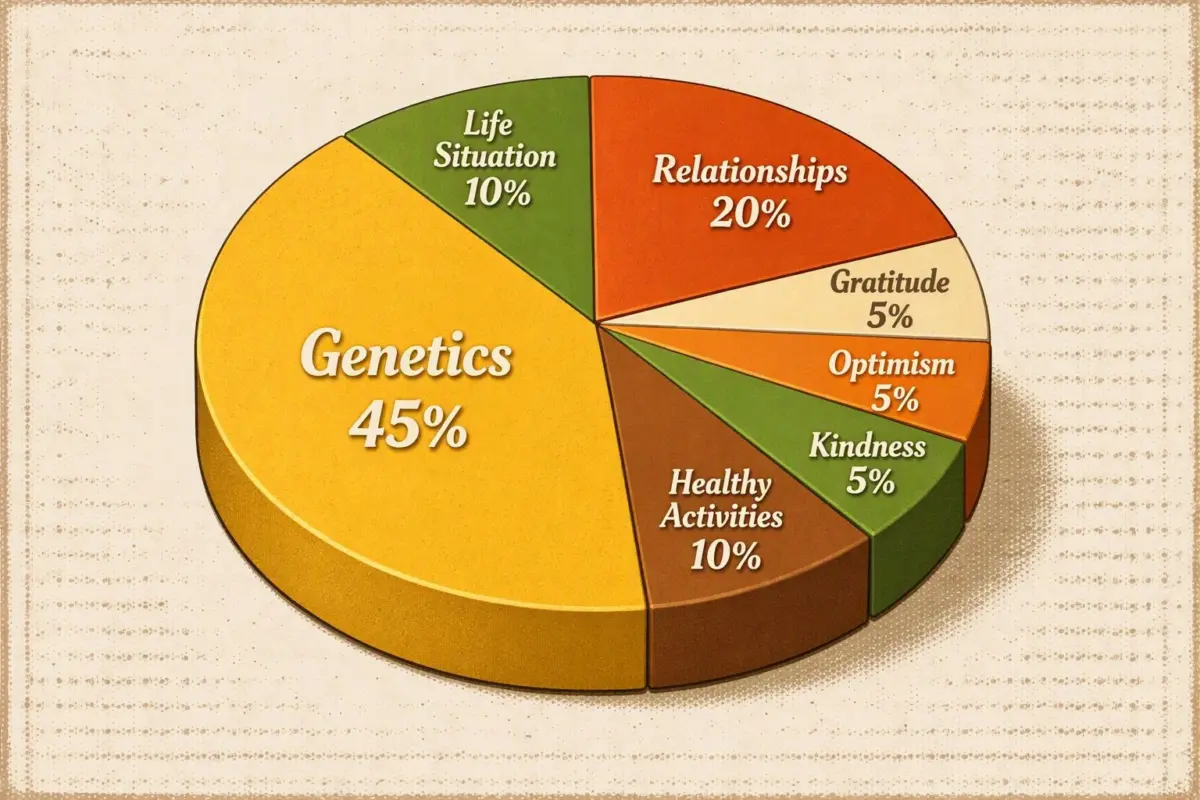
High productivity underpins rising standards of living, economic growth, and the feasibility of early retirement. However, once societies achieve a certain baseline level of material wealth, additional financial gains yield diminishing returns regarding human happiness. In developed nations, basic survival and comfort requirements were surpassed decades ago, shifting the focus of human satisfaction toward relationships, gratitude, optimism, and outdoor physical activity. Genetic predispositions and personal life choices ultimately play a much larger role in individual happiness than portfolio size.

Despite historical evidence showing that economies adapt and grow, background fear remains a powerful psychological constant. Human beings evolved as sophisticated danger-detection machines, a biological trait designed to protect against predators and scarcity. Once immediate physical threats are resolved, this cognitive machinery often pivots to new targets, moving goalposts from physical survival to social acceptance, financial comparison, and complex tax strategies.
Understanding and Managing Financial Fear
Overcoming pervasive financial anxiety requires self-awareness and an understanding of personal history. Many individuals inherit scarcity mindsets from parents or grandparents who lived through economic depressions or personal trauma. Recognizing that these fears are often echoes of the past rather than objective assessments of the present can help individuals evaluate risk more rationally.

Analyzing worst-case scenarios often reveals that potential outcomes are far less catastrophic than imagined. Taking concrete action against unfamiliar challenges helps build resilience, transforming abstract anxieties into manageable experiences. Furthermore, limiting exposure to sensationalized daily news feeds and surrounding oneself with optimistic, productive peers can significantly improve mental well-being.
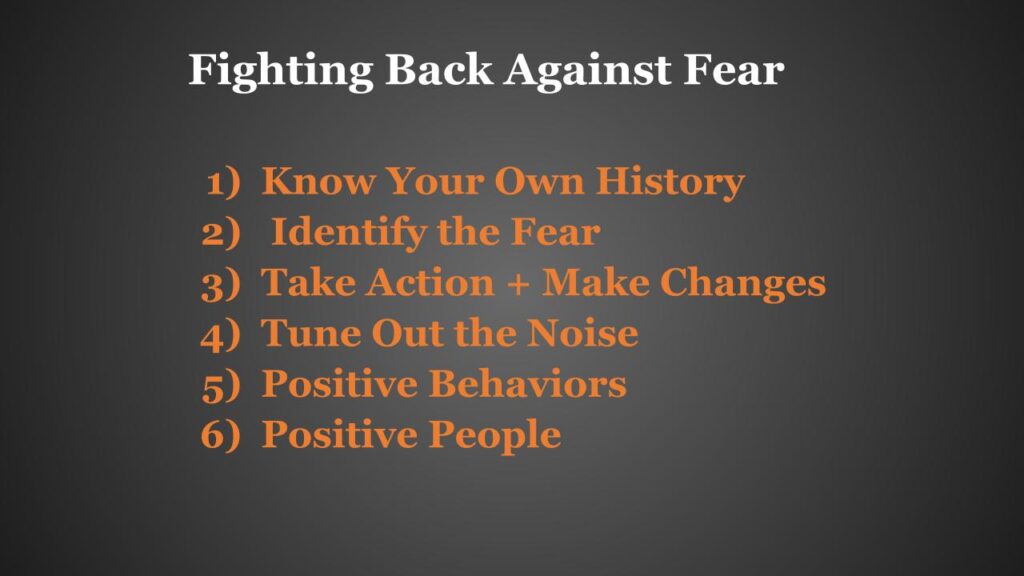
Viewing life changes—including career shifts, market corrections, and technological revolutions—through the lens of experimentation helps reframe uncertainty from a threat into an opportunity. Rather than succumbing to doom-scrolling and fear-mongering narratives regarding artificial intelligence, analysts suggest examining the technology objectively. AI functions essentially as a cognitive tool designed to boost efficiency and productivity.

While technological revolutions inevitably displace certain jobs—disrupting entry-level office roles, software tasks, and transportation sectors much like past industrial shifts—they simultaneously reduce costs and foster entirely new industries. Historically, the productivity gains from major innovations ultimately benefit the broader economy and shareholders alike, even as the transition period requires adaptation.

Ultimately, artificial intelligence represents another chapter in ongoing technological evolution. By addressing the root causes of fear and maintaining a focus on productivity, learning, and resilience, individuals can navigate market bubbles and future uncertainties without compromising their long-term well-being and financial freedom.