
By Staff Reporters
The stock market has once again proved its capacity to surprise. As valuations reach record highs driven by the current frenzy surrounding Artificial Intelligence, investors are left grappling with a familiar financial anxiety: when the market climbs to extraordinary heights, a catastrophic crash is often perceived to be right around the corner.

For those who have tuned out the daily financial drama, the modern AI story can be distilled into a few rapid developments. Massive investments are flowing into infrastructure, tech companies are racing to deploy generative models, and public enthusiasm has sent valuations soaring. Yet, this rapid ascent has triggered widespread concern that the mania resembles an accelerated version of the dot-com bubble of the early 2000s—a market cycle that defined the early career of prominent financial commentator and blogger Mr. Money Mustache before nearly derailing his livelihood and citizenship application during the subsequent crash.
Addressing these widespread anxieties, the veteran financial educator recently debuted a presentation at the Camp FI Midwest event, with a polished version slated for the upcoming Bogleheads conference in November. Marking 21 years of formal retirement, the commentator reflects on the persistent nature of public anxiety, drawing parallels between today’s AI-driven panic and the doomsday narratives of past decades.

Will the AI Bubble Ruin Our Retirement?
Reflecting on two decades of retirement, the financial blogger highlights how easily individuals can be consumed by macroeconomic dread. When asked by a friend how anyone can sleep at night given the state of the world, the contrast between contemporary worries and those of yesteryear becomes striking.
Looking back twenty years to 2006, the prevailing anxieties feel remarkably familiar yet distinct. Back then, society wrestled with geopolitical tensions involving leaders like George W. Bush, Saddam Hussein, and Osama Bin Laden, alongside ongoing conflicts in the Middle East. Observers worried about the U.S. national debt, inflation, and an overvalued housing market that ultimately precipitated the Great Financial Crisis of 2008—the most severe economic downturn since the Great Depression. Additional concerns dominated the headlines two decades ago, including the outsourcing of labor to India and China, and widespread debates over "peak oil" and impending fossil fuel scarcity.

Despite the severity of the Great Financial Crisis and subsequent shocks, such as the 2020 pandemic-induced downturn, historical charts illustrate a resilient upward trajectory. A $100,000 investment made during those turbulent periods would have grown substantially over the ensuing twenty years. Simultaneously, broader global indicators improved drastically: extreme poverty rates dropped from 20 percent in 2005 to 8 percent over two decades, infant mortality rates were cut in half, and clean energy adoption surged as solar panels became roughly forty times cheaper. Pure electric vehicle sales transitioned from virtually zero to roughly a quarter of all global vehicle sales.
This historical perspective raises a fundamental question: does the current era genuinely represent an unprecedented existential threat, or is it simply a new iteration of perennial anxiety? While critics point to the towering U.S. national debt, the scale of the AI boom, or speculative fiction regarding superintelligence, market observers often overlook a foundational economic truth. Prosperity does not originate from financial systems or computerized stock market figures; true prosperity stems directly from human productivity.

Prosperity, Productivity, and the Illusion of Fear
Financial systems and stock markets are fundamentally human constructs. As demonstrated during previous economic collapses, if a financial system suffers catastrophic failure because market participants reject prevailing valuations, society simply restructures the metrics and returns to productive labor.
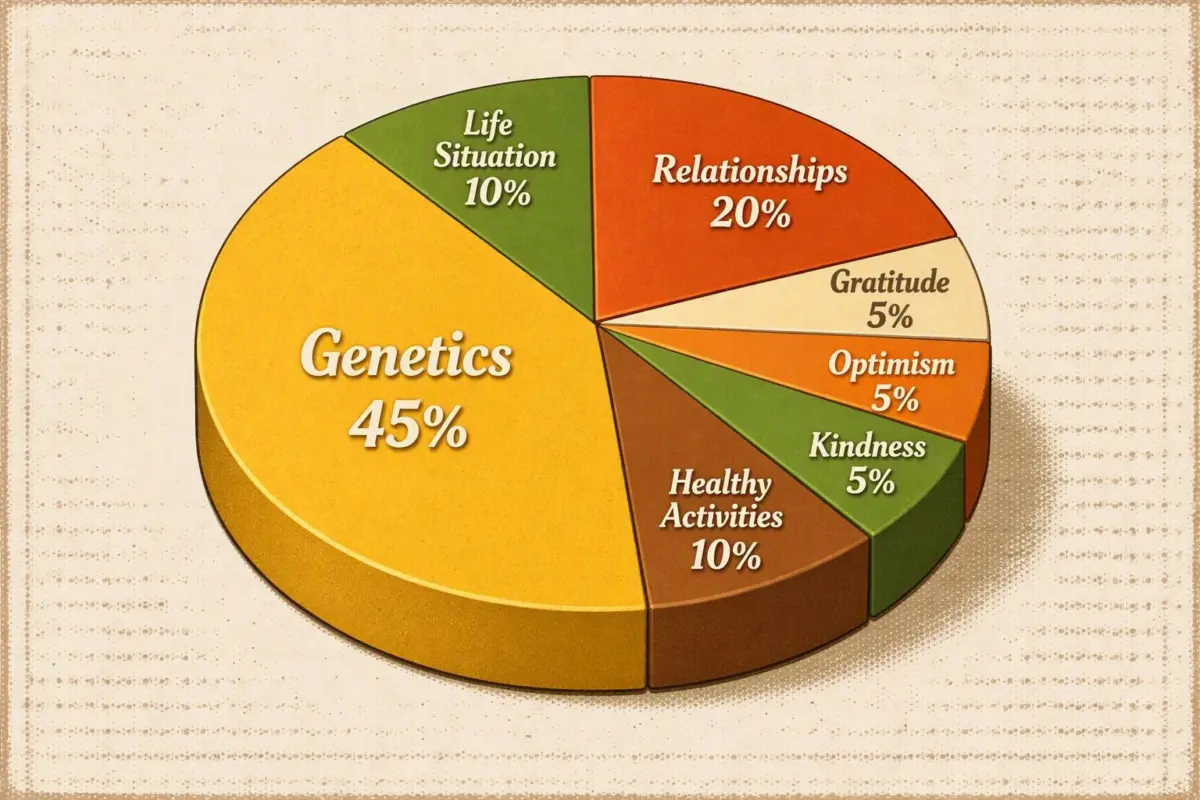
Standard of living, economic growth, and the feasibility of early retirement are all anchored to productivity. However, once societies achieve a baseline standard of living—a threshold long surpassed in the developed world—further wealth accumulation ceases to yield proportional increases in human happiness. Happiness research indicates that life satisfaction is heavily influenced by genetics, close interpersonal relationships, lifelong optimism, and healthy outdoor physical activity, rather than marginal financial gains.

Despite these established principles, fear remains a persistent obstacle for many investors, even within the financial independence community. Human beings evolved as sophisticated danger detection mechanisms. When immediate biological threats such as predators and disease are mitigated, the human brain adapts by shifting its focus toward new worries, ranging from resource scarcity and social exile to tax strategies and government-mandated Required Minimum Distributions (RMDs) for retirees.
Combating this pervasive anxiety requires self-awareness and an understanding of personal history. Childhood environments, family scarcity mentalities, or past trauma often shape modern financial fears, projecting historical trauma onto an objective present. Identifying specific worst-case scenarios through rational analysis frequently reveals that feared outcomes are manageable. Taking deliberate action transforms the unfamiliar into the familiar, fostering resilience and eliminating the paralyzing grip of apprehension.

Everything Is an Experiment: Approaching the AI Era
Adopting an experimental mindset allows individuals to approach life changes—whether choosing a new career, relocating, or entering retirement—as manageable tests rather than high-stakes gambles. This framework applies directly to the current Artificial Intelligence boom.
Rather than succumbing to pessimistic news cycles, treating AI as a technological evolution provides a clearer perspective. AI functions essentially as a "cognitive nail gun," dramatically enhancing efficiency, productivity, and ultimately societal prosperity by making advanced cognitive capabilities accessible at a negligible cost.

Like previous technological revolutions, AI inevitably displaces certain entry-level office and driving roles while simultaneously lowering service costs and catalyzing entirely new industries, mirroring the transformation unleashed by the internet and smartphones. While the economic rewards of such advancements historically concentrate among corporate owners and shareholders, individual market participants retain the agency to determine their response.
Ultimately, technology, economic cycles, and market bubbles are constants of modern life. By addressing the root causes of personal fear and focusing on positive behaviors, continuous learning, and supportive communities, individuals can navigate market volatility and technological disruption with resilience, keeping focus on what truly matters on the other side of apprehension.