

For nearly a decade and a half, the global financial landscape remained remarkably steady. Consumers and investors alike grew accustomed to a predictable environment where borrowing costs hovered near historic lows, fueling a prolonged period of economic growth and asset appreciation. That era abruptly ended as central banks shifted policy, pushing interest rates to two-decade highs in an effort to combat rising inflation.
This dramatic reversal has prompted widespread questions among consumers, savers, and prospective homebuyers trying to determine whether they need to panic, adjust their portfolios, or radically alter their financial plans. While financial newspapers have meticulously tracked each incremental rate hike, much of the public discourse misses the most critical question: beyond the macroeconomic numbers, what should everyday people actually do about this new environment?

Why Is This Happening, and What Got Us Here?
To understand the current economic climate, it helps to view interest rates as a giant gas pedal for the broader economy, controlled by the Federal Reserve and Chairman Jerome Powell. For most of the past two decades, monetary policymakers kept the pedal pressed firmly to the floor, injecting easy money into the financial system through near-zero interest rates.
This loose monetary policy made mortgages exceptionally affordable, drawing a massive wave of buyers into the housing market and driving up demand for both existing homes and new construction. Cheap borrowing costs similarly galvanized business investment. Entrepreneurs and corporations leveraged low-cost capital and venture funding to launch new enterprises, lease office space, construct facilities, and hire millions of employees. Those workers, in turn, fueled consumer spending on housing, vehicles, electronics, and other modern amenities.
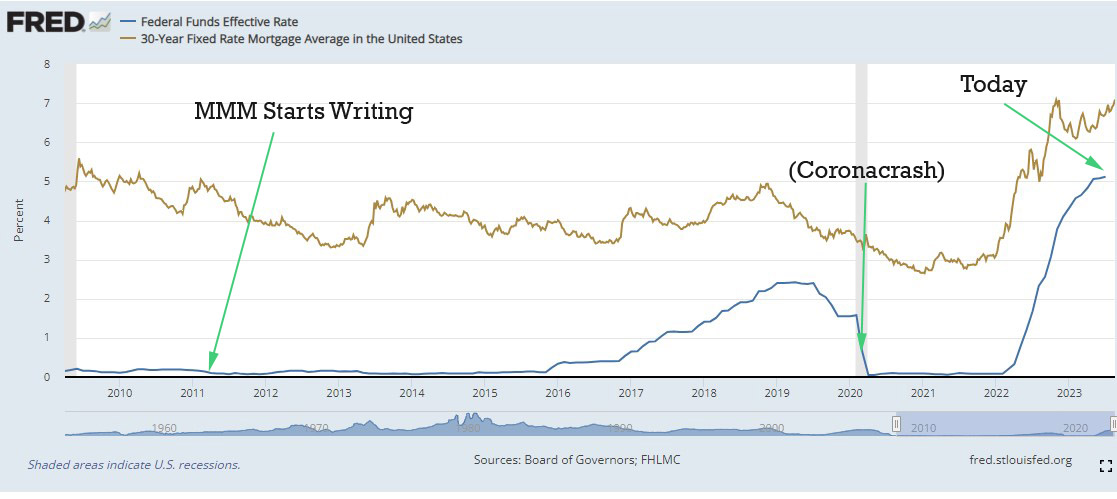
This prolonged period of cheap money supported two decades of economic expansion, technological innovation, and wealth creation. Eventually, however, the strategy went too far. A surplus of money began chasing a limited supply of goods—particularly real estate—triggering an unacceptable surge in inflation.
Recognizing the overheating economy, the Federal Reserve eased its foot off the gas pedal by aggressively raising interest rates. As borrowing costs climbed, economic activity naturally began to cool. Mortgages became significantly more expensive, causing many prospective buyers to delay their home purchases. Corporations faced with costly debt scaled back expansion plans and slowed hiring, leading to notable workforce reductions across major technology companies and contributing to a localized banking crisis that rattled mid-sized financial institutions.

Public sentiment surveys often suggest that the nation is experiencing severe economic hardship and heading in the wrong direction. Yet these perceptions contrast sharply with macroeconomic reality, including multi-decade lows in unemployment and an otherwise resilient labor market. Rather than a systemic downturn, the current economic phase functions much like taking a momentary break to digest a period of rapid growth—a cyclical adjustment that occurs periodically in a mature economy.
Market Strategy: Stocks and Savings
Given the turbulence, many investors wrestle with whether to pull their money out of the stock market to avoid a potential crash. Historically, long-term market trends point upward despite unpredictable volatility, making market timing an ineffective strategy. While the broader US market experienced a modest correction from its early 2022 peak, these fluctuations present a normal part of the long-term investment cycle. Purchasing index funds during a market downturn effectively means buying equities at a discount compared to their previous highs.

Simultaneously, the rise in high-yield savings accounts and money market funds offering attractive returns creates a new dilemma for savers. When interest rates hovered below one percent, equities easily outperformed cash equivalents. However, with yields climbing past four percent, the calculus becomes more nuanced.
While guaranteed returns on cash are appealing, equities continue to offer higher long-term growth potential, especially when underlying asset prices are temporarily discounted. Rather than abandoning equities entirely, investors often adopt a balanced approach that maintains steady contributions to diversified portfolios while capitalizing on stable yield opportunities.

The Real Estate Market and Housing Affordability
The most profound impact of higher interest rates is visible in the housing market. Financing a home with a mortgage has become substantially more expensive, prospective rental investments yield lower returns, and homeowners with locked-in low mortgage rates face strong disincentives to sell.
Typical mortgage rates have climbed sharply from historic lows near three percent to over seven percent. For a buyer securing an average mortgage, this shift dramatically increases monthly housing costs, effectively reducing purchasing power and pricing many buyers out of the market.
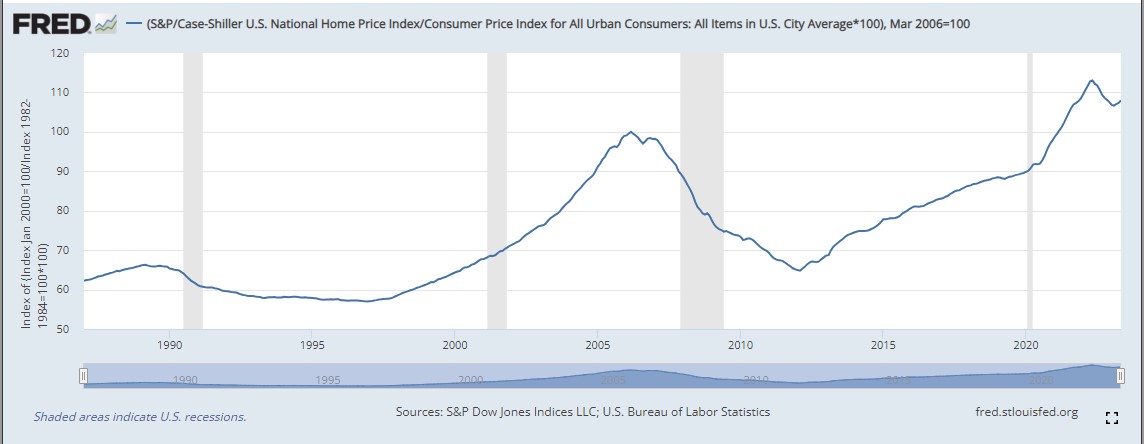
While these dynamics can appear discouraging, they represent the intended mechanism of monetary tightening. Higher interest rates are designed to cool demand, reduce competition for scarce properties, and ultimately stabilize or reduce home prices.
Long-term housing affordability relies heavily on supply and demand fundamentals, including construction costs, regulatory environments, and labor availability. Technological advancements in manufacturing and building materials—such as more efficient plumbing systems and specialized construction tools—have historically helped offset material expenses. Conversely, complex zoning laws, regulatory red tape, and approval delays have contributed to inflationary pressures by restricting new housing supply in many municipalities.
While some cities have embraced progressive zoning reforms to encourage denser, more affordable housing development, overall inflation-adjusted home prices remain near historic highs. Whether prices experience a direct downward correction or simply remain flat for an extended period while wages catch up, the long-term trajectory depends heavily on local market conditions and ongoing supply constraints.
Looking Ahead: The Future of Interest Rates and Yield Curves
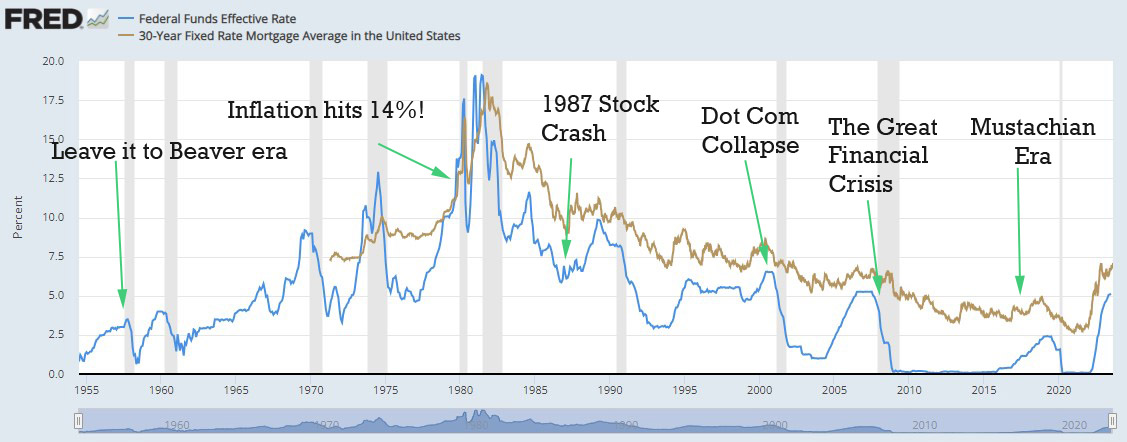
Despite the recent shock, today’s interest rates sit near historical averages rather than abnormal highs. Whether they decline in the near future depends entirely on macroeconomic indicators, particularly inflation and employment data. If the economy cools sufficiently, central banks may eventually pivot to lower rates.
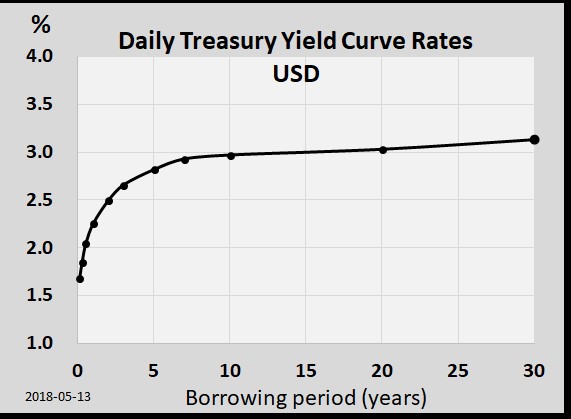
Market expectations regarding future rate cuts are reflected in the US Treasury yield curve. An inverted yield curve—where short-term yields surpass long-term yields—indicates that bond investors anticipate falling interest rates ahead, a pattern that has historically preceded economic slowdowns. While economic forecasting remains uncertain, many analysts project that rate reductions could materialize within the next eighteen to twenty-four months, potentially alongside a mild economic transition.
Ultimately, navigating a shifting interest rate environment requires focusing on controllable fundamentals rather than macroeconomic headlines. Maintaining a healthy balance of savings, keeping debt low, and focusing on long-term financial planning help insulate individuals from short-term market volatility. When personal finances are managed from a position of strength, broader monetary shifts become manageable background developments rather than sources of financial stress.