
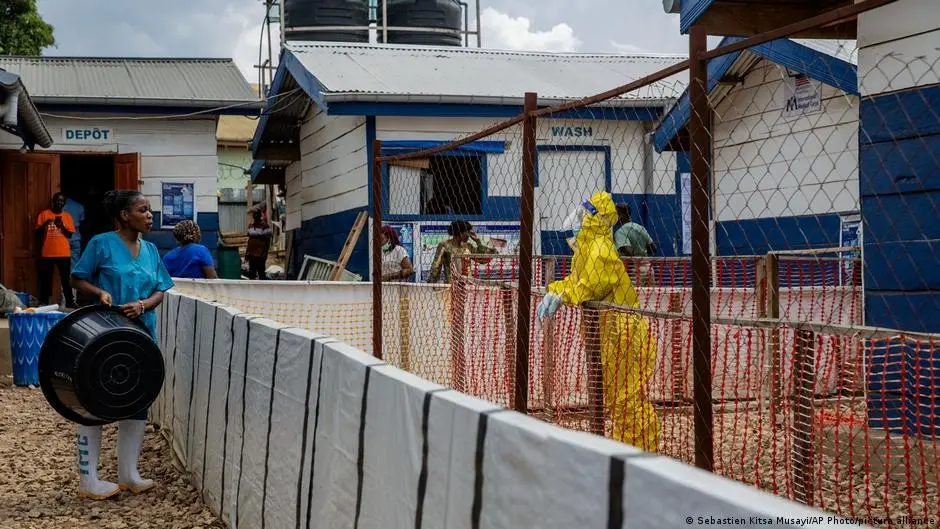
ABUJA — Nigeria’s Federal Ministry of Health on Tuesday confirmed that the country has identified its first known case of Ebola linked to the ongoing outbreak in Central and East Africa. The diagnosis marks the geographic expansion of what has already become the fastest-growing Ebola outbreak on record, putting health authorities across the continent on heightened alert.
According to health officials, the confirmed patient is a woman who recently arrived in Nigeria on an international flight from Uganda. Her positive test result has triggered an immediate public health response in the capital city of Abuja, where epidemiological teams are working rapidly to trace anyone who may have come into direct contact with her following her arrival.
The current crisis, which emerged earlier this year, is believed to have originated in the eastern region of the Democratic Republic of Congo (DRC), near its border with Uganda. Uganda subsequently became the second nation to identify infections within its borders. Over the past month, the cross-border movement of travelers has extended the reach of the disease, with Kenya confirming limited transmission and now Nigeria recording its first imported case.
Despite the emergence of cases in neighboring and regional nations, the overwhelming majority of known infections and fatalities remain concentrated within the DRC, especially across its heavily impacted eastern provinces.
What Is Known About the Nigerian Case
Federal Minister of Health Muhammad Ali Pate announced the development, explaining that the confirmed patient sought medical attention several days after arriving in the country from Uganda.
According to the timeline provided by health authorities, the woman first began to experience symptoms consistent with the virus on October 7. Four days later, on October 11, she presented herself to a private medical facility in Abuja, where she was subsequently admitted. Clinical teams initiated diagnostic testing, which ultimately confirmed the presence of the virus.
Minister Pate affirmed that containment protocols were enacted immediately following the laboratory verification, with contact tracers deployed to map out the patient’s movements between her arrival, the onset of symptoms, and her eventual hospitalization. Officials have already identified at least 44 individuals who had contact with the patient and are placing them under medical monitoring.
"We are doing everything possible to contain this case by tracing all contacts the individual may have had," Pate stated, emphasizing the government’s priority of cutting off any potential chains of local transmission before the pathogen can establish a wider foothold in the metropolitan area.
The confirmation follows weeks of precautionary measures enacted by the Nigeria Centre for Disease Control and Prevention (NCDC). Approximately two weeks ago, following reports that Kenya had identified its initial cases, the NCDC announced that it was stepping up active surveillance mechanisms nationwide to reinforce general emergency preparedness.
At the time, the agency indicated that national preparations were centered around a comprehensive operational framework designed to mitigate the threat of an imported viral illness. "These efforts have focused on early detection, isolation and referral, laboratory diagnosis, infection prevention and control, contact tracing, risk communication and protection of healthcare workers," the public health agency noted.
Nigeria has been proactive in reinforcing its defense mechanisms ahead of this development. In June, the federal government officially established a specialized Ebola task force to coordinate national preparedness and prevent the chaotic administrative hurdles that characterized past public health emergencies.
The creation of the task force was guided by lessons learned from the major West African outbreak of 2014, when an infected traveler arrived in Lagos, triggering an intense race against time to trace contacts and isolate patients in what remains Africa’s most populous nation.
Addressing the formation of the body earlier this summer, Femi Gbajabiamila, chief of staff to President Bola Tinubu, outlined the government’s determination to avoid being caught unprepared by cross-border outbreaks.
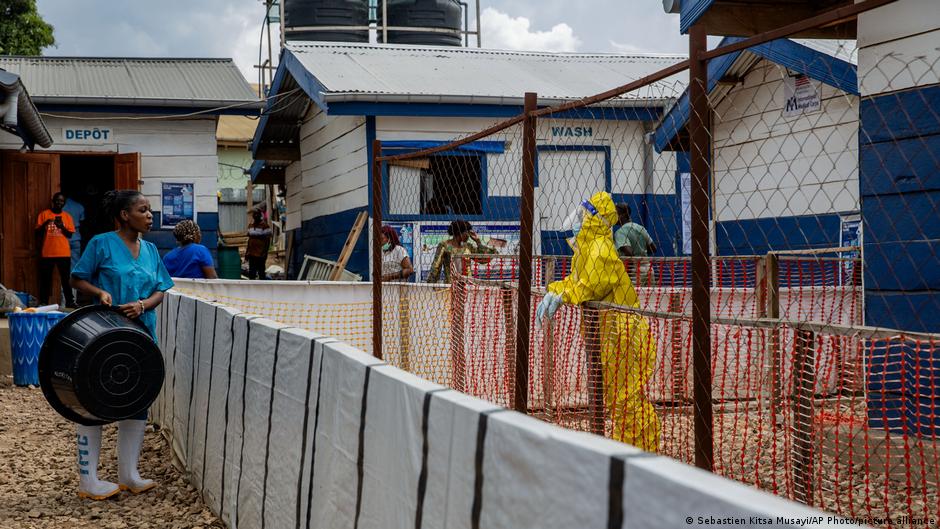
"We do not want a repeat of what happened during the last outbreak when a carrier entered the country, and everyone was scrambling to respond," Gbajabiamila said at the time. "We have covered a lot of ground and established structures to address any potential threat."
Federal authorities maintain that the mechanisms established by the task force have allowed public health workers to act swiftly in response to Tuesday’s confirmed case in Abuja, enabling rapid isolation and contact-tracing efforts.
A Rapidly Expanding Outbreak Surpasses 9,000 Cases
Epidemiologists and international health organizations have closely monitored the current wave of infections, which has proved exceptionally aggressive in its rate of expansion. While the Ebola virus does not spread through the air or transmit as readily as respiratory pathogens such as influenza or COVID-19—requiring direct contact with the body fluids of an infected person or contaminated surfaces—it presents an extraordinarily high mortality rate for individuals who contract it.
The ongoing outbreak is driven by a lesser-known strain, the Bundibugyo ebolavirus. To date, public health data shows that the virus has caused more than 9,000 confirmed cases and claimed more than 4,300 lives across the region. This translates to an overall case fatality rate approaching 50%, underscoring the severity of the clinical challenge facing medical teams on the frontlines.
While the disease has spread to several nations, the epidemiological heart of the crisis remains firmly located within the borders of the DRC. The eastern regions of the country, which have long grappled with limited healthcare infrastructure and protracted regional conflict, have borne the brunt of the devastation, accounting for almost all reported cases and fatalities.
Nevertheless, regional transit links have made containing the virus strictly within the DRC’s borders an ongoing challenge. Kenya was placed on high alert earlier this month after identifying a cluster of nine cases. Health officials in Nairobi reported that the first patient identified within Kenya subsequently died from the disease. Authorities believe that the subsequent eight infections confirmed in the country are directly linked to that individual, forming a localized cluster. Kenyan surveillance teams have indicated that there is currently no evidence showing the virus has spread beyond that known network of contacts.
The newly confirmed case in Nigeria also brings renewed attention to the status of Uganda’s outbreak response. Uganda, which shares a border with the DRC’s Ituri province—the epicenter of the current regional health emergency—documented 20 cases and two deaths earlier in the year.
Following intensive medical interventions and active surveillance, Uganda had reached a major public health milestone when it was declared Ebola-free by the World Health Organization (WHO) in late August, after surpassing the standard threshold of 42 consecutive days without recording a single new confirmed infection.
However, the Health Ministry’s confirmation that the Abuja patient traveled directly from Uganda, paired with the onset of her symptoms shortly thereafter, could potentially raise new questions regarding whether undetected transmission may still be present within the region.
Public health experts consider this year’s outbreak to be the second-largest Ebola event on record, surpassed in absolute numbers only by the catastrophic 2014–2016 epidemic. Crucially, the current crisis has distinguished itself as the fastest-spreading outbreak documented in medical history. Health specialists have pointed out that while improved laboratory diagnosis and more agile surveillance infrastructure may partially account for the speed at which cases are being detected and tallied, the rate of transmission remains unusually high.
By comparison, the West African epidemic that struck Guinea, Liberia, and Sierra Leone between 2014 and 2016 ultimately resulted in approximately 28,500 recorded cases and claimed around 11,300 lives, but those figures accumulated over a prolonged duration of roughly 30 months.
In contrast, the present crisis was officially declared only five months ago, in May of this year, though research teams and epidemiological modeling suggest that low-level circulation likely began undetected several months prior to that formal declaration.
As surveillance personnel in Abuja continue monitoring the 44 identified contacts over their incubation periods, healthcare facilities across Nigeria have been advised to remain on high alert, enforcing strict infection prevention measures and screening protocols for all incoming patients presenting with unexplained fever and related symptoms.