
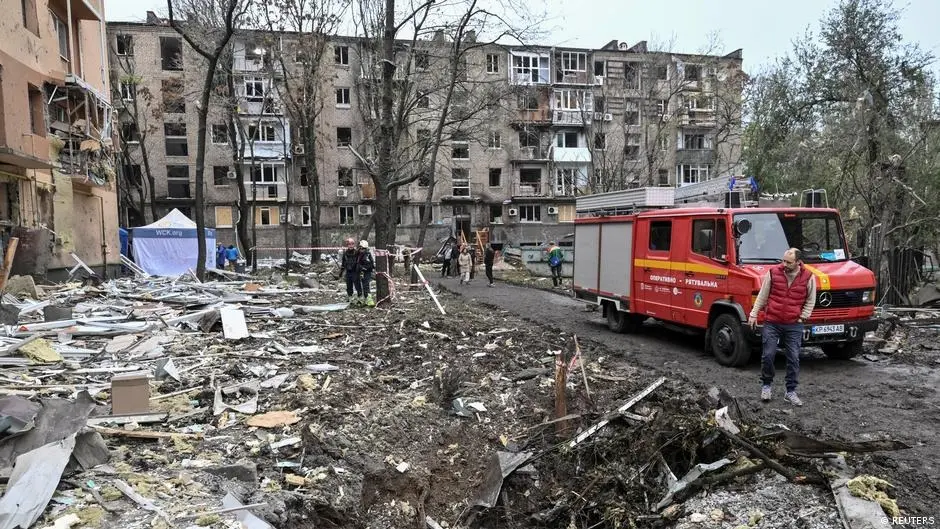
KYIV — Russia has significantly escalated its aerial bombardment of Ukraine’s energy infrastructure in an explicit effort to sever electricity and heating across the country as the winter season approaches, Ukrainian President Volodymyr Zelenskyy warned on Saturday.
The intensified campaign of long-range missile and drone strikes against civilian facilities and basic utilities in Kyiv and several other regions marks one of the most perilous moments for the nation’s domestic stability since the war began. Observers and strategic analysts warn that Moscow’s overarching objective is to incapacitate everyday services, freeze critical municipal operations, and render ordinary life across Ukraine virtually unlivable as temperatures continue to fall.
The renewed offensive against the national power network coincides with severe diplomatic turbulence between Kyiv and Washington. President Zelenskyy sharply criticized United States President Donald Trump after the American leader moved to suspend a major tranche of economic sanctions and tariffs targeting the Kremlin’s lucrative energy revenues, a decision that has sparked deep concern in Ukraine and open celebration in Moscow.
Zelenskyy Warns of Deliberate Winter ‘Blackout’ Strategy
In an extensive public statement published on the social media platform X, President Zelenskyy disclosed that Russian forces had launched what amounted to one of their most concentrated and destructive operations against Ukraine’s civilian power system since the full-scale invasion commenced in February 2022.
According to the Ukrainian president, the synchronized barrage targeted more than 15 critical power generation plants, transmission substations, and interconnected electrical facilities distributed throughout various regions of the country.
"More than 15 critical power generation and transmission facilities were targeted across different regions of Ukraine," Zelenskyy said. "Restoration work is ongoing, with all necessary services and all available resources of Ukrainian energy companies involved."
Zelenskyy argued that the geographical scale and timing of the strikes revealed a systematic Kremlin strategy aimed at weaponizing sub-zero weather conditions against the Ukrainian civilian population. With the cold season setting in, damage to electrical generation and regional transmission grids directly threatens residential district heating systems, municipal water distribution, and hospital facilities.
"Russia is trying to cause a blackout in Ukraine — right before winter. Russia is trying to leave millions of our people without electricity and heating," the president stated, making an urgent appeal to international allies to apply decisive political and economic leverage against Moscow to force an end to the destruction.
He noted that the Russian military has deliberately "expanded its campaign against the energy system" in a calculated attempt "to stretch Ukraine’s reserves and repair capacity as thinly as possible." Energy technicians and municipal repair crews have been deployed nationwide to conduct emergency interventions, but continuous strikes on generation units and key transformer stations threaten to outpace available maintenance stockpiles and technical resources.
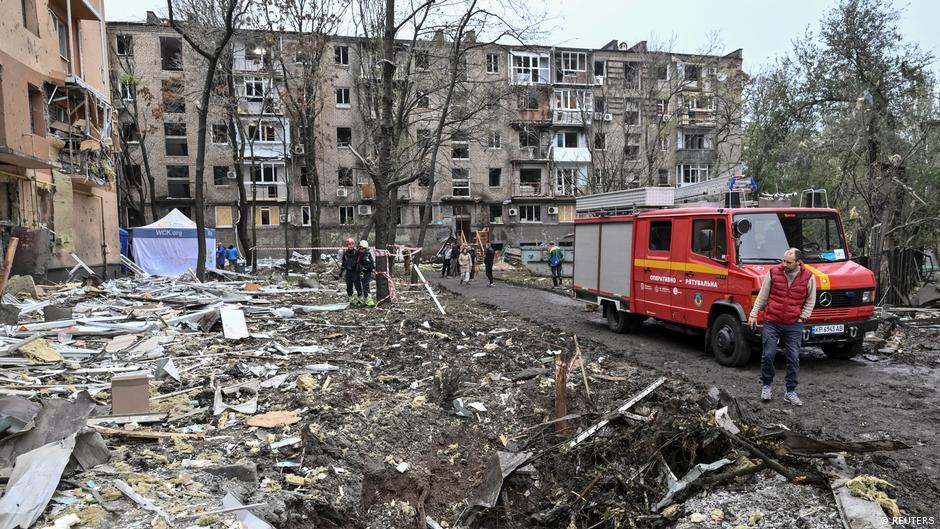
Moscow Details Wave of Infrastructure Strikes Across Multiple Regions
The Russian Defense Ministry confirmed the extensive nature of the overnight assault on Saturday, issuing a statement claiming credit for strikes against an array of infrastructure sites across Ukraine.
Among the primary energy installations confirmed targeted by the ministry was an electricity distribution substation located in the northwestern regional capital of Zhytomyr, an essential transit node for regional power distribution.
Beyond purely electrical distribution facilities, the Russian military emphasized that its targeting parameters included heavy industrial properties that it claimed were intertwined with Ukraine’s wartime defenses. Moscow claimed that it successfully struck Ukraine’s largest commercial steelworks, situated in the central city of Kryvyi Rih. The Russian defense establishment justified the strike by maintaining that the vast industrial enterprise actively supplied critical structural steel and finished components to the Ukrainian military-industrial complex.
The Russian ministry announced that an additional industrial facility, another prominent steel manufacturing plant located in the frontline city of Zaporizhzhia, was also struck during the coordinated overnight operation.
The destructive wave of bombardment exacted an immediate civilian toll across several population centers. Regional Ukrainian authorities reported that a 64-year-old man was killed during overnight strikes that damaged residential structures in Zaporizhzhia.
Further south, in the regional capital of Kherson, local officials confirmed that a lethal Russian airstrike resulted in the death of an emergency service ambulance driver while inflicting injuries on 19 other individuals, among them a young child. Residential structures, transport routes, and civic buildings bore the brunt of the blast damage in both administrative sectors.
Simultaneously, cross-border hostilities were reported within the territory of the Russian Federation. Russian state news agency TASS reported that an aerial strike carried out by Ukrainian unmanned aerial vehicles inside the border territory of the Belgorod region resulted in the death of a civilian woman and left a man injured.
Diplomatic Rift Widens as Trump Waives Energy Sanctions on Moscow
The devastating strikes on Ukraine’s utility network unfolded against a backdrop of mounting geopolitical controversy surrounding United States foreign policy. President Zelenskyy responded with dismay to an executive action by US President Donald Trump granting an eleventh-hour sanctions waiver that protects Russian state revenues.
Zelenskyy warned that the relaxation of economic pressure from Ukraine’s most vital international security partner serves directly to embolden Russian President Vladimir Putin to continue his destructive aerial campaign against civilian targets.

"A US sanctions blackout, easing pressure on the aggressor, financial rewards for Putin — all of this only encourages him to keep attacking," Zelenskyy said.
The policy shift in Washington came on Friday, when President Trump formally signed an executive order granting a waiver on a sweeping, legally mandated package of US sanctions and protective tariffs designed to curtail Russia’s energy export earnings. The comprehensive measures had been scheduled to take full legal effect within two days of the presidential intervention.
In stark contrast to the alarm expressed in Kyiv and across European capitals, the US administration’s decision was enthusiastically received in Moscow, where high-ranking Russian government officials lauded the maneuver as an epochal breakthrough in relations.
Kirill Dmitriev, a Russian presidential envoy, publicly hailed the White House waiver as a "historic moment" that fundamentally reassesses bilateral dynamics.
"The Trump administration’s suspension of the [Lindsey] Graham Act is an important and truly historic moment," Dmitriev said in a post on social media.
The legislation targeted by the executive order had been drafted and sponsored by the late US senator Lindsey Graham to inflict punitive penalties on Russian energy commerce and isolate the Russian financial sector. Dmitriev asserted that the suspended legislative measure "would have caused serious damage first and foremost to the US economy and global markets."
The timing of President Trump’s waiver has accelerated deep apprehension over the durability of long-term American backing for Ukraine. The controversial suspension of financial measures against Moscow followed a period of escalating public friction between the White House and President Zelenskyy, during which the American commander-in-chief has repeatedly leveled sharp criticism at the Ukrainian president, amplifying concerns among Western allies that the administration is systematically distancing itself from Kyiv while realigning its strategic approach toward Moscow.