
Katie Zacharia will be stepping down from her role as White House press secretary, concluding an extraordinarily brief five-day tenure that was marked by severe public scrutiny, escalating credential controversies, and a disastrous debut in the James S. Brady Press Briefing Room. Her exit represents the fastest departure of a press secretary in the history of the White House press office, cutting short a high-profile appointment that collapsed almost immediately after it began.
The official news of her departure came on Friday, following hours of speculation fueled by public comments from US President Donald Trump. Speaking to reporters on the White House South Lawn shortly before news of her exit was formally announced, Trump signaled that Zacharia’s time in the position was rapidly coming to an end. Standing in front of the Marine One helicopter during an impromptu news conference early Friday afternoon, the president revealed details of private conversations he had held with his embattled press secretary regarding the intense pressure she was facing from the media and the public.
Trump told reporters that he had offered Zacharia an explicit exit ramp as criticism mounted throughout the week. He recounted telling her directly that she was under no obligation to remain in the relentless spotlight of the White House press room if she felt overwhelmed by the scrutiny. According to Trump, he suggested that she step back from the high-stakes role, advising her that she did not have to remain in the position if she did not wish to. He recounted asking her whether the role was truly suitable for her, noting that he questioned whether taking on such a demanding public role was worth the personal and professional toll it was taking. He explicitly advised her that if he were in her position, he would seriously reconsider continuing in the job, adding that she did not need to endure such difficult treatment.
The president laid the blame for her departure firmly on the media, expressing his belief that Zacharia had been subjected to overly harsh and aggressive coverage. He told reporters gathered by Marine One that he believed she had been treated unfairly and aggressively by news outlets during her short time at the podium. Trump stated that he felt she had been treated in a particularly nasty manner by press figures, framing her resignation as a response to an unnecessarily hostile media environment rather than a failure of preparation or qualification.
Despite the abrupt end to her tenure, Zacharia posted a warm message praising the president on the social media platform X just hours after his comments on the South Lawn. In her post, she lauded Trump using a series of glowing adjectives, describing him as kind, wonderful, gracious, thoughtful, enthusiastic, and the most hardworking man. She added that serving in his administration had been a profound honor, attempting to strike a tone of gratitude and loyalty despite the turbulent nature of her exit.
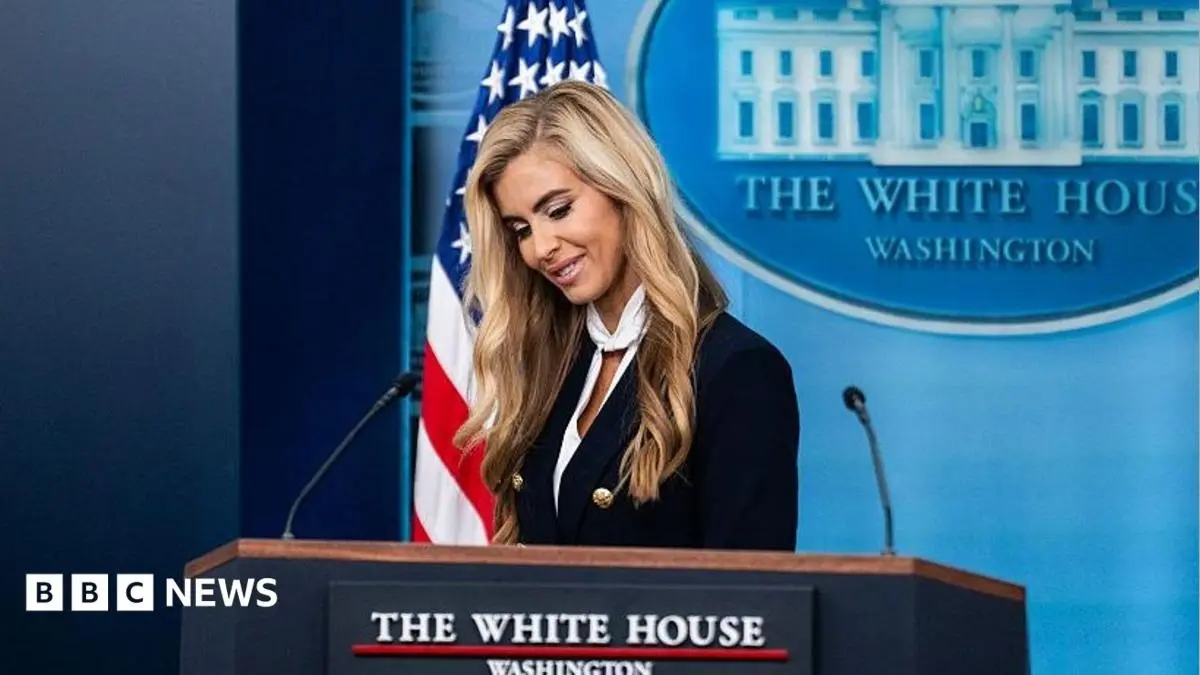
The unraveling of Zacharia’s brief stint as the chief voice of the White House began on Tuesday, during her very first official press briefing. That inaugural appearance lasted less than fifteen minutes, making it one of the briefest press conferences in recent White House history. Throughout the session, Zacharia appeared visibly nervous and uncertain at the podium. Observers noted that she relied heavily on reading pre-written talking points directly from a loose-leaf notebook rather than engaging fluidly with the press corps. Her anxiety was further highlighted when she fielded only three questions from the gathered journalists before wrapping up the briefing, and at one point during the appearance, she accidentally referred to her husband as the president.
The primary catalyst for her downfall, however, emerged from a single exchange during that Tuesday briefing regarding her professional credentials. Prior to her appointment, Zacharia had been repeatedly referred to as an attorney by President Trump and several of his key allies. She had indeed attended and graduated from Pepperdine University’s law school. However, in the United States, obtaining a law degree alone does not grant an individual the legal right to practice as an attorney. To legally practice law, a graduate must sit for and pass a state’s bar examination and formally be admitted to a state bar association.
During Tuesday’s brief Q&A session, a reporter asked Zacharia directly where she had taken and passed her bar examination to earn her status as a practicing lawyer. Zacharia provided a surprising and ambiguous answer, stating that she had passed the exam when she was in China.
That response immediately triggered intense media digging and widespread journalistic scrutiny over the following two days. Reporters and legal analysts investigated her background to verify whether her claims aligned with state bar records or international legal practice standards. As questions mounted and media outlets pushed for verification, the pressure on Zacharia intensified. By Thursday, after days of playing defense against persistent reporting on her background, Zacharia issued a statement admitting that she had not, in fact, passed a bar examination.
In her statement attempting to clarify her legal career, Zacharia explained that while she was not admitted to any US state bar, she had previously practiced international transaction law in China. She maintained in her written defense that she had conducted her work in China with what she described as appropriate credentials, even while conceding that she did not hold formal status as a licensed attorney in the United States.
Her concession did little to stem the tide of criticism. Over the course of the week, the discrepancy between her claimed legal credentials and her actual qualifications became a dominant national news story, drawing intense interest across the political and media spectrum. The situation escalated further when conservative news outlets, traditionally supportive of the administration, began pressing her vigorously on her assertions and her readiness for the role of White House press secretary.
On Thursday, Zacharia agreed to an interview with Sean Hannity on the conservative-leaning Fox News network. Rather than providing a safe platform to reset her narrative, the interview featured unusually sharp and pointed questioning from the host. Hannity challenged her directly on why she had not simply been transparent about her background from the very beginning. He pointedly asked her why she had not simply stated upfront that she had never actually practiced law in the conventional sense, rather than giving a misleading answer about China at the White House podium.
During the interview, Zacharia sought to explain the context of her rocky start by emphasizing how rapidly her appointment had occurred. She disclosed that she had been brought into the role of press secretary less than a week before being sent out to conduct her inaugural live press briefing. That revelation prompted Hannity to question the internal support and preparation provided to her by the White House communications team. Hannity directly pressed her on her assertion, asking whether her comments implied that she believed the White House staff should have done a better job of preparing her for the intense scrutiny of the podium.
The challenging media rounds continued into Friday morning when Zacharia made an appearance on Fox & Friends, a morning news program widely known to be watched closely by President Trump. Once again, she faced a difficult line of questioning regarding her qualifications and her conversations with the president before taking the job. Addressing the hosts, Zacharia defended her failure to disclose her status as a non-attorney to Trump prior to her appointment. She explained that she had not explicitly informed the president that she was not a licensed attorney because those specific questions had simply never been asked during their discussions. She argued that she had been hired to fulfill a communications role rather than a legal post, suggesting that her lack of a legal license should not have been a central issue for her press duties.
The exchange reached a climax when host Lawrence Jones asked her directly whether she believed she still retained the trust and confidence of the president following days of controversy. Zacharia sidestepped the question, avoiding a direct answer about where she stood with Trump. Instead, she offered a defensive response, stating that she hoped to be able to build the confidence and trust of everyone around her as she moved forward.
Ultimately, her appearance on the morning show was not enough to salvage her position. Within hours of the broadcast, Trump made his comments by Marine One, paving the way for her formal exit later in the afternoon.
The swift collapse of Zacharia’s appointment immediately became central to national political debates, particularly as both major political parties prepare for the upcoming November midterm elections. With control of the US Congress hanging in the balance, Democrats quickly seized upon her five-day tenure as evidence of internal chaos, poor vetting procedures, and management failure within the Republican White House.
Democratic leadership wasted little time using the rapid departure to criticize the administration’s stability. Hakeem Jeffries, the top Democrat in the House of Representatives, posted a direct critique on the social media platform X shortly after the news broke. Jeffries wrote that the White House Press Secretary was gone, characterizing the abrupt exit as a sign that MAGA extremists were continuing to fall apart.
Beyond
the immediate political arguments, Zacharia’s rapid exit establishes a remarkable benchmark in modern White House history. Her five-day tenure stands as the briefest appointment among any member of Trump’s White House press and communications teams across his time in office. Previously, the shortest high-profile stint belonged to Anthony Scaramucci, who famously served just ten days as White House communications director during Trump’s first presidential term in 2017 before being abruptly dismissed.
Scaramucci himself reacted to the news of Zacharia breaking his record by posting on X on Friday afternoon. Reflecting on the swift end to her appointment, Scaramucci noted that records are ultimately made to be broken. However, he struck a somewhat empathetic note, writing that he took no pleasure in watching other people go through such intense public pain and professional embarrassment.
Zacharia’s departure leaves the White House press office facing immediate operational challenges as it seeks to stabilize its public messaging, reform its vetting processes, and appoint a new spokesperson capable of navigating the intense media environment of the White House briefing room.