
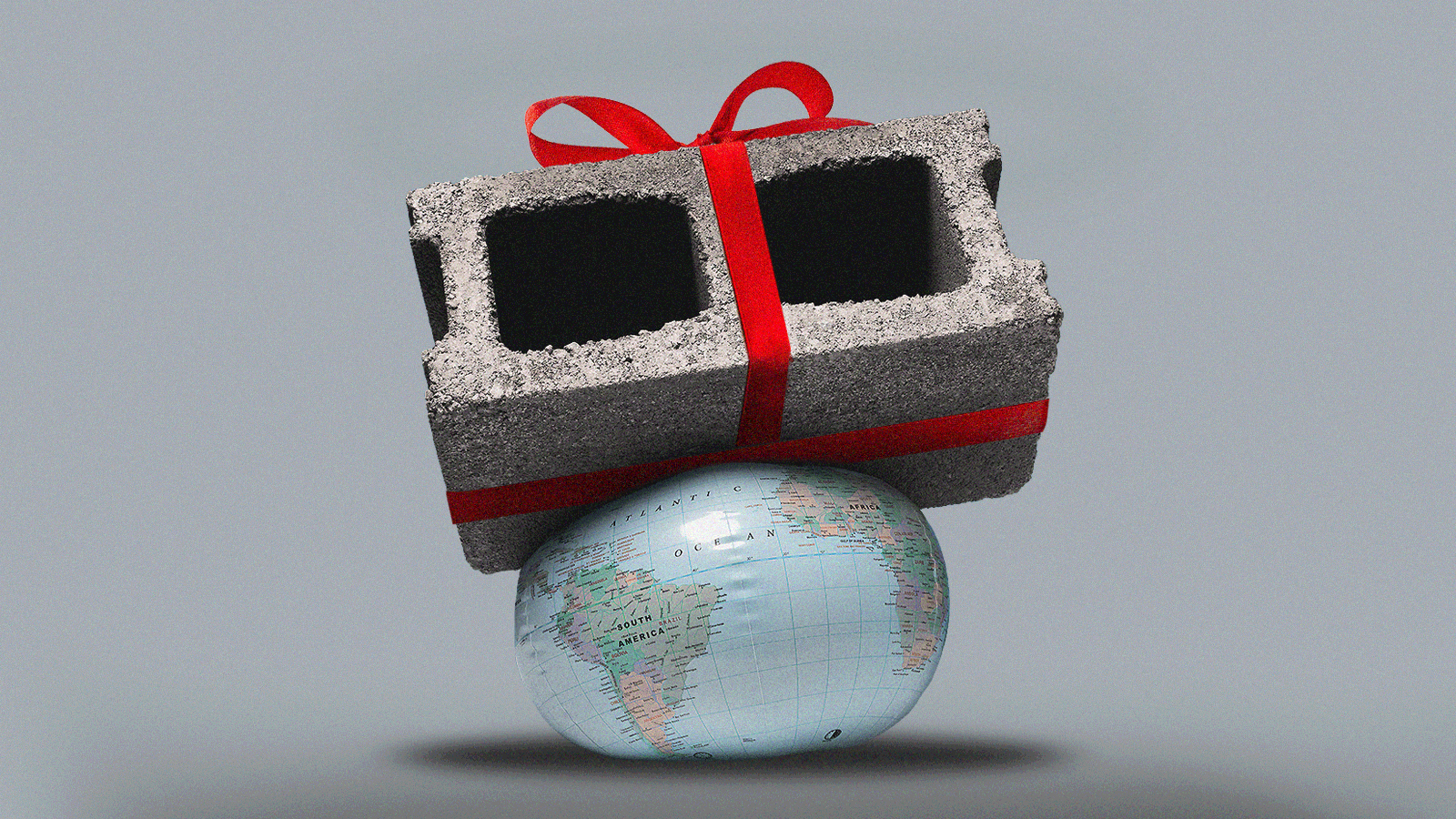
It is the second-most used material on Earth, an environmental disaster, and it is quietly falling apart all around us. Meet concrete, the subject of a compelling new feature-length documentary by John Wilson, a filmmaker renowned for his unique knack for finding laugh-out-loud absurdity in the mundane corners of modern life.
The History of Concrete stitches together quick cuts of handheld footage and deadpan narration in the exact same style that defined How To with John Wilson, the acclaimed HBO show that launched the filmmaker’s career. Much like his memorable television episodes focusing on topics such as "how to make small talk" or "how to put up scaffolding," the titular subject of the film is not really the point. Instead, Wilson uses the overarching theme of concrete as a kind of structural connective tissue, taking the viewer on a sprawling, unexpected exploration of the overlooked corners of our shared world.
Because concrete’s pervasiveness is so absolute, it allows the film to venture anywhere—from a family-run mortuary specializing in tattoo preservation to a patriotic brick-laying competition in Las Vegas, and even to a grueling 3,100-mile spiritual race where runners circle a single city block in Queens for weeks on end.
While it would certainly be a stretch to categorize the documentary as a traditional climate film—indeed, it is explicitly styled with the nostalgic tropes of a Hallmark movie—Wilson manages to shed light on an unfolding environmental disaster with every turn of his camera lens. After all, as he points out, concrete is the third-biggest contributor to global warming worldwide. And although concrete remains an utterly indispensable part of modern infrastructure, its relatively short and increasingly crumbling lifespan makes it a mounting hazard on an increasingly disaster-prone planet.
Wilson’s personal fascination with the material began when the basement of his apartment building in Queens began intermittently flooding. When he attempted a quick fix by patching the leak himself with a store-bought concrete mix, the water simply kept coming back. His frustration is widely shared across urban centers. As climate change intensifies storms and raises sea levels, residents in major cities like New York are dealing with unprecedented levels of extreme rainfall and coastal flooding. The sheer abundance of concrete in these metropolitan environments drastically worsens flooding by preventing stormwater from naturally seeping into the soil, and when the aging material inevitably cracks, it fails to block water from filling subway stations and buildings for dozens of days a year.
Wilson goes on to discover that our concrete-smothered world is full of hidden hazards, largely due to the material’s surprisingly short lifespan. Critical infrastructure like the Brooklyn Promenade, which constitutes the upper-most deck of a complex four-layered expressway, was never designed to last for more than 40 years, according to Sam Schwartz, a former New York City traffic commissioner interviewed in the film. Today, that 1,800-foot-long transportation artery is heavily covered in patch jobs, leading Schwartz to warn Wilson that a mass structural catastrophe could be just a few years away.
Armed with these stark facts, any modern city quickly starts to look like a morass of potential disasters. It is little wonder that Wilson spent at least a full year filming the expanding cracks and structural vulnerabilities spread across New York. Some locations, such as a public swimming pool sanitation facility constantly inundated with leaks, are given a few minutes of patient screen time. Others—including the architecturally famous Spring Street Salt Shed, which has been humorously patched with packing tape, and a decade-old skyscraper in midtown Manhattan that may already require demolition—are presented in a quick, jaw-dropping montage. As Wilson observes throughout the project, it frequently feels as though we are all in danger somehow.
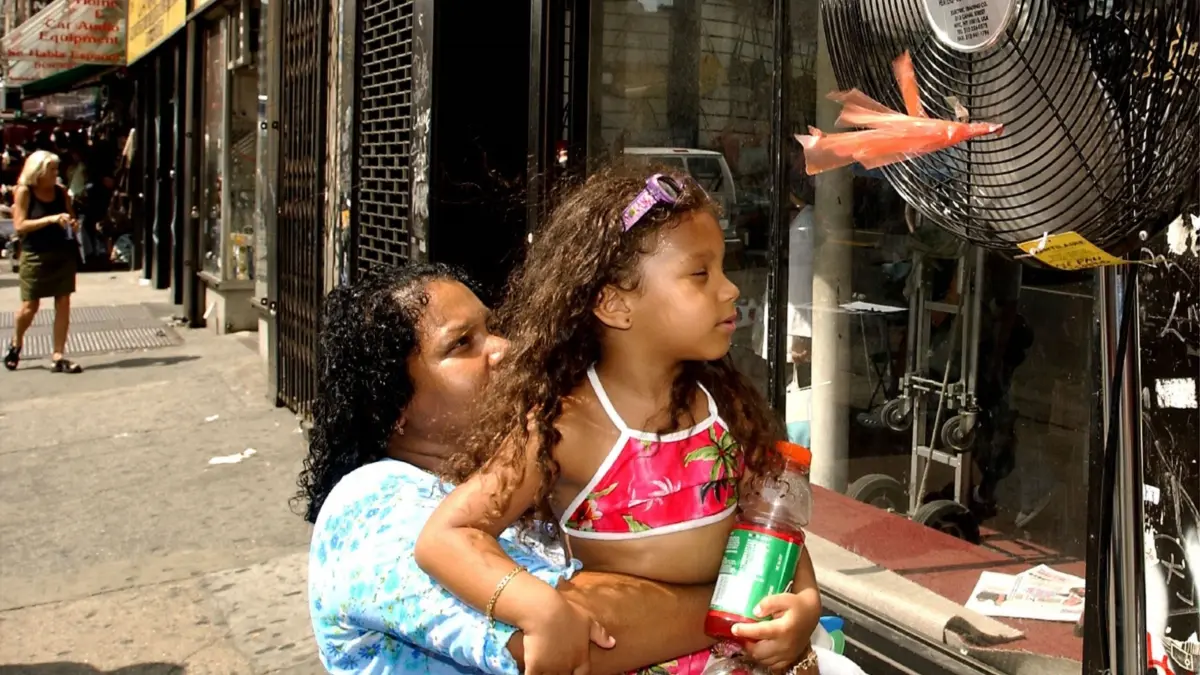
Perversely, climate change is actively accelerating this deterioration. Numerous studies show that extreme weather hastens the structural decay of concrete infrastructure around the world. Furthermore, even structurally sound concrete poses severe public health hazards as the planet warms. The material significantly contributes to the "urban heat island" effect, which can cause local air temperatures to rise by as much as 7 degrees Fahrenheit. This turns city pavement into a scalding 140-degree griddle during heatwaves, a phenomenon that tragically kills hundreds of people in places like Arizona every year.

Yet, as a local contractor bluntly tells Wilson, society would be entirely lost without it. Cities like New York require vast, continuous quantities of the material simply to construct new housing and maintain existing urban environments. Unfortunately, sand—the fundamental ingredient in concrete—is rapidly vanishing as coastlines erode and human civilization consumes roughly 50 billion tons of the resource every year. While the general public remains largely unaware of the impending crisis, industry experts have spent years trying to warn the world of an escalating global sand shortage.
Near the conclusion of the film, Wilson visits a concrete recycling plant, representing one of the few existing mitigation efforts aimed at these systemic problems. These facilities are designed to divert demolition debris from crowded landfills and, ideally, produce usable aggregate with lower carbon emissions. However, the recycling facility Wilson located near Brooklyn’s marine terminal was also overwhelming nearby residential neighborhoods with dangerous clouds of airborne dust, sparking intense local protests and ultimately leading to the plant’s closure in 2025.
For now, our deep dependency on concrete remains as intractable as its physical and environmental pitfalls. As Wilson notes, once a society becomes accustomed to a certain way of building, it is exceedingly difficult to change lifestyles without external pressure.
For many observers, walking out of the Manhattan theater after screening the documentary brings the surrounding gray environment into sharper, more unsettling focus. The film demonstrates a distinct kind of poetry: the banal becomes beautiful, the bizarre becomes delightful, and heartbreaks become unguardedly funny. Wilson’s persistent curiosity serves as a direct invitation to join him in the simple, necessary act of paying closer attention to the built environment we so often take for granted.