
ATLANTA — The United States government has firmly rejected assertions that it assisted defeated Brazilian presidential candidate Flavio Bolsonaro in fleeing his home country following his loss in last month’s presidential runoff election, even as President Donald Trump publicly declared that the far-right politician is welcome to remain on American soil indefinitely.
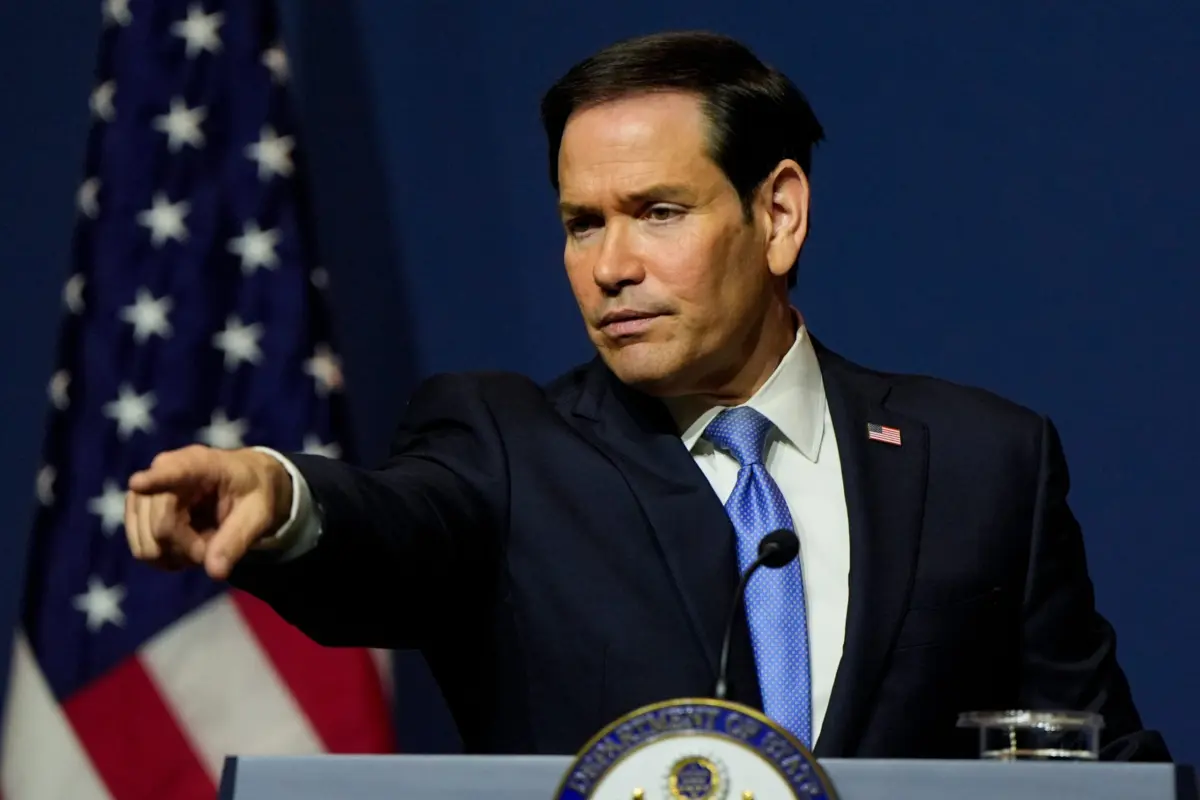
Speaking to reporters on Saturday in Atlanta, Georgia, where foreign ministers and top diplomats from the Group of 20 major world economies were gathered, U.S. Secretary of State Marco Rubio sought to clarify Washington’s stance regarding Bolsonaro’s sudden departure from Brazil. Rubio explicitly denied that the administration arranged or facilitated the former candidate’s journey across international borders while he was facing severe legal jeopardy and active criminal investigations back home.
"We didn’t facilitate anything," Rubio told journalists in Atlanta, addressing rising international questions about how Bolsonaro managed to leave Brazil despite judicial orders restricting his movement. "We had word that he had arrived in the United States. He had previously held a visa, and the president made a decision to allow him to enter the country."
Rubio further emphasized that while the final determination to permit Bolsonaro entry into the United States rested directly with the White House, American government agencies were not actively engaged in orchestrating or executing his physical relocation out of South America. He noted that the U.S. government was not "involved directly in any of the moves that were made," attempting to establish a clear distinction between granting legal entry to a foreign national and actively aiding a political figure in evading domestic legal authorities.
The clarification from the Secretary of State comes in the wake of Bolsonaro’s arrival in Miami, Florida, on Wednesday. His landing in the United States followed a public statement issued by the U.S. Department of State on October 27, which confirmed that Bolsonaro and members of his immediate family would be granted visas to enter the country. The visa decision was rendered shortly after Bolsonaro lost the crucial October 25 presidential runoff election to President Luiz Inacio Lula da Silva, a high-stakes contest that notably bucked a recent broader trend of conservative electoral victories throughout Latin America.
Prior to his flight, Bolsonaro was under intense legal scrutiny from Brazilian judicial authorities and federal police. The defeated presidential candidate is the subject of multiple criminal investigations in Brazil involving alleged corruption, money laundering, and tax evasion. In the days leading up to his departure, police officials in Brazil had formally designated Bolsonaro as a high flight risk, leading a judge to order the immediate surrender of his passport to prevent him from leaving the national territory.
Despite the judicial order mandating that he hand over his travel documents, Bolsonaro successfully departed Brazil, embarking on an indirect international route that took him through multiple South American nations before he reached the United States. According to reports published by U.S. media outlets, Bolsonaro traveled through Argentina and Ecuador before finally boarding an international flight bound for Miami. Those same media reports indicated that the logistics of the multi-leg journey were arranged in part with the assistance of Jason Miller, a White House official, raising lingering questions regarding the extent of informal American involvement in his escape.
Upon his arrival in Florida, Bolsonaro was granted entry into the United States under humanitarian parole, according to details reported by the Reuters news agency. Humanitarian parole is an extraordinary immigration status granted at the discretion of the executive branch, allowing foreign nationals who would otherwise be inadmissible to enter and temporarily remain in the United States for urgent humanitarian reasons or significant public benefit. The status typically grants legal residence for a period of up to one year, though it can be renewed or modified at the discretion of federal immigration authorities.
The decision to offer sanctuary to the embattled Brazilian candidate has received direct, public backing from President Donald Trump, who has consistently expressed solidarity with Bolsonaro. Speaking to reporters at his private residence in Florida on Saturday, Trump offered strong words of sympathy for Bolsonaro’s situation and indicated that the former candidate would face no pressure from the White House to leave the country.
"I think he got treated very shabbily, very shabbily, so he can stay here as long as he wants," Trump told reporters. The American president had previously questioned the legitimacy of the Brazilian democratic process, publicly describing the October 25 runoff election as "rigged"—a claim that echoed the rhetoric used by Bolsonaro and his political allies throughout the campaign.
Since arriving in Florida, Bolsonaro has steadfastly refused to concede defeat in the presidential election to President Lula da Silva. The defeated candidate has repeatedly attacked the integrity of the vote, calling the election results fraudulent while failing to provide any concrete evidence or official documentation to support his claims of widespread voter irregularities.
From his vantage point in the United States, Bolsonaro has continued to project himself as a legitimate political leader in exile. He has claimed to be the true "leader" of Brazil and argued that his sudden departure from his homeland was not an attempt to evade legitimate criminal proceedings or judicial oversight, but rather a necessary measure taken because he was the victim of coordinated political "persecution" by his opponents and the Brazilian judicial system.
The presence of Bolsonaro on American soil and the public statements issued by President Trump have created significant diplomatic complications between the United States and Brazil, the two largest democracies in the Western Hemisphere. The willingness of Washington to shelter a figure actively fleeing legal proceedings in his home country threatens to strain bilateral relations between the Trump administration and the government of President Lula da Silva for the foreseeable future.
Despite the growing tension surrounding the issue, high-level diplomatic communication between the two governments has continued. Secretary of State Rubio confirmed that he met directly with Brazil’s foreign minister, Mauro Vieira, in Atlanta during the G20 gatherings on both Friday and Saturday. Rubio noted that he expects to engage in further bilateral discussions with Brazilian officials in November, when foreign ministers are scheduled to meet again during an international gathering in France.
However, President Trump’s assertion that Bolsonaro can remain in the United States indefinitely underscores a deep political and ideological alignment between the two leaders that threatens to override traditional diplomatic norms regarding extradition and judicial cooperation. By granting humanitarian parole to a political candidate facing federal corruption investigations, the U.S. administration has signaled its willingness to extend protection to key conservative figures in the region, regardless of the potential fallout in foreign relations.
The political standoff occurs against the backdrop of a changing political landscape across South America. Lula da Silva’s victory in the October 25 runoff had been celebrated by left-leaning governments as a major political comeback and a reversal of the right-wing momentum that had seen conservative candidates win elections across Latin America in recent years. Bolsonaro’s refusal to accept the results, combined with his decision to seek refuge in Florida, ensures that the contentious aftermath of the election will continue to play out on an international stage.
As law enforcement officials and legal authorities in Brasilia assess their options regarding Bolsonaro’s defiance of judicial orders and his flight from justice, the decision by the United States to harbor him guarantees that relations between Washington and Brasilia will remain deeply sensitive. With public statements from the White House contrasting sharply with the official position of the Brazilian government, the presence of Flavio Bolsonaro in Miami stands as a persistent flashpoint in Western Hemisphere diplomacy.