
The stock market has once again proved its capacity to surprise. As valuations reach historic highs driven by the frenzied boom in Artificial Intelligence, investors find themselves caught in a familiar emotional tug-of-war. When the market crashes, retirement portfolios shrink, sparking immediate panic. Yet when the market soars to unprecedented records, anxiety often remains just as high, fueled by the persistent fear that a catastrophic correction is inevitable.
For those who have managed to tune out the daily market drama and focus on living their lives, this detachment is often the healthiest approach. However, for investors watching the current economic landscape closely, the parallels to past speculative bubbles are difficult to ignore. Many fear that the current AI mania is simply too much, too fast, setting the stage for a magnified version of the dot-com crash of the early 2000s. That earlier boom played a defining role in the early career and eventual path to early retirement for prominent financial commentators, though the subsequent crash nearly derailed professional stability and citizenship applications at the time.

As questions continue to mount regarding this investment cycle—drawing comparisons to past booms and busts—financial educators have taken to public forums to address these widespread anxieties. Presentations at events like Camp FI Midwest and upcoming conferences such as the Bogleheads gathering highlight a central question on the minds of retirees and everyday savers: Will the AI bubble ultimately ruin retirement?
Echoes of 2006: A Historical Perspective on Market Anxiety
Reflecting on decades of financial independence, commentators often recall conversations with friends who look at global events and ask how anyone can remain comfortable and sleep at night amid such uncertainty. When posed with this question today, list-makers of modern worries might point to turbulent geopolitical figures, persistent inflation, towering national debt, and brewing conflicts in the Middle East and Eastern Europe, alongside the looming threat of artificial intelligence disrupting the workforce.

Yet, remarkably similar questions were asked more than twenty years ago, during the economic climate of 2006. At that time, anxieties centered on entirely different political leaders, the Iraq War, rising national debt, inflation, and an overvalued stock market driven by a dangerous housing bubble rather than an AI boom. Back then, globalization and the outsourcing of jobs to India and China were seen as the ultimate threats to domestic employment, while widespread debates over "peak oil" suggested global fossil fuel consumption would inevitably outstrip supply.
Looking back, the subsequent events proved both dramatic and resilient. The world did experience the Great Financial Crisis, triggered by a toxic combination of irrational exuberance in real estate and excessive financial leverage. It was the most severe economic downturn since the Great Depression. Yet, when viewed on a twenty-year chart, even that monumental crash appears as a temporary dip in a long-term upward trajectory. A hypothetical $100,000 investment made during that era still grew substantially over the decades, absorbing subsequent shocks such as the 2020 pandemic-induced crash.

Global indicators outside the financial markets also showed remarkable progress. Over a twenty-year span, the global proportion of people living in extreme poverty dropped significantly, while infant mortality rates were halved. Clean energy transitioned from a niche concept to a dominant market force, driven by a dramatic reduction in the cost of solar panels and a rapid surge in electric vehicle adoption. These developments suggest that focusing energy on optimism and tangible progress often yields a more accurate picture of the future than succumbing to cyclical panic.
Prosperity Roots and the Core of Productivity
Skeptics of the current market cycle often wonder if the present era is fundamentally different—whether soaring national debt, unprecedented technological disruption, or autonomous superintelligence will permanently break the economic recovery cycle. Financial media outlets frequently capitalize on these fears, amplifying scary narratives that overlook a fundamental economic principle: true prosperity does not originate from financial systems or stock market tickers, which are ultimately human-invented metrics.

Instead, true prosperity stems from productivity. While capitalist markets are inherently volatile and prone to wild sentiment swings, beneath the surface lie real people performing real labor and developing genuine innovations. The concept of an economy is simply another human construct; if a financial system suffers a severe correction due to shifting valuations, society has repeatedly demonstrated the capacity to reset the baseline and return to productive work.
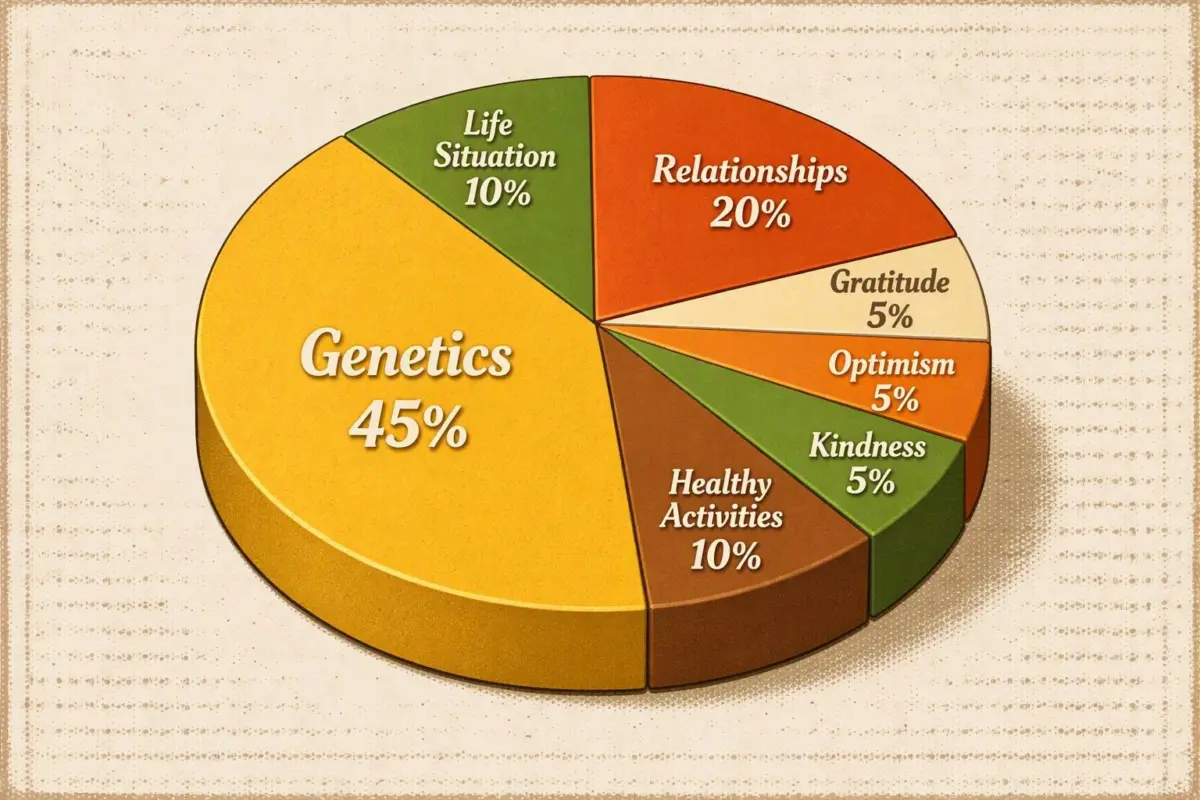
Standard of living, economic growth, and financial independence are all driven by productivity gains enabled by human ingenuity. Furthermore, once basic material standards of living are met in developed nations, incremental increases in wealth cease to be the primary driver of human happiness. Psychological research indicates that overall life satisfaction is heavily influenced by non-financial factors, including genetics, strong personal relationships, the practice of gratitude and optimism, and maintaining an active, outdoor lifestyle.

Understanding the Evolution of Fear
Despite historical evidence showing that humanity routinely adapts and overcomes systemic crises, baseline anxiety remains remarkably persistent. Psychologists note that human beings evolved primarily as danger-detection machines. This background fear served as an essential evolutionary trait designed to protect early humans from predators, disease, and starvation.
However, a quirk of this psychological machinery is that when immediate physical threats are successfully resolved, the brain continues searching for new sources of worry. Once scarcity is managed, individuals begin worrying about social standing within their tribe. Once financial security is achieved, anxieties shift toward tax strategies, investment preservation, estate planning, and mandatory government withdrawal rules for accumulated wealth.

Recognizing this pattern is the first step toward combating irrational fear. Understanding personal history—such as growing up in households shaped by generational scarcity or experiencing early trauma—can shed light on why certain financial worries persist independently of objective present-day realities. By actively examining the worst-case scenarios of perceived financial threats, individuals often discover that the absolute worst outcomes are far more manageable than their anxiety suggests.
Taking deliberate action is widely recognized as an effective antidote to fear. Action transforms the unfamiliar into the familiar, fostering resilience and the adaptability required to navigate new environments. Furthermore, curating one’s mental diet by reducing consumption of sensationalized daily news—which disproportionately highlights alarming stories—allows individuals to focus their energy on positive behaviors, physical health, and productive problem-solving.

Viewing Technological Shifts as Experiments
This proactive mindset can be applied directly to the current discourse surrounding artificial intelligence. Rather than viewing emerging technologies through a lens of doom-scrolling and apprehension, framing significant life and economic shifts as experiments can transform uncertainty into fascination.
From a technological and economic perspective, artificial intelligence functions essentially as a cognitive tool designed to enhance efficiency and output. Much like the introduction of the internet, mobile applications, and automation before it, AI promises substantial productivity gains that will ultimately drive broader economic prosperity. At the same time, it will inevitably displace certain traditional administrative and operational roles, prompting a shift in labor markets as new industries emerge to take their place.

Historically, the economic rewards of such technological leaps tend to concentrate among owners of capital and shareholders, echoing trends seen across previous industrial revolutions. For individual investors participating in public markets, these shifts are reflected in portfolio performance. Ultimately, the rise of artificial intelligence represents yet another opportunity for individuals to choose how they respond—whether by treating technological change as a catalyst for continuous learning, personal adaptation, and engagement, or allowing apprehension to dictate their outlook on the future.