

For nearly four decades, the federal government has quietly operated a high-stakes real estate program with a singular, urgent mission: buying out homeowners living in severe disaster-prone areas to encourage them to relocate to safer ground. Administered primarily through the Federal Emergency Management Agency (FEMA), this initiative has invested more than $6 billion into more than 53,000 properties nationwide.
The strategy behind the Hazard Mitigation Grant Program has always looked sound on paper. By purchasing repetitive-loss properties, the federal government hopes to break the costly cycle of repeatedly paying out disaster aid or insurance claims at the exact same geographic coordinates. In some extreme instances, the financial toll of maintaining these vulnerable homes has reached staggering proportions. ProPublica famously reported on a single home in northeast Houston that received a staggering 18 federal flood insurance payments totaling $1.8 million—roughly 15 times its actual market value.
Yet, despite the billions spent and decades of implementation, a central question has persistently dogged planners, economists, and lawmakers: To what extent does this ambitious retreat approach actually work?
A comprehensive new study published today in Science Advances offers the latest and most rigorous answer to that question. Authored by Rachel Young, an environmental economist at the University of Minnesota, the research reveals that FEMA’s buyout program has largely succeeded in its primary objective of relocating people out of harm’s way. Crucially, the study also shows that the initiative has mostly paid for itself by successfully avoiding future property damages and emergency response costs.
However, the findings deliver a stark caveat: the program is not helping everyone equally.
"The program is extremely effective at helping people not only move, but also move to lower-risk places," said Young, whose paper makes it abundantly clear that the tangible benefits of this national adaptation effort are far from evenly distributed across American society.
To understand how the program operates, homeowners typically apply through their local or municipal governments. These local entities then request federal funding, which usually covers up to 75 percent of the property’s appraised pre-disaster market value. If the grant is approved, the government extends a buyout offer to the homeowner, who retains the ultimate autonomy to decide whether to accept or walk away.
By analyzing an extensive mix of public administrative records and private data sources, Young’s paper tracked the long-term trajectories of program participants. The research found that individuals who took part in the buyout were about 20 percentage points more likely to relocate within the first five years following a disaster compared to control groups of similarly impacted homeowners who did not receive buyouts.
While that gap in mobility narrowed slightly as the years passed, the elevated likelihood of relocation persisted for at least 15 years. Furthermore, the study tracked where people went after taking the buyout. Participants tended to successfully move to neighborhoods boasting higher average incomes, better educational attainment rates, and stronger employment metrics. Additionally, their overall household debt levels fell, at least in the short term, easing the crushing financial burdens that often accompany natural disasters.
From the perspective of federal policymakers and fiscal watchdogs, the program has undeniably been a win. Young noted that "as long as we’re targeting people and ensuring that they move to less risky properties," the federal investment consistently pays dividends over time through reduced disaster claims and lower long-term emergency response expenditures.
Despite these clear successes, the research uncovered glaring demographic and geographic disparities. The data revealed that participants originating from higher-income neighborhoods were significantly more likely to successfully relocate and transition into areas offering greater economic opportunity. Conversely, households originating from majority-Black or low-income neighborhoods moved much less frequently and experienced noticeably smaller socio-economic improvements after leaving their properties.
These findings struck a chord with external experts studying the intersection of climate change, housing, and social vulnerability.
"This work is super important," said Jim Elliott, a sociologist at Rice University whose research centers heavily on inequities in disasters and recovery.
A.R. Siders, director of the University of Delaware’s Climate Change Science and Policy Hub, echoed that assessment. "This is something people have shown at smaller scales," she said, reflecting on earlier localized research. "It’s good to see it on the national level."
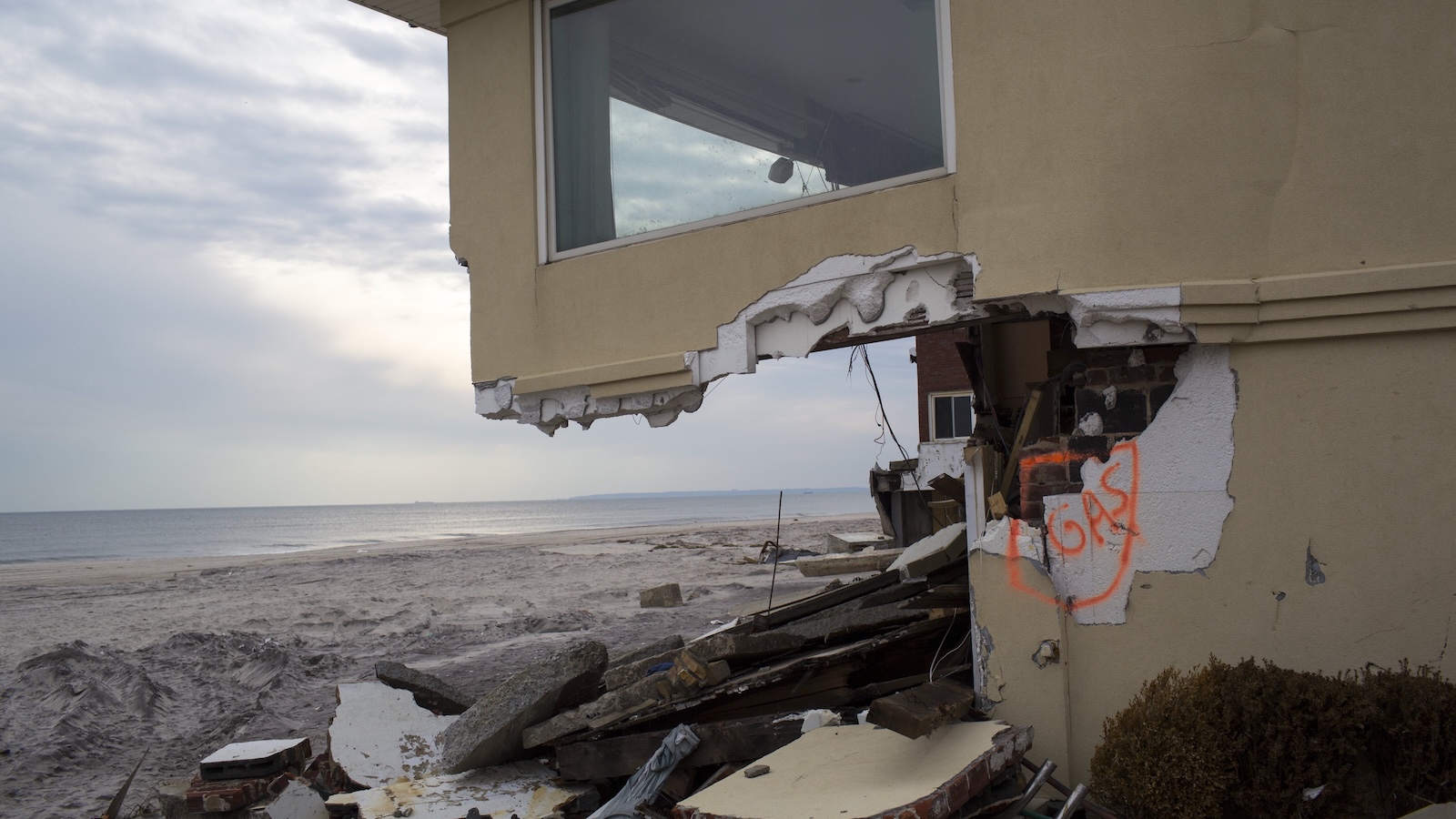
Neither Elliott nor Siders were involved in the new study, but both emphasized that the research confirms and expands upon a growing body of academic literature. This broader consensus points to a buyout program that fundamentally works on a technical level, but desperately requires systemic structural improvements.
Reducing frustrating bureaucratic wait times and paying vastly greater attention to racial and economic equity are absolute prerequisites for reform, Elliott explained. He noted that a fundamental disconnect often exists between how the federal government and everyday homeowners view the core purpose of the buyout effort.
"The government looks at it as a property acquisition program" and "a way to look out for other taxpayers," Elliott said. "But if you’re from a damaged home, you’re looking at this as disaster recovery."
For disaster-struck residents, the buyout process can drag on for months or even years, leaving families trapped in precarious, liminal conditions while they await bureaucratic decisions. Even when a buyout is ultimately approved, Elliott pointed out that relying on pre-disaster market values can actively amplify pre-existing societal inequalities. Homes located in historically marginalized or economically depressed communities tend to possess lower baseline property values from the very start.
Consequently, when the government offers a buyout based on that pre-disaster value, the homeowner walks away with significantly less capital to fund their relocation. In numerous documented cases, the government’s final offer falls woefully short of the prevailing cost of housing elsewhere, effectively making it financially impossible for vulnerable families to move to safer, higher-opportunity ground.
These disparities are starkly visible in the quantitative data of Young’s paper. The average buyout payment amounted to just $40,583 in census tracts with majority-Black populations, compared to a substantially higher $93,977 in high-proportion white census tracts. Furthermore, the estimated increase in successful long-term relocation was approximately 18 percentage points in tracts with smaller Black populations, but plummeted to just 6 percentage points in majority-Black tracts.
"The buyout program should do better and be more equitable," Elliott said. However, he cautioned that equity is only part of the puzzle. The larger, more systemic crisis is that the program currently fails to reach millions of Americans who are actively living in increasingly dangerous, disaster-prone homes across the country.
"This is important, but it’s not sufficient," he said of the potential policy fixes. "It’s buying us some time."
Looking forward, Young hopes that empirical research of this caliber can help policymakers refine, strengthen, and potentially expand property buyouts as a vital climate adaptation tool—even as federal funding priorities fluctuate under shifting political leadership, such as the repeated spending restrictions pushed by former President Donald Trump.
To envision a better path forward, Elliott pointed to innovative managed retreat programs operating in European nations and New Zealand, which could offer valuable lessons and structural models for the United States. Meanwhile, Siders emphasized that the study reinforces the urgent need to seriously consider long-proposed reforms to FEMA’s operational guidelines, such as transitioning away from rigid pre-disaster market valuations and instead utilizing a home’s actual replacement cost to ensure marginalized communities have the financial means to relocate securely.
Ultimately, all three researchers agreed that a great deal more work must be done by public institutions to fully understand why these persistent inequities occur and how to effectively dismantle them. They argue that this evaluative work is an obligation that rests squarely on the shoulders of the government.
"The federal government doesn’t do anything to assess where people go after the program," Young pointed out.
Elliott noted that tracking these vital post-buyout outcomes almost always falls to independent academics who face severe limitations regarding access to the necessary government data.
"It was sort of left to us to figure out what the implication of the policy is," Elliott said. "That’s backwards."