
A former artificial intelligence engineer charged with secretly planting a covert audio recording device inside a high-level meeting room at OpenAI’s headquarters has been denied bail after federal prosecutors revealed evidence suggesting he received substantial support from elements within the Saudi Arabian government.
According to filings submitted to a U.S. federal court in California, federal prosecutors alleged that 35-year-old Abdulrahman Alfozan maintained direct and frequent communications with a member of the Saudi royal family during his tenure at the prominent artificial intelligence firm. Furthermore, court documents reveal that following Alfozan’s arrest by federal authorities, a member of the Saudi Arabian military stepped in to purchase one-way, business-class airline tickets for the defendant’s wife and child to flee the United States.
The dramatic developments were detailed during a detention hearing in San Francisco, where U.S. District Judge Alex Tse ruled on Monday that Alfozan represents a severe flight risk. Denying a request by defense attorneys for pre-trial release on bail, Judge Tse ordered that the former tech worker remain in federal custody pending trial, determining that the risk of the defendant fleeing the country to evade prosecution was too significant to mitigate through standard conditions of release.
The government’s detailed court filings paint a troubling picture of potential corporate and state-sponsored espionage operating within one of the world’s leading artificial intelligence organizations. Alfozan, a Saudi national, had been employed as an engineer at OpenAI for approximately one year prior to the discovery of the hidden listening device. His contract with the company was abruptly terminated immediately following his arrest by federal law enforcement officers.
According to the legal documents filed in the U.S. District Court for the Northern District of California, the breach was first uncovered on September 30, when personnel inside OpenAI discovered a physical audio recording device concealed inside one of the company’s primary conference rooms. The listening apparatus had been inserted directly into the back of a television monitor mounted in the room and was intentionally covered up with toilet paper in an apparent effort to hide the hardware from plain sight while preserving its power source and line of sight for audio collection.
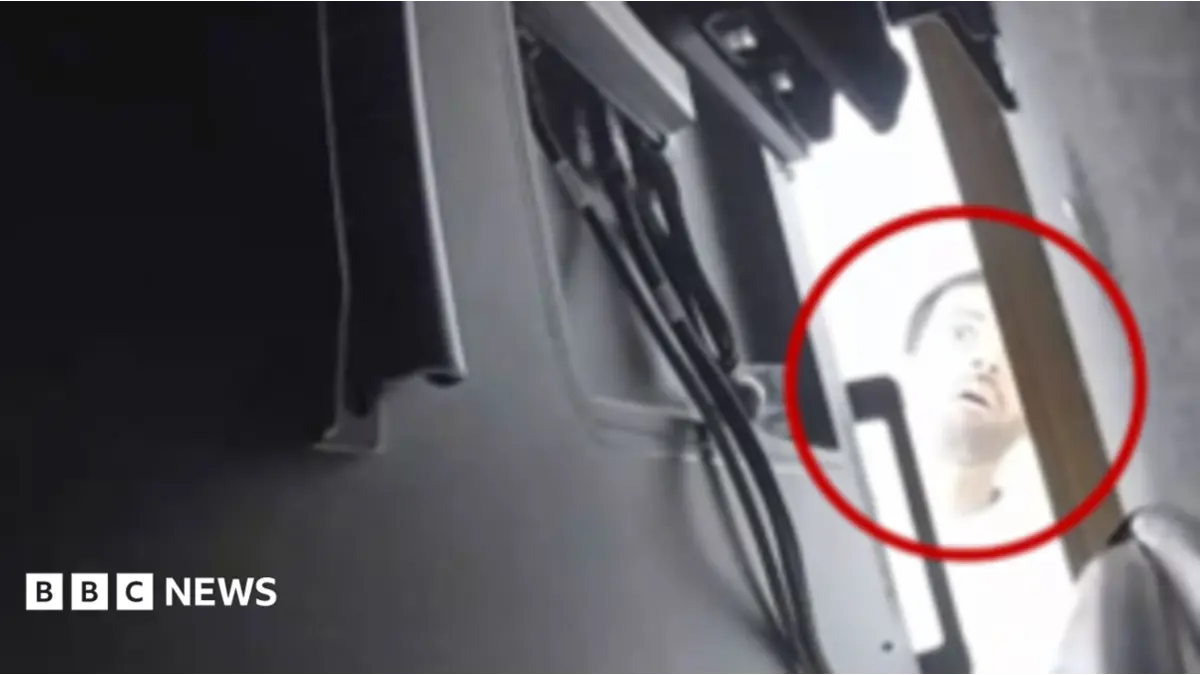
Upon discovering the illicit bug, investigators and security personnel launched a targeted counter-surveillance response rather than immediately removing the device. A hidden camera was positioned in the conference room to monitor the television set and record anyone attempting to service, retrieve, or inspect the concealed recorder.
That tactical measure yielded crucial evidence less than a week later. On October 5, security footage captured Alfozan entering the conference room alone. The surveillance video recorded the engineer approaching the television set and appearing to reach behind the unit to check the specific location where the audio recorder had been placed days earlier.
Armed with the video evidence and additional investigative findings, special agents from the Federal Bureau of Investigation moved in to arrest Alfozan on October 9. In the immediate aftermath of the federal arrest, OpenAI officially severed all employment ties with the engineer.
The revelation of the covert bugging attempt has raised acute concerns among federal authorities due to the highly sensitive nature of the discussions held in that specific corporate conference room. In court documents, federal prosecutors argued that Alfozan’s alleged actions posed a direct and potential danger to the national security of the United States. Prosecutors emphasized that during the precise timeframe the recording device was believed to have been installed and operational, high-ranking executives from OpenAI held confidential meetings in that very room with official government representatives.
The presence of U.S. government officials in meetings hosted at top-tier artificial intelligence firms highlights the national strategic importance of the technology being developed inside companies like OpenAI. The potential interception of unredacted conversations between corporate leadership and national security or government personnel represents a high-stakes intelligence vulnerability, according to the government’s legal memorandum.
Beyond the national security implications, federal prosecutors presented an extensive timeline of events surrounding Alfozan’s personal movements and family activities to demonstrate that he had systematically prepared to flee the jurisdiction of the United States prior to his apprehension.
The court filings reveal that Alfozan’s arrest by the FBI occurred just three days before he was scheduled to depart the United States permanently. Federal investigators uncovered evidence that the defendant had already finalized travel arrangements to board a one-way international flight from San Francisco to Riyadh, Saudi Arabia, alongside his wife and son, scheduled for mid-October.
The timeline became further complicated immediately following the defendant’s arrest on October 9. When FBI agents conducted an interview with Alfozan’s wife shortly after his detention, she explicitly informed investigators that her United States visa was expiring. She stated to the interviewing agents that, as a result of the visa status, she and her young son were permanently moving back to Saudi Arabia, and confirmed that her husband had intended to leave the United States permanently with them on their scheduled departure date.
Just one day after Alfozan was taken into federal custody—on October 10—his wife and child departed the country from San Francisco International Airport. Court filings indicate that the pair traveled to Doha, Qatar, en route to their final destination. FBI investigators subsequently discovered that the one-way business class tickets utilized by the family had been explicitly booked and paid for by an active member of the Saudi Arabian military.
Prosecutors cited this immediate financial and logistical intervention by a foreign military official as clear evidence of the extensive network of state support available to the defendant. In their written submissions to the court, federal prosecutors asserted that Alfozan had virtually no meaningful incentive to remain in the United States to face criminal charges, given his extensive ties to influential foreign figures and the foreign state support demonstrated by the arrangement of his family’s flight.
Addressing the court during the bail hearing, prosecutors argued that the combination of foreign state assistance, frequent communication with a member of the Saudi royal family, a lack of deep ties to the local community, and the prospect of a significant prison sentence rendered the defendant an extreme flight risk who could easily seek refuge in Saudi Arabia, a country with which the United States maintains complex extradition protocols.
Defense attorneys representing Alfozan advocated for his release on bail, proposing conditions that would keep him under supervision within the court’s jurisdiction while awaiting trial. However, U.S. District Judge Alex Tse ultimately agreed with the government’s assessment, confirming that the risk of non-appearance was simply too pronounced to allow for pre-trial release.
The Saudi Arabian government did not immediately issue a public statement or respond to formal requests for comment regarding the allegations raised in the U.S. court filing, including the claims of communications between the defendant and a royal family member, or the purchase of international travel tickets by a military official.
Alfozan was scheduled to make a formal appearance in federal court in San Francisco later on Monday as the legal proceedings move forward. The criminal charges against him carry severe statutory penalties under federal law. If he is ultimately tried and convicted of the charges, the 35-year-old engineer faces a maximum sentence of up to five years in a federal penitentiary, alongside a maximum fine of $250,000 (approximately £188,000).
Federal law enforcement authorities confirmed that the FBI’s investigation into the full scope of the security breach, including the potential handling or transmission of any audio recordings captured by the hidden device, remains active and ongoing.