
The administration of US President Donald Trump has sharply escalated its diplomatic campaign this autumn in an effort to break the stalemate in negotiations and bring an end to Russia’s war in Ukraine. Driven by a desire to deliver a swift resolution to the protracted conflict, Washington has increasingly exerted pressure on Kyiv and its European allies while simultaneously extending substantial diplomatic and economic incentives to entice Moscow back to the bargaining table.
Among these overtures, the White House has moved to ease select sanctions on a temporary basis and facilitated an arrangement involving Russian diesel exports to the United States. Yet, despite Washington’s visible urgency and concessions, the Kremlin continues to signal that it will not be rushed into comprehensive peace talks on terms dictated by the West.
Moscow’s measured response became clear following high-level discussions in St. Petersburg between Russian President Vladimir Putin and Steve Witkoff, the US special envoy tasked with exploring pathways to end the war. Following their meeting, Kremlin officials indicated that Russia is prepared to engage in technical-level consultations with Ukraine in the coming month, but reiterated that substantive political negotiations remain conditional on broader strategic understandings.
Yury Ushakov, a senior foreign policy aide to Putin, stated that the Russian leader agreed in principle to resume Washington-mediated peace contacts after November 10. Ushakov noted that a potential subsequent round of discussions could be hosted in Abu Dhabi, with a primary focus on delineating a future security system for Russia and Ukraine once the fighting stops.
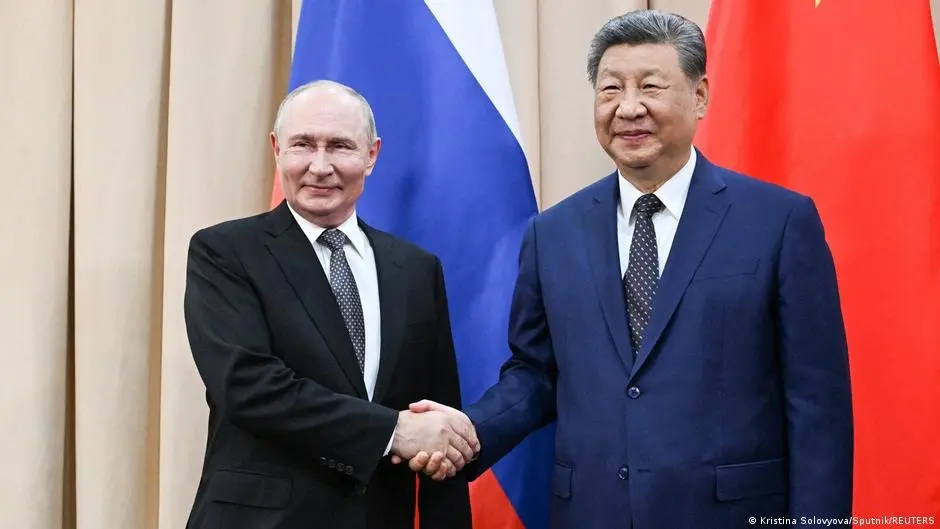
Beyond bilateral and technical contacts, Ushakov revealed that Putin conveyed to Witkoff his vision for a much broader diplomatic track: an ambitious trilateral summit that would bring together Donald Trump, Vladimir Putin, and Chinese President Xi Jinping. According to Ushakov, authorities in Beijing are already actively preparing for such a meeting.
Trilateral summit in China without Ukraine
The diplomatic maneuvering around a three-way summit gathered momentum following a report by The Wall Street Journal, which disclosed that Moscow had proposed convening the trilateral meeting on the sidelines of the Asia-Pacific Economic Cooperation (APEC) summit in Shenzhen, China, scheduled for November 18–19. Sources cited by the publication indicated that Putin hopes to leverage direct dialogue with Trump and Xi to forge an agreement that would conclude the war on terms distinctly advantageous to the Kremlin.
The proposed format—bringing together the leaders of Russia, the United States, and China, while pointedly excluding both Ukraine and the European Union—reveals Moscow’s preferred blueprint for conflict resolution. The Kremlin has consistently maintained that any viable peace process requires Ukraine to accept territorial concessions and demands that Western powers fully integrate Russian security demands into any post-war framework. By convening solely with Washington and Beijing, Moscow seeks to frame the war not as a localized conflict over Ukrainian sovereignty, but as a broader renegotiation of global power dynamics.
According to The Wall Street Journal, Putin explicitly conceptualizes the proposed Shenzhen meeting through the historical lens of the 1945 Yalta Conference. At Yalta, the leaders of the United States, Great Britain, and the Soviet Union met in the final months of World War II to coordinate the defeat of Nazi Germany and delineate the postwar geopolitical architecture of Europe. For the Kremlin, a 21st-century iteration alongside the US and China represents an opportunity to restore a great-power condominium capable of drawing new spheres of influence over the heads of smaller states.
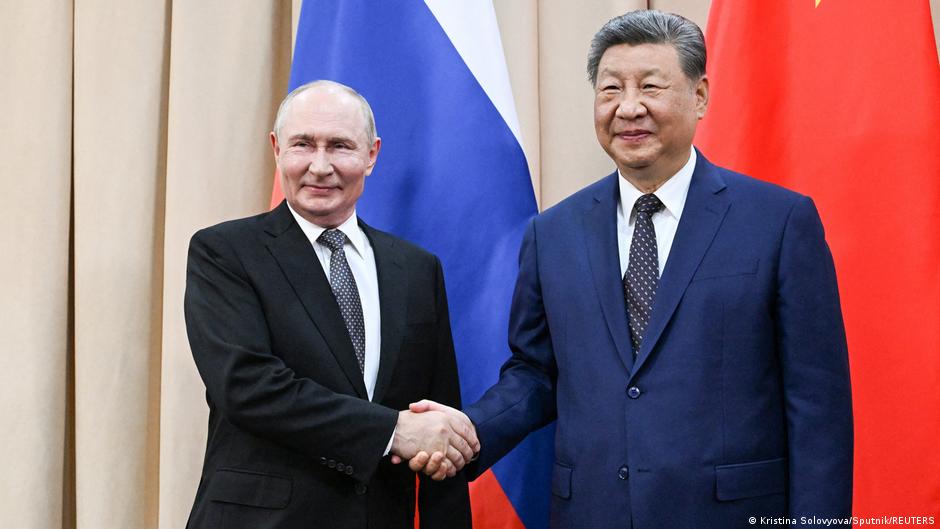
Diplomatic channels have indicated that Beijing would raise no objections to hosting or participating in the three-way format provided Trump formally agrees to attend. Trump, whose public and private relations with Kyiv have experienced notable strain in recent weeks, has voiced openness to exploring such high-level summitry.
However, any attempt to settle Ukraine’s fate without its participation faces fierce resistance from Kyiv. Speaking in Oslo on October 20, Ukrainian President Volodymyr Zelenskyy firmly rejected the premise of external powers dictating terms to his country, emphasizing that any international dialogue concerning the future, borders, or sovereignty of Ukraine is acceptable only if Ukrainian representatives are seated at the negotiating table.
What does China stand to gain from the talks?
The Kremlin’s push to involve China in direct negotiations with the United States reflects a longstanding Russian desire to be acknowledged as an indispensable global power, according to Temur Umarov, a specialist in Russia-China relations at the Carnegie Russia Eurasia Center in Berlin.
Umarov noted that the previous US administration steadfastly adhered to the diplomatic principle of "nothing about Ukraine without Ukraine," refusing to engage Moscow in talks that touched upon Kyiv’s sovereignty in the absence of Ukrainian leadership. The current political climate in Washington, however, has led Moscow to believe that a major-power settlement negotiated above Kyiv and Brussels has become a realistic possibility.
The Kremlin’s strategic calculation appears to rest on the assumption that an understanding struck between Trump, Xi, and Putin would inevitably compel the White House to lean heavily on Ukraine and the European Union to concede to the agreed terms. Yet, analysts question the extent to which Beijing is genuinely invested in becoming an active arbiter of the conflict.
Umarov argued that China’s role in such a gathering would remain primarily symbolic rather than operational. In his assessment, Beijing harbors no desire to assume responsibility for guaranteeing or enforcing Ukraine’s post-war settlement. Participating in the summit would grant China significant diplomatic prestige as a global peacemaker without requiring it to undertake binding commitments.
Umarov explained that Moscow’s insistence on this specific three-way configuration is also intended to project an image of parity, demonstrating that Russia sits as an equal partner alongside both the United States and China. In reality, however, Moscow occupies a junior position in its strategic partnership with Beijing.
Given these dynamics, Umarov believes that China has limited direct incentive to steer the talks toward concrete compromises. Even if the three leaders were to conclude the summit with a joint declaration, Beijing would insist on ambiguous, flexible terminology. Such noncommittal wording would allow China to interpret any subsequent developments on the battlefield or in diplomacy as fully aligned with the summit’s framework, protecting its broader foreign policy maneuverability.

A differing interpretation is offered by Yurii Poita, a senior associate researcher at the Mercator Institute for China Studies (MERICS). Poita contends that Beijing and Moscow share deep structural interests that go beyond mere symbolism, particularly in their mutual pursuit of an alternative Eurasian security order aimed at curbing Western dominance.
From Poita’s perspective, both Russia and China would derive substantial geopolitical dividends from a retreat of Western military strength in Europe and the Asia-Pacific, as well as a weakened, fragmented NATO alliance. If Moscow and Beijing were able to jointly persuade Washington to curtail its military footprint on the European continent and scale back assistance to Kyiv, Russia would secure an immediate operational edge on the Ukrainian battlefield.
Simultaneously, such an outcome would severely erode European confidence in Washington’s security guarantees under NATO, fulfilling long-term strategic objectives shared by both China and Russia.
Is Putin’s political survival crucial for China?
Beyond broad questions of Eurasian architecture, Beijing’s posture toward the war remains fundamentally anchored in the internal stability of the Russian regime, according to Michael Kimmage, director of the Kennan Institute.
While China is wary of the global economic disruptions caused by the war and remains keen to protect its commercial ties across Europe and with Ukraine, Kimmage argued that these considerations are secondary to Beijing’s paramount priority: the political preservation of Vladimir Putin.
Russia represents an invaluable geopolitical asset for China, offering reliable flows of discounted natural resources and energy while acting as an assertive, anti-Western partner on the world stage that rarely challenges Chinese interests. Consequently, Kimmage argued, Beijing will continue to provide indirect backing to Moscow’s military campaign to forestall any risk of a catastrophic Russian defeat.
While an overwhelming Russian victory may not be essential to China’s regional calculations, preventing the collapse of Putin’s government remains an absolute necessity. Because of this strategic imperative, analysts do not expect Beijing to apply pressure on the Russian leadership to end the war on terms that Putin himself deems unacceptable.
Does excluding Europe reveal the EU’s weakness?
The deliberate exclusion of both Ukraine and the European Union from the proposed Shenzhen talks has also raised uncomfortable questions regarding Europe’s standing in international diplomacy.

Kateryna Krasina, a junior researcher at the Kyiv-based New Geopolitics Network, suggested that the diplomatic structure favored by Beijing and Moscow offers a candid reflection of how both powers perceive the West. In Krasina’s view, China’s willingness to entertain talks that bypass Kyiv and European capitals suggests that Beijing views Ukraine as lacking true strategic autonomy and considers the European Union too fragmented and weak to act as an independent geopolitical heavyweight.
However, Kimmage cautioned against conflating diplomatic optics with actual influence. While European governments may possess limited leverage to stop Trump, Putin, and Xi from convening a trilateral summit, Europe’s underlying role in the conflict remains formidable.
He pointed to European diplomatic coordination during the 2025 Alaska summit between Trump and Putin, where European engagement helped steer negotiations away from frameworks that could have marginalized continental security.
Furthermore, Kimmage stressed that Europe’s direct contributions to Ukraine have expanded dramatically throughout the war. Through sustained financial assistance, macro-economic stabilization, and deep industrial defense partnerships—spearheaded by Germany and other European nations—the continent has become indispensable to Ukraine’s defense capabilities.
This sustained material backing, Kimmage argued, translates directly into hard geopolitical leverage. While the leaders of Russia, China, and the United States may find it politically expedient to project an image of Europe as a bystander, the practical reality of European support makes continental interests impossible to ignore indefinitely.
Ultimately, any agreement formulated in Shenzhen or Abu Dhabi would have to confront the enduring realities of the war itself. As Umarov emphasized, Beijing is fully aware that regardless of what agreements might be drafted in high-level summits between great powers, the eventual trajectory of the conflict will be decided by the situation on the ground.
Whatever Moscow’s aspirations for a modern-day Yalta, Ukraine retains its own strategic agency. Neither pressure from Washington nor declarations issued by distant summits can entirely reshape the battlefield without the consent of the nation fighting on it.