

After a hiatus of nearly two decades, travel writer and author Matt Kepnes returned to Ko Lipe, a tiny island nestled in the southern reaches of Thailand. What he found upon his arrival was a stark departure from the isolated idyll he had spent a month calling home back in 2006.
Nineteen years ago, Ko Lipe existed far beyond the typical tourist radar. It was a destination reserved for the most intrepid travelers—a place where electricity flickered to life for only a few hours each day, basic bamboo bungalows right on the sand cost roughly two U.S. dollars a night, and travelers regularly worried about catching the literal last boat off the island before the seasonal monsoon cutoff.
Back then, the daily itinerary was defined by simplicity. Visitors spent their time lounging on the beach, reading books, snorkeling in crystal-clear waters, enjoying beers at the island’s solitary beach bar, and rotating their meals among a modest selection of five local restaurants before turning in early. It was a classic backpacker paradise, a place where days effortlessly bled into weeks and where many visitors notoriously found themselves "stuck" for far longer than they had originally intended.
For Kepnes, those weeks spent on Ko Lipe long stood out as the undisputed highlight of his global travels. It was an era defined by genuine human connection—forging deep friendships, interacting closely with local residents, picking up rudimentary Thai, and living out the quintessential, carefree backpacker lifestyle that so many travelers romanticize.
Yet, for years, he deliberately avoided returning. The memory of that pristine experience remained so vivid that he feared any revisit would inevitably shatter the illusion, reducing his journey to an exercise in chasing ghosts. He knew that the magical atmosphere could never be genuinely recreated without the original cast of people who had made it so special. Furthermore, aware that the sleepy enclave had undergone significant development over the years, he harbored a deep reluctance to witness firsthand the transformations that might taint his fondest recollections.
The reality of tourism development in Thailand has long leaned toward the unsustainable. Across the country’s stunning coastline, islands rarely develop in a controlled or environmentally conscious manner; instead, the prevailing ethos has largely centered on relentless construction. Kepnes had desperately hoped that Ko Lipe would somehow be spared this fate.
However, while mapping out a recent journey through Southeast Asia, logistics made a return to Ko Lipe increasingly logical. Traveling down the Indian Ocean side of Thailand en route to Malaysia, his itinerary naturally brushed past the island. Furthermore, seeking a vibrant locale to ring in the New Year—and recognizing that nearby island alternatives were sparse, particularly given Ko Lipe’s direct ferry connection to his next stop in Langkawi, Malaysia—he decided to put his reservations aside and make the journey.
The reality he encountered upon arrival was disheartening. Ko Lipe has fully embraced the heavily commercialized model pioneered by destinations like Ko Phi Phi, transforming into an overdeveloped hub that strains local ecosystems to their absolute limits.
The physical landscape of the island has been radically altered. Most of the terrain is now paved over, with the once-charming dirt footpaths replaced by concrete roads designed to accommodate cars and heavy construction trucks. Vast swaths of native palm trees have been cleared to make way for high-end luxury resorts complete with swimming pools—a particularly troubling development on an island entirely devoid of a natural freshwater supply. Meanwhile, heavy construction machinery continues to reshape the landscape at a rapid pace.
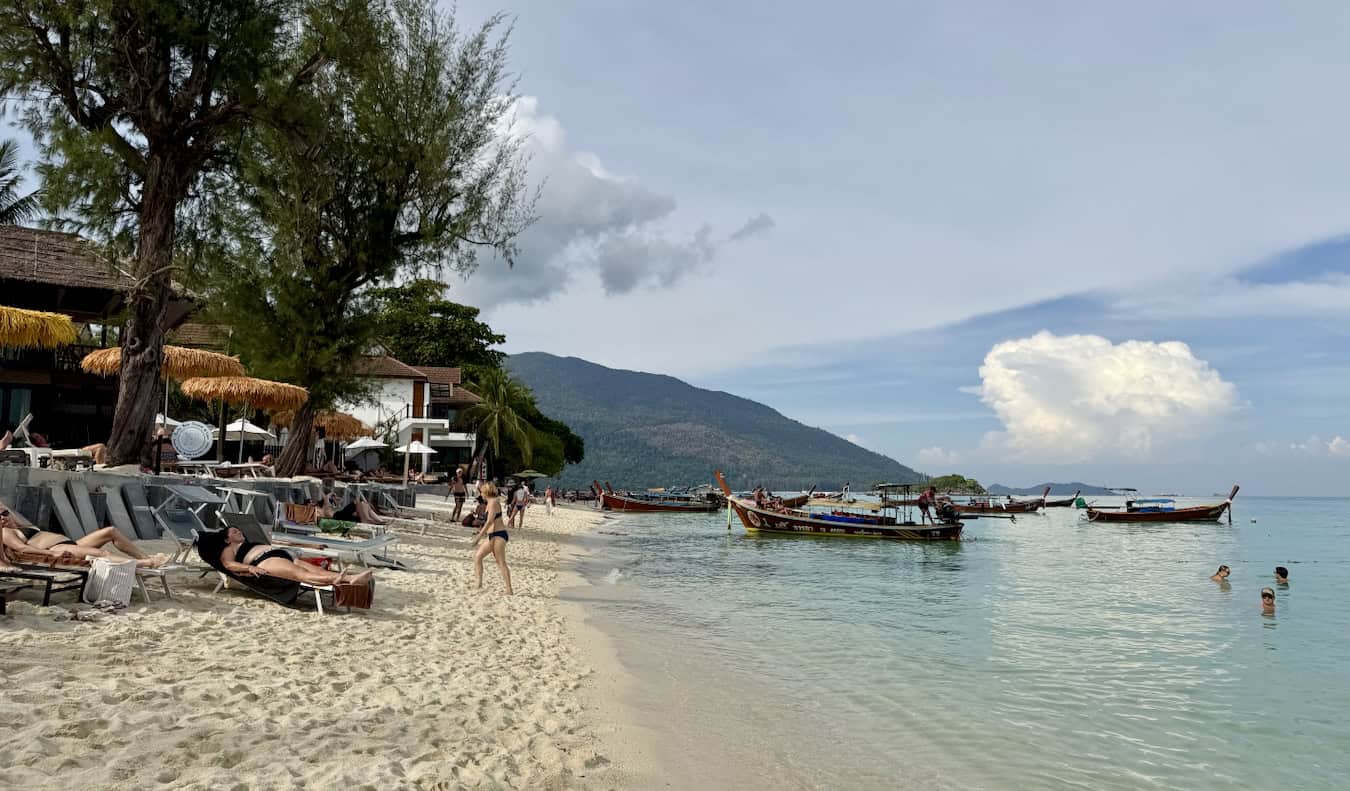
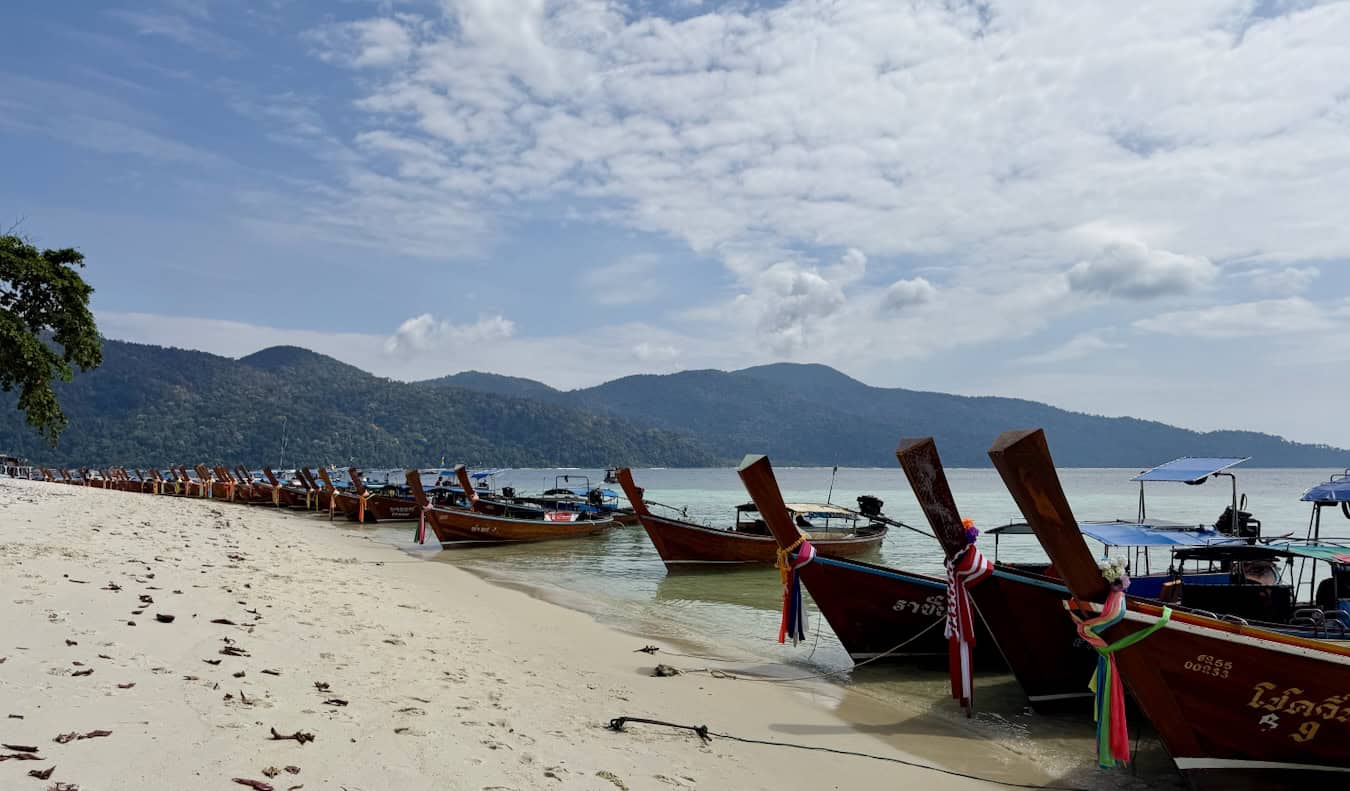
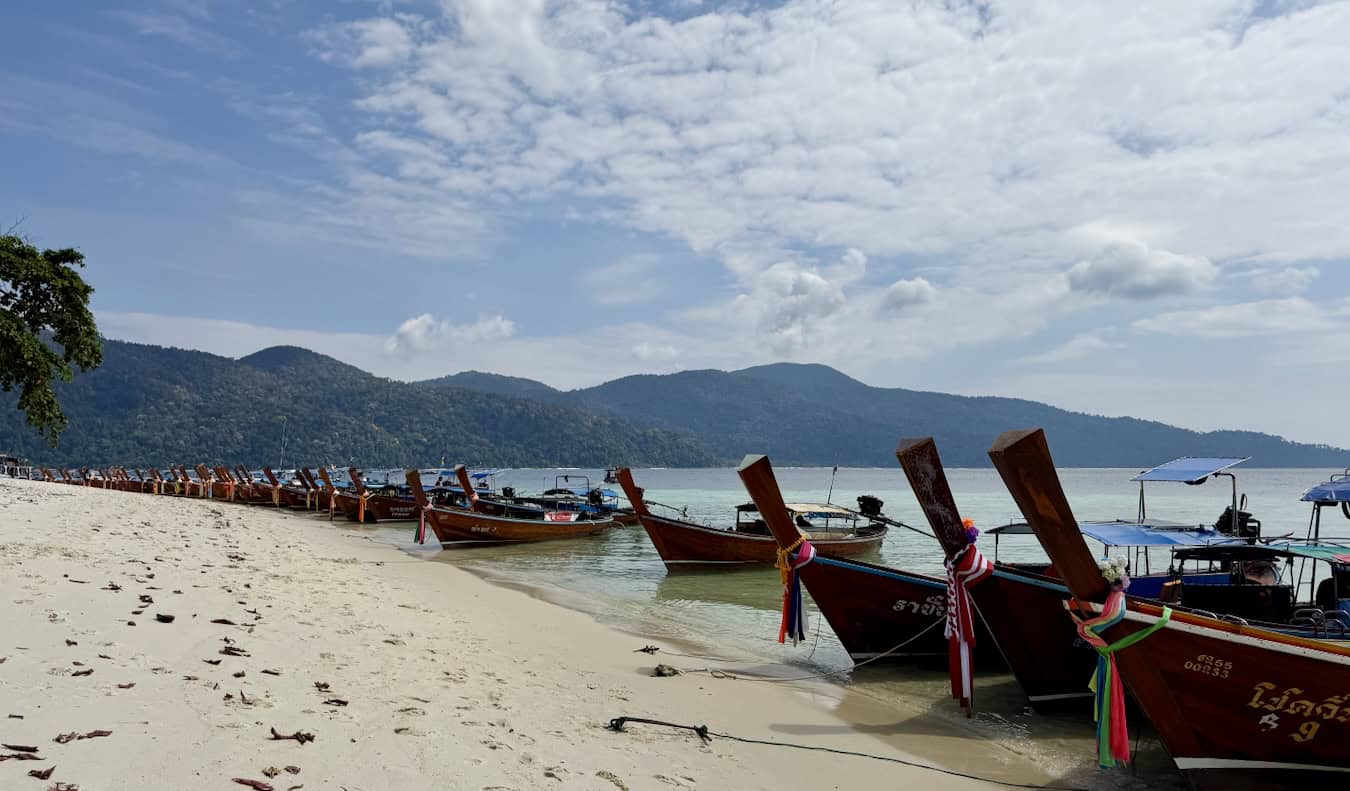
The marine ecosystem has borne the brunt of this unchecked expansion. The vibrant coral reefs surrounding the island are steadily dying, suffocated by the heavy maritime traffic, rogue anchors, pollution, and widespread overfishing. The shoreline is now perpetually choked by longtail and speedboats, their exhaust engines spilling fuel into the water and leaving a shimmering, oily film visible to anyone swimming offshore. In the commercial centers, dining options have increasingly pivoted away from authentic local cuisine to cater to tourists demanding standardized Western meals.
This economic and structural boom has also taken a heavy toll on the local population. Many native residents have been pressured or forced to sell their land to deep-pocketed developers from the mainland. Consequently, a significant portion of the island’s current workforce is brought in from outside, seeing very little of the actual financial benefits generated by the tourism surge. Ko Lipe has effectively become yet another casualty of Thailand’s persistent overdevelopment and the aggressive exploitation of fragile island resources.
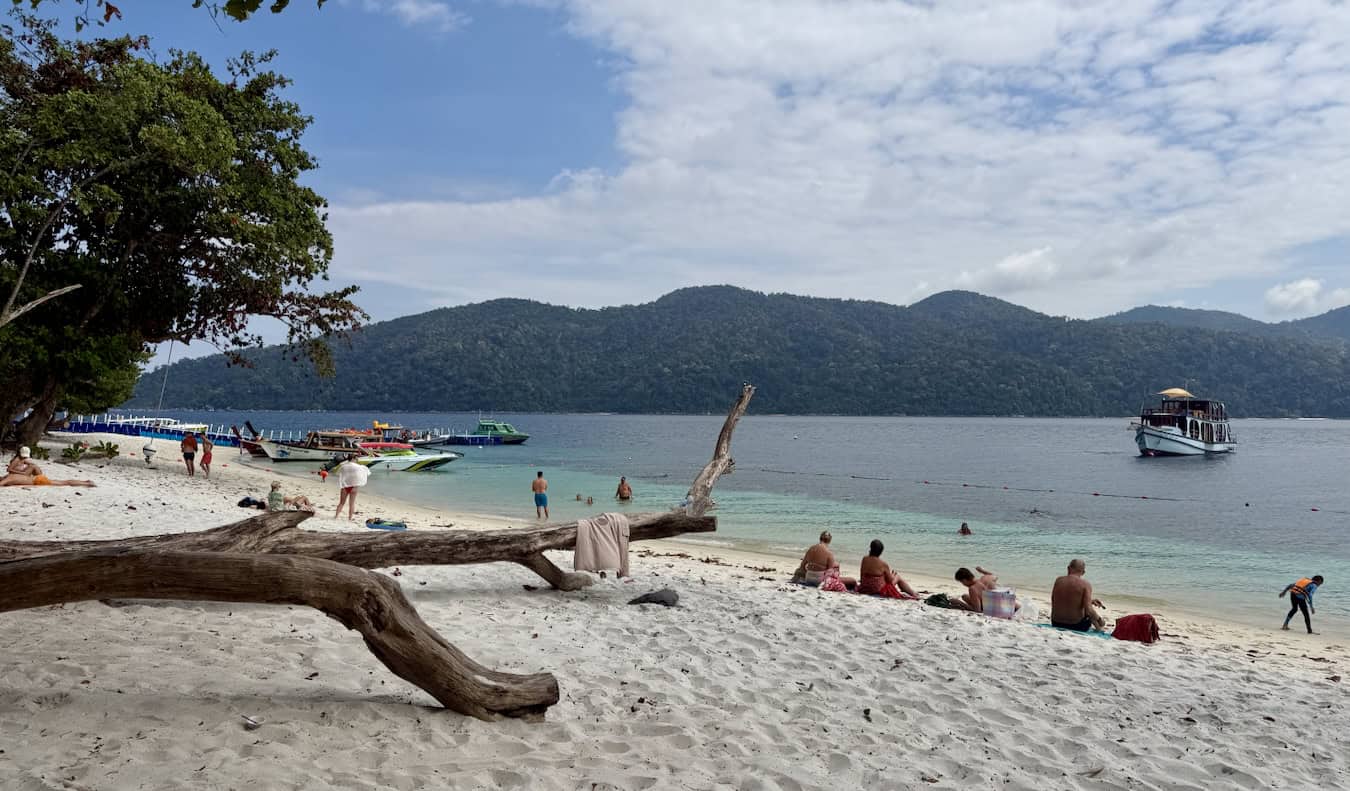
Despite these grim realities, the island retains a superficial allure. First-time visitors frequently express awe at its undeniable aesthetic appeal—the postcard-perfect scenery featuring brilliant azure waters, powdery white sand beaches, and proximity to a protected marine national park that offers daily excursions to secluded neighboring islands. Compared to heavily congested mainland and island hubs like Phuket, Krabi, or Ko Phi Phi, Ko Lipe can still feel relatively manageable to an uninitiated traveler taking their first steps onto its shores.
Yet, reflecting on the broader implications of this development, the conclusion remains sobering: travelers should seriously reconsider visiting Ko Lipe.
The issue is not growth in and of itself, but rather the reckless, poorly managed nature of this particular expansion. Pouring more tourists into a fragile ecosystem only places an unsustainable tax on limited resources that cannot be easily replenished. While the tourism genie cannot be put back into the bottle—and local residents cannot realistically be expected to remain economically stagnant simply to preserve an outsider’s romanticized ideal of paradise—the current trajectory is fundamentally flawed.
Fortunately, travelers seeking authentic and well-managed island experiences in Thailand still have viable alternatives. Destinations such as Ko Lanta, Ko Jum, and Ko Mook offer stunning natural beauty alongside more thoughtful, sustainable approaches to tourism development.
Choosing to bypass Ko Lipe in favor of better-managed destinations is a matter of traveler responsibility. History has proven that consumer consciousness can drive meaningful shifts in the travel industry. The widespread decline in elephant riding across Thailand and the explosive growth of eco-lodges are direct results of travelers altering their habits and voting with their wallets. Overtourism is now a central topic of discussion among global travelers and local communities alike.
While individual restraint may not single-handedly reverse decades of concrete and construction on Ko Lipe, choosing to stay away ensures that visitors are no longer active participants in a broken system. Ultimately, as tourism pressures mount across Southeast Asia, recognizing that enough is enough remains one of the most powerful tools available to modern travelers committed to preserving the very places they love to explore.