
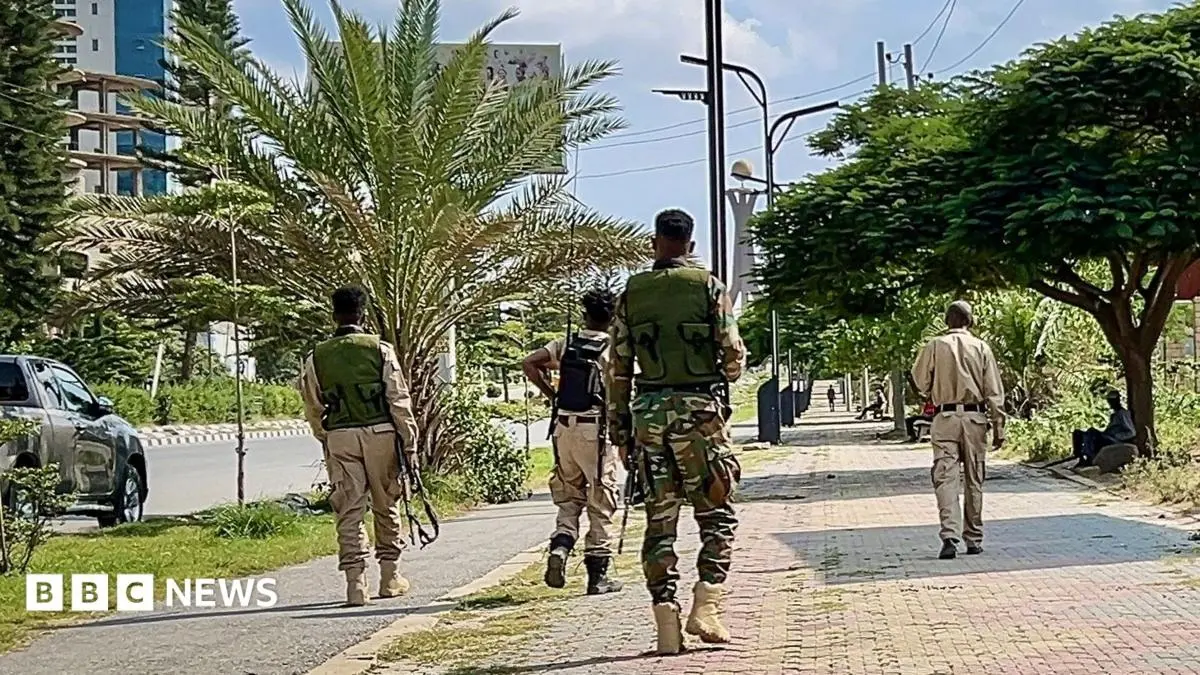
Fears of a catastrophic return to full-scale war have re-emerged across the Horn of Africa as the Ethiopian federal government and the leadership of the northern Tigray region trade bitter accusations of launching fresh military offensives. The dramatic military escalation, which features infantry advances across regional borders, heavy aerial strikes, and the takeover of key transportation hubs, threatens to shatter the fragile peace established after one of the deadliest conflicts of the twenty-first century.
In a dramatic shift on the ground, Tigrayan fighters have reportedly taken control of federally administered airports inside the Tigray region while simultaneously launching ground offensives into the neighboring Afar and Amhara regions. The rapid military maneuvers prompted state carrier Ethiopian Airlines to immediately cancel all commercial flights servicing the region, effectively severing Tigray’s primary air transport link with the rest of the country and leaving local transport networks in state of total disarray.
Confirmation of the local airport takeovers came directly from residents in Mekelle, the regional capital of Tigray. Local citizens reported that Tigrayan regional forces moved early on Wednesday morning to disarm and dislodge national police units stationed at Mekelle’s main airport, taking full operational control of the facility. The operational shutdown of the regional aviation sector occurred amid repeated reports of federal drone strikes targeting various locations across Tigray over recent days, escalating an atmosphere of intense panic among local populations.
Addressing the military crisis, Getachew Reda, a cabinet minister and senior adviser to Ethiopian Prime Minister Abiy Ahmed, issued a scathing public assessment of the situation on social media. Getachew confirmed that Tigrayan forces had captured federally managed airports inside Tigray and aggressively pushed across regional borders into strategic positions within Afar and Amhara. He expressed profound dismay over the sudden turn of events, stating that it was heartbreaking to observe how, despite extensive diplomatic efforts by the international community to avert another round of devastating warfare in Tigray, the TPLF leadership had launched an all-out offensive against government defensive positions early in the morning.
The political trajectory of Getachew Reda highlights the severe political schisms that have fractured Tigrayan leadership since the conclusion of the previous civil war. Getachew previously served as the head of Tigray’s interim regional administration, which was established by the central government following the cessation of hostilities. However, he suffered a major political fallout with the entrenched Tigray People’s Liberation Front (TPLF) leadership in 2025, ultimately stepping down from his regional posting to align directly with the federal government as a cabinet minister and top advisor to Prime Minister Abiy.
Countering the assertions from Addis Ababa, Tigrayan regional authorities asserted that their forces had not initiated an aggressive campaign, but had instead been forced into a strictly defensive posture to shield the population from ongoing government aggression. On Wednesday, the Tigray authorities formally accused the central government of launching an "open invasion" of the northern region. Regional leaders called upon the public to maintain unwavering unity and offer full support to regional military forces to repel federal troops.
In their official statements, Tigrayan officials forcefully accused the federal government in Addis Ababa of committing grave violations of international humanitarian law and human rights standards. They claimed that recent federal military action, particularly sustained air operations, had deliberately disrupted vital public services and severely damaged critical civilian infrastructure across the region, further worsening the precarious humanitarian situation on the ground.
The escalating military campaign was punctuated by a severe aerial bombardment on Tuesday in the southern Tigrayan town of Alamata, which resulted in significant civilian casualties. According to local Tigrayan authorities, the strike left at least 14 people dead and injured another 22 individuals. The mayor of Alamata, Mogos Shiferaw, provided a harrowing account of the bombardment, detailing how federal forces launched a coordinated air assault using more than five unmanned combat aerial vehicles and at least one conventional fighter jet.
Mayor Mogos reported that the military aircraft carried out a relentless barrage of more than 21 individual strikes against targets within the town, beginning at approximately 03:30 local time. He emphasized that the attack triggered intense psychological trauma and plunged the local civilian population into a state of acute terror and panic. According to the mayor, every single person killed or wounded in the Alamata strikes was a non-combatant civilian.
The mayor specifically noted that federal air strikes hit two local secondary schools within Alamata. He explained that federal forces likely targeted the educational facilities under the mistaken suspicion that regional Tigrayan forces were utilizing them as military staging posts or garrisons. However, Mayor Mogos clarified that while the two schools had indeed been repurposed as federal military bases during the peak of the 2020–2022 civil war, they were entirely unoccupied at the time of Tuesday’s bombardment because the new academic school year had not yet commenced. The federal government has not issued an official response to the allegations regarding the Alamata strikes, and independent verification of the event remains impossible due to restricted access.
The destruction in Alamata followed another grave aerial attack earlier in the week. The U.S. State Department’s Bureau of African Affairs publicly condemned a separate drone strike that occurred on Monday, which struck a vehicle convoy operated by Catholic humanitarian organizations carrying essential food aid to displaced populations. American diplomatic officials called for a thorough, transparent investigation into the strike on aid workers, urging all combatants to adhere to international human rights laws, cease hostilities, resolve their deep political disputes through dialogue, and establish immediate safeguards to prevent future attacks on humanitarian supply lines.
The military friction coincides with a significant political realignment aimed at replacing the central government. On Sunday, the TPLF officially announced the formation of a broad political and military alliance alongside six other active Ethiopian armed opposition groups. The explicit goal of this newly established seven-member coalition is to mobilize combined forces to remove Prime Minister Abiy Ahmed’s administration from power in Addis Ababa, representing a formal, multi-front challenge to federal authority.
Internal political friction within Tigray had already reached a boiling point in the lead-up to Ethiopia’s national general elections in May. Electoral authorities excluded the Tigray region from participating in the national vote due to persistent security instability. In response, the TPLF unilaterally dissolved the federal-backed interim regional administration—formerly led by Getachew—and reinstated its pre-war administrative governance structures across the region. Concurrently, regional observers and international monitors raised alarms over reports indicating that the TPLF had initiated forced conscription drives, forcibly recruiting young men into regional military formations to bolster its forces.
The dramatic collapse in relations comes months after federal leadership explicitly warned of renewed hostilities. During an address to the national parliament in July, Prime Minister Abiy openly accused the TPLF of covertly rearming, reorganizing, and preparing its security forces for a fresh round of armed conflict. Both Addis Ababa and the TPLF leadership have faced persistent international criticism for failing to fulfill core commitments outlined in the Pretoria Agreement, the African Union-brokered peace treaty signed in November 2022 that brought an end to two years of brutal civil war.
Addressing the rising crisis on the international stage, Ethiopian President Taye Astike Selassie defended his government’s stance while delivering a speech at the United Nations General Assembly in New York. President Taye stated that the federal government had demonstrated immense restraint in its military and administrative actions, despite facing continuous interference in internal state affairs by what he described as adversarial elements, though he refrained from explicitly naming specific foreign or domestic entities. He issued a stern warning against those challenging state sovereignty, declaring that Ethiopia’s message to forces of destruction and mayhem was loud and clear, urging all factions to respect the sacred right of the people of the Horn of Africa to live in peace and enduring prosperity.
The international response to the renewed fighting has been swift, reflecting deep alarm over the potential destabilization of the Horn of Africa. The chairperson of the African Union Commission, Mahmoud Ali Youssouf, issued an urgent appeal to both parties, calling for an immediate de-escalation of military operations and demanding that federal and Tigrayan leaders immediately return to the negotiating table to preserve the integrity of the peace process.
Simultaneously, the United States expressed firm condemnation of the TPLF’s military maneuvers. The U.S. Ambassador to Ethiopia publicly criticized the Tigrayan leadership for making what was described as a poor decision to launch a large-scale offensive against federal forces, explicitly characterizing the renewed military campaign by regional forces as an unwinnable fight that would only bring further misery to the population.
The current escalation threatens to thrust northern Ethiopia back into the devastating conditions of the 2020–2022 war, which stands as one of the deadliest conflicts of the modern era. According to estimates provided by the African Union’s chief peace mediator, the previous two-year civil war claimed the lives of approximately 600,000 people. Beyond the staggering loss of human life, the widespread destruction of critical infrastructure, systemic blockades, and economic collapse brought millions of civilians to the precipice of extreme famine, creating a generational humanitarian catastrophe that the region is still struggling to overcome.